Software
Houzz Logo Print
growingadvice

Recommend raised garden depth

3 years ago
last modified: 3 years ago

Hi, I live in Massachusetts and plan on making some raised beds for a vegetable garden. I'm not sure if the term is correct because they are not going on stands, instead it's basically a box with soil in it on the ground.I mentioned that because my question has to do with what is the recommended depth of a raised garden bed. The answer may be different if it was lets sat a concrete slab versus existing soil. Which is why I wanted to clarify.I'm deciding between 12 and 18 inches high.It'll likely be 6 4x8 beds. I'm dredings hand to wheelbarrow any more soil to fill them then I have to look.But I don't want to get Crappt results bc I skimped 6in on the depth either.Anyway,what are your suggestions? Thank you
Ps, deciding between Western cedar or metal. Any recommendation on one over the other?

Comments (14)

  • 3 years ago

    What's wrong with your soil that you feel the need to put different soil on top? Or are you trying to elevate for a different purpose?

  • 3 years ago

    I'm not totally understanding your clarification, unless I'm just confused.


    On a concrete slab, deeper you can get the better, more than 12". If on top of decent soil, a raised bed can be 12" or less.


    There is no set rule, there are many ways to grow.

  • 3 years ago

    The soil is pretty rocky entry the first few inches, but the main purpose is to evaluate the beds for easier access.


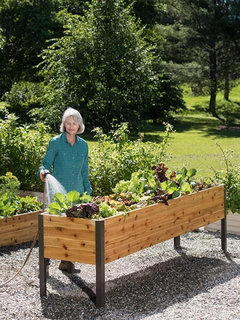
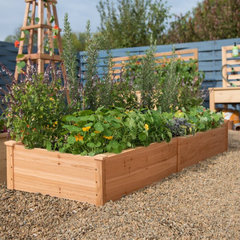
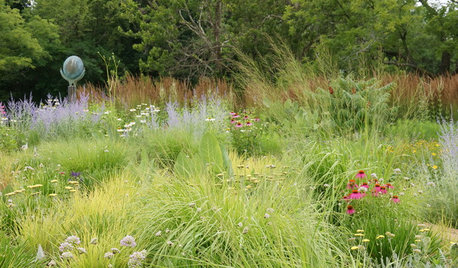
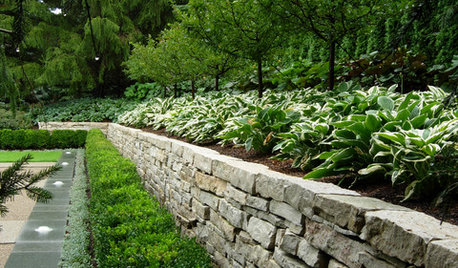
    By clarifying, I probably made it more complex then intended. I just meant when I search "raised beds" I get the first, and second image. Im looking for the second image type

  • 3 years ago
    last modified: 3 years ago

    Your roots need 12-18 inches of good quality, friable soil. If your native soil doesn't allow that, then you build it up with good stuff. You can answer your question yourself by determining how deeply you can improve your native soil. If the native soil is like concrete, and you can't dig into it, then you're going to need a 12-18" raised bed. The height of a raised bed is determined largely by how deep you want to dig and improve.

    You mean easier access by raising the soil surface higher? Boy, that's a lot of work for a little less bending down.

  • 3 years ago

    Rocky as in gravel-like, rocky as in lots of pebbles and small stones in the soil, or rocky as in lots of larger stones that go clunk when your shovel hits them? If it's either of the latter options, what's the rest of the soil? Sand, clay, silt, loam?


    What height would be most comfortable for you? Keep in mind that the creation is a one time effort; you'll be working and using the beds throughout the growing season for years. You'll regret skimping on work early if it makes things more difficult later.

  • 3 years ago

    I reccommend 18-24” depth, i do not fill to the brim.

  • 3 years ago

    rocky as all sizes of river rock. There was a gravel pit nearby (about 200 yards) and this is par for the course for this area of the city. Someone who install sprinkler systems, refers to the soil in the area as "bony"

  • PRO
    3 years ago

    If you got lots of bony, I would recommend you use a hardware cloth under your beds. It will help keep out burrowing critters and stone from rising up in your beds. Rocks float, lol.

    I'd go more of a foot plus with your box fill. If you had some pretty decent soil under the box you could get away with less. But with lots of rocks under it six inches deep is indeed skimpy.

  • 3 years ago
    1. If your soil supports plants fairly well you can choose depth of beds that suit your ease of access and 12" of amended soil should be as good for plants as 36". I suffer from restricted range of motion so all my veggie beds and a few landscape are 24" tall. My soil is heavy black clay that doesn't drain well and difficult to cultivate when wet or dry. I use a form of hugelkultur by digging 12" below grade and building 24" above grade.
  • 3 years ago

    Depends what is underneath. I tilled the ground under and throw down fertilizer then used 2"x10" lumber and hilled dirt up to 14" or more in the center. It does fantastic.

  • 3 years ago

    I'm with beesneeds. If you have gophers anywhere in the area, do the hardware cloth! NOT chicken wire! It's too widely spaced (most rodents can fit through a hole the size of their head!) and will rot out. Another option for critters are sound emitters, which we've been using for 20 years! It takes the critters a couple of weeks to realize that annoying noise isn't going away, then they stay away except for an occasional visit or if they break or if the batteries give out (don't recommend battery style, batteries too expensive!)

  • 3 years ago

    Another thing I did when building each new bed (we built 1 or 2 per year in clay soil) was to fork down and/or break up the soil as much as possible and add horse manure and/or compost and water in, water in, add, water in until it won't allow any more! Build the boxes and hardware cloth start adding your preferred soil and water in water in! Finally fill your boxes to maybe an inch below the tops of your beds (the soil will compact with watering)

    Most of all Have fun!

  • 3 years ago

    I've had great success over the years using untreated 2x10's laid on top of grass and filled with good topsoil and compost. I like 'em long and skinny... 32" x 12' is my go-to size... so I never have to step on the soil and compact it. Easy to tend. No need in my experience with this method to bust sod. The grass under dies and breaks down eventually, adding organic matter to the soil, and I've never had issues with it growing up through the bed. I do have several in-ground patches for larger crops, but I love my 2x10 beds... I am always throwing together new ones whenever I see a nice sunny spot that looks like it'd look nicer with a few plants! I don't till, and add compost and dirt every season as the contents settle. I get 7-10 years out of the untreated lumber, and by then I'm usually ready to tweak the location/size/location anyway. A major benefit in my opinion to using 'utility' lumber, (other than cost!) is that it's easy to attach things to. Fencing, plant supports, shade cloth, row cover, etc. Spot a new family of woodchucks moving in under the shed? Up goes some 36" wire fence, stapled to the 2x10's easy as pie. Heatwave on the way? Throw together a quick frame and screw it into the 2x10's to support some shade cloth. I like cedar as much as the next, but I'm less inclined to screw/staple/nail into it, personally. One last comment... as a craftsman, it's important to me that the beds are leveled on my uneven New England property. I achieve this by combination of digging in the boards or scribing and cutting the boards to the contour of the ground they sit on. I find they remain nicely level for years doing it this way, despite the ground's tendency to move and settle.