Software
Houzz Logo Print
nick_solana

Standing water in back yard

3 years ago
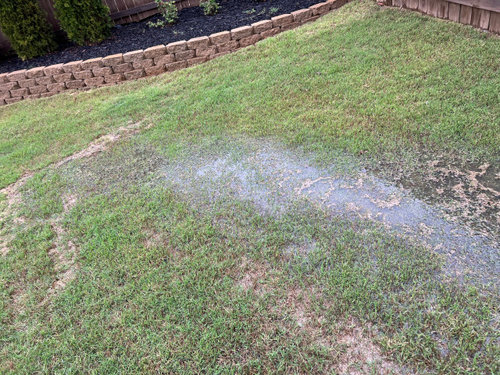
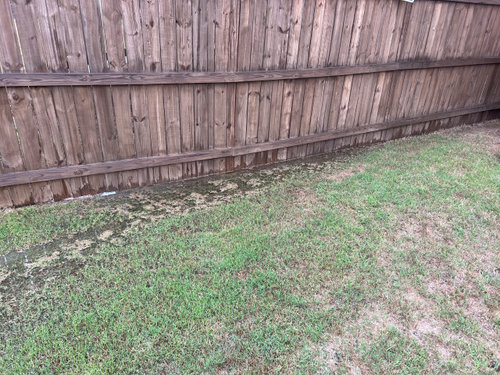
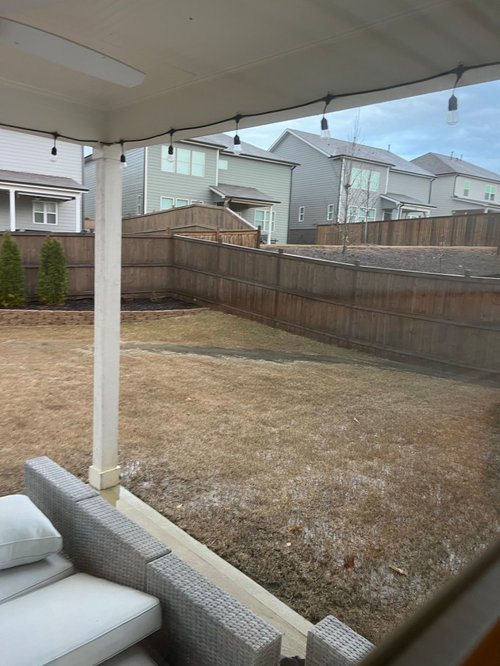
Looking for potential options on how to handle standing water in my back yard. Any time it rains, certain areas of my back yard gets super soggy and the water takes upsards or 3 to 4 days to fully absorb. I believe that a french drain would solve my problems, but looking for any advice on a cheaper alternative since i would likely need 150 feet or so of trench/drain material to go that route.


I was thinking of either:

A) pulling up the sod in areas where water sits and digging out some of the clay to mix in some better draining soil


or


B) planting a water-loving tree in that area to help soak everything up(don't

want a huge tree, though)


any other reasonably cheap and quick options i’m not thinking about? thanks!


Comments (15)

  • 3 years ago

    Another piece of info - i am in northern GA zone 7B

  • 3 years ago
    last modified: 3 years ago

    Bald cypresses and some other bottomland trees would have no problem -- my yard has standing water problems occasionally. That said, a drain could work, but you'd need a nearby area that's lower than the flood area (or a dug-out area with a large volume of loose rocks added). Here's my lot during a flood, but it doesn't happen very often to this extent.


  • 3 years ago
    last modified: 3 years ago

    a tree will not solve your problem ... and any tree that might have the most minimal impact.. you don not want in your yard ... huge damage prone weeping willows.. are not for your tiny yard .. they are park trees ...

    nor will you idea of changing the soil type..

    in extreme circs .... the water needs somewhere to go ... and by the looks of the swale.. it continues down thru the subdivision ...

    i all reality.. how many days a year do you have water there?? .. if its 2 or 3.. perhaps after extraordinary rains.. then i wouldnt really bother spending money to fix this alleged problem ...

    do a perc test.. and let us know the results.. this is the base issue here .. so we should start with some info about such..

    https://duckduckgo.com/?q=perc+test+garden&t=ffab&iar=videos&iax=videos&ia=videos

    ken

  • 3 years ago

    How about just bringing in some more soil to raise the ground level up and then reseeding. I've also filled in low areas by gradually adding an inch or so of soil at a time and raking it into the grass so that the grass isn't covered and smothered by the soil, weeks later add another inch of soil and so on.

  • 3 years ago

    There is a world of difference between trees and shrubs that will tolerate very wet soil or occasional standing water and those that can actually mitigate the situation! Very few trees will absorb or take up more water than they need to keep fully hydrated. This is not going to be down to plants to fix!

    Drainage issues in the garden need drainage solutions, not just plants. Corrective grading, a swale, a French drain are all possible solutions but need someone skilled in these issues in your area to decide what will work best in your specific situation. This is not a online or an easy DIY fix.

  • 3 years ago

    Thanks for all the info everyone. When we first built here there wasn’t much of an issue, but over the last year and a half we have been getting frequent rains(ultimately turning this into a more frequent issue).

    • Heard on the tree front(doesn’t sound like a good option after all)

    • I’ll do the perc test and see how that turns out. Not too concerned if my yard is soggy for a few days after a rain, but I am more concerned about the standing water that will eventually rot my fence posts(and horrible mosquitoes in the summer)

  • 3 years ago
    last modified: 3 years ago

    This seems to be an issue with many new housing developments. Especially in states that don't have a rigorous permitting process w/regards to stormwater management.

    North Georgia soils are pretty acidic: http://www.bonap.org/2008_Soil/pH20110321.png

    I'm NOT saying this is a magic bullet, but if the soil is high in 'acid cations', treating it with gypsum or calcitic (NOT dolomitic) limestone can change the structure of the soil to improve drainage. It worked amazingly well in a certain part of my garden. An area that was so super boggy that my tractor's wheels would sink, was transformed over the course of 2 years. It doesn't happen instantly.

    https://www.soilminerals.com/Cation_Exchange_Simplified.htm

    However, my lot had been farmland for 200 years before houses were put here and it was not extensively graded when they were, the overall quality of the soil was good and it was deep. That's one reason my trees have grown incredibly fast. (2 ft. in 2010, 50+ ft. now) In your case, it looks like your probably dealing with pure clay subsoil that was extensively graded. So YMMV, in the extreme. But there's no harm in trying. It will not bother your grass to have some lime applied, unless you tell me you've already been doing it.


    For such a small area, I would just try a 40 lbs bag of gypsum spread over the course of the a couple months, before each rain so it can slowly soak in. If you just dump that much at once, a lot of it will clump or run off.


    I have other past threads about this topic but don't have time to find them RN.

  • 3 years ago

    I second what krnuttle said, the first choice in these situations is always grading or installing drains. My suggestion is a backup plan to try if that's not feasible. The problem in situations like these, as he alludes to, is the fact the issues might be shared by several property owners, and the solutions might have to be as well. Hard to tell for sure from the picture but it looks like a lot of homes were placed on a slope without much thought as to where the water was going to go.


  • 3 years ago

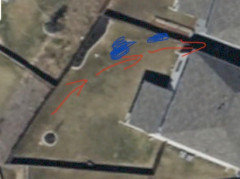
    Appreciate all the info, everyone! My lawn is going to be aerated in the next week or so and I am going to try the gypsum to see if that helps even just a little bit. If that doesn’t work, I’ll probably try the more effective, but time/money intensive options like swales or drains. Here is a somewhat blurry map of my back yard, the blue spots are the general areas of standing water and the red arrow is the direction the builder intended for the water to flow.


  • 3 years ago
    last modified: 3 years ago

    New houses anymore often have their yard "soil" (after contractors haul away/sell all the good topsoil) graded/compacted to near concrete hardness. Parents new house back in 2000 was exactly like that -- had to dig w/a digging iron to plant things.

  • 3 years ago
    last modified: 3 years ago

    Map, That is the way I pictured your drainage from the pictures. From the pictures it looks like the water flow is between the two houses. If so the only probably solution is a pipe type drain from the back yard to the front. It you do it you and your neighbor may want to place the inlet grating to the pipe on his lot, depending.

    If you go with the pipe you may also wish to adjust the contours of you yard to maximize the flow toward the entrance to the pipe to the street.


    The best time to work with water problems is when you have something to work with. The last big problem I had, I put on a rain poncho and boots and went out and cut a trench to get the water to drain properly. A couple of weeks later on a nice day I went out and cleaned up, smoothed up the area using my trench as a guide line for the slope

  • 3 years ago

    A swale at the top of the hill would slow water for plants and trees, should you want any, and a trench leading down to a dry well or pond, or another swale maybe.

  • 3 years ago

    I would use berms as well.