Software
Houzz Logo Print
alexh1000

Recurring chlorosis

3 years ago

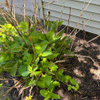
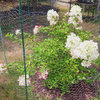
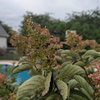
Hi, I have a couple of Nikko blues planted about 5 years ago. First 2 years great growth and blooms but last few years they have gone chlorotic. Last year was very bad, leaves almost white and one almost died. Flowers white! I tested ph with strips made for gardening many times and its about 6.5. Added lots of Epsoma soil acidifier and some ironite, magnesium and acid fertilizer for good measure last year and this year also but ph tests about the same. Good growth starting out this year, about half of the leaves are deep green but some are showing some chlorosis (with green veins) and then usually it worsens over time.


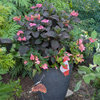
i also have a potted Hydrangea (smaller variety) and it also has some chlorosis. I repotted it this year using a fine bark product (its actually wood chips as far as I can see) because the existing potting soil was waterlogged.


i have Camelias in the same bed as the Hydrangeas and they do OK but not great.


I read that the Epsoma product is not very effective and the pros usually use Fertilome. Is this worth trying?


I read a good article on chlorosis by a PHD and he says if PH is not right its best to give up on that plant but the Fertilome comments says it's very effective and I can't imagine a cottage garden without Hydrangeas.


Thanks

Comments (3)

  • 3 years ago
    last modified: 3 years ago

    Sorry; a few clarification questions, alexh1000. Can you specify where are you located? What type of soil do you have there?

    Have you done a formal soil test before? What was the soil pH in the results for the hydrangea's location?

    Can you clarify which of all products you are referring to when you say you used Fertilome? Hi-Yield Soil Sulfur?

    I assume the Espoma product that you used is Espoma Soil Acidifier (also known as garden sulfur)?

    Amendment products are quite slow acting, in the order of weeks. When you apply the product per product directions and re-apply, do you water and then let a few weeks pass before testing?

    It was unclear if you are amending the soil one time only. Are you applying the amount directed and also religiously re-applying per the schedule frequency recommended in the product? If you do not re-apply per those directions, the soil will revert back to its original state. The amendments has to be applied correctly and consistently for as long as you have the hydrangea. For example, when I use Espoma Soil Acidifier in my mild winters, I re-apply every two months or so. As long as the soil does not freeze or is not covered with snow/ice, are you re-applying per schedule/amount?

    Is your soil rich in calcium, like in some places in Maine and Utah? Growing in containers may be easier and necessary there.

    Regarding the potted hydrangea, are you using an ericaceous/acidic potting mix for azaleas, camellias, blueberries? Or just pine bark?

    The PhD does not understand how much we like to have our hydrangeas! ;o)

    alexh1000 thanked luis_pr
  • 3 years ago

    Located in the SF bay area (zone 8/9) but its obvious lot was bulldozed when house was built and no topsoil, only extreme clay. I did do a professional soil test early on and I believe ph was 7.0 so this in combination with the clay was very limiting. So I finally realized that raised beds were my only recourse and I created those on almost all of my borders. However, the Hydrangeas and camelias are not in raised beds although I did amend with lots of compost and the hydrangeas have about 1' deep loose, dark soil with lots of organic matter. I take the soil sample near the hydrangeas using a slice from surface to about 6" down.


    i did not use Fertllome 10665 yet, it appears to be a fast acting liquid acidifier but one nursery owner commented that it should be used in concert with Sulphur for long term acidification as you said. I have been putting down the Epsoma soil acidifier for almost 2 years but not as frequently as you are recommending, I believe about 3 or 4 6lb bags total over 20 sq ft in the 2 years. I see that the recommended frequency is every 60 days, about 1 cup per plant. I will be more regimented in the application from now on, I did not think my soil ph was bad enough to warrant this much treatment but I really cant see what else it could be. I have also realized that my Camelias are not thriving as they have only grown about 2' in 5 years. I read that they will only thrive at about 6 to 6.5 ph.


    For the container, I have been using the bark/wood chip mix just because it works well for long term large pots as it breaks down so slowly but now I realize that for the hydrangea I need use a mix specifically for acid loving plants as you say and will procure that ASAP.


    BTW, i use a bagged steer manure for compost most of the time and the article I referred to warned against the excess use of manure because it is high in phosphorus which blocks iron so this is something I need to be aware of. I assume the hydrangeas did well the first 2 years because they were growing in the original potting mix that they came with.


    Thanks for your detailed response, I actually mail ordered those Nikko Blues about 5 years ago because I needed a variety to reach 6' height or so to clear a bench. Seems like no one sells those anymore and they were quite pricey.


  • 3 years ago
    last modified: 3 years ago

    Ah, if you are not using the appropriate amount at the suggested application frequency, I can see why the soil reverts back to its original state. Continue with the Espoma Soil Acidifier but use it correctly. The Fertilome 10665 can be put aside or used when you finally run out of the Espoma Soil Acidifier. Just be aware that Fertilome 10665 will have a different amount (dilute 2 tbsp in a gallon of water) and frequency of application (every 2-3 weeks). Liquids normally have to be re-applied often. Sometimes weekly or every two weeks, for example, so I do not buy them often, unless reeeeally needed.

    Camellias should do well in your area but, while there are always exceptions, camellias are extremely slow growers. Measure their growth in inches. Two feet in five years might be considered huge by some people. ;o)

0