Software
Houzz Logo Print
peppa_ivanova

Help with my Philodendron Scandals

3 years ago
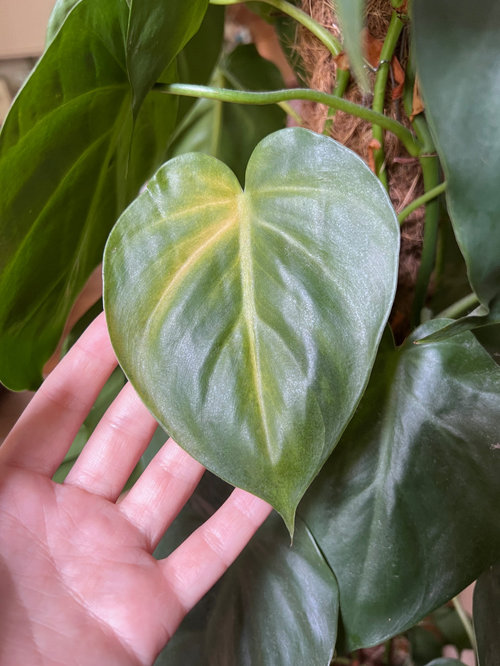
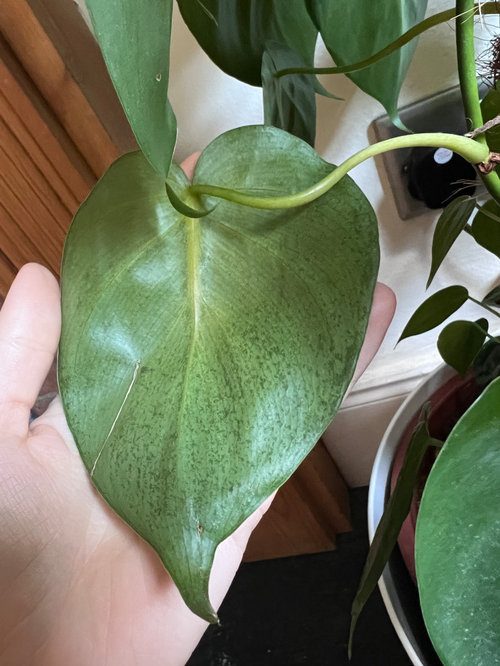
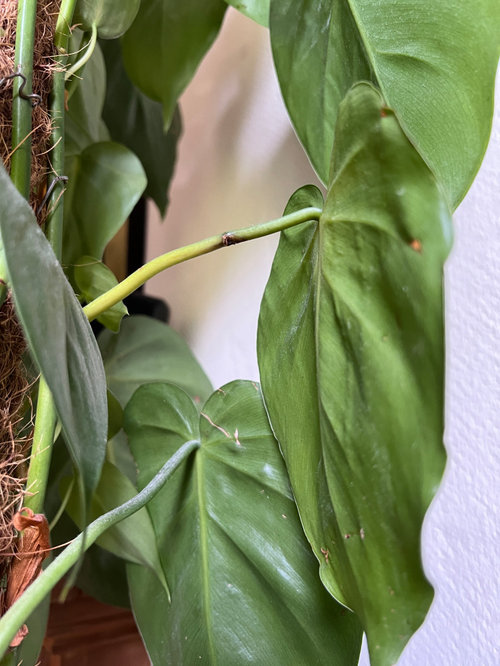
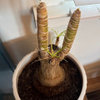
A few months ago, I noticed a few yellow leaves on the lower parts of my plant. I've asked a friend who works in a plant shop and was told it's normal shedding during wintertime. I have now come to notice quite a few of my plants' leaves are starting to turn yellow upper in the plant as well as some honeydew residue and tiny black dots(that in texture seem like soil).Additionally, a few of the leaves seem to be punctured in the stem. I thoroughly inspected for any pests, but I could not find anything. My friend suggested it might be scale, but since I cannot actually find any pests anywhere on my plant, I'm quite puzzled. If anyone has any suggestions, I would appreciate your help. I have had my plant for 3 years now, and this is the first time I'm having issues with it.


Comments (5)

  • 3 years ago

    scale are immobile... they dont move .... so if you cant find some.. than they arent the issue


    im not sure i see anything wrong with this plant.. based on these pix.. color seems washed out.. but im blaming that on the camera.. or the operator...


    i hope it spends time closer to a window.. if its always in the middle of the room.. its washed color could be blamed on lack of proper light...


    but that said.. it still looks like a very happy plant..


    whens the last time you repotted.. and the last time you fert'd?


    ken...


  • 3 years ago

    Hi Ken, thanks for your comment.


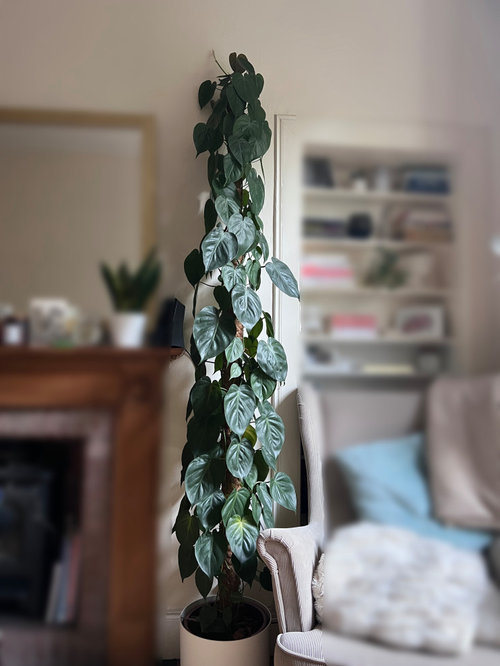
    The plant is about a 1.70-80meters away from a large window. I moved about 5 months ago and unfortunately, this flat is not as bright as the previous one. I believe this to be a good spot for it as it is not in direct sunlight but still closer to a window.


    Its been repoted just once, quite away ago, as I’ve been told philodendrons like to be camped and dont require much space. Last time I fertilised was mid April.


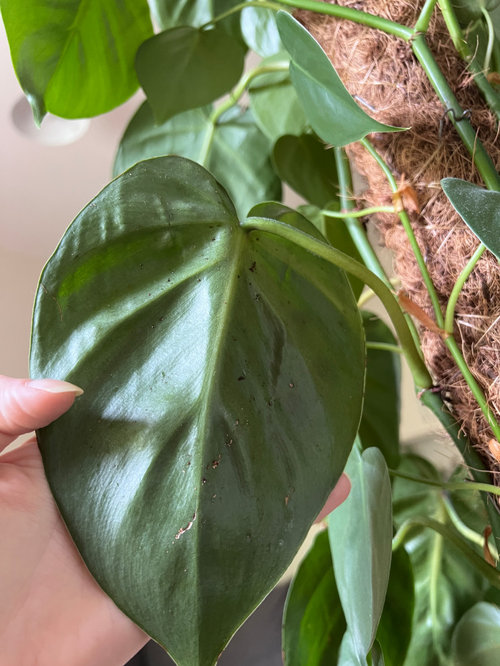
    Ive attached more photos, plus what I believe to be a healthy leaf for comparison. Ive also noticed some damage on the new growth.


    thanks for your suggestions.


    Peppa


  • 3 years ago
    last modified: 3 years ago

    @ken_adrian Adrian MI cold Z5 If scale is (are?) immobile, how do they get to where they are going? They don't just appear. Scale goes through a pre-adult 'crawler' stage, during which they are both mobile and most vulnerable to insecticides. Only when they reach the adult stage do they attach themselves to a feeding site and stay put.


    @Peppa Ivanova The plant is showing some symptoms of oedema, which is most often driven by over-watering and potentially exacerbated by other cultural conditions like cool temps, high humidity, low light levels, loss of foliage. More about that below.

    That you didn't mention anything about how you fertilize, what you use for fertilizer, and when you last provided the plant sort of makes nutrition the elephant in the room. There is a strong possibility that, if you haven't been keeping up with the plant's nutritional wants, that the plant is robbing older leaves of the mobile nutrients they contain (nitrogen, phosphorous, potassium, magnesium) to support new growth, and shedding the old leaves from which the nutrients were taken - something very common. Old growth is also shed as a consequence of root congestion. Too, no plant likes or prefers to be rootbound. It is stressful for the plant and from the plant's perspective it's never a good thing.

    The idea that this or that plant likes or needs to be rootbound stems from the idea that a pot full of roots holds much less water than one with plenty of soil unoccupied by roots, and less water in the pot means less chance of over-watering. Unfortunately, when choose the least of 2 evils we still end up with a limiting factor. It's much better to choose and use a medium that allows you to water to beyond the point of full saturation without the need to worry you're over-watering, and poot-prune/ repot regularly to ensure finer roots with room to run. Click Me for More about the Rootbound Myth

    I'll look forward to what you share about fertilizing.

    Oedema

    Oedema (aka edema) is a physiological disorder that can affect all terrestrial plants. It occurs when the plant takes up more water than it can rid itself of via the process of transpiration. The word itself means 'swelling', which is usually the first symptom, and comes in the form of pale blisters or water-filled bumps on foliage. Under a variety of circumstances/cultural conditions, a plant's internal water pressure (turgidity) can become so high that some leaf cells rupture and leak their contents into inter-cellular spaces in leaf tissue, creating wet or weepy areas. Symptoms vary by plant, but as the malady progresses, areas of the leaf turn yellow, brown, brown with reddish overtones or even black, with older damage appearing as corky/ scaly/ ridged patches, or wart/gall-like bumpy growth. Symptoms are seen more frequently in plants that are fleshy, are usually more pronounced on the underside of leaves, and older/lower leaves are more likely to be affected than younger/upper leaves.

    Oedema is most common in houseplants during the winter/early spring months, is driven primarily by excessive water retention in the soil, and can be intensified via several additional cultural influences. Cool temperatures, high humidity levels, low light conditions, or partial defoliation can individually or collectively act to intensify the problem, as can anything else that slows transpiration. Nutritional deficiencies of Ca and Mg are also known contributors to the malady.

    Some things that can help you prevent oedema:

    * Increase light levels and temperature

    * Monitor water needs carefully – avoid over-watering. I'd heartily recommend a soil with drainage so sharp (fast) that when you to water to beyond the saturation point you needn't worry about prolonged periods of soil saturation wrecking root health/function. Your soil choice should be a key that unlocks the solutions to many potential problems.

    * Avoid misting or getting water on foliage. It slows transpiration and increases turgidity.

    * Water as soon as you get up in the AM. When stomata close in preparation for the dark cycle, turgidity builds. If you water early in the day, it gives the plant an opportunity to remove (for its own needs) some of the excess water in the soil.

    * Put a fan in the room or otherwise increase air flow/circulation. Avoid over-crowding your plants.

    Peppa Ivanova thanked tapla (mid-Michigan, USDA z5b-6a)
  • 3 years ago

    Hi Tapla,


    Thank you very much for your comment; all the information you shared was very helpful.


    I water than plant once a month. However, I don't keep a regular schedule of when I water it, so sometimes more time would go by. Of course, I check the soil beforehand. It's close to a window which I often leave open to refresh the air in the room for at least an hour in the winter, and in the past few months, it's open almost all the time. I wouldn't say it is a humid room, however, I live in Scotland, so some humidity is inevitable (although this has never been a problem in the past). So I would assume the issue lies with the lack of light in the room. As I mentioned, I moved to a new flat about 4 months ago, and it's facing Northwest. The old flat was facing southwest, however, the plant was on the opposite wall of the window.


    I bought the fertiliser from the same shop I bought the plant, it was recommended by the plant shop lady. Unfortunately, I can't find it online, and the sticker peeled a while ago, however, from memory, I remember it's an organic seaweed plant food, and I believe I was told it's rich in nitrogen. I've been using it ever since. I used to give the plant fertiliser every time I water it, however, I've been told this is incorrect, and the plant should be fertilised only once per season, excluding winter. I've never questioned the fertiliser as it was recommended by the plant shop lady, who seemed knowledgeable. Would you suggest a new one if you reckon that's also an issue? I forgot to mention I never water the soil itself. I water inside the pot, and it gets absorbed (pot in a pot kind of situation). I lost a plant to fungal gnats, and I water all of my plants that way.


    I'm terrified of reporting it as I've been told Philodendrons are quite sensitive to reporting and don't like having too much space in their pot, which might lead to root rot. I'm worried it might complicate its condition even more. But if that proves to be the problem, I will probably go to the nearest plant shop and ask them to help me as they offer such services. I've also been told if I am to report it to be in the same pot, just new soil.


    Some additional information. Just before I noticed the yellowing leaves, I took cuttings for propagation from the new growth, and I've noticed the chattings also show similar signs and the main plant.

    I look forward to your advice.


    Best wishes,

    Peppa


  • 3 years ago

    I water the plant once a month ....... However, I don't keep a regThat would make sense as low light in combination with the excess water in the grow medium would certainly increase the likelihood and severity of the oedema disorder.specially if after a month the hint you get that it needs water isn't wilt, you're seriously over-watering or the the medium holds too much water. You really don't want to be in a situation where you have to battle the grow medium for control over your plant's vitality (health). There are 2 ways to effectively limit the amount of water a grow medium can hold. The first is to use a grow medium with a VERY large fraction of coarse material (like pine or spruce bark); and the second is by using simple science to trick all or most of the water into leaving the pot. When you get to the point where you know how to make a grow medium that allows you to water as much as you want w/o the plant paying an over-watering tax in the form of unrealized potential or root diseases; or, you can trick excess water into leaving the pot, it's a game changer. It will significantly increase your ability as a plant nurturer and will increase the amount of personal satisfaction you get from your growing experience.

    This is one of the two types of grow media I use.

    The odd items are for size comparison.

    I would assume the issue lies with the lack of light in the room. That would make sense as low light in combination with the excess water in the grow medium would certainly increase the likelihood and severity of the oedema disorder.

    I remember it's an organic seaweed plant food, and I believe I was told it's rich in nitrogen. Would you suggest a new one if you reckon that's also an issue? I don't know of any seaweed emulsion that would be appropriate as a stand-alone fertilizer. Many are missing several nutrients and more often than not the macronutrient content (N+P+K) are very low. On another thread, I was helping a lady from Germany with her fertilizing. In her search for a fertilizer similar to what I use, she discovered a fertilizer called "PLNTS Nutrition". It is a complete fertilizer in an appropriate ratio with NPK %s of 6-2-4. It has all nutrients essential to normal growth. Find it at https://plnts.com/en/product/plnts-nutrition-500ml It is a complete nutritional supplementation program from a single container.

    I used to give the plant fertiliser every time I water it, however, I've been told this is incorrect, and the plant should be fertilised only once per season, excluding winter. I've never questioned the fertiliser as it was recommended by the plant shop lady, who seemed knowledgeable. No one can offer meaningful advice re what kind of intervals you should fertilize at unless they can evaluate the grow medium you use and take into consideration your watering habits. If they try, it's a good bet they don't know much about plant nutrition. If a grower is watering correctly, so the entire soil column gets well-wetted and at least 20% of the water applied exits the drain hole, most of the fertilizer used will be flushed from the medium and through the drain hole. That is the proper way to water if one wants best results. Because watering intervals can change drastically with the seasons, it makes most sense to fertilizer about every 4th time you water ...... again, this is if you are watering correctly. This brings us back around to the right type of grow medium allowing you to water correctly which makes fertilizing so easy anyone can do it with great results. To keep track of who (which plant) needs fertilizer, drop a marble, button, other item in the pot when you water. When it's time to water the 4th time, pick up the items and fertilize, and start the cycle over.

    I forgot to mention I never water the soil itself. I water inside the pot, and it gets absorbed (pot in a pot kind of situation). Where I mentioned flushing the soil above, the reason is two-fold. One, it keeps the level of total dissolved solids (salt) in the soil low. High levels of salt limit water uptake and nutrient uptake as well, given nutrients must be dissolved in the water taken up by roots. The second is it prevents a buildup of certain nutrients (which depends on the amount of those nutrients in the fertilizer you use. Too much of nutrient A can limit uptake of nutrient B and perhaps C and D as well. A high level of phosphorous limits uptake of calcium, potassium, copper, zinc, and especially iron, which is why bloom-booster fertilizers shouldn't be used for containerized plants. Your practice of watering from the bottom ensures that ALL dissolved solids (salts) from tapwater and fertilizer solutions remain in the soil, causing limited water/nutrient uptake and potentially/eventually reversing the flow of water into cells. A high level of salts in the soil will eventually PULL water from plant cells by the same mechanism that curing salt pulls water from meat cells, like ham/bacon/sausage.

    I'm terrified of reporting it as I've been told Philodendrons are quite sensitive to reporting and don't like having too much space in their pot, which might lead to root rot. I'm not surprised you're anxious about the thought of repotting or even doing anything to mess with roots. At least 99% of hobby growers have what seems to be a natural fear of anything having to do with roots; however, that idea is unfounded. I've done well over 5,000 full repots with bare-rootring and root pruning, and the results are many, many times more effective than potting up a pot size. One of my typical repots in 3 images:


    Ready to back into a pot ^^^

    I'm worried it might complicate its condition even more. But if that proves to be the problem, I will probably go to the nearest plant shop and ask them to help me as they offer such services. I've also been told if I am to report it to be in the same pot, just new soil. Repotting is rejuvenating, and there is a scientific reason for that which has to do with cutting either roots or shoots back closer to the most vigorous part of the plant - the root to shoot transition area where the stem turns into roots. My bet is, the lady at the plant shop will be just as concerned about repotting as you, but that is because she's likely never been exposed. Once someone learns how to do a full repot (instead of potting up), they'll never go back to the half-measure (potting up). It's that much more effective.

    Just before I noticed the yellowing leaves, I took cuttings for propagation from the new growth, and I've noticed the cuttings also show similar signs and the main plant. that's to be expected because the nutrients deficient in the parent plant will also be deficient in the cutting, which typically has an impact on success rates.

    Al


Sponsored
Peabody Landscape Group
Average rating: 3.5 out of 5 stars8 Reviews
Columbus' Reliable Landscape Design & Contracting