Software
Houzz Logo Print
bill_mn_z3b

Ilex Verticillata bloom question.

3 years ago
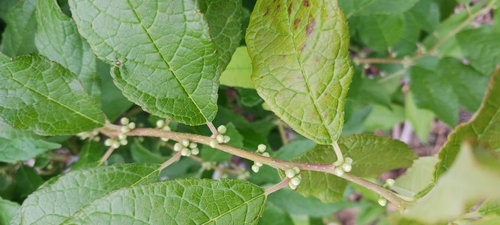
I noticed this last year but thought it might be because the plants were newer seedlings from the spring before.


The Male blooms appear to start earlier than the Female plants.


I'm supposed to have the right male/female plant combination with 'Southern Gentleman' and 'Winter Red'.


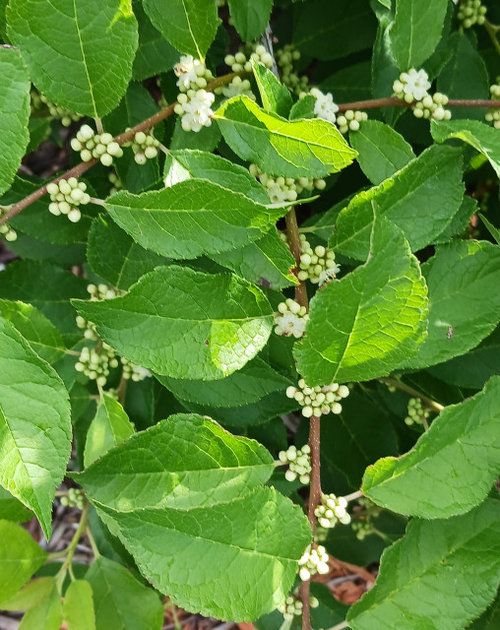
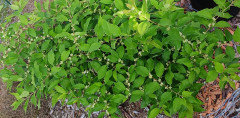
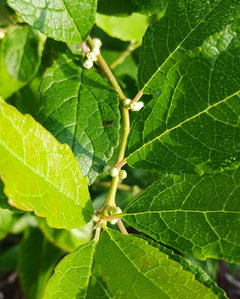
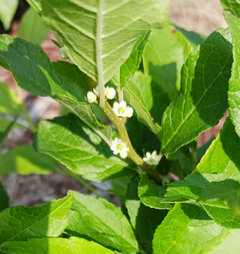
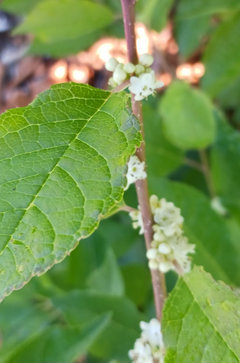
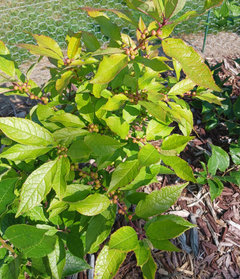
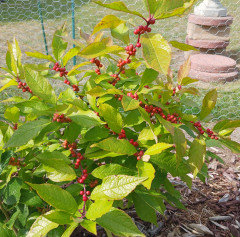
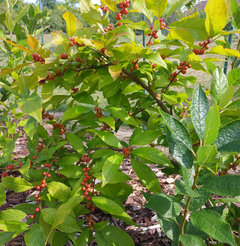
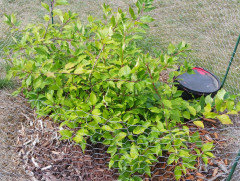
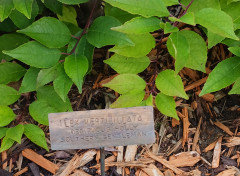
Below are pictures of the M/F plants taken today. They appear to be at least a week apart as far as flowers are concerned.


Female (Winter Red):

Male (Southern Gentleman):


Is this going to be a problem where pollination is concerned? Or does this happen naturally?

I didn't get any berries last season but expected that bc documentation told me not to expect any the first year.

TIA

bill

Comments (26)

  • 3 years ago

    Wow, thanks! Those berries look spectacular.


    I chose this particular species because even here, a June bloomers chance of frost or freeze would be highly unlikely.

    I was thinking too that there would be overlap at some point during bloom time.

    I asked the grower, but he didn't know as he only works with seedlings and doesn't grow them up.


    Been dry here too but after 5 days of 90's and sun, the soil felt cool and moist under the mulch and the leaves weren't wilted. We managed to pick up over an inch of rain the last few days, but the rain has been scattered with some people getting 2-3" and some very little.


  • 3 years ago

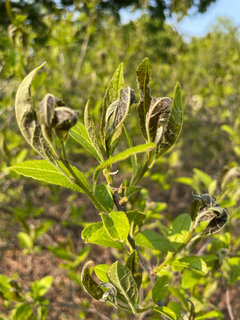
    That's right, they bloom late enough that there's virtually no chance of direct freeze damage to the flowers, but I'm thinking a late spring freeze may do enough damage to the twigs that it could affect the abundance or timing of flowering. The two varieties may also vary slightly in their susceptibility to freeze injury to the twigs. Frost/freeze injury to the new foliage has been relatively common on mine - probably at least one out of every three years, if not more often.

    Winter Red leaves with frost damage 5/18/23


    BillMN-z4a thanked arbordave (SE MI)
  • 3 years ago
    last modified: 3 years ago

    Yes, that's always a possibility here.

    I can see where yours would be further ahead than mine, leafing out.

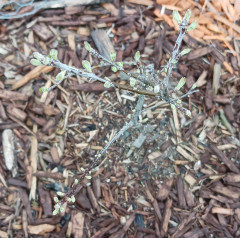
    Here's my I.v. on 5-13-23: They were slow leafing out. I figured they were just being zone hardy, z3 plant.


    5-23-23: By this time killing frosts are rare but possible.


  • 3 years ago

    "I can see where yours would be further ahead than mine, leafing out"

    Yes, mine leafed out earlier than yours, but no flower buds are open yet on mine (WR or SG), so I did some checking on the growing degree days (GDD) at your location vs mine. It's interesting that on 5/13/23 my location was ahead of yours at 204 GDD (base 50) vs your location at 123 GDD. But as of yesterday (6/25/23), your location was at 913 GDD vs my location at 740 GDD.

  • 3 years ago
    last modified: 3 years ago

    Dave, you were warmer than us in April. We were cold days and freezing at night until end of April.

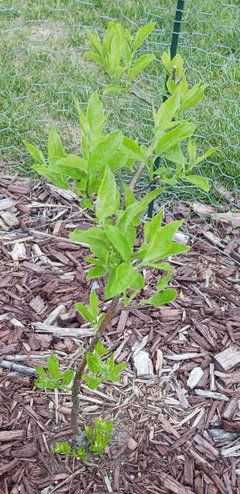
    My yard 4-21-23:


    In May we finally started hitting the 60's and by the second week we had high 70's and even some low 80's. That's the only reason mine started leafing out by 5/13.

    The second half of May was one for the books with high 70's to near 90's most days.

    We never did get any late frosts or freezes in May either so that helped.

    eta: June was a cooker all month.

    Here's what my Ilex looked like last year in May, 5-31-22. Just starting to grow. I would say this is more 'normal' for us most years.


    I used to figure growing degree days back in the day growing corn, but that seems so long ago now. ;-)

  • 3 years ago

    6-27-2023:

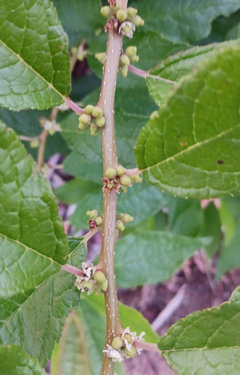
    The male is about 5-10% blooming, but the female flowers are beginning to open.

    Male:

    Female:

    It looks as though there will be some 'Lap'.

    I don't see any aerial pollinators. Just a few small ants on the male flowers.

    The male is 35 ft. away from the females so I hope I don't have them too far apart.


  • 3 years ago

    Just for the record.

    The tiny pollinators were buzzing around in the hundreds around the male plant today.

    They were too flighty and too fast to sit still for pictures.

    None around the female plants yet.


  • 3 years ago

    Surprisingly, the female plants began to flower today (6-27). And it's not the plant put in 2 years ago, but the replacement seedling just planted spring of last year. Game on! ;-)

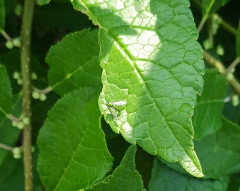
    I can see something very small flitting around the females now. But the only thing I could see that landed was this fly of some sort but don't know what it is or if it's a pollinator.


  • 3 years ago

    I think that is probably a "long-legged fly" in the genus Condylostylus.

    My Winter Red plants started flowering several days ago, but my single Southern Gentleman had its first bloom just today (6/30/23)

    It's possible that because my SG was planted more recently and is not as well established as the Winter Reds may account for the difference in timing.

    BillMN-z4a thanked arbordave (SE MI)
  • 3 years ago
    last modified: 3 years ago

    Thanks Dave!

    My SG is swarming with pollinators today but the WR is not, even thought quite a few blooms are open. I do see a lot of small ants on the WR flowers and wonder if that's interfering with the pollinators wanting to land on the flowers?

  • 3 years ago

    7-4-23:

    Just an update:

    Yesterday I saw pollinators working the female flowers. The ant didn't seem to dissuade them and there were less ants than there was the other day.

    Flower petals have fallen off many of the female flowers leaving the small berry like part in the center but they haven't swollen yet so I can't tell yet if they have been pollinated or not.


    The males appear to be near the end of flowering but still had more pollinators working on them than the females.


    There's a nice steady rain coming down today. I don't know if that will end or affect the pollination for this season. Did my best. :-)

  • 3 years ago

    7-6-23

    One observation; while the female plants are nearing the end of bloom time. the male plants still have new bloom buds that are just opening. So, yes, a good overlap on available pollen for the female plants. I knew that Nature 'got this'. ;-)


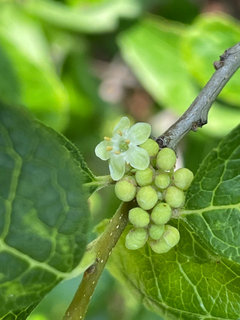
    Female branch this AM.

    Male branch:


  • 3 years ago

    7-20-2023:

    Remeasured and the male plant is 43 ft. away from the females.

    Apparently, the ants didn't hurt anything either. Even the second-year seedlings came through with berries. :-)


  • 3 years ago

    8-10-2023:

    Nothing dropped with mainly hose water. It's rained finally.


  • 3 years ago

    8-30-2023: update.

    Berries are still attached. I only water once a week trying to let the plants harden off.

    But just when I think they're done growing, more shoots pop up from around the base. :-\

    No rain forecast for the next 10 days so maybe I can get a handle on this.

    It might be that it's been so hot, they just want to keep putting out new growth, idk.

    Starting to see some color in the berries.

    ;-)

  • 3 years ago

    Thanks for the update. Very nice berry crop for such a young plant.

    BillMN-z4a thanked bengz6westmd
  • 2 years ago

    9-11-2023:

    The story behind these, I bought 1 male and 4 female plants from Reeseville Ridge Nursery in 2021. I planted them but they were very slow breaking bud and 3 of the females died.

    Darrell at RRN knew some of that batch failed and replaced them.


    2022, the male and female that survived each had a few flowers, but none pollinated on the female.


    2023, Second year for the new seedlings, so I never expected any berries but figured the larger plant from 2021 might have a few.


    Turns out, all three of the females flowered profusely and pollinated well.


    ///////

    And as an aside:

    As most of you know, I started with a clean slate (read bare, open yard from both north and southerly directions) 11 years ago. I've been working all long to populate this yard and make it nicer to live here.


    I wanted these to add a hedge of sorts and was delighted to learn that Ilex genus could be grown here.


    I've added a shed near the opening between the houses, which helps baffle the wind some and some spruce trees out front. Even my neighbor across the street planted a few balsam firs to help. It's a process but anything I can do along these lines helps and it's been fun figuring all this out. :-)


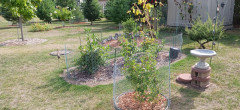
    Below looking NW: The opening between the houses is my 'Wind tunnel' and the only place I have access to the back yard with a vehicle, so I can't close it up completely. ;-)

    Ilex verticillata (bottom center), slowly filling the 10ft. long bed.

    It's a plant that gets quite tall and brushy and should add some 'Winter interest' and we do have Cedar waxwings and we see them occasionally during the wintertime.


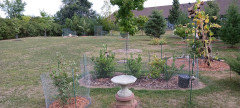
    Other direction: Looking SSW. More trees I planted earlier in my years here.

    SSE: (looks further to the back in the picture than in real life, <100 ft.?).

    ESE:


    Yes, it's been improving noticeably. More shade in early morning and late afternoon. More natural beauty as the plants grow. In another 10 years, I can give you a progress report.

    ;-)


  • 2 years ago

    12-15-2023:

    Just a follow-up on the Berries.

    It's been an unusual (for us) season, as far as temperatures go. After our 3" of snow in late October, it has been a roller coaster ride with highs in the upper 20's to low 50's and lows from near single digits to high teens (52df yesterday with some nights above freezing).

    Probably the freeze/thaw that's been happening caused the berries on the plants that were planted spring before last to go mushy(?).

    We haven't noticed any Cedar Waxwings eating but we do have that type of bird residing here in the wintertime.


    It's much less noticeable on the older plant that was planted a couple of years ago.

    Could be the younger plants just haven't ripened as well? but nbd, this kind of weather is not normal for us. Although the new USDA zone hardiness map has upgraded my area to Z4A,


    Raining as we post with inches of wet, slushy snow forecast for tonight (First real precipitation here in over a month).

    Forecasters say no chance of a white Christmas this season with temps in the high 30's all next week. The yard exhibits an eerily strange appearance for this time of year.

    ;-)

  • 2 years ago

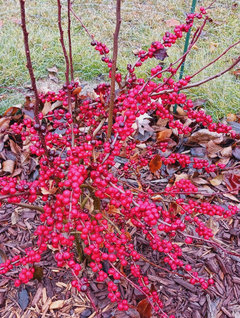
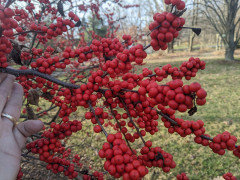
    Here's the big deal: 'Winter Red' Winterberry Holly going full tilt today in a public landscape, Louisville KY.


    This is what this selection aspires to...


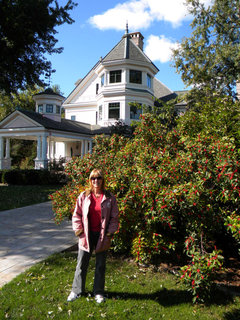
    The only way 'Winter Red' can look better? include your hot spouse in the pic...


    BillMN-z4a thanked ViburnumValley central KY Bluegrass z6
  • 2 years ago
    last modified: 2 years ago

    Thanks VV!

    Nice to see into the future. ;-)

    I'm satisfied, so far. considering two of my female plants were started from seedlings a year ago.

    They'll still need to grow some so browsing won't be a big deal.

    This is only the third season for the male plant but it's doing better than the females. I'm thinking that's because the males don't use up energy producing fruit.

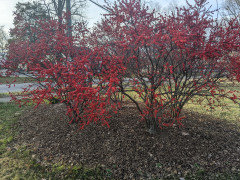
    8-31-2023
    Single plant.


    Sorry, no women in the pictures. :-)

  • 2 years ago

    Well, no wonder those plants aren't busting out of the ground...

    BillMN-z4a thanked ViburnumValley central KY Bluegrass z6
  • 2 years ago
    last modified: 2 years ago

    2-3-2024:

    FWIW:

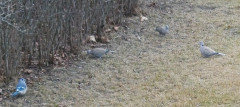
    I saw a Blue Jay perched on the low fence surrounding the winterberries eyeing up the overripe berries and a few Ring neck doves hanging around the yard yesterday.

    From what I've read, birds find the berries more palatable once they've went through a freeze/thaw cycle, supposedly sweetening them up.

    Streptopelia decaocto (Turkish dove) are a non-migratory Eurasian introduction but still nice to see such a docile bird scavenging for food here when they generally only exist further west and south in Minnesota.

    Only picture I could get without scaring the daylights out of them:


    :-)

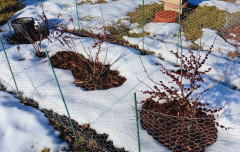
    eta: Winter red wb: 2-1-24:
    (not much 'winter interest' this season).


    eta: Not Streptopelia Capicola but Streptopelia decaocto, my bad.

  • 2 years ago

    "From what I've read, birds find the berries more palatable once they've went through a freeze/thaw cycle, supposedly sweetening them up."


    I've always wondered why the birds never bother with the berries right after they ripen -- they often linger on the bushes for a while until the birds go after them. This probably explains it.

    BillMN-z4a thanked porkchop_z5b_MI
  • 2 years ago
    last modified: 2 years ago

    I was a bit concerned when I saw my berries turning dark and wrinkled but when I squeezed one between my fingers, it was very juicy inside, almost good enough to eat but I know better. ;-)

    We'll see how long it takes before they disappear.

  • 25 days ago
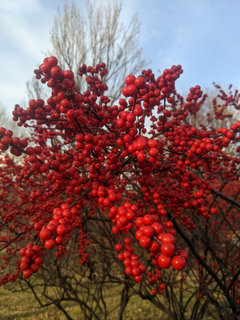
    8-15-2026:

    I'm still not seeing much eating my winterberries.

    It could be I've had mine fenced with chicken wire.

    This season I may let them go unprotected bc they're large enough to sustain some damage and survive (I think).


    One interesting event I noticed this season.

    My female plants appeared to have quite a bit of branch dieback, which could've been caused by my April thaw, the consecutive freezing days a week later.

    BUT, once the season got going, right near the base of the dead branched, new shoots sprouted and grew more than enough to replace the dead branches.

    Once I removed the dead stuff, you can't hardly tell anything happened.

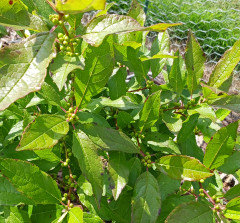
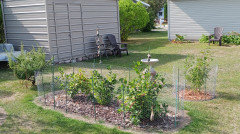
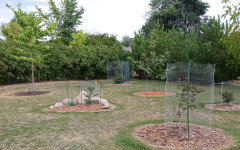
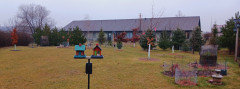
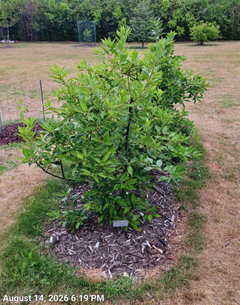
    Ilex verticillata 2026: (male plant upper right, 43 ft. away).

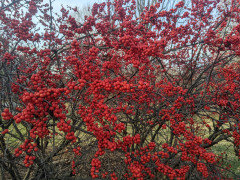
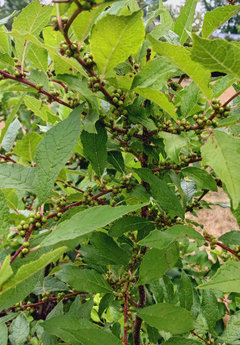
    Appears to be lots of berries after a very dry summer (note grass color) and I only watered these once (we did have a couple of rains).

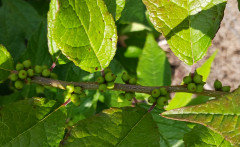
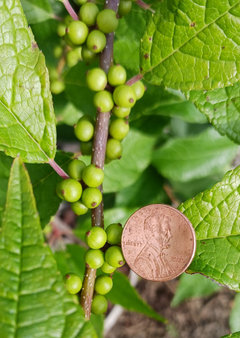
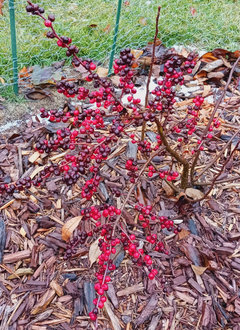
    Berries end of July: