Software
Houzz Logo Print
webuser_286430874

Limelight Hydrangea/Texas

3 years ago
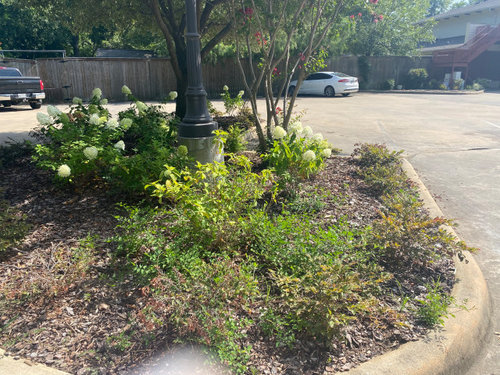
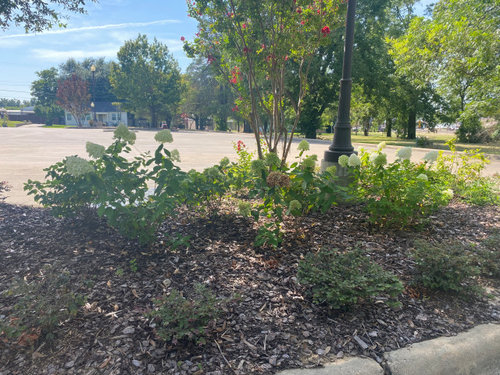
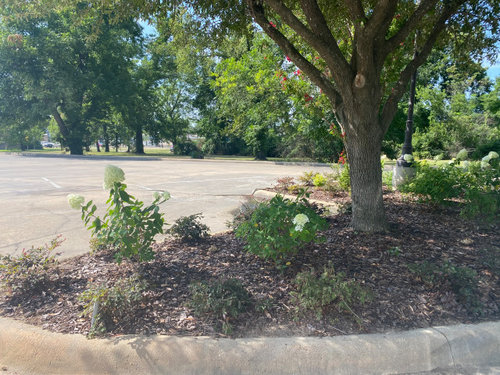
I recently planted this bed with 12 Limelight Hydrangeas this past April. They seem to be doing alright, despite an irrigation pause which gave them a bit of stress recently. (They’re normally watered every other day) They were all 2 gallon sized shrubs, with all but one having already been pruned back by about 1/3 when I recieved them. They receive an hour or two of morning sun, then dappled shade from the oak throughout the day -then several hours of afternoon/evening sun again. They were fertilized with Hollytone & mulched with pine bark as well. However, one of them seems to be struggling a bit & has yet to bloom. It’s also the same one that was pruned back significantly less. I’m thinking it may be because of those dry conditions from the irrigation issue (also no heavy rain in weeks now) & the heat we’ve had here in East Texas. Does anyone have any ideas of what to do? I increased their watering time this week & am considering applying a second round of Hollytone & compost next week.


Also, would y’all consider the rest of the hydrangeas to be doing well for their first year in the ground? Most shrubs planted here in our hot & humid climate seem to just “do alright” in the first year, but I want other opinions. Lol. We live in East Texas (Zone 8a).


Comments (8)

  • 3 years ago
    last modified: 3 years ago

    From afar, I could not detect subtle symptoms of any glaring problems except for the one without blooms. Its foliage in the picture looks to be too yellow. I would normally not expect the problem to be caused by interveinal leaf yellowing as East Texas soil is usually acidic but, since here in the Dallas/Fort Worth area it is alkaline, that degree of yellowing popped right away. There are two flavors of yellowing: interveinal leaf yellowing and complete leaf yellowing. Too far to identify it. Maybe it is just the camera and sunlight but the others looked green.

    You may just want to confirm that the soil is acidic using a soil pH meter from just about any plant nursery or HD/Lowes. Alkaline soil can cause the leaf veins to remain green but the space in between turns light green, yellow or even white. To correct interveinal leaf yellowing, you can amend the soil forever using some garden sulfur but, when testing the soil acidity in spots, try to test the area where the roots are probably growing into your garden soil instead of testing the area with the original potting mix which is normally not alkaline. To help with that, imagine the circumference of your original plastic pot around the base of the stems and test soil samples beyond the circumference.

    Complete leaf yellowing may be caused by: too much direct sun exposure (panicle leaves cannot tolerate full sun in Texas: the leaves will not be pristine by the time our sub 100°F temperatures arrive in September so the leaves may need yet more late afternoon shade regularly... or one-time only this summer); the soil is too wet (maybe the roots are therefore oxygen deprived; cannot absorb some nutrients; etc.) in that spot; or the soil is not draining well there. You can also try to research it has sunk in the planting hole hole and is now lower than the surrounding soil.

    Panicles also like to show their feet and drop foliage by yellowing due to the typical summer heat stress but that is usually limited to an area close to the crown/base of the stems; some of the leaves there would completely yellow out and drop.

    A word of caution: I have not tried planting Limelights here in Texas, only the more compact Little Lime, as Limelights tended to get rather large 10 to 12++ feet tall in the New Hampshire area at maturity (10+ years), though plant labels still claim they get as low as 6 feet tall and wide. So, I am not sure just how tall and wide they will get down here in Texas. Thus, monitor their size as they may be too close to other greenery/tree/posts in the picture. The rather shallow (4") root system will be quite vigorous and may compete for water with other plants/trees.

    As for watering, I maintain 3-4" of organic mulch (no rocks), test the soil almost daily in the summer mornings and water the soil as soon as the soil is almost dry at a depth of 4" in spots under the canopy. Try to use enough gallons of water to ensure you use enough water; the soil should be moist at a depth of 8" after letting the water percolate. If the soil at a depth of 4" is already wet before starting to water, I skip watering. Aim to keep the soil as evenly moist during our summer months of mid-May through September, not dry nor wet.

    Sometimes, you have to give a pass when they fail to bloom in year 1. I would not be concerned as it has happened to me with other panicle hydrangeas in their first summer.

    I assume there are no nutrient deficiencies or toxicities in the soil there or debris but you may want to run a soil assay if you wish.

  • 3 years ago

    I also can't make out details. Could it have something to do with either the foundations for the lamp post or the square thing in the foreground of the first picture? Could there be concrete or hardcore under the surface?

  • 3 years ago

    Thank you for the quick responses.

    I will post some close up pictures asap, as these were sent to me yesterday evening as an update. I don’t believe it’s a pH issue, but I will likely run a test this coming week to double check. The planting doesn’t seem to have settled beneath the surrounding grade either, & they were all planted fairly above grade. As far as foundation issues surrounding the lamppost, I didn’t find any obstructions when planting this spring. In fact, the client had a very large & leggy Loropetalum that we removed from right near that same spot. Ironically, I believed this was the best dirt in the entire bed because of how loamy it was (maybe it wasn’t lol).

    Anyways, I will post additional close up pictures of the hydrangea later. Like I said, I don’t usually plan on shrubs planted in the first year to be particularly outstanding, but not a single bloom & rather stunted growth is less than ideal -especially for a panicle hydrangea. I’m predicting it is likely because of dry conditions & possibly too much sun for a first year (as that area gets the most overall). I’m sure we can figure it out…

  • 3 years ago

    Just a small clarification but panicle hydrangeas are not at all fussy about soil pH. Unlike many other hydrangea species, they do not require acidic soils but will grow and flower happily in neutral as well as slightly alkaline soil conditions. They are also not heavy feeders and I would skip a second application of fertilizer on any stressed plants. Just water deeply and thoroughly as needed and mulch well to insulate the soil and the shrubs' root systems against heat and moisture evaporation.

  • 3 years ago

    11 out of 12 isn't too bad for a parking lot planting. To me, it also looks like some of the other type plant that is near the failing Limelight look to be struggling as well. Got drier than the rest? Perhaps there was an issue with that particular plant from the get go? More rootbound than the rest? When I have plants fail can't always figure out why.

  • 3 years ago

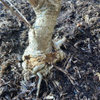
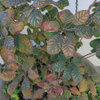
    So here’s a picture of the hydrangea up close. It just seems generally stunted compared to the others. -The 32 Loropetalum (Purple Daydream) also haven’t done the greatest, but they’re making it alright aside from a few. Newly planted Loropetalum always seem to fade from that deep purple into an olive green in our hot summers. They’ll likely spring back when cooler temps arrive.

    If I remember correctly, this particular hydrangea was slightly root-bound & I broke it up some during planting. I also remember it being the most well developed one of the bunch leafing out at that early stage in April. And again, it also had received less pruning than the rest.

    I’ve increased watering. What do y’all think about spreading some cotton burr compost next week?

  • 3 years ago
    last modified: 3 years ago

    It does not look that bad to me. If it was root bound and you disturbed the roots to address the issue, that would reduce the amount of vigor until the root system sufficiently recovers. It has only been 3 months since planted so it has not been long enough for the roots to grow much. Give it a pass. It will have to catch up with the others later. I do not fertilize hydrangeas in the summer in Texas. Temperatures of 100-115F are stressful times when you only need to mulch, shade, test the soil and water. My last fertilizer application is when temperatures recede and stop hitting the 100s in September.

    The foliage up close does not look sunscorched or chlorotic so I see no further action needed.

  • 3 years ago

    Luis, thank you! Will do. I will add some more pine bark mulch next week & definitely post updates.