Software
Houzz Logo Print
helpmehelpthishouse

what’s under this carpet?

Hi! We are debating tearing out some carpet (it’s about 6 years old, installed by previous owners).

Not sure yet if we will replace with new carpet or refinish whatever is under here. It’s in the attic so the quality of the plywood is probably questionable.

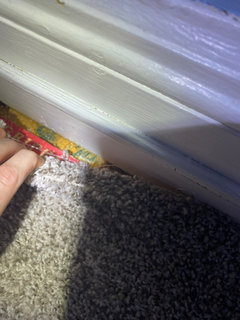
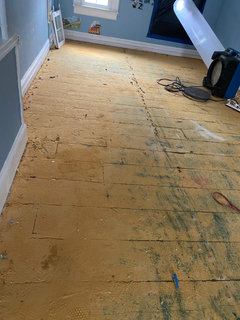
I wanted to take a peek at what’s under here and noticed that under or bordering the rug pad, there’s like an orange substance. Is this some type of glue that hardened? It’s all chalky and break apart easily. I knew it would be messy to rip up a carpet but this looks like it would be a pretty epic mess.

We would ultimately hire a professional but I’m still curious about what’s underneath. Pic below.

Thoughts?

Comments (25)

  • PRO
    3 years ago

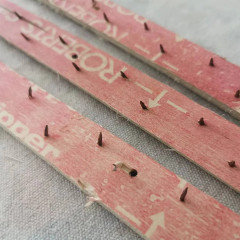
    It's a tack strip that hold the carpet in place. Nothing mysterious.

    Here is what they look like out of the box:


  • 3 years ago

    Yes but what is the orange stuff next to it?

  • 3 years ago

    Cant see orange stuff in your picture


  • PRO
    3 years ago

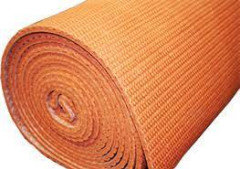
    I don't see orange stuff in your picture either. But, if there is orange stuff, it is cheap carpet padding, and by now may have crumbled into dust.


  • 3 years ago

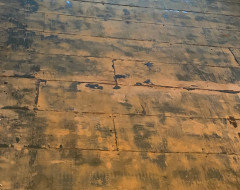
    You don’t see it right next to the tack strip? It’s the orange/tan-ish stuff that’s broken up on top of the dark flooring. I’ll try to get a better pic

  • 3 years ago

    Here’s a pic with light in it

  • 3 years ago

    This stuff is on the edges of the carpet anywhere I’ve checked. Is it some kind of adhesive maybe that dried up??

  • 3 years ago

    Maybe. If you want better guesses as to what it is, you need to peel back the carpet and post a better picture. Judging from the base molding, looks like an old, old house. So that adds a lot of potential materials no longer in use to the candidate list of possibles.

    Not sure yet if we will replace with new carpet or refinish whatever is under here. It’s in the attic so the quality of the plywood is probably questionable.

    Again, judging from the moldings, strip flooring of some type is a lot more likely than plywood. In an attic space, soft flooring like carpet is going to be a lot more quiet than hard surface floors.

  • 3 years ago

    Ok I just looked up images of disintegrating rug pads and you’re right that’s what it seems to be, but holy hell what a mess! It’s literally just an entire layer of loose crap that will need to be sucked up. I worry about that spreading throughout the house during the process….regardless of replacing carpet or refinishing the flooring underneath. I thought the carpet was new(ish) when we bought the house 6 years ago bc it smelled like new carpet smell…I wonder if it was always carpeted and they replaced the carpet on top and just left the gross stuff underneath. Yuck.

  • 3 years ago
    last modified: 3 years ago

    Yes, old padding crumbles and/or gets gummy and sticks to stuff.

    Are there flat heat registers in the floor? Lift one out and see what you can see in the void around the vent leading to your furnace.

  • PRO
    3 years ago

    Padding normally stops before the tack strip.

    You need to pull the carpet back past the tack strip, and if there is padding, pull it up to see what is underneath. A corner -- maybe in a closet, is a good place.

  • 3 years ago
    last modified: 3 years ago

    Not sure yet if we will replace with new carpet or refinish whatever is under here. It’s in the attic so the quality of the plywood is probably questionable.

    The existing carpet looks fine for an attic and I doubt there is any flooring to refinish.

    As to the orange stuff...insulation?


  • 3 years ago

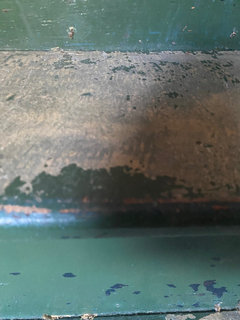
    Hey all. Sharing an update on this because it’s kind of wild. So the carpet pad, or in this case, possibly some kind of foam insulation pad that sat under two carpet pads, had been there so long it basically became one with the underlying plywood. I seriously hate the previous owners. So at one point they painted the plywood dark green (like, why???), and then at another point they padded the sh*t out of it and threw some carpet on top.
    Some guys just Hepa vacuumed all of it but mostly it can’t be fully removed, or has discolored the wood. I was told sanding isn’t a good idea with this pine plywood subfloor.
    We are planning to add prefinished hardwood floors now, but it grosses me out that this crap will basically always be there. We don’t have the means to rip everything out up there. Good times!

  • PRO
    3 years ago

    Are you sure all of the residue is only old padding?

    It looks like it could be mold AND old carpet padding.

    If I were replacing this floor I would first treat it with a good mold killer, then a barrier paint like Kilz.

  • 3 years ago

    We treated it as if it were mold, I had a mold restoration company contain the area and add negative air scrubbing and remove the carpet and fog the entire area. We’ve had this area including an enclosed crawl space tested for mold several times which came back negative but I still wasn’t convinced so we took all the precautions. The orange stuff is definitely old padding but there could absolutely be some mold stuck in there too.

  • 3 years ago

    Next step is adding new prefinished hardwood flooring. I’m going to get his opinion before doing anything else like painting with Killz. Want to make sure it will all work with the project to add the new wood.

  • PRO
    3 years ago

    OK, step one finished. I would still roll down a barrier paint before proceeding with new flooring, just to be absolutely sure. It's cheap insurance. Mold abatement does not always get all the mold.

  • 3 years ago

    Oh also just to clarify, it was more like a foam insulation substance versus a rug pad. There were already two rug pads underneath and then this foam crap

  • 3 years ago

    Thanks for the tip. I sent a note to the floor guy to see if that would be any issue to roll down some Kilz. I had been thinking about it already, appreciate the tip!

  • PRO
    3 years ago
    last modified: 3 years ago

    Step 1 is being sure of the air sealing and insulation levels before putting in a substance that doesn't deal well with high humidity and high temperatures from poorly insulated and poorly HVAC'd attics. Don't waste money on finishes without double checking the guts underneath first. Or you will be spending twice that again.

  • 3 years ago

    Are you referring to the new floor material, or putting down something like Kilz? Assuming the new flooring…I’m very new to all of this! Haha but we are looking at prefinished hardwood, likely oak, and the plan is the let it sit up there and acclimate for a period of time before install….

  • PRO
    3 years ago
    last modified: 3 years ago

    You will end up with a huge amount of cupping, edge crush, and all kids of other issues, if that space isn't properly insulated and air sealed. Do not get ahead of your self with the pretty stuff. The ugly invisible stuff has to be right first.

  • PRO
    3 years ago

    I think what DeWayne points out is valid.

    If you had some mold under the carpet pad, that's fairly normal.

    If you had a lot of mold, something more than a few spots in every square foot of floor, then that's not normal and should be checked out.

    It means a lot of moisture is getting to that floor, and you should find out where it's coming from and fix it before you put down a new floor.

    Frankly, from the images, it does not look to me to be excessive.

  • 3 years ago

    Thanks, yeah it’s the attic so generally more humid, but the majority of the space is air conditioned, except for the “craw space” where the ac unit sits. That area we had some issues with as there was no air flow, but have since addressed. None of this carpet or pad/foam was in that crawl space, just the bare pine plywood subfloor. We had several mold tests done, though none after removing the carpet and foam. All were negative, even in the more humid crawl space, but I insisted we treat it all as contaminated, whole space Hepa vacuumed and fogged and ran negative air. At this point I plan to use a Kilz type of paint on the floor (floor guy said that wouldn’t be any issue). At least this way it’s offering a seal of both the foam reside and anything else in the mix.