Software
Houzz Logo Print
fahmy_e

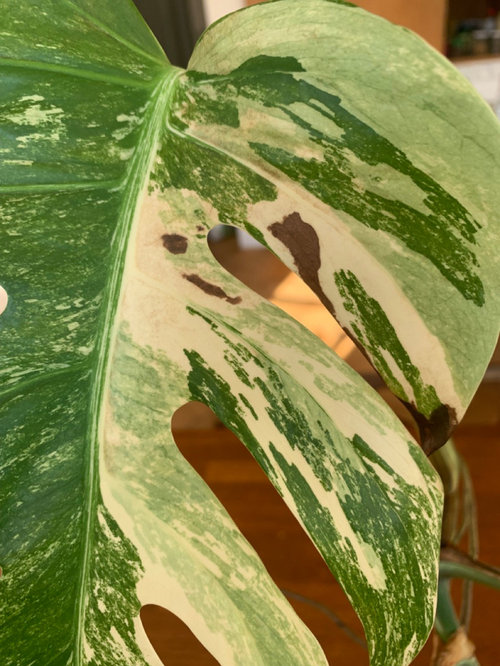
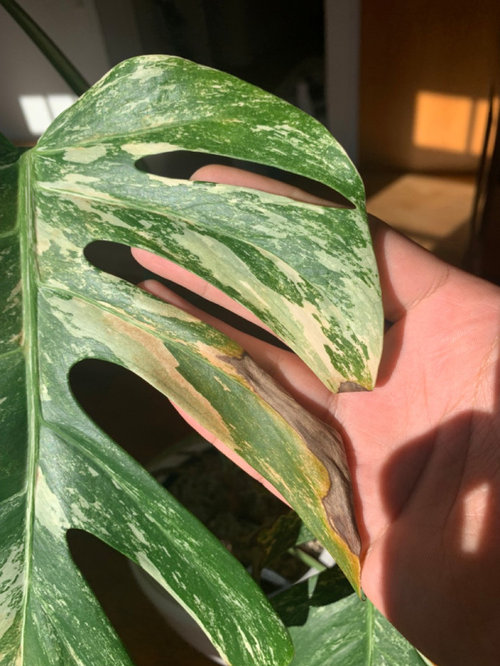
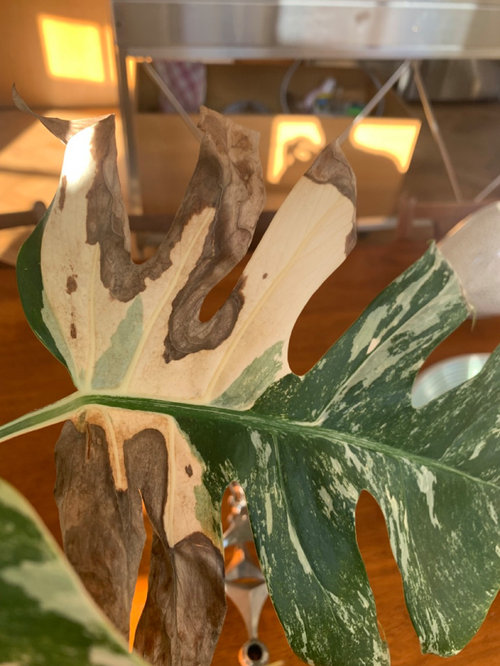
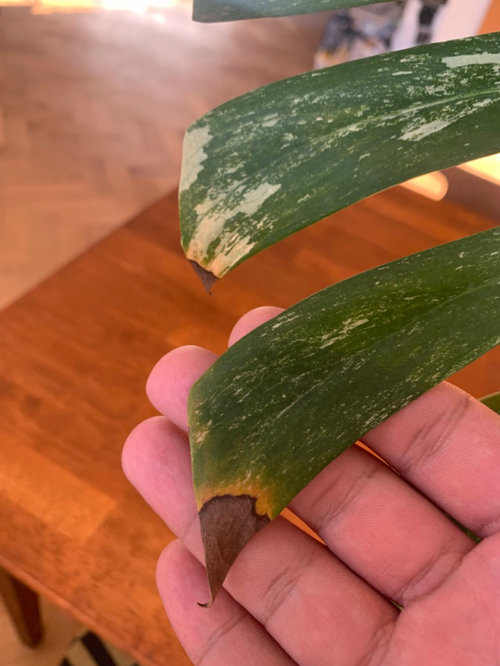
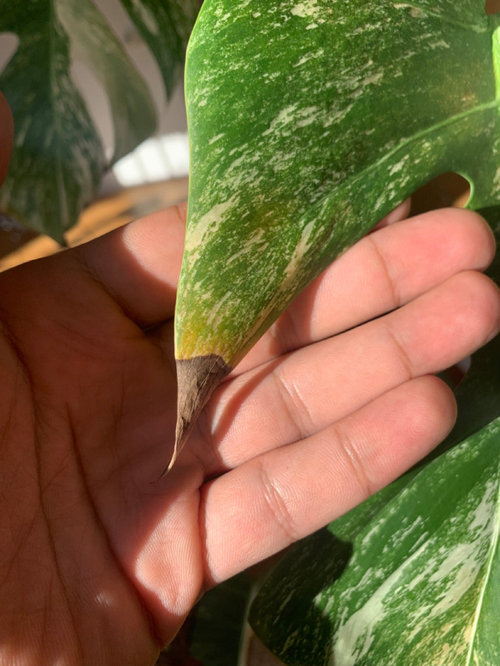
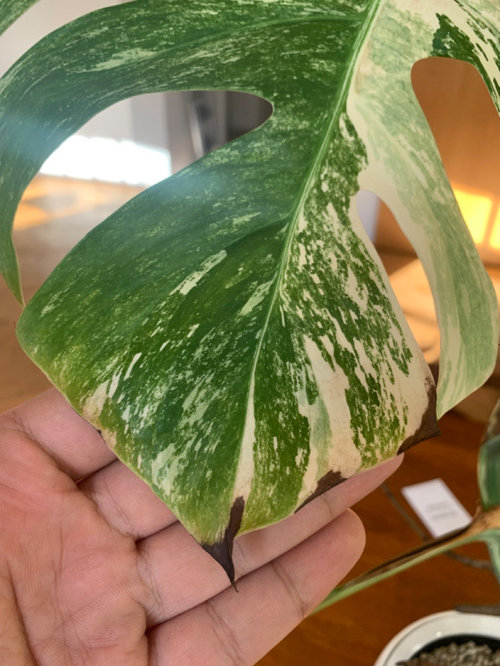
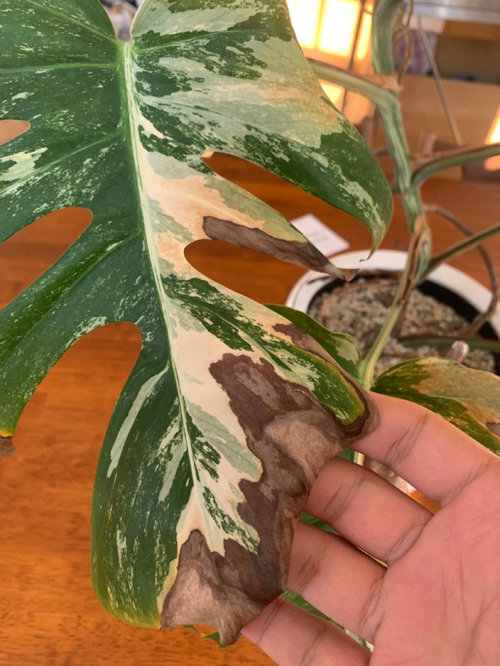
Why is my albo Monstera browning/getting black spots

2 years ago
Hello,


I would appreciate some input as I am running out of ideas what maybe causing the issue


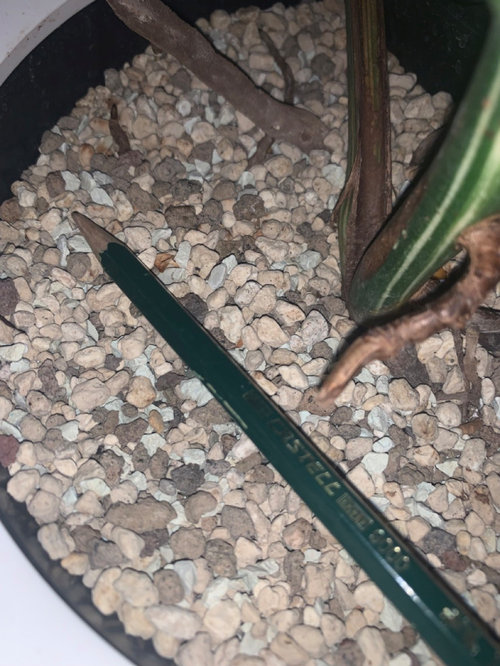
I repotted (potted up) my monstera in June (4 months ago), it was in 100% seramis (similar to turface) and it was doing fine, I had a bag of lechuza pon which is a coarse medium made of ( pumice, zeolites, lava rock ) so I used it in the new pot, few days after repotting I started noticing brown spots, first I though it was just transplant shock, it got better afterwards, but in the last couple of weeks it has been getting really worse


the plant was placed few meters away from a south facing window, so it was getting plenty of bright but no direct sunlight, when it started browning I moved it to an east facing window where it gets 2-3 hours of direct morning sun light, the browning seemed to stop, but then it increased again


humidity is between 40%-60% and I couldn't find a correlation between the humidity level and the browning


I was suspecting it had thrips as it was mentioned in multiple forums, so I looked closely and I washed and wiped the leaves clean


the symptoms look like it could be overwatering, but it is really hard to overwater in pon, and it certainly dries faster than seramis and the pon feels very dry after 1-2 days


I used a scale to make sure the plant is a bit on the dry side before watering but it didn't help


I tried adding silica, it seemed like it helped, the browning stopped for 2-3 weeks but then it came back


I tried to stay between weak fertlizing routine (1/4 recommended dose) to none as the Pon is pre-fertlized with coated slow release


The plant is growing well otherwise pushing 1 leaf every month and the temperature is consistent in the room between 17c - 20c in zone 7a (Germany), the browning start as mushy soft spots and then dries out, then the next spot appears, it happens on the edges or start from the middle and expands


The last week has been exceptionally bad


here are some photos


Comments (9)

  • 2 years ago

    Hi Fahmy,

    I want to make sure I understand correctly - it's potted in pon substrate but not in a pon pot with a reservoir? Have you checked to see how the roots look? Can you post a pic of the entire plant?

    To me it looks like some light scorch combined with consistently too dry of substrate. I can appreciate that you're being conscientious about giving your monstera a well-draining substrate, but I personally would only put succulents in a pon substrate without the pon pot. If it was doing well in seramis (IDK what that is), can you put it back in seramis?

  • 2 years ago

    thanks for the reply


    || it's potted in pon substrate but not in a pon pot with a reservoir?

    Correct, pon substrate without a reservoir


    || Have you checked to see how the roots look?

    I didn't want to disturb the roots when the plant is in this state, just checking some roots at the top of the substrate the looked fine, white, a bit dry, but no signs of rot


    || Can you post a pic of the entire plant?

    will do later today


    I have been trying to understand how often should I water plants in pon, most of the feedback I read was that the substrate dries out completely in 7-10 days and that how often one should water in pon without a reservoir, even in lechuza's instruction they suggest a dry out phase after the reservoir is empty, but now I feel I was a bit misled, because every post showing browning all the feedback were about overwatering


    seramis is similar to turface, I can put it back except I am concerned disturbing the plant is such a state can do more harm

  • 2 years ago

    Thanks for the info,

    I checked the roots, they looked white, a bit dry, but no sign of rot

    the forum is indeed reddit :D , testimonies there of people watering their monsteras once every 2 weeks - 20 days in pon and that pon retains a lot of moisture


    I don't have any seramis right now to pot it back in seramis, I will try to pick up some on the weekend, but for the time being I moved the plant to a pot with a reservoir


    beside the weird advices and comments on reddit about how water retentive is pon, I was confused as I noticed that the browning usually happened the day after I would water the plant as long as the plant was dry it seemed no browning/black spots appeared


    additionally, when I was following a watering routine every 7-10 days (some times 12 days depending on weather) the plant never looked droopy like the one in the picture, the leaves were always firm


    I would like to ask if you have experience with pon, how much water do you think it reatins compared to orchid(bark based), 511, Gritty mix etc.


  • 2 years ago

    I use pon with a few of my plants but never by itself; always with a pon pot. I've never put monsteras in pon pots because I was leery of how they'd react to it. Are you sure the people on the forum are using pon alone rather than saying they fill the reservoir every 2-3 weeks? I personally wouldn't use pon substrate alone with any plants, not even my cacti or succulents. Pon substrate retains less water than any of the mixes you mentioned. Pon isn't designed to be used as a substrate in a regular pot, it's designed for use in a pon pot with a reservoir. The only way pon can hold any moisture at all is by soaking it, and even then the moisture it holds isn't a lot. The surface pores of pumice and the pores and channels in zeolite can hold some liquid when they're soaked in it, but not from water just pouring over them.


    The plant in the photo was droopy and needed to be watered immediately. I always take pictures of a client's plant before I start working with it. The owner had been watering it, just not often enough; hence the browning on the leaves. She called me because she was afraid it had root rot, but it didn't; it was extremely dry.


    In all likelihood, the reason your plant develops brown patches after watering has to do with there being fertilizer in the substrate. Never fertilize a dehydrated plant because you risk plant damage.


    Deanna


  • 2 years ago

    I also meant to say in my previous comment that the mix I put my monsteras in is 75% organic materials and 25% inorganic. HOWEVER the portion of peat based soil (considered organic) is only 20% because it's peat that holds the water and doesn't leave any spaces for air for the roots. The rest of the organic ingredients are coco chips (35%) and orchid bark (20%). The water runs right through it and when I lift the pot it's still relatively lightweight, so it doesn't retain an excessive amount of water. My experience has been that coco chips do an excellent job of making a soil mix airy when used generously. The inorganic ingredients in the mix are pumice, perlite, and charcoal. So IMO you don't have to use predominantly inorganic soil ingredients to get a well-drained mix. Unless you're talking about succulents, and that's a whole different ball game!


    Oyyy...mea culpa, mea culpa. I found your posts on Reddit and in one of the photos you posted (I don't think it was one you posted here) I DID see thrips! GRRRR...I hate those things!! They're very difficult to see - zooming in with your phone camera is the best way to spot them. They're shaped like tiny little grains of rice. Can you get the systemic insecticide imidicloprid in Germany? What about spinosad insecticide?


    Isolate the plant from your other plants and spray it with Spinosad - spray tops & undersides of leaves, stems, the soil and the outside of the pot. Then mix imidicloprid systemic granules into the top of the soil, unless you decide to stick with pon in a pon pot; then putting liquid imidicloprid in the reservoir would be appropriate. Make sure to use the amount of product that the label says. It seems like a lot of product but it's important to follow the dosage instructions; otherwise it allows pests to build up resistance to it because the amount needed to kill them was not used.

    A systemic insecticide is the best treatment for thrips because they lay their eggs inside the leaves and stems of a plant, so if you only spray spinosad you'll have to respray each successive generation as they hatch. When the larva hatch, they frequently fall into the soil, or on the floor, or on the leaves of a nearby plant. Consequently, you should give the same treatment to nearby plants. Also, clean the whole area thoroughly including the floor where the plants have been sitting. After you finish the treatment, wash your hands and arms thoroughly and change your clothes. The reason? You could get thrips hitchhikers on your skin or clothing and spread them around to your other plants. I learned the hard way when I brought home spider mites to my collection after treating them on plants at work.


    If you can't get imidicloprid in Germany, spray with spinosad every 3 days for a few weeks. I know all this is a pain in the butt, but it's the only way to get rid of those sneaky little bastards. And don't just spray - get some DE (diatomaceous earth) and when the surface of the plant's soil is dry, sprinkle a layer of DE over it. This so any larva falling in or crawling out of the soil will be sliced and diced by the DE.


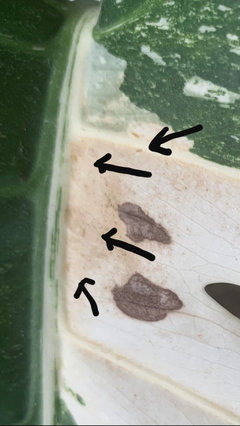
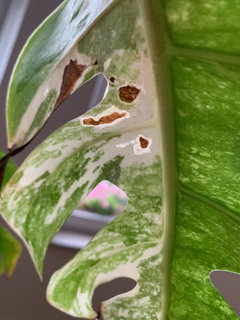
    So you have 2 issues going on - underwatering and thrips. The big patches of brown are from being too dry. Here are two of your Reddit photos zoomed in. One has arrows pointing to some thrips. The other one is of little brown dots that I suspect are where thrips have punctured the leaf to lay eggs.


    Sorry for such a long response!!


    Deanna

  • 2 years ago

    Hi Deanna,


    Thanks for the info, it all really make sense,


    the instruction from lechuza clearly indicate that one needs to top water, like normal soil until the roots grow enough reaching the lower part of the pot and then a reservoir can be added and this was exactly the part confusing me, if I top water as if it is soil, how often should it be watered, compared to other substrates? and judging by weight pon seemed to retain some moisture and I had seramis/turface (calcined clay) as a reference in mind which is very coarse yet it hold a lot of water


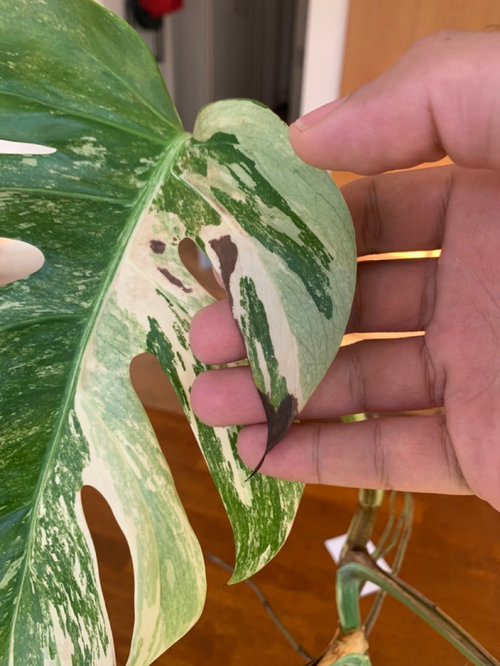
    now I am (very) familiar with fertilizer burn / browning at the edges, but I would like to hear your and others opinions/ideas on what happens with my monstera (see picture below)


    I watered it, the next morning after watering it I noticed beside some guttation, some damage spots started to appear .. again :(


    - The spots are not at the edges, they start some where in the middle of the leaf and expand

    - They start as translucent patches, the patches look like the leaf is thinning at this spot and they get almost completely transparent and they look soft/mushy, few hours later they start drying up and become brown/black and , they continue to grow and in many cases by the time they stop they would have reached the edges

    - I would really like to understand what is happening, some time those spots appear on multiple leaves on the same day, some time on successive days, multiple spots on 1 leaf and a single spot on another

    - not all the leaves sees this effect but once a leaf is affected, it is going to be affected every single time this happens


    - I saw spots appear, grow and dry over night, during the day, on sunny and cloudy days, on humid and dry days, some time few hours after watering and some times 1-2 days after watering


    - using distilled water or tap water or ph adjusted water or not does not seem to play a role, silica and fertilizing or hydro mycorrhizae , for dialing down the ph I tried using citric acide, vinigear and commercial hydroponics ph down, I target ph between 5-6 when adjusting and the tap water is at 7.8


    - how old is the leaf does not seem to play a role when will it get the damage, but I noticed that the more variegation the leaf has the faster it will get the damage, but also green leaves would get the damage


  • 2 years ago

    I really can't help you any further. If it was my plant I would pot it in a different substrate because the plant is telling you it doesn't like its current conditions and you're having trouble getting the watering on point with the pon. Going forward, probably not a good idea to put an expensive plant in a substrate that requires a learning curve unless you're already experienced with it. Al (tapla) suggests a watering tell to determine when to water, and that is an excellent idea with the substrates I'm familiar with. I always suggest it to my customers, but IDK if it would work with pon or not.


    I do know that I wouldn't have it in a spot where direct sunlight shines on the leaves. And I wouldn't procrastinate on treatment for the thrips. They will kill your plant.


    Deanna

  • 2 years ago

    Hi Deanna,


    thanks you ! I really appreciate taking the time for the detailed answer, by the way, your two comments from yesterday showed up all together with the last comment, I don't know why, but I would have wrote my comments differently, I think now I know what needs to be done, I will try to find out which treatment for thrips I can get and repot in a better adjusted substrate


    many thanks !