Software
Houzz Logo Print
sarah_lucas9509077

Old flooring, 1700-1800s house

2 years ago
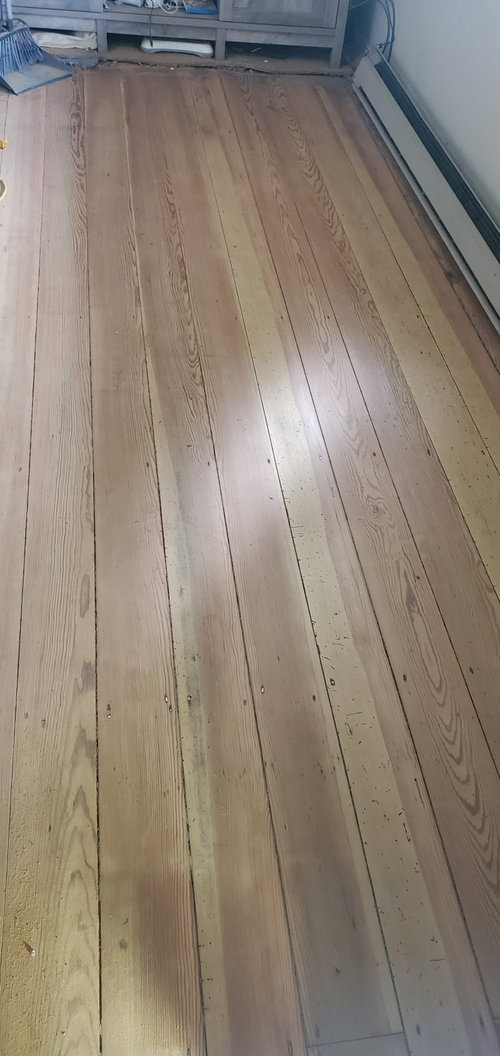
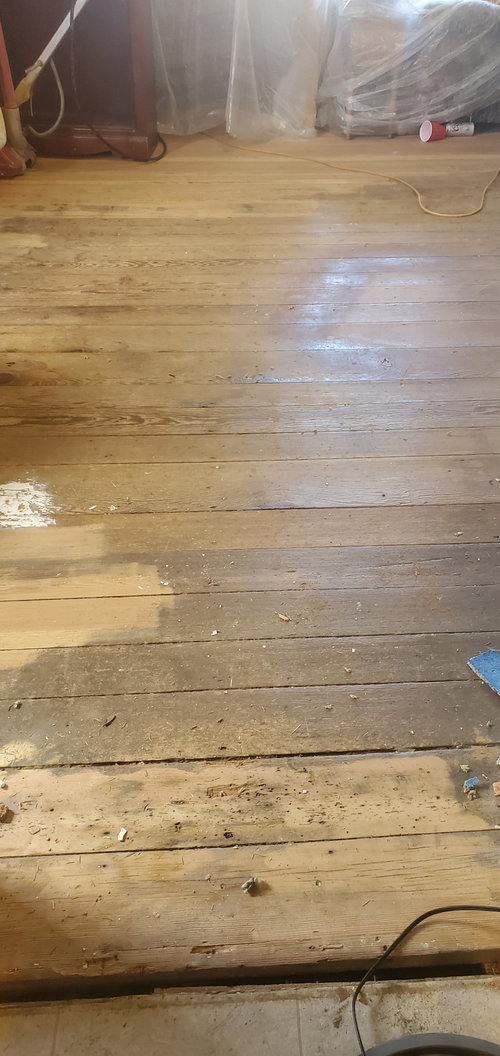
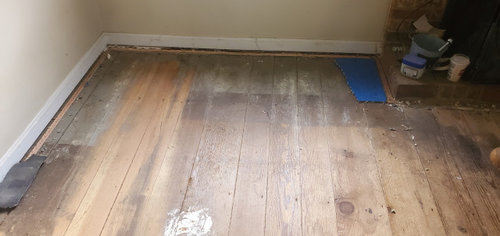
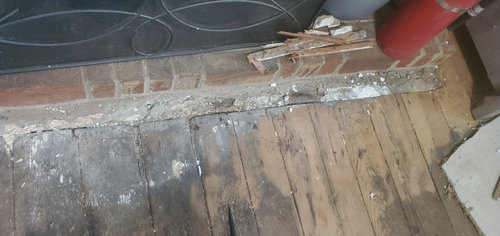
We pulled up our old nasty carpet and found beautiful hardwood floors underneath. The house age hasn't been determined yet (records say 1948 but we know they're wrong because we know people who had relatives living here before that). But we think it's either late 1700s or early 1800s. My brother says these floors look like heart pine. Does anyone know the best way to figure out if they are and then the best protective finish for them? Or how to date a fireplace without taking it apart?

Comments (10)

  • 2 years ago
  • 2 years ago

    If you think the house is significantly older than 1948, I'd be 1848. Simple typo. There are ways to date your house. This has some dates, but I've seen charts that are more detailed. You can also look at the title in the town records. When we inspected our title chain, we discovered that the date the town had 1) pre-dated the neighborhood's development. You can see historical pictures with the first few houses in the neighborhood, not including ours. And 2) pre-dated the first owners of the house having bought all the parcels of land on which the house was built. (The development had tiny lots, our house sits in the middle of 2.5 lots.

  • 2 years ago

    Contact your state Dept of Agriculture about the wood. nIs the foundation stone?

  • PRO
    2 years ago

    They could be pine but they aren’t heart pine. Heart pine even when freshly sanded is dark. If you wet it it’s mahogany colored. Yours could be white pine. As to dating, lots of different ways to date. Hopefully your town has some historic preservationists that can help.

  • 2 years ago

    Thanks everybody!

    Historical preservationists might be hit or miss; we live in a very rural area.

    I don't know about foundation stone, there's a crawl space but it's hard to get into.

    We think the screw up with the dates could be that the ADDITION was added in 1948 and the records instead changed the build date of the entire house.

    I plan to look at town records, unfortunately it will take a lot of time because much of them aren't on a computer. Rural Virginia lol.

    I'm waiting to hear back from the owners of the house across the road; that house is much larger and was built in the 1790s. She might have a lead on someone who has lived in the neighborhood a long time.

    My father's pastor's wife grew up in this house, and the pastor's grandparents owned it. He's going to give me the info he has when he gets the chance, but he says it's definitely pre-Civil War. Which fits, because no matter what type of wood this is, the nails used are definitely cut nails.

  • PRO
    2 years ago

    Looks more like Douglas Fir to me. Douglas Fir is common in old homes, also.

  • 2 years ago
    last modified: 2 years ago

    Virginia old house enthusiast and owner here. It looks like yellow pine although its very light in color. In Virginia, the old pine floors are almost always yellow pine. I'd be careful about the "heart pine" descriptor, it means different things to different people. Some locals in Virginia will call it "heart pine" or "hard pine" but in either case here its yellow pine. And when yellow pine is from old growth trees, it is very hard (hence hard pine), particularly the heartwood (hence heart pine). But if I had to guess that flooring is not 19th century. The narrow width ~4" pine flooring you have became more common in the early 20th century. The first picture is exactly what we see in the early 20th century. I see in the other pictures the widths vary, but the narrow widths would be really unusual for the 19th century. 18 and 19th century pine floors in Virginia have inconsistent widths usually between 6-10". Is there a subfloor? Sometimes later pine flooring was laid over the old 19th century flooring. Your best starting point on dating will be the deed records. Virginia grantor/grantee records are relatively easy to follow. The local historical/geneology office (if you have one) would be next. As for features such as foundation, fireplaces, flooring, joists, rafters, nails, screws etc. - those can also give an indication of age - but the scope of that discussion is best saved for another day.


    As for determining the species exactly, there are companies that will test samples for a fee.

  • 2 years ago

    I grew up in a house built in 1917, these boards are much wider than the ones in that house. The nails used are cut nails, there's wooden peg construction in the attic, my brother took one look at the place and told us the chimney was 1800s - and he worked for a company that took apart old buildings to repurpose the materials for repair work on historical buildings. He did some work on one of Lord Fairfax's houses years ago as well as other buildings. We also know someone who's wife grew up here and who's grandparents owned it, and he said pre-Civil War.

  • 2 years ago

    Sarah, all of the features you mention point to 19th century and earlier construction. I've seen quite a few Virginia houses listed for sale dated 20th century but from the pictures you can tell the house is much older, oftentimes by the foundation. My house was listed as early 20th century but based upon many of the same features you mention about your house and some further research and sleuthing, we determined it was 100 years or so older. You don't mention anything about the exterior, but the exterior design/construction is probably the first feature when it comes to dating the house. Unless your house was originally used for something else prior to becoming a residence (e.g., store, blacksmith shop, etc.), the exterior design should be very indicative of approximate age.

    I mentioned that the narrow flooring pointed to a 20th century age but of course that is based off me looking at the top picture. I see in the 3rd & 4th pictures some planks are much wider and have the width variation typical of 18/19th century houses (to my point, take a look at the pre-1850 Virginia houses on an old house realtor website like Circa Old Houses and look at the floors. You'll see that there is a consistency in terms of the wood type and varying wide widths. Maryland and southern PA houses are similar in this regard too, yellow pine being abundant in the mid-Atlantic).

    As for dating a fireplace, I think the best one can do is to look at the bricks and mantle. From what I've seen, there seems to be no consistent fireplace design or construction type in Virginia, say unlike in the Northeast where Rumford fireplaces and beehive ovens were very common. Old bricks tend to be soft and will crumble or break relatively easy. If any of the brick faces have spalled, check the exposed area. Mantles (if your original is still there) can sometimes be dated to a period.

    As for finishing your floors, I think there are a few options depending on preference, durability, finished look etc. Polyurethane is probably the most durable/least maintenance and you can leave the floors natural or stain them. I refinished the floors of a small room in my house with boiled linseed oil, but linseed and tung require ongoing maintenance and are on the opposite spectrum of poly for durability. Call Craig Jacobs at Salvagewrights in Madison, VA. He'll know every finishing option and the pros and cons of each. I can imagine your excitement about your old house, feel free to PM me if you have any questions along the way.


  • 2 years ago

    Go to the Recorder's Office and track the ownership (who conveyed the property) there. If the records are not all online, they can show you how to look things up.