Software
Houzz Logo Print
kitasei2

best source for hellebores

2 years ago

I have been holding back on buying hellebores because of the cost but can resist no longer. I understand they spread easily so I would like to get a variety to build from. What is the most cost effective way to do this? Large plants from local nurseries or small pots from places like Bluestone? Seed?? The one I did buy came from a surprising source - Trader Joe's! A nice big pot for $15. I havent seen them since.

Comments (35)

  • 2 years ago

    Places that offer seeds like Plant World Seed or Jellito are the most cost effective.

    Otherwise I like Pine Knot Farms.

    kitasei2 thanked dbarron
  • 2 years ago

    I'd go with seed as well. Other than the common and popular x hybridus (aka orientalis hybrids) and the few available species on the market, most hellebores are complex hybrids that are sterile. And not always easily dividable (divisible?).

    You'll also get the largest color range with seeds.

    kitasei2 thanked gardengal48 (PNW Z8/9)
  • 2 years ago

    Not sure what you mean by "they spread easily." They aren't rhizotomaceous though they might seed about some. And they are very difficult to divide successfully as gardengal has also stated. If you only want a few plants, I'd choose some with the flowers you like best and be done with it.

    kitasei2 thanked laceyvail 6A, WV
  • 2 years ago

    Why are they difficult to divide? I have a large clump that I had to move in the fall and stuck in a place I don't really want it because it was too big to put anywhere else; maybe if I divide it, it will be placeable.

  • 2 years ago

    It depends on what kind of hellebore they are. Not all hellebores are created equally, the same as many types will not self seed or spread. :-))

  • 2 years ago

    ^^ Oh, gosh, I don't even remember. It's white and a cultivar, that's all I know. It expands in a clump, not a running/spreading type.

  • 2 years ago

    There are no running/spreading hellebores.

  • 2 years ago

    If anyone is looking for a "seedy" hybrid, I've gotten lots of seedlings from the Winter Jewels strain.

    kitasei2 thanked cecily 7A
  • 2 years ago

    Cecil’s, I’m looking for that! At my former house , my hellebores were happy despite competing with tree roots & drought, &!had seedlings surrounding the clumps and I was able to pot some up & grow to more transplantable size.

    I moved a few clumps to my new house and am hoping they will do same, but not yet. I’ve been trying to keep surrounding top layer of soil hospitable and porous.

    Because I had access to “ natural seedlings “ for years, I never thought to harvest the seeds as the flowers matured. But I’m going to try that this spring, as well as searching carefully for any seedlings under the mother plants.
  • 2 years ago

    I shot a note to Plant World asking which variety would reseed most readily for naturalizing a large area and immediately got this reply from Doug:

    “All will reseed but best to go with singles and orientalis types.” Seems like a great company so thanks for the recommendation.

  • 2 years ago

    I have no idea who Doug may be but that response from him - “All will reseed but best to go with singles and orientalis types” - is simply not correct. The types of hellebores that will freely set seed is quite limited. Perhaps that was said in reference to the types of hellebore seeds they carry, as it is only the x hybridus (orientalis hybrids) and species that set viable seeds. Most other varieties on the market now are sterile hybrids. Obviously, (I hope) they would not be offering seeds collected from those :-))

    And be aware that seedling plants that may pop up are also unlikely to be true to form. Named varieties will not necessarily produce clonal replicas.

    kitasei2 thanked gardengal48 (PNW Z8/9)
  • 2 years ago

    However, is it an observation that the seedlings often do look similar to their parent(s) (but no guarantees of course).

    kitasei2 thanked dbarron
  • 2 years ago

    Lest I get poor Doug in hot water, let me quote him accurately: ”All should self seed but maybe sticking with singles would give more success. Also go for orientalis types.”

    Plant World lists 21 varieties which invite our esteemed Gardengal to evaluate for us.


  • 2 years ago

    The hellebore seeds listed by Plant World are all either a couple of species or the oriental hybrids now properly known as x hybridus. Aside from the few species, they are all the same plant! The exception is H. sternii, a cold sensitive but simple hybrid not suited to gardens below zone 7. But all the other more complex hybrids - of which there are many - are not addressed as they are ALL sterile: ericsmithii, ballardiae, nigercors, iburgensis and glandorfensis. One is missing out on some very choice plants if one ignores these but the x hybridus selections have been around longer, have the widest color range, climate suitability and freely self seed so many growers or suppliers tend to focus only on these, neglecting a lot of very stunning and almost maintenance-free plants in the process.

    kitasei2 thanked gardengal48 (PNW Z8/9)
  • 2 years ago

    And here I am the one who always wonders why all the hoopla over hellebores -- they're just meh IMO {shrug}

  • 2 years ago

    MXK3, my thoughts are A) they're mostly evergreen with semi-attractive foliage B) early bloom when almost nothing else is in flower (this being the reason why we plant crocus and tulips too).
    I am not overly happy with mine, because the weather patterns have shifted and mine grow fairly actively till Dec and then in January an extreme polar front comes along and turns all that new growth (including flowers) into mush :(

  • 2 years ago

    If it weren't for the attractive foliage, I wouldn't have kept the ones I have. Yea, they flower early but what difference does it make when you can't really see the flowers? Have to be right on top of the things to take any note of them; certainly I can't see them from the house.

  • 2 years ago
    last modified: 2 years ago

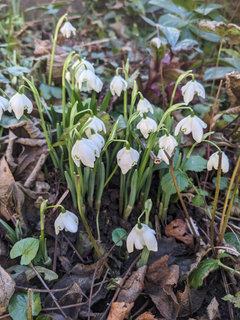
    In climates with winters mild enough to be out in the garden at any time, Hellebores are completely invaluable. Mine start just after Christmas and I look forward to seeing them along with the snowdrops. I have a miniscule garden, so even if I don't go outside, I can easily see them from the window. A good tip is to plant them, if you can, on banks or wall tops where you can see the flowers from below. Or place them below windows. They can be gorgeous.

    kitasei2 thanked floral_uk z.8/9 SW UK
  • 2 years ago
    last modified: 2 years ago

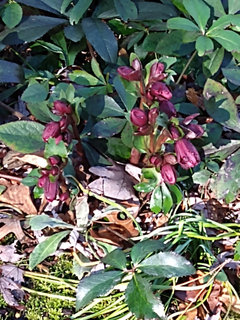
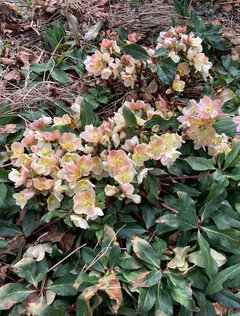
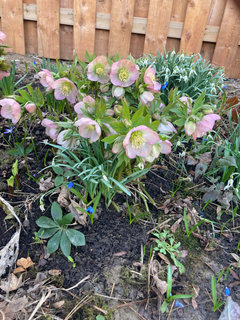
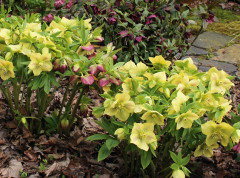
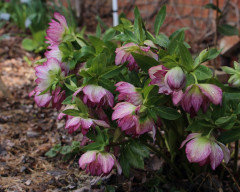
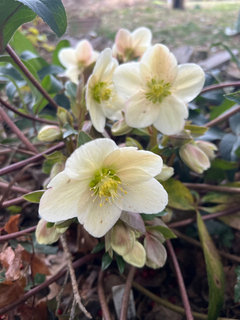
    Today ...


  • 2 years ago


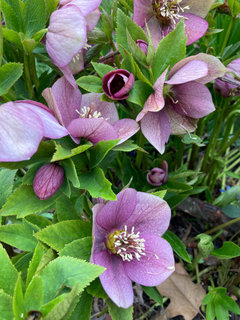
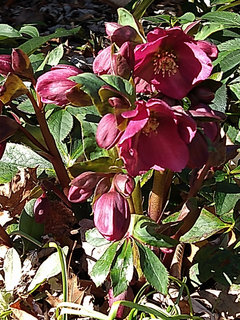
    Ice & Roses Red

    The blooms are held well above the foliage and this photo was taken today in northern Virginia.

  • 2 years ago

    and of course they make striking arrangements.

  • 2 years ago
    last modified: 2 years ago

    Plant breeders have been growing strains of orientalis with upward facing flowers and there is no doubt that the colour range has expanded to include some fabulous yellows, apricots, greens as well as the usual plums, whites, reds and pinks. Years ago, I made a round trip of 80miles to buy a single yellow in bloom, but all my others are raised from seed collected from various places, so I have limited experience and grow none of the sterile hybrids such as ericsmithii. The species such as foetidus have an innate elegance. I absolutely wouldn't be without them. They seed about and are utterly effortless plants (although I do make the effort to remove the old sordid leaves).


  • 2 years ago

    I would like to hear more from those of you who have them how you think they can be used most effectively in the garden. Floral, when you say on walls do you mean in containers? or crevices of dry stone walls? Are they best grouped or scattered in a groundcover? How robust are they to compete?

  • 2 years ago

    I like to use orientalis hybrids as a groundcover under trees in DRY shade with spring bulbs scattered among them. In fall/early winter I trim back the skanky old foliage so the spring bulbs will be visible and they bloom together. Hellebores are slow growing hence expensive so you need a seedy strain of orientalis to make an affordable groundcover.

  • 2 years ago

    Floraluk most likely means atop walls or even in chnks between the stones (anything to raise the level).

    I have been ?lucky? enough to see an acre of hellebores on a rocky Ozark hillside, pretty darn glorious!

    kitasei2 thanked dbarron
  • 2 years ago

    I did not read all of the comments but I needed to chime in when I saw some claim that hellebores don’t spread. I am overrun with hellebores. They spread every year and are encroaching on other plants and my path. The new plants take a couple of years to bloom. I’m literally digging them up trying to keep them contained. Mine live under a willow oak.

  • 2 years ago

    They are not spreading, which implies rhizomatous or root expansion. They are self-seeding, which is a totally different concept. Aside from the self-seeding aspect of certain types, hellebores are clumpers that will expand in clump size slowly, just like many other perennials.

  • 2 years ago

    I feel I have to come to the defence of my poor hellebores ;-). I have a few of the sterile ones, and though they are beautiful, here they tend to start blooming early in a mild winter, only to be turned to mush when true winter weather strikes. Most of mine are X hybridus, by now for a good part self sown seedlings. This is one plant I would never buy on line or out of bloom. If you are picky and start with plants with well shaped, outward or up facing blooms in good colours, you stand a good chance of getting lots of interesting seedlings. You can then keep the ones you truly like, and give away or compost the rest. I find the seedlings quite easy to get rid of where they are not wanted. And a good clump is certainly visible from a distance, especially white or pink ones. I am already looking forward to the first blooms on a few new seedlings. Such a long wait always till their third year…


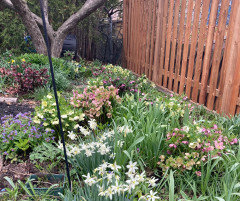
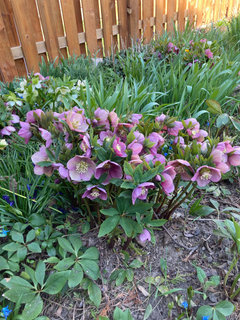
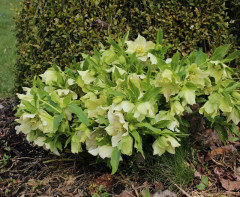
    Sterile ballardiae 'Cinnamon Snow' in a good year.


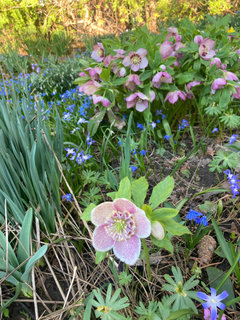
    A group of mostly X hybridus in April


  • 2 years ago

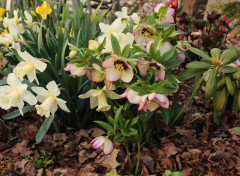
    Some more over the years.


    The single bloom in front is an almost ethereal seedling of the one in the background.


  • 2 years ago

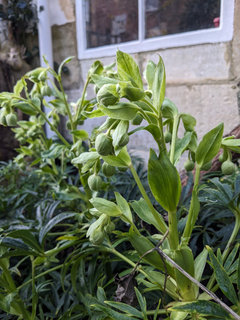
    H foetidus


    By "on a wall" I meant along the top of a retaining wall or similar where you would be walking at lower level and could look up into the flowers, although personally I have no difficulty appreciating them at ground level. I have bought precisely one in my life. All the others are pass alongs.

  • 2 years ago

    "And here I am the one who always wonders why all the hoopla over hellebores -- they're just meh IMO {shrug}". Heh heh, that comment gave me a nice chuckle! I happen to be a fan, but when my first ones (purchased online) flowered I was excited of course... but was a little 'meh' as well. I was also expecting something a little more exciting.

    But friends thought otherwise and now those plants are with friends :)

    They can spread quite a bit, but the doubles don't seed out nearly as much as the singles, so that's an option. If I get around to it I'll cut the faded flowers and weed out seedlings and that will take care of it, but you know how that often goes! I'm always excited to see how a seedling looks in flower and if I "missed" weeding it for a year or two, what's one more year to see what it looks like in bloom ;)

    The mentioned seed sources look fine, seeds from friends might be better, buying them in person is excellent, but really consider a few four inch pots from Pine Knot to get started. The Winter Jewels series is outstanding and the singles will seed and spread around... the doubles not as vigorously. Four inch pots will probably take a year or two before they bloom, baby them in good soil and a little more sun for quicker growth.

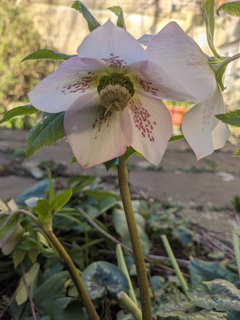
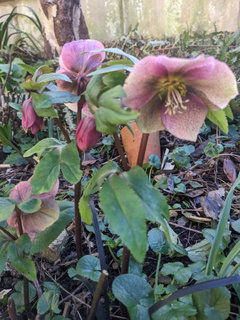
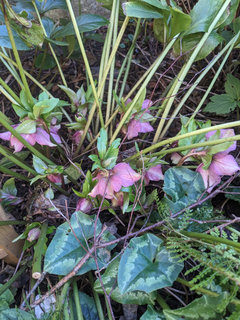
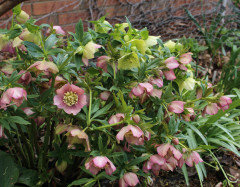
    Love the photos shared so far! Here are some seedlings in my garden from previous years:


  • 2 years ago

    February 3, 2023


  • 2 years ago

    I’m just here for the pics. When my mom got into hellebores, I thought she was crazy, but then I moved to my current house with a very dry, shady front garden area and now I love hellebores because they thrive where other things don’t and bloom their heads off over sn extremely long period of time… starting on late January when I am starved for flowers.


    My favorite is ’Joker.’ It is in a very prominent spot where I can enjoy it everytime I go in or out my front door. the blooms are upward facing and above the foliage.


  • 2 years ago

    Okay, count me as someone who went down the deep, dark path to helleborus hell, and still doesn't quite understand all the ins and outs - but here is my experience. When I first started gardening @12 years ago, the horticulture industry loved having all the hellebores show up at the home shows which they would be having around this time (February) of the year. Usually some dusty pink variety, the pots would be in full bloom and they'd be charging $30-$40 a pop, and they'd be flying off the sales tables. I could never bring myself to pay that amount for them, but over the next few years I'd find some at lower prices, and introduce them to the garden. The clumps would establish really well - growing bigger every year. A few times I would worry I'd lose them, especially when they deck was being re-done and the clumps were being hacked in half - but they'd always rebound even bigger and better. After a few years, I began to realize not only were the clumps getting bigger - but there were now seedlings in play. I had no idea this was a thing. Not only that - began to watch a lot of YouTube videos on hellebores, and learned those seedlings are STRONG - the root systems of hellebores are not fragile at all, but wiry. I've now introduced whole bunches of different varieties of hellebores in recent years - and I honestly don't know which ones are "sterile" or not. But I've got enough to warrant a regular culling every year!