Software
Houzz Logo Print
mralston21

ADVICE - white oak hardwood floors - water damage + board separation

2 years ago
last modified: 2 years ago
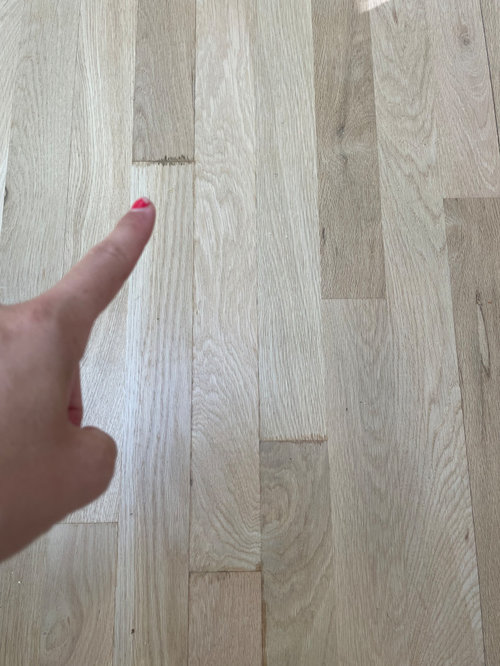
Hi all- would appreciate your input. We are approaching our one-year mark in our new build and we have questions about our white oak hardwood floors. They were sealed with a matte finish by Loba.

1) Is it normal for water to seep into the cracks between the boards like in the pictures? We notice staining within minutes of being exposed to water/food spills/drops.

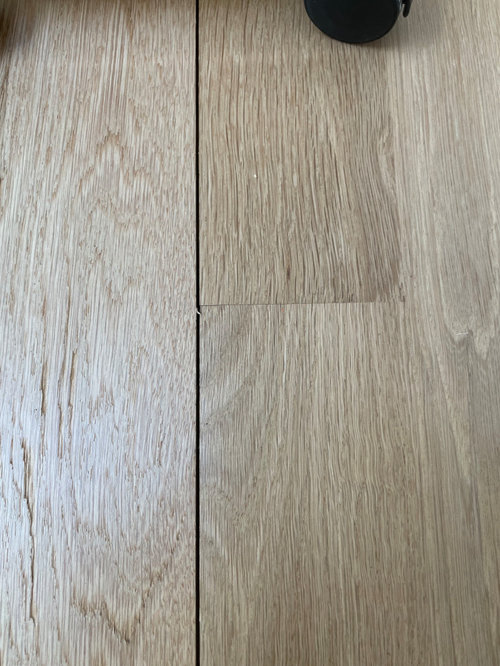
2) Is it normal for the boards to separate this much? We've waited a full year to see how they change with each season (southeastern US) given different temperatures and humidity levels inside the house. The separation between the floor boards is worst in the hot summer with AC running.

Because this was the first time that our contractor used this Lobo product, he had the Lobo tech come see our floors. The Lobo tech said that the purpose of the seal is to protect against dents and scratches, not protect against stains or moisture/water. He also said that in his experience, the separation between the boards is a result of mismatched moisture levels during installation.

Our contractor confirmed that his floor guy has never used moisture readings and there's never been an issue. The hardwood floors were conditioned for over a month, but this was in the basement where it's mostly concrete and significantly cooler than the top two floors where the hardwood floors were put in and without HVAC running.

We are amateurs in this world, so I'd love your advice on how to solve the problems so that neither party gets completely burned. Thanks so much!!

Pic 1: tannins pop up overnight, presumably from leftover water (see bottom of pic too)


Pic 2: at its widest, you could fit a nickel between the boards, in the middle of summer


Comments (20)

  • 2 years ago

    Is this hardwood or engineered wood floors?

    If it's over concrete, you should have used engineered wood.

    Also why is the humidity changing so much? With today's HVAC systems humidity should be consistant.

    Michelle thanked cpartist
  • 2 years ago

    It's hardwood, not engineered, and it's NOT over concrete. We suspect that during the summer, the HVAC is constantly running, which might change the humidity levels inside vs. outdoor high humidity levels.

  • 2 years ago
    last modified: 2 years ago
    The pros/cons of a poly finish VS a hard wax oil finish is a whole other discussion!

    My engineered floors are Hard-wax Oil and I am extremely happy with the durability of the finish and the way it is performing.

    The OP has only been using the floors for one year and there shouldn't be any "required maintenance labor" ... of course if lots of people live in the house and they have high foot traffic and wear, then it could be different, but not for a normal household.

    My hard-wax oil engineered wood floors recommend a re-oiling every 3 to 5 years depending on the traffic/wear on the floors. I have found my engineered hard-wax oil floors to be more durable than the site finished poly floors in my 3 previous homes. Really like that an area can be touched up without having to refinish the whole floor.

    Most negative responses to hard-wax oil are from people who have never used/lived with that type of wood floor finish!

  • 2 years ago

    @Chispa thanks for advice! no, we didn't consider engineered floors. Real white oak hardwood floors seem pretty ubiquitous where we are, especially in modern homes like ours. Our contractor suggested we bring a humidifier in, but he didn't pursue it, and I don't think our HVAC system has this feature built in. Would you consider trying a filler/putty approach? We are worried that won't be a sustainable solution long-term. What other options are there, besides redoing the floors, which seems ...not ideal :/ ? Thanks again!!

  • 2 years ago

    It's wood. And it's beautiful. I prefer the solid wood over engineered wood also. The flooring should have a topcoat that does not allow moisture to enter. On both sides. And polyurethane has the best moisture resistance of any topcoat I'm aware of.

    It seems strange that the topcoat is not one that protects against moisture. Floors get wet. And even with a good topcoat. Wood can move. Especially in a southern climate. It would have been better if the flooring was acclimated in the area to be used. Was the finish applied on site, or was it finished with a topcoat from the manufacturer ? If on site and both sides of the boards were not topcoated this may be the issue.

    Also if wider boards are used you will get more movement in the wood. But again if it's real wood and 3/4" thick it's going to move. It's just physics involved. The wood pores absorb moisture and at different times of the year the moisture in your home is changing.

    I'm not sure what you can do with the stains appearing at the butt ends of the boards. Possibly a polyurethane can be app.applied on it that would help it from moisture penitration

  • PRO
    2 years ago

    If I read your original post correctly, your contractor stored the wood in your basement and then moved it upstairs to be installed and then you probably had air-conditioning installed and turned on after the project was complete. If I’m reading that correctly, it’s a recipe for this kind of shrinkage.

    Michelle thanked HALLETT & Co.
  • 2 years ago

    @hallet & co yes, that is correct. What do you think are the next best steps to fix this? (sorry i can't seem to catch your handle to tag you!)

  • 2 years ago
    last modified: 2 years ago

    @aklogcabin thanks! yes, not wide planks, standard size and real wood. We used a water-based finish, and we are equally surprised it didn't protect *some* against moisture. We could apply another coat, but we were waiting to see what happens with the board separation first. The topcoat was applied on site, after installation,

  • 2 years ago

    @james overton we chose to use a water-based finish because it's more environmentally friendly. These should still work to protect floors from water, right? Why else would you use the finish? I will ask about the HVAC system.

  • 2 years ago

    " They were sealed with a matte finish by Lobo. "


    Called Loba, and what exact finish and how many coats was applied? Any other sealers applied?

  • 2 years ago

    The floors need to be conditioned in the space you install them. Otherwise, they aren't conditioned. The water staining looks to be entering the wood through the unfinished ends. That's not the fault of the finish.

    Michelle thanked dan1888
  • 2 years ago

    @dan1888 thanks! are you suggesting that water is getting into the ends because of poor installation?

  • PRO
    2 years ago

    Have you confirmed that the water source is not coming from underneath? Windows, doors, drainage, etc.

  • PRO
    2 years ago

    The boards shrinking and having unfinished ends is not due to the chosen finish is due to the contractor storing the wood in the basement (typically very high humidity) and then installing and finishing. At some point hvac was turned on and started pulling the moisture out. At this point it seems to me you are owed a refinish since the contractor screwed up the install.

    Michelle thanked HALLETT & Co.
  • 2 years ago
    last modified: 2 years ago

    @hallet thanks! so sorry to be dense, but do you mean a refinish of the Loba seal/finish? Should we first sand down the boards and fill the gaps with a putty/resin with the wood dust?

  • 2 years ago

    @millworkman Good catch! Edited to Loba. We honestly can't remember exact number of coats, but I want to say two coats of the matte look 1K residential water-based product were applied and no other products were used. We had discussed doing another coat *after* seeing if/how the gaps between the boards move during the cold winter. We would move all the furniture to one of the house, finish one side of the floors, then do the same on the other side of the house, so that we wouldn't have to move out of the house completely. Thoughts?

  • 2 years ago

    Can you get hygrometer or two and see what your indoor humidity level truly is.

  • PRO
    2 years ago

    Even a poly finished floor will still expand and contract. The unfinished sides and edges of boards will always be subject to moisture intrusion, if moisture exists under the floor, or on top of the floor. Like a dog dish slopping over. Or like a concrete subfloor, without the proper vapor barrier glue for the wood above.

  • 2 years ago
    last modified: 2 years ago

    I'm not understanding this statement:

    "tannins pop up overnight, presumably from leftover water"

    What leftover water? There should be no leftover water on your floors, except if you have wood floors in the kitchen and are a bit sloppy when washing dishes ... but that water should be wiped up soon after you got done with dishes.

    Or, are you saying the floors are still damp from when they were installed and that they "sweat" water?

    Are you getting condensation in your windows?

    Are you bathrooms fans vented to the outside and do you use them regularly when showering?

    Use a vent hood when cooking?