Software
Houzz Logo Print
1915foursquare

Good enough ventilation for 30” induction

2 years ago

We have a 30” induction range and will be remodeling the kitchen. The range hood vent duct will have a 90 degree turn to the left, then about 8’ of ducting. We don’t do much searing or other cooking that produces a ton of smoke, and switching from gas to induction vastly reduced our ventilation load, but I have asthma and want to have decent ventilation. Per the info provided by @kaseki and @opaone I want a large capture area and containment volume. I want to stay at or under 400 CFM to avoid triggering the need for active MUA.


I am looking at the Prestige compact insert UIB30-400 in a custom hood. The insert appears to cost around $1k, plus the hood, duct, and labor.


Are there other products or solutions you would recommend considering?

Comments (18)

  • 2 years ago
    last modified: 2 years ago

    Interesting question. You note using induction has reduced the need for ventilation. I have had a GE Cafe 30” induction induction for a few years. When I did my research, I got the impression that you don’t need the ventilation since induction is a different way of cooking. We never got anything.


    There has been talk in the past year or so about gas stoves and an increase in asthma. Your concern at this point seems to be in optimizing the ventilation to guard against possible asthma. Have you still experienced problems since you are using your induction? If not, do you need the additional ventilation? if you have had issues, then hopefully @kasecki and/or @opaone or others will see this and give input. if nothing else, at least this will be bumped up. I hope you will get the help you need to reach a good informed conclusion!

  • 2 years ago
    last modified: 2 years ago

    The need for venting is more for cooking, not the fuel used. Yes, gas does have fumes that electric (radiant or induction) doesn't have, but cooking effluent is the bigger reason (we call them FOGSS - fumes (gas), odors, grease, smoke, steam).

    The best thing you can do is to get a hood

    • at least 6" wider than your cooking surface
    • 24" deep
    • decent cfms (The lower the cfms, the greater the capture area needed.) Note that each 90-degree bend decreases the effectiveness of the cfms.
    • with an alcove to capture and hold the FOGSS until they can be exhausted out, not a flat hood
    • externally exhausted


    30" range > hood 36" x 24", regardless of fuel type.

  • 2 years ago

    @Buehl thanks. I am not sure if we can spare the extra 3” on each side, but I definitely want more depth and height (for capture volume) than the shallow, flat hoods widely available at the 400 CFM level. High end, high powered hoods tend to be deeper, but I neither need nor want something over 400 CFM. So I seem to be stuck between available products - unless there is something I am missing?

  • 2 years ago

    @wannaknow2 switching to induction eliminated the asthma triggers, and reduced other things that need to be ventilated (no more grease flare ups when frying things!) but our current hood is still inadequate in terms of controlling smoke, odor, steam, and grease.

  • 2 years ago
    last modified: 2 years ago

    "When I did my research, I got the impression that you don’t need the ventilation since induction is a different way of cooking."

    I would like to see any research that says that with induction you don't need ventilation. I do not believe it exists, but perhaps - since it's the internet where people say all kinds of things - somewhere somebody wrote that. In any case, it would mean that if someone is cooking, e.g. bacon, on an induction cooktop, there will not be smoke or grease emitted from the fry pan - because it's induction. Same with hamburgers, fish, sautéing onions, or any kind of cooking that one would expect to have steam, smoke and/or grease - with induction it will not? That can't be.

    The reality is that cooking will generate steam, smoke and/or grease regardless of the type of energy used to cook the food. Also, the idea that induction does not generate the emissions that natural gas has should have minimal impact on your hood exhaust needs. Natural gas is the lightest of the cooking effluent. You need more "suction" to pull the heavier effluent. In order of density, lightest to heaviest, is: natural gas, steam, smoke, grease. The demand on your hood capabilities is from smoke and grease. Look, I am not the "exhaust police". If you don't want a hood exhaust, it's your kitchen. I just want to clear up misinformation.

    To @Isaac - sorry I digressed a bit from your OP, but I had to respond to that previous comment. So, to your question, first, switching from gas to induction does not "vastly reduce your ventilation load" as I discussed above. But I understand why you want to stay at 400 cfms. Second, I would want to know what is the depth of your hood surround, i.e. front-to-back. Many hood surrounds are quite shallow, and do not cover the front burners. Your induction range is at least 24" deep. The insert you mentioned is only 11-1/2" deep, which is very small indeed. Your goal of "a large capture area and containment" cannot be met with an 11-1/2" deep insert. The hood depth should be at minimum 22", but preferably more like 24-26", and the insert covering as much of that area as possible. Prestige is a high-quality baffle-filter insert, but the size is too shallow. I personally would rather have a stainless steel hood with the correct depth, and it's easier to clean to boot

  • 2 years ago

    M Miller - switching from gas to induction _did_ vastly improve our ability to ventilate the kitchen. We have a terrible hood, but it is now capable of handling _most_ of the steam, smoke, etc. that we generate, even when cooking something smoky (like burgers on a skillet on a burner). The same hood was totally overwhelmed when I cooked the same dish in the same pan using a gas range. With gas, grease caught on fire sometimes.


    Looking on e.g. build.com all of the sub-400 CFM hoods are shallow (typically 20”). None of them have any capture volume to speak of. My thought was to have a stainless hood built that had a lot of capture volune, with an insert near the top. That way, ”bursts” of steam, smoke etc. could be captured and then exhausted. This idea is based on the advice @kaseki and @opaone have given on previous threads.

  • 2 years ago

    I still do not see how the energy from induction would make the steam, smoke, etc. that you generate have less to exhaust. But that is not the question here, so let's move on. The question here is how can you achieve your OP's stated goal of "a large capture area and containment volume". It cannot be achieved by an insert that is only 11-1/2" deep.

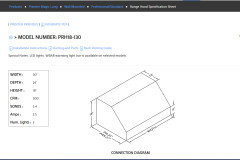
    Your OP talked about the cost of $1000 just for the 11-1/2" deep insert. You would still need to pay for the hood and installation as you said. I understand it is hard to find 400 cfm hoods with good capture area. I suggest looking at the Vent-a-Hood ("VAH") models. Many of their 30" hoods are offered in 400 cfms or less. Just as an example, the VAH #PRH18-130SS. It is 300 cfms, 24" deep, and is in a "Pro" canopy shape which is ideal for good capture of effluent.

    Vent-a-Hood claims that their "Magic Lung" series of hoods deliver cfms more efficiently than other hoods, so their actual 300 cfm hood they claim to be "equivalent to 450 cfms". That is likely marketing BS. But regardless, you get your hood cfms under the threshold that would require MUA, and perhaps you get some more suction than another 300 cfm hood. Their "Magic Lung" construction has been popular for a couple decades, so it's not a flash in the pan.

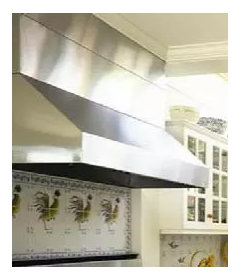
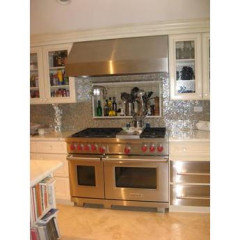
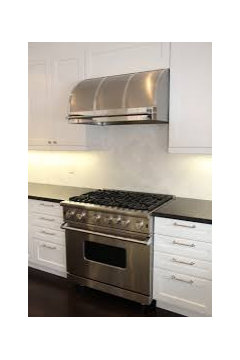
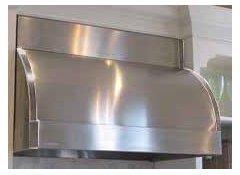
    Setting aside the specs, the VAH hood is also a looker. Note that there are options for how the hoods are installed, with respect to under-cabinet, or wall-hung, or with different widths and lengths of chimney extensions. Prices vary according to the options, but these hoods are not inexpensive, but I think they will cost about the same as what you were planning with your $1000 small insert and separate hood. Here are a couple photos of the PRH18-130SS and the more curved-style "Excalibur" XRH9. There are many other styles - again, look for the VAH 30" width hoods that offer a 300 cfm option.

    https://www.ventahood.com/index.php/products/premier-magic-lung/ml-wall-mounted


    Isaac thanked M Miller
  • 2 years ago

    M Miller, thanks. I had not seriously considered the VAH since some on this forum have said they are a pain to clean and (IIRC) may not capture effluent as well as baffle filters. But maybe those are worth a scond look.

  • 2 years ago

    Though kaseki and opaone disparage Vent A Hood, many of us are more than happy with ours. Yes, cleaning is a bit more complicated, than just removing baffles. However, we don’t find it to be a big deal. Parts can go in the dishwasher, like baffles.

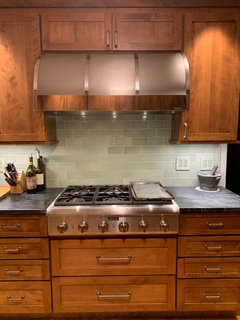
    Our Vent A Hood, now 8yo, is incredibly quiet, even on high. The hood does a great job capturing all cooking odors, steam, grease, and smoke…exactly what a proficient vent hood should do.

    Here’s ours:


  • 2 years ago
    last modified: 2 years ago

    The vast majority of the effluent that needs exhausting is from cooking, NOT from the heat source. For healthy IAQ there is NO difference between induction and gas - BOTH need proper ventilation. And the amount needed is the SAME for both.

    Gas does come with higher immediate health risks so is perceived as more important and to some extent is more important but long term health risks are often much greater with the effluent from cooking.

    A 1200 CFM VAH provides slightly less exhaust vs other 1200 CFM consumer level hoods. IIRC they averaged about 420 CFM on high and were about 15% less. All tests were on residential installs so there is some variability but there were enough that it was statistically clear VAH was a laggard.

    VAH are louder than other consumer hoods and much louder per CFM. They average 20 sones / 100 CFM while consumer hoods generally average 15 sones. Commercial systems average 3 sones. Chart here: https://bamasotan.us/range-exhaust-hood-faq/

    Note that VAH marketing lit used measurements taken from much further away than the 1m standard used largely everywhere outside of NA. Unfortunately the U.S. has no standards for consumer produce noise.

    VAH really is a bad choice. I have no dog in the fight other than to provide as best information as possible. If VAH came out with a good product I'd support them as much as anyone else.

    Mechanical MUA helps all hoods perform better and most also function quieter since they are not having to work against high static pressure.

  • 2 years ago

    Your anti-VAH bias has been made evident by your multiple comments about it on this forum. It is funny that you say you "have no dog in the fight" when you evidently do. Over and over, the same tune. I do not agree that you can know they are louder than other consumer hoods. They are all loud. As I have said before, people need to be realistic about ANY exhaust hood that has a motor at head height. Your typical bathroom exhaust on the ceiling is about 85 cfms - how loud is it? And a kitchen exhaust at head height with 4x as many cfms as a bathroom exhaust, how loud do you think it will be.

    It is irresponsible to tell the OP will find other consumer hoods to be quieter. The only way to make a hood quieter is to locate the motor either inline or externally.

    The VAH hoods can be criticized for more difficult cleaning (though people have differing opinions on that), and their marketing of "equivalent cfms" as I mentioned. @opaone's constant criticism of VAH with numbers that sound authoritative but don't pass the smell test, has been frequently challenged on this forum.

    The OP is limited in choices due to 400 cfms requirement, as well as correctly wanting more capture area than an 11-1/2" insert can provide, or the more common flat-bottomed, mesh-filtered, low-cfm hoods readily available on the market.

    @opaone - why don't you provide some hood suggestions for the OP?

  • 2 years ago
    last modified: 2 years ago

    I just realized you need at or under 400cfms..so the below is kind of moot, but maybe they have something.

    --

    We used to have a generic hood vent, something one would purchase at Home Depot, and over the years you could see grease build up everywhere, so we knew we wanted to upgrade when we redid the kitchen. We don't deep fry or anything like that, but cook a lot from scratch. The old vent was okay, but you could tell it didn't do much, didn't really suck if you held a paper under the mesh grates and over the years they got kind of warpy and stained.

    Similar to you, we got an induction and I also remember feeling stuck in the middle. There wasn't much with baffles that wasn't overkill.

    We ended up getting a 30" Victory Elite, 900 cfm Professional Under-Cabinet Range Hood from Victory hoods. They are mechanical parts which we also like. I don't think they are the same quality as the other brands spoken about here. We also upgraded our 4" vent to an 8" vent. We rarely use it the highest speed, unless there's crazy steam, frying or something burnt, but it is so much more effective in those situations.

    Isaac thanked JG ON_CAN
  • 2 years ago
    last modified: 2 years ago

    It is curious how much less gunk escapes from our hood since we switched from gas to induction. I don’t have a full explanation, just some observations. One, high heat and oil no longer lead to flare-ups. Two, the heat is spread out evenly on the bottom of the pan; with gas there were hotter and colder spots so some bits of food got overcooked and sometimes burned, and oil on the edges of the pan tended to spray up. Three, I no longer have to heat cast iron pans for a while to get the whole pan up to an even heat; this means less time for the pan to smoke.

    We didn’t really use the hood to manage carbon dioxide from cooking, but we do have air monitors and in the winter with windows closed and the oven or burners on, it was remarkable how much CO2 levels used to spike, to over 1000 ppm. That is no longer a concern.

  • 2 years ago
    last modified: 2 years ago

    "It is funny that you say you "have no dog in the fight" when you evidently do. Over and over, the same tune."

    It's the same tune because it's the same bad product being foisted off on to unsuspecting consumers.

    "It is irresponsible to tell the OP will find other consumer hoods to be quieter. The only way to make a hood quieter is to locate the motor either inline or externally."

    We know the noise because I and numerous others on here have measured it (and there have been four discussion threads on these measurements). The loudness of VAH was amazingly consistent across a number of them in a number of different houses measured by a number of different people. The only thing louder / CFM was an OTR Microwave.

    Remote blowers (and silencers) are indeed the least noise but hoods w/ integrated blowers can be made quieter. IIRC the Prizer and both Kobe in the noise charts are integrated and they are much queiter / CFM than VAH.

    As to suggesting options... I wrote the entire Range Hood FAQ and have continued to update it as new information becomes available.

  • 2 years ago

    "it was remarkable how much CO2 levels used to spike, to over 1000 ppm. That is no longer a concern."

    With a proper exhaust system there should be no or very minimal CO2 increase when using a gas range. If your exhaust wasn't removing CO2 effectively then it's likely not removing harmful effluent from cooking effectively.


    BTW, interesting about the change in 'gunk'.


  • 2 years ago

    @opaone we didnt generally run the hood when just the oven was on, because we didn’t get the air monitor until shortly before switching to induction - and before we got the air monitor we didn’t realize the CO2 was so high.

  • 2 years ago

    Our gas oven was definitely bad for CO2; I wasn’t sure if that was typical since the range was a piece of junk in general. We roast a lot of vegetables and it is nice not having to worry about the electric oven producing CO2 (or anything else other than a burst of steam when we open it.)


    Back to the original question, is it fair to say that a sub-400 CFM hood with good capture volume is still not really available? Would using an insert and a custom stainless hood be the way to go?