Software
Houzz Logo Print
darragh_w

What is this old primula variety?

2 years ago
last modified: 2 years ago
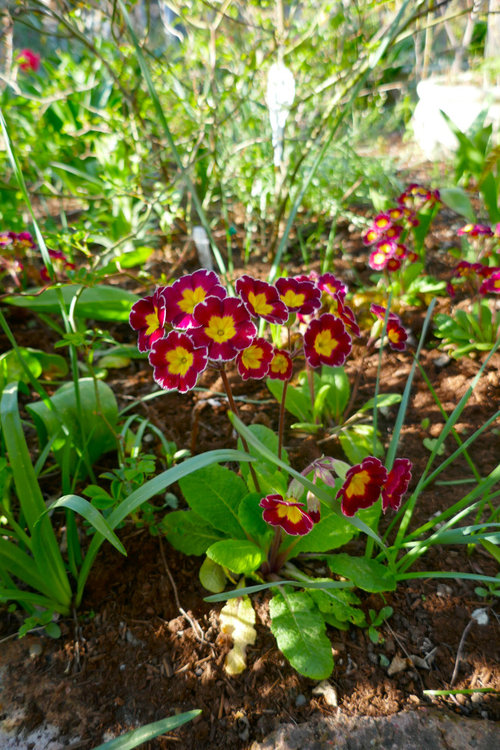


An aquaintance gave me this primula three years ago. It has been divided into over twenty plants this year! So it is a hardy garden grower, not one of those store bought primroses. I saw the exact variety fetured in The English Garden March issue 2024. They merely called it a 'red primula' without giving a name. The plant has flowers on long stems, dark garnet red with a white picotee edge and yellow center. Normal primrose leaves a bit on the smaller side. Thanks for any information.

Comments (26)

  • 2 years ago
    last modified: 2 years ago

    It's not necessarily a named cultivar. Polyanthus are promiscuous and appear in all sorts of colour combinations. Any Polyanthus seed mix could probably throw up similar plants.

    Darragh W thanked floraluk2
  • 2 years ago

    It’s very pretty!

    debra

    Darragh W thanked djacob Z6a SE WI
  • 2 years ago

    Floraluk2 this is an old variety. As mentioned, I spotted the exact plant in The English Garden magazine for March 2024, this year. It was growing on an old estate in England. They simply called it a 'red primula'. So that doesn't tell me anything other than it has been growing for a long time. I'm hoping someone will recognize the variety.

  • 2 years ago
    last modified: 2 years ago

    What I am trying to say is that it won't necessarily have a cultivar name. It may well be an old type but it might never have been named if it was just a pass along plant. The edging isn't yellow, the petals are not evenly shaped and the markings are too ill defined for it to be one of the gold laced cultivars. Do you recall where it was grown in England? Can you show the picture from the magazine?

  • 2 years ago
    last modified: 2 years ago

    Rosaprimula and Floraluc2 all good comments. I don't believe my primula is an auricula variety, likely a vulgaris or polyanthus type. Possibly mixed with 'Gold Lace' genes. It isn't 'Gold Lace' as I also grow that variety and the unnamed one above is bigger with different flowers. Gold Lace measures 6" height, whereas the above plant is 8" in height.

  • 2 years ago

    O no, definitely not auricula, just saying how easily primulas will cross and seed, and the difficulty of maintaining named varieties once mixed in with other types. I agree, deffo a polyantha, and given the picotee edge, might well have some of the Gold Lace genes.

    Darragh W thanked rosaprimula UK (Cambridge) Z8/9
  • 2 years ago

    Good to know, rosaprimula! Floraluc2 posting the magazine picture won't work because I took it on my phone which won't upload on to this platform due to whatever type the picture is. I would need to go back to the library with a camera to retake the picture. Might do that. So a polyantha type. At least a start. More info than I had before. As well, as mentioned this primula grows and multiplies very well. It reminds me of 'Gold Lace' again in how it multiplies. Basically it seems to be a polyantha/Gold Lace cultivar of some sort that is an old cultivar from an English estate.

  • 2 years ago
    last modified: 2 years ago

    Rosaprimula, I checked the magazine picture on my phone. "Pretty, deep red polyanthus, each petal piped with a slivery trim." The quote accompanying the picture of, yes! definitely my primrose! It was in an article on a topiary garden.

  • 2 years ago
    last modified: 2 years ago

    No, definitely neither an auricula nor a vulgaris type. (Auriculas have entirely different leaves and texture). They're just known as polyanthus which always have a bunch of blooms on top of a flower stem. Vulgaris has no such single stem and veris has smaller flowers. Polyanthus genetics are lost in the mists of time due to their happy criss crossing and pass along nature.

    Btw 'Gold Lace' isn't a single cultivar. There are many. It just describes a group based on flower type.

  • 2 years ago


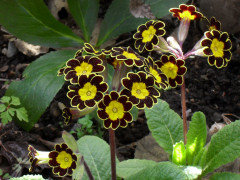
    This is my Gold Lace variety. As mentioned, it is 6" in height, with the Red Polyanthus being 8" in height, with longer flower stems, larger leaves than Gold Lace, a different flower shape and markings and colour. As well, the Red Polyanthus has a silver picotee edging with Gold Lace having a gold edging.

  • 2 years ago

    Lovely. I've grown a dark one like that in the past.

  • 2 years ago
    last modified: 2 years ago

    Delightful. Primulas have always been a struggle (lean soil, dry climate) but I do grow the smaller types in pots (trying chionantha and secundiflora this year). Auriculas and cowslips(p.veris) do well for me in the openground, while oxslips (elatior) and the likes of japonica or beesianum need continual replacements. Plus,the vine weevil nightmare (I have to use nematodes). I tend to avoid miffy plants (cos negligent and lazy) but willmake both the exception and the effort for primulas.

    I did once have an absolute horror (but beloved by many) - a horrid striped one with dark leaves, (Dark Rosaleen), given to me by a nursery owner friend. Passed on as soon as I decently could.

    Despite being a less than together gardener, I am afraid that I am also a massive snob with puritanical tendencies (only towards plants though). Those brightly coloured polys are not getting traction in my garden (and yet, to show my double standards, even the most austere of the auriculas are distinctly gaudy)..

  • 2 years ago

    Rosaprimula what don't you like about Dark Rosaleen? I just planted four of them, so want you to spill all the dirt about what you find wrong, or difficult about this variety. I haven't had any luck in the past with the red tinged leaf Irish primroses. They tend to need too much water for my very porus soil. Is it the flower you don't like? Tell all!

  • 2 years ago

    Gods, where to begin. Dumpy, STRIPED, horrible foliage.(I am not really a fan of stripes on any flowers but seeing this combo on primulas (valued by me for their innate grace, elegance and simplicity) just horrified me. Even the lurid auriculas have more architectural style than Dark Rosaleen...but I realise I am in the minority here as Kennedy's primula breeding has been wildly successful and much beloved (just not by me). And yes, they do need a fair bit of watering and did not really enjoy pot culture, but I was blowed if I was going to place mine in the little spring borders which have an austerely refined colour selection of pale yellows, creams, soft blues and pale lilacs. YMMV.

    Darragh W thanked rosaprimula UK (Cambridge) Z8/9
  • 2 years ago
    last modified: 2 years ago


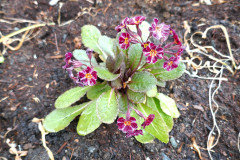
    Rosaprimula, this is what we have today regarding Dark Rosaleen. You are thinking that white line down the edges of the dark burgandy flower is the striping you don't like? When I hear 'stripe' I think primula Blue Zebra. So hadn't really considered the white edging lines to be stripes. They are fairly low growing for sure. I'm waiting to see how much water these plants will need in my garden. Pretty sure they are growing in too much sun and will have to be moved to more shade.

  • 2 years ago
    last modified: 2 years ago

    I didn't know Dark Rosaleen until I saw that photo. But I agree with Rosaprimula. To me it looks like a red primrose which has undergone very severe, wet, windy weather and has been battered, bruised and bleached.

    This is my favourite Primula:


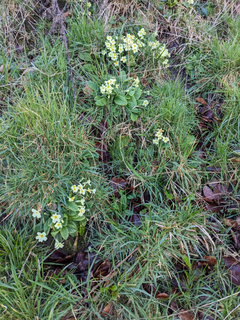
    Wild P vulgaris. Plentiful in my neck of the woods.

  • 2 years ago
    last modified: 2 years ago

    I think, if you moved it somewhere shadier, you might lose that bronzed look of the foliage, Darragh. Anyways, I consider Dark Rosaleen to be a 'collectors plant' while I am a garden philistine. I really don't care for the doubles either. I do admit to adoring my auriculas...but I grow them as specimens...not in any sort of garden setting, where I can admire their ridiculous audacity. I used to do that whole 'auricula theatre' thing, displaying each in tiny terracotta pots (and even had a few of the farinaceous 'fancies' but these days, I allow them to spread in large, shallow clay pans while the stems grow this way and that...and when the show is over, I tuck them out of sight behind the greenhouse (along with the other pots of spring bulbs such as tiny narcissus and wild tulips.

    If I had a bog garden, I would certainly grow a lot more of the tall, dark asiatics since discovering how easy most primulas are to grow from seed...but it is almost a desert here in the dry east, compounded with hopelessly lean soil. Great for the likes of tiny centaury, pulsatillas, pussytoes,, pinks and the smaller centaureas such as c.bella...but rubbish for attempting a decent primula collection.

    As a kid, I was often shunted off to the Irish relatives in CLare and Mayo...where I swear, it rains every single day. MIsty, green and perfect for primroses of all kinds. You wouldn't believe the number of failed attempts at the likes of filipendulas, veronicastrums, eupatoriums I have endured...but alas, not to be unless you have a watering can or hosepipe welded to your wrist...

  • 2 years ago
    last modified: 2 years ago

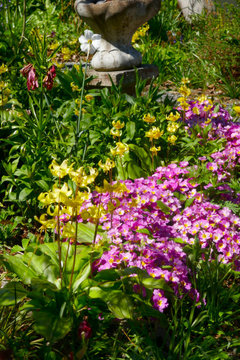
    Ladies, this conversation is wonderful! I really appreciate it. Floraluc2, the picture above of Dark Rosaleen IS a deep red primula that has been subjected to severe wet windy weather, here is where I get to complain bitterly about the lousy April weather I've been enduring on Vancouver Island, BC, Canada. Amazing you can tell that by looking at poor newly planted Dark Rosaleen. The distinguishing difference with DR is there are white edgings on the outside of petals which visually makes the flower distinctive. I am in awe of your picture of Primula vulgaris growing in situ in the grass! I do grow P. vulgaris but it isn't especially vigorous in my garden. Rosaprimula I tend to be a garden pragmatist, like yourself my growing conditions are difficult for primroses. We have the coldish, wet winters and spring here, then some weather god flips a switch and, I kid you not, in one day a 20 degree jump in temperature and we metamorphosis into the Mediterranean with hot and dry for the rest of the year. Added to which I have like yourself, extremely porous, lean soil as my growing base. So I look for plants that can take my garden growing extremes. I'm doubting DR will make the cut, but am giving it a go. The dark red polyantha which started this thread, is my second best primrose in regards to toughness and endurance. Here's a picture of my toughest primrose which I love because it is so prolific with such great endurance. Not sure what you both will think of this one, but for me it is marvelous due to it's tenacity. Planted here to compliment Erithronium 'Pagoda'. From this spring 2024.


  • 2 years ago
    last modified: 2 years ago

    Oh, I am envious of your Pagodas. I had one once but the snails finished it off. Finally it dwindled to nothing and I, and it, gave up.

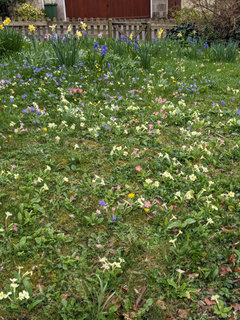
    I always enjoy this ,'flowery mead' just up the road from me.

  • 2 years ago

    O, very lovely, Darragh. Erythroniums, when happy, seem to colonise very well indeed.

    I have quite a few clusters of the pink/lilac vulgaris (sibthorpii) which I did try to keep separate from the ordinary pale yellows. Also does really surprisingly well in my dry soil. I was given one plant but they have spread around - never very sure whether the lilac ones are a different separate variety or just a spontaneous mutation. The ones in better soil are considerably less floriferous (with oversized leaves) than the primroses which grow in the more neglected parts of the plot...so I think they like a low fertility, but moist soil...which is just about doable after a damp winter. Talking of colonising, I actually have to remove a LOT of cowslips which really spread worse than myosotis sylvatica...but have a much harder time trying to keep the taller, more graceful oxslips alive.

  • 2 years ago
    last modified: 2 years ago

    I wish cowslips would spread for me. I have just a few, growing between paving stones. I collected the seed in a local meadow.

  • 2 years ago
    last modified: 2 years ago

    Glorious, floraluk2! I love to see the Cowslips in a natural setting. The Erythroniums are native here on VI, the native one is white and about a week earlier to flower. 'Pagoda' is the cultivated variety. I salvaged mine from an old farmstead that was being converted into a shopping mall. Fortunately I knew what they were and went in with a friend. We dug up every erythronium that could be spotted. They've taken off in both our yards, so I feel like a good deed has been done there. Rosaprumula, is my pink/lilac primula, Primula vulgaris 'sibthorpii'? Is that how it would be presented? I agree completely with you about the dry and infertile soil suiting this variety. That's what I have, and as you can see, they just do wonderfully! I also grow them in pots. To showcase how tough this variety is - gave a few clumps to a neighbour up the road. He is only here part time, and part time at his other home in Victoria. So the garden here doesn't get watered much, if at all. Added to this, the man proceeded to replace the siding on his home, in the process of which dumped wood, shingles, plastic and other construction debris all over the spot where the primroses were planted. Covered the area completely for months. I thought the plants were destroyed and was quite annoyed with him. Imagine my amazement this spring, with all the building debris removed, to see patches of lavender/pink flowering merrily among blue grape hyacinths. Tough, indeed. As to the oxslips, I've never seen any for sale here. They look lovely! As to cowslips spreading more easily than myosotis, I wish! Mind you the common Forget-me-not doesn't do well in my yard either, but there is a minature boring version that is a weed. However I have discovered MULCH! which has stopped all those scruffy weeds in their tracks, am happy to report.

  • 2 years ago

    Floraluk and Rosaprimula, what do you think of the primrose in the link above? Could this be my variety? My primrose measures 20 cm in height, with this variety at 24 cm, so it is a taller type. By contrast, Gold Lace (my dark maroon one) is 16 cm, a much smaller plant. I've received a reply back from The English Garden magazine editor regarding the variety identification. She didn't know the variety in their story, but speculated it and mine (which are clearly the same) could be Silver Lace Lavender due to flower looks. That variety is too small at 16 cm to be the correct one. However this Silver Lace Purple is bigger.

  • 2 years ago

    I don't think so.

    Darragh W thanked floraluk2