Software
Houzz Logo Print
blakrab

White Boneset??

2 years ago
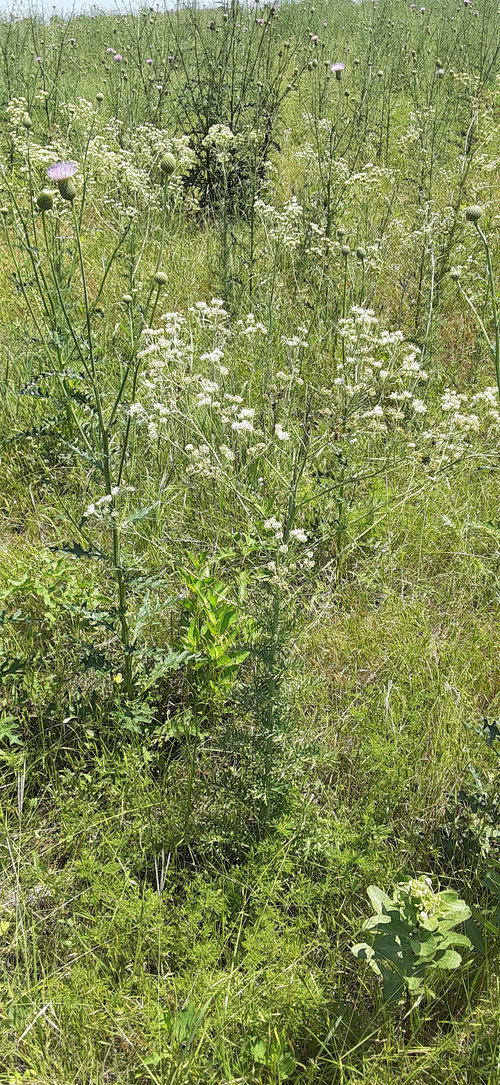
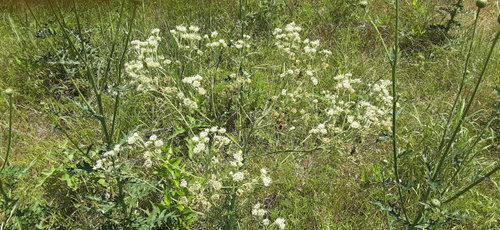
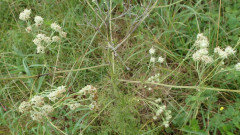
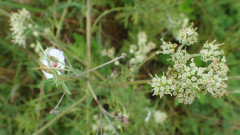
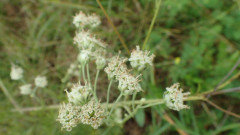
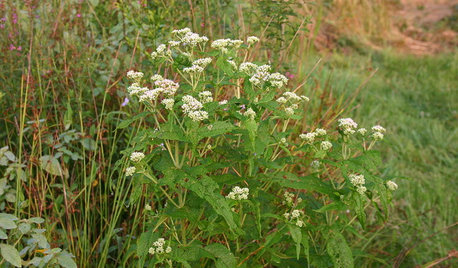
This ~3' tall wildflower with small, creamy white blooms was found in an unmowed field. What is it?


Comments (14)

  • 2 years ago
    last modified: 2 years ago

    There are only 2 species of Boneset(Eupatorium) in the Dallas area. E. serotinum, Late Boneset and E. capillifolium, Dog Fennel. It looks like it was very windy when you snapped the pic, so it vaguely appears that the leaves have more substance than Dog Fennel, but I can't say for sure. If the wind messes up your photos you should consider plucking a branch that has leaves and flowers and photographing it out of the wind, before the branch wilts? You've been doing this long enough that you should be familiar with botanical terms used for description. You can also describe a plant using regular every-day words. The plant descriptions on the Illinois Wildflowers website are a good model for going about describing plant charecters. It's very easy to identify a plant using only descriptions without a photo, if the descriptions are precise. Compare to Eupatorium serotinum or Eupatorium capillifolium.

    You can rule out Dogfennel. It's flowers look nothing like the pic. Consider Arnoglossum ovatum, but we really need a closer shot. I'm not seeing very much foliage on them, so close ups of any leaves, stems, flowers and involucres would help immensely.

    blakrab Centex thanked Jay 6a Chicago
  • 2 years ago

    To add to what Jay said, we have asked many times for close ups of details: leaves, flowers, stems. But still you seem unwilling to step closer to your plants. Could you try to help us to help you by getting nearer to your subjects?

    blakrab Centex thanked floraluk2
  • 2 years ago


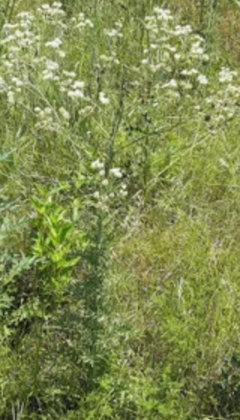
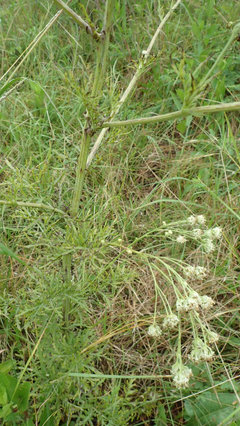
    This stem looks like something is wrapping around it. That make it more interesting. Do you happen to recall what it looked like? I looked up species to the Eupatorium tribe, Eupatorieae in Dallas, and nothing like this came up, though I don't actually know what your plant looks like Lol. Brickellia is another option, Texas has a few of them..

    blakrab Centex thanked Jay 6a Chicago
  • 2 years ago

    Compare to Brickellia eupatoroides

    blakrab Centex thanked Jay 6a Chicago
  • 2 years ago

    Sorry, I was out on my bike and only had my phone on me when I took those pics. Maybe I'll try to go back with my camera and get some better pics?

  • 2 years ago
    last modified: 2 years ago

    A good description should include

    Stem, is it round, square, smooth(glabrous), pubescent? What type of pubescence? Hirsute, pilose, tomentose, etc.

    Leaves, shape: ovate, cordate, rhomboid, linear, lanceolate.elliptic?

    Leaf tips, rounded*blunt) acumate, acuminate?

    Leaf bases, rounded, tapered, cordate, etc?

    Leaf margins(edges): entire, lobed, serrated, ciliate, what type of serration? crenate,(blunt) biternate, etc.

    Leaf surface: smooth(glabrous), pubescent: area of pubescence,: along midvein on bottom leaf surface(abaxial). Across entire leaf surface. (A 10x magnification loupe can allow you to see pubescence that's invisible to the naked eye.

    Leaves: describe basal, cauline(stem), and upper leaves, any leaves in the flowering stems?

    Leaf habit, stiff, relaxed, conduplicate(sides bending upwards( undulate(wavy), etc.

    Leaf petioles and leaflet petiolules:

    Sessile(lacking petioles) perfoliate, clasping, winged, long, short? Petiole and petiolule lengths?

    Flowers,radially symetrical? bilaterally symetrical? How many petals, How many ray petals? Are there disc flowers? How many disc flowers?

    Involucre: length of involucre? How many phylaries? Surface of phylaries, glabrous?, pubescent? Arangement of phylaries, solitary? overlapping? How many rows of overlapping phylaries? Length of flower stems,(peduncles)? Guy Nesom, the botanist who broke up and redid Aster, Solidago, Brickellia, Euthamia and Eupatorium, states on his web page that he has an excellent grasp on his English. His powers of description are his main boast. Better use of botanical terms will elevate this group and make conversations here more fruitful and enjoyable! Just a suggestion, to each their own Lol.

  • 2 years ago

    I have a great app, New England Wildflowers. They have them for most states and you put in the characteristics and scroll through pics. So much easier to ID in place than expect us to ID from mediocre pics.

  • 2 years ago
    last modified: 2 years ago

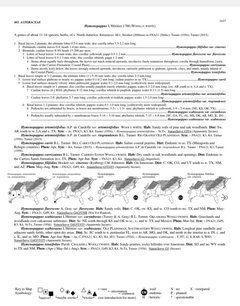
    Hymenopappus scabiosaeus! Carolina Woolywhite.

    blakrab Centex thanked Jay 6a Chicago
  • 2 years ago

    Wow, damn! Hymenopappus scabiosaeus (Carolina Woollywhite)...and perhaps Hymenopappus scabiosaeus var. corymbosus since it's in Texas? I'll have to go back and get some better pics and hopefully some seeds later! First time I've ever heard of this native! :o

  • 2 years ago

    It's the 1st time I've heard about it too Lol. Confirmation still pending. I hope I'm right because it's an awesome looking plant. It reminds me of Verbesina walteri, that also occurs in Texas, with it's white flowers also lacking ray petals. There is nothing like Woolywhites up here in spring. The closest thing we have is Silene latifolium and Silene stellata. I wonder if Carolina Woolywhite is used by Monarchs migrating north? All our Eupatorium type species bloom in the fall for the Monarchs migrating to Mexico. Awesome leaves and flowers. Can't wait to see some closer pics.

    blakrab Centex thanked Jay 6a Chicago
  • 2 years ago
    last modified: 2 years ago

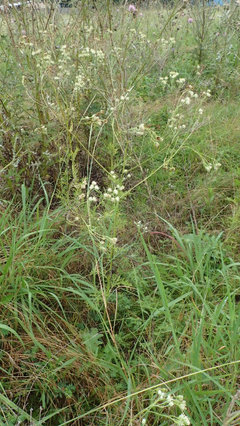
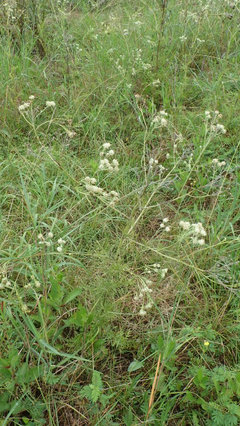
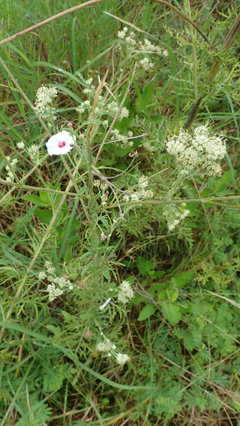
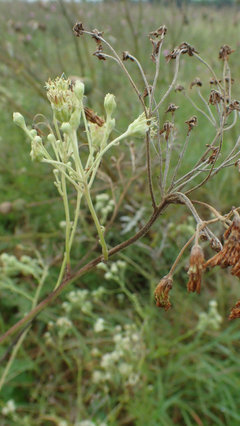
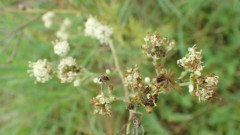
    OK, I went back and got some better pics...enjoy!


    So, I think it does appear more to be Hymenopappus scabiosaeus var. corymbosus, rather than var. scabiosaeus? The little blackish cones in the last pic are the seeds, btw.

  • 2 years ago

    You need the plant in hand to learn if it's var. corymbosus or not.


  • 10 months ago

    I have a 5 foot tall boneset bought at a wild plant sale in Oklahoma. The flowers are much fuzzier.