Software
Houzz Logo Print
mxk3

Brought home more natives

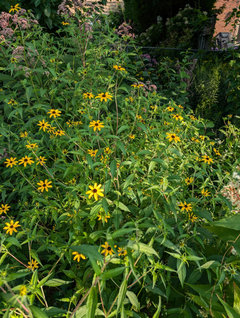
I picked up sneezeweed (Helenium autumnale), Rudbeckia triloba, and stiff goldenrod (Solidago rigida). These are for the pasture-turned-meadow.


My reference book said the Rudbeckia triloba is a biennial but a prolific seeder. I'm disappointed it's short-lived but will be happy if it self-sows with abandon, which is what I'm hoping -- it's too expensive to buy many plants for back there, it's a pretty good-sized area. The goldrenrod reads like a winner. IDK that the sneezeweed was good choice. The bench card didn't say anything about it needing moist conditions but the reference book I have says it prefers moist. Which this area is not. It's not dry-dry, but it's fast-draining and gets no supplemental watering from me. Oh well. It was only $7.


What has your experience been with these?

Comments (25)

  • last year

    New plants, that is fun!!


    I have no experience with these but would love to see the progress of transforming your pasture to a meadow! 😍

  • last year
    last modified: last year

    "...but would love to see the progress of transforming your pasture to a meadow!"

    I'm doing it in a very lazy and haphazard way -- basically by just letting it do its thing and what survives and thrives survives and thrives on its own. I did learn one year that we do have to cut it until at least early June or else the pasture grasses, whatever they are - ? crops - get over 6' high and all you see is a sea of grass. I think it's probably oats, rye, and the like -- whatever was in the horse feed and came out the back end, basically. I'll occasionally buy something if it's not too expensive, or transfer divisions of natives I have up by the house. Sometimes they take, but often they don't. It seems if I plant in June after we stop cutting they have a better chance at survival than later planting. They're competing with tenacious grasses/crops, so if they don't get a good foothold the first season they're probably not going to make it. There's just no point to plugs - they can't compete, yet it's surprising what pops up on its own back there with zero input from me.

  • last year
    last modified: last year

    maybe add in a hemi-parasite such as yellow rattle (rhinanthus majus)- keeps the grasses a little bit in check and have quite attractive early summer flowers - sow seed direct after the first cut.

  • last year

    Following with interest because I have a swathe of “ disturbed” area but is rocky ( not like a rock garden, but various sizes of rocks everywhere you dig), and also sloped & uneven. Being taken over by the various weedy grasses, brambles. So I don’t want to create a sea of tall meadow and tall grasses even if I could , because I can’t actually mow it, can only weed- whack & selectively poison.

    I started by outlining a few smaller areas of it ( like 4x4 or 8x 4 , but not squared off) with deadfall logs or those cut by power co., and hand- planting some small potted perennials that were available on sale or more cheaply- Rattlesnake Master, coneflower, mountain mints, goldenrod. Some Bahrain priced non- natives like Russian sage ( I have deer). With plans to try to make more of the “ matrix” with lower items and some self seeding annuals/ biennials that I could do from seed.

    But yes, actual plants are so expensive! Sedges! I for sure have looked at plugs , which you usually have to buy a lot of at once, which is actually great for the concept of making an “ installation “ you can concentrate on watering in for the least time possible, but I always see that pictured as installations by crews in large PREPARED sites, where soil has been dug & raked, & that ain’t happenin’ here!

    Randomly thinking about tossing out some dwarf Plains Corepsis seeds.

    So am also interested in learning what can “ outcompete “ the weedy stuff. I need to search that term. I think mountain mint is doing better than some other things because it comes up bushy. Agastaches also. Not expecting no- maintenance , but “ what are plants I can recognize as the ones I planted and/ or I want , so I can encourage and pull or zap the thugs whilst their seed bank diminishes somewhat.

  • last year

    Rosaprimula, the Yellow Rattle is so interesting! I just read about it.

  • last year

    Once you have Rudbeckia triloba, you have it! As you mention, it self-seeds with abandon. I have not intentionally grown it for many years, but it still pops up here and there around the garden. If it is in an empty spot (a rarity around here) I leave it, the rest gets pulled up. An advantage for some gardeners is that it can take more shade than most yellow sunflower types. Good choice!

  • last year

    Fantastic pics, Jay. Is that your gaff? I confess, it was not what came to mind on reading 'Chicago' in your zone name.


    I have officially given up on all those gold, bronze, yellow asteraceae as seemingly NONE survive in the dry east. I really am limited to cushiony plants, white, silver, grey or small waxy leaves...in fact, the less leaf, the better. Or, a huge storage organ (taproots, tubers et al) - they can work.. Heleniums were some of the very first to be attempted (and lost)...to add to phlox, hydrangeas, asters (nearly all those plants I see on here, although I always check out SW and Cali gardening). By the time August rolls around, it is practically a desert here...I have been in denial for a quarter of a century - finally getting to grips with properly xeric gardening...but it is proving to be a painful transition, watching the decline of all those hopeful perennials such as sanguisorba, potentillas, thalictrums and francoas and the like, now the hose has been withdrawn.


    This year, the abnormally wet weather has beckoned, with false promise, to both myself and my plants...but the reckoning is in the post...

  • last year

    I have had triloba for many years in a wild and woolly area. For sure it does reseed and in this location it is welcome. A while back I picked up triloba "Prairie Glow". Its flower is definitely distinctive...very pretty but it wasn't nearly as self seeding as the traditional triloba. In fact after a few years it was no more.

  • last year

    R. triloba is a wonderful plant if you have space. Unwanted seedlings are easily pulled. I adore it!


  • last year

    I too adore rudbeckia triloba but it does not seem to reseed so freely for me. Perhaps it's the location - the bed gets more shade than I think I am willing to admit to myself lol. But I sow some every year so I have at least a few plants to enjoy.


    :)

    Dee

  • last year
    last modified: last year

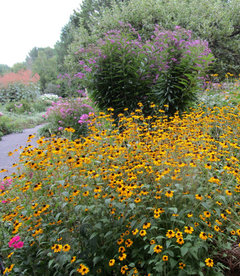
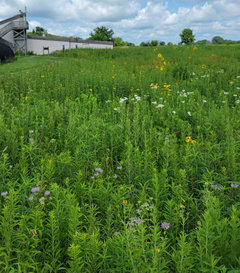
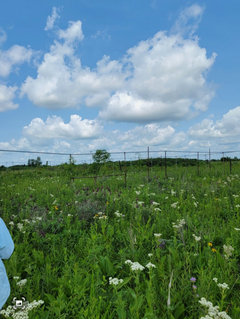
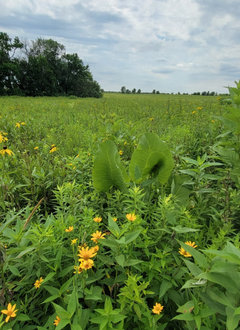
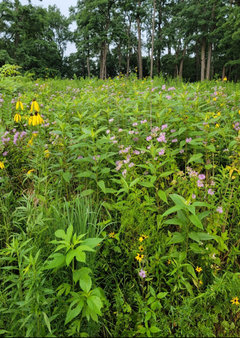
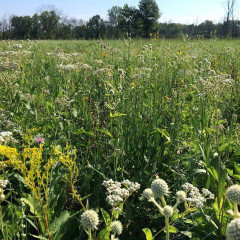
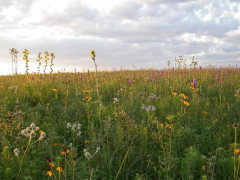
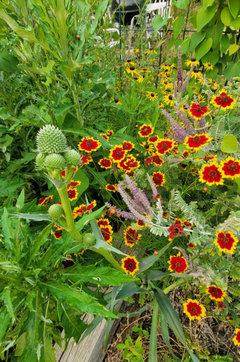
    The gardens aren't mine. They are gardens that friends designed. Rosaprimula, what about using our southwestern Asteraceae like Desert Marigold? I know you've went down that rabbit hole before? These are photos of nearby prairies in the Chicago area. The name Chicago means Allium in the tongue of the original native people.


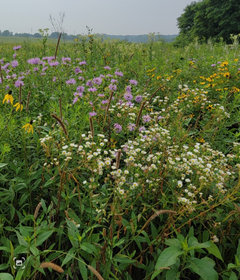
    Wild Quinine, Parthenium integrifolium looks like umbellifers from a distance.


    Phlox glaberrima grows within the taller plants.


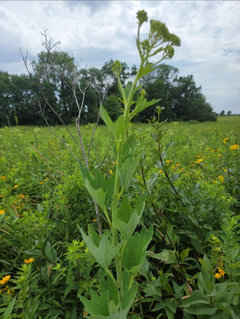
    I love Prairie Dock. Silphium terebinthinaceum. With Heliopsis I think?


    Arnoglossum atriplicifolium. I love the contrast between it and the other plants.


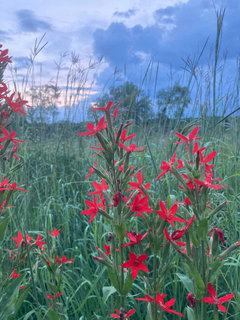
    Silene regia, Royal Catchfly


    Rattlesnake Master, Eryngium yucciifolium.


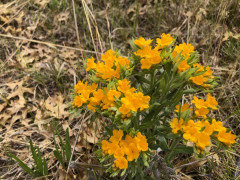
    Hoary Pucoon, Lithospermum canescens. It thrives in dry sand.


    Marsh Lousewort, Pedicularis lanceolata. It's hemiparasitic and uses grasses as hosts.


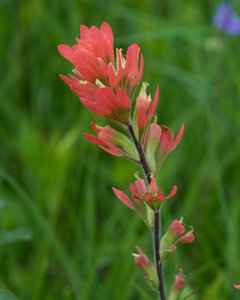
    Scarlet Indian Paintbrush, Castilleja coccinia. Another hemiparasitic that steals nutrients from grass. Most prairies I visit have shorter plants like Pedicularis canadensis, Achillia gracilis, Viola sagitatta, Krigia dandelion, Antennaria neglecta and Primula meadi, that bloom in spring and then they dissapear from view when the taller plants start actively growing.

    Coreopsis tinctoria, Eryngium yucciifolium, Amorpha canescens and Cirsium altissima. Dry lovng plants.

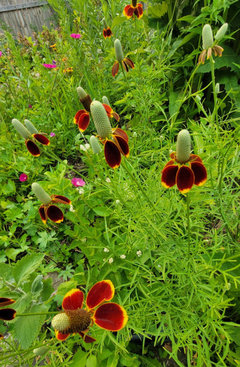
    Mexican Hat, Ratibida columnaris, and Bush's Poppy Mallow, Callirhoe bushii.

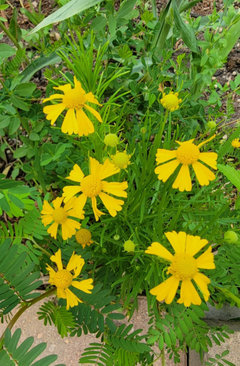
    Helenium amarum.

  • last year

    Great pics, Jay!

  • last year

    Yah, am pinning all my hopes on baileya multiradiata and tagetes lemmonii after a kindly forum mate-y sent me seeds. The baileya especially looks promising with that pale, downy foliage.


    I love, love, love the look of hoary puccoon (great name too) and will, no doubt, be attempting royal catchfly again. I grow a few silenes but this one has always eluded me. Am definitely going to have a good look at Spanish paintbrush - had always assumed, being hemi-parasitic, that I would not be able to provide the right hosts. Does it parasitise any particular grass?

    Anything with 'marsh' or palustris in the name is likely to be a non-starter for me.


    Do please keep the photos (and text) coming - I enjoy them enormously. I learn A LOT from the gardens and gardeners on here, even though many plants are out of my reach, ability or pocket.


  • last year
    last modified: last year

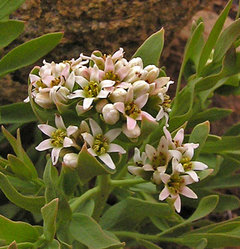
    Castilleja coccinea uses various species of grasses, sedges, composites and violets as host plants. It's not particular. The germination instructions are interesting.


    I tried inserting Bastard Toadflax, Comandra umbellata seeds into host grasses with no luck. Bastard Toadflax is in the Santalales and is known to be difficult. Im really obsessed with growing it too.


    Bastard Toadflax, Comandra umbellata, Comandraceae, Santalales


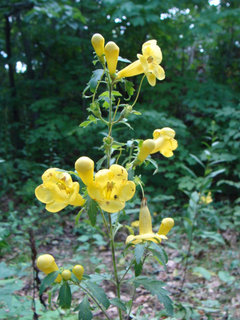
    Aureolaria pedicularia, Fern Leaved Yellow False Foxglove loves dry, sandy soil and it only uses oaks as hostplants. Orobanchaceae


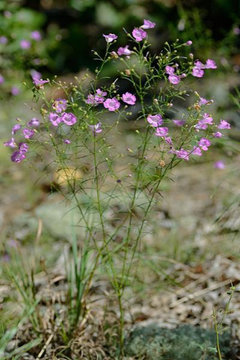
    Rough False Foxglove, Agalinis aspera. It also uses a variety of grasses and composites as host plants. It loves growing in dry, sandy soil. Orobanchaceae. Not sure about germination. Ive scattered probably thousands of Agalinis seeds and have never seen 1 seedling?? Does it need a special species of mycorhizae? Is germination triggered by fire? For years people had difficulty germinating Hoary Pucoon. Prairie Moon nursery had a question mark for germinating instructions. Someone must have cracked the code because they were selling plants at a recent sale. I was in such a flurry grabbing things I regretfully left the sale without them. Time to visit the sand prairie and collect Lithospermum, Crocanthemum and Comandra seeds.

  • last year

    O, be still, my beating heart. I adore those airy flowers - the aureolaria and agalinis especially. The only orobanche I grow is the ivy broomrape...but so tempted to seek out seeds, especially the aureolaria...


  • last year

    I'm still waiting for the R. triloba to bloom, but I can see that it's budded up so it should be any day now. Does it normally start blooming in late July-early August in zone 5/6, or do you think it's pokey because it's newly planted?

    I scored again last weekend -- stumbled on some gorgeous, full plants of Pycnathemum muticum (mountain mint) and Symphyotrichum novae-angliae (New England aster) for a good price. Brought home two pots of the mountain mint and one of the aster, got them planted right away -- both look great, didn't miss a beat even though they're in hot, blazing sun.

    I'm really pleased to see more nurseries carrying natives! I'm tempted to go on another shopping spree maybe next weekend to the place I got the Rudbeckia, but by then it will August and I'm thinking it's getting kind of late in the season and stuff may not have a chance to get established back there before late fall cut-down and then winter, what will the intense root competition from all those grasses and whatnot. Might be better to wait until next year. IDK.

  • last year

    Does it normally start blooming in late July-early August in zone 5/6, or do you think it's pokey because it's newly planted?


    Some of those that haven't been munched down by deer :( are starting to flowers...earlier than usual for sure as it usually starts in August.

  • last year

    "...earlier than usual for sure as it usually starts in August."


    Good to know.

  • last year

    I planted 3 different types of mountain mint in areas that get little help from me- and all are doing well. The blunt mountain mint is looking best , but maybe is just in more of its happy place. The one plant is already an enlarging clump, but if I find it again for sale, I will plant more.

  • last year
    last modified: last year

    Marmiegard (and anyone else), I have often been tempted to plant some mountain mint, but I am so leery of anything with mint in its name. I would need to get the Pycnanthemum virginianum (Virginia Mountain-mint) since that is native here. I just don't want to plant something that will spread very aggressively since I am having trouble keeping ahead of some of my very aggressive natives (for example, Symphyotrichum ericoides, white heath aster which is taking over). Opinions welcome-pro or con!

  • last year

    @porkchop_z5b_MI I thought of you when I saw this clump of just blooming triloba (about 4.5 feet tall)


  • last year
    last modified: last year

    I scored again last weekend -- stumbled on some gorgeous, full plants of Pycnathemum muticum (mountain mint)

    For 'everyone' else it seems these mints easily grow but I have tried MM on a few occasions and I cant get them to last more than a couple of seasons :(.

  • last year
    last modified: last year

    I thought about your thread @porkchop_z5b_MI when I picked up an Oxeye Sunflower and a Common Boneset yesterday.

    porkchop_z5b_MI thanked rouge21_gw (CDN Z5b/6a)
  • last year

    You will be amazed at the amount of buzzers that visit the boneset -- mine are utterly covered in flying insects of all shapes and sizes, some of which I have no idea what they are. I enjoy just standing there and watching, I find it rather mesmerizing. I saw an insect last week that was shaped and sized similar to a queen bumble only a little rounder in the abdomen and hind and it had a smooth reddish-brown body - no clue what it was but it was thoroughly enjoying the boneset.


    Interestingly, I have two clumps not too far from one another, and one is preferred over the other, maybe it has to do with the fact that one is a few years old now whereas the lesser-preferred one is brand-new as of this spring, maybe it's just not pumping out the nectar yet or it's in an area that's a little shady so maybe that makes a difference. IDK. Anyway, be patient -- plant it and they will come; may take a year or two until they find it, but they will come.