Software
Houzz Logo Print
gerhardpeters

Need help with young maple trees

last year
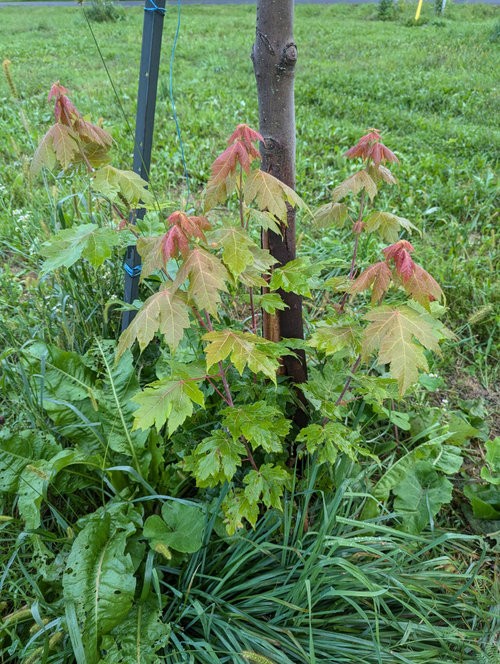
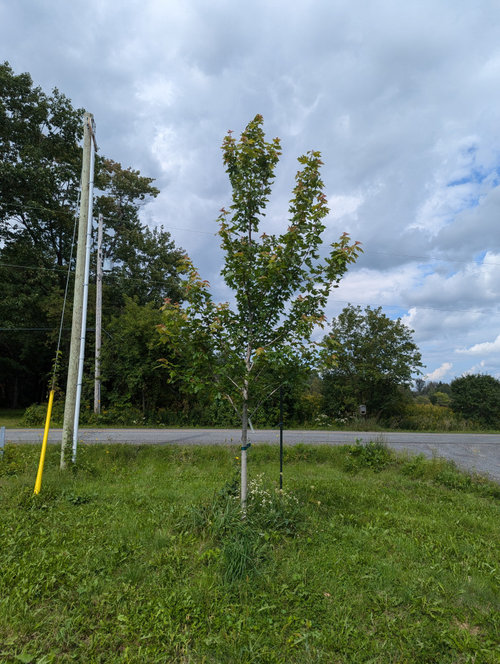
A bit of background. I had a new house built in 2021, and in 2022, I had the landscaping done by the same company that did all of the excavation and septic system for the house build. They also planted six maple trees for me. Looking back now, I realize this company had no experience in landscaping and planting trees. I should have chosen a company specializing in landscaping.

I need help with nursing the five remaining maple trees I have. One already died

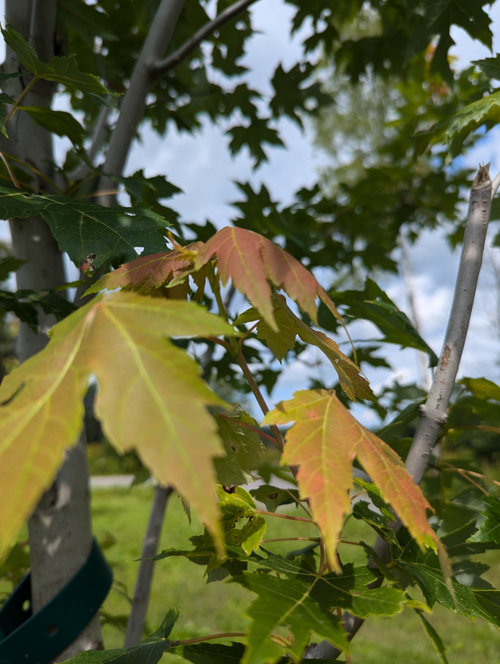
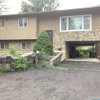
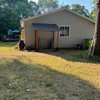
I'm including some pictures below. The trees all have leaves turning red, which started about two months ago. I found an article on The Journal "When your maple turns red before its time". It is suggested that the pH level is too high and bring it down by using Iron sulfate. I purchased Southern Ag Chelated Liquid Iron and did one application about a month ago. So far I'm not seeing a difference. I also talked to a local Arborist, and he suggested trimming the trees and replacing the soil around the trees. I had him trim the trees, but instead of replacing the soil, I used the Southern Ag Chelated Liquid Iron. He wanted about $800, which was a bit too steep.

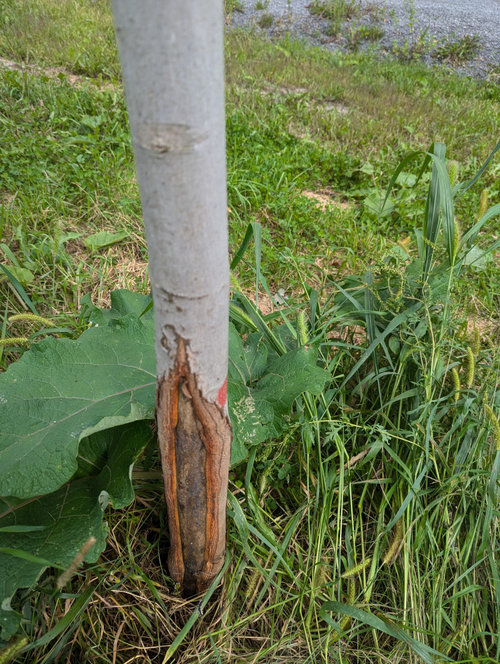
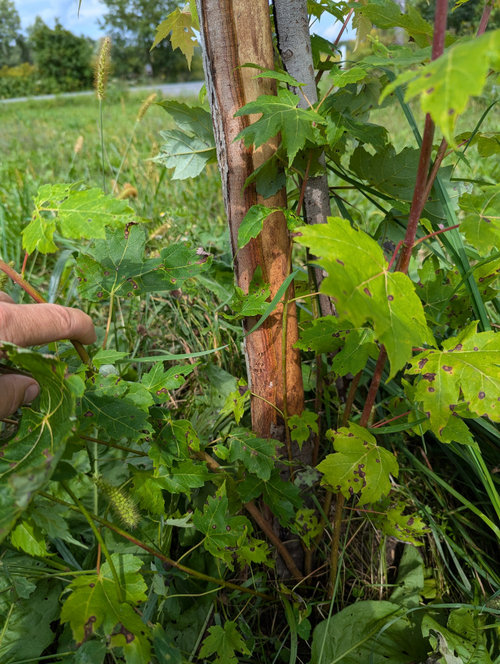
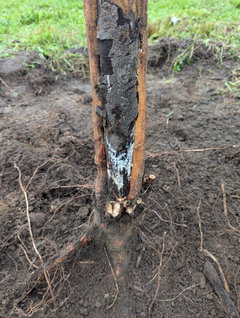
Now I also see that two of the trees the bark is coming off at the bottom. One of them also has new trunk of maple trees growing from the bottom. The Arborist suggested that the trees where the bark is coming off would be not be strongly rooted or something like that. I don't recall exactly how he said it

I need help to figure out what to do next. Any help I can get is appreciated.

Here are the pictures


Comments (48)

  • last year

    Start by telling us where in the world you are.

    The time to adjust soil pH is after you have had a soil test done.

    It looks like the trees were planted too deep. The top of the root flare should be exposed.

  • last year

    I am in Eastern Ontario, Canada about an hour from Ottawa

  • last year

    Red leaves on new growth are not an issue and need no treatment.

    Your problems are too deep planting, damage to trunks and lack of a clear area around the trees.

  • last year

    The trunks show substantial damage, which looks like physical injury to me. None of the maple bark diseases I looked at seem to be a match, other than smothering with mulch. Too deep planting might result in the same problem. If you know that it's not physical injury.


    It's always a bad idea to apply a substance designed to change the pH without knowing what your soil's pH is and what the maples need. According to Ontario.Ca, the range of most soils in Ontario is from 4 to 7.5. According to Forestry.com, maples like soil between 5.5 and 7.5, so your soil was probably in the right range, but if it was at the lower end of the Ontario range, it was too acidic and you added an acidifying agent. This took me a very quick google to figure out. pH kits are cheap and your local extension service will do a test for you for a reasonable price so you can know exactly.


    It's worth noting that a 4 ft maple runs around $30-$50, so there's a limit on how much you should spend trying to solve this problem. Frankly, I might just pick some different trees and plant them myself. It's not hard and there are tons of videos for every tree you might want to plant, unless you pick something very exotic.


    Ontario Trees and Shrubs - List of Native Species

  • last year

    Remove any trees that have those deep bark splits. They will never grow into healthy trees.

    Remove all grass and weeds in a 5 foot circle around the tree. Remove soil until you expose the root flare, where the roots meet the trunk. Google for pictures of what a root flare is. If you see any burlap that was around the root ball, cut it below the soil level.

    Cut off all the suckers that are coming out at the base.

    Apply 4" of mulch evenly over the circle, but leave a few inches bare soil at the trunk so the mulch does not touch the trunk. No soil or mulch should ever touch the bark of the trunk.

    What kind of maple trees are these?

  • last year

    Perhaps the trees are planted too deep, but how can anyone tell with all the weeds and thick grass you have around the trunks? Pull that grass from around the trunk and find out where the root flare / first major root is. You will see it easily if the trees were planted at the right depth. Were these potted trees? You should put mulch around your trees. Mulch rings - not mulch domes or volcanoes. Mulch doesn't need to be put down that thick and should not be heavily up against the trunks. Cut those maple sucker shoots off that are coming out from the base of the tree.


    What side of the tree is the trunk damage on? Does it face a southerly direction? It looks like possible sunscald to me. Not physical injury. Have you been putting any trunk protection on your trees for the winter? What is your hardiness zone? Are these maples Autumn Blaze? The leaves like fine and healthy to me.

  • last year

    Also, remove the stakes. Many arborists no longer stake trees, but even if they do, not more than 2 years.

  • last year

    New mid-to-late summer tip growth is quite colorful on many trees. Eventually, as that new flush of growth stops, the leaves will darken to the regular, normal hue of the particular tree. Chlorosis is probably your main concern with this type of maple but I don't see any indication of that in your photos.


    An arborist recommended replacing the soil? What good would that have been other than a temporary fix? These trees are going to have massive root systems eventually. You weren't going to be able to dig up and replace all the dirt in your entire yard. I'd find a different arborist.

  • last year
    last modified: last year

    There's no other way to put it other than say you are a gluton for punishment. First you hire inexperienced people to plant trees then you hire someone claiming to be an arborist that isn't. No arborist would steal your money by pruning those trees. The advice you paid for is nonsense. Now you think people can give you a silver bullet and there is no such for those trees. Those trees will never recover. If you plan doing your own upkeep, do your own planting. Buy a book by a respected local author about your location. If you can't do the work for goodness sake ask people you trust for recommendations for someone who can. Admittedly advice here is better than that you paid for but no one can ace these things without hands on,,, ,no one..

  • last year
    last modified: last year

    I've gardened on two continents, 4 countries and 3 states. I've learned that a lot of garden advice is bad. You have the advice written by someone who is an expert in his region and his advice will be great in that region, not so hot outside of it. You have a lot written for an average audience, but if you are outside the average, it will be bad advice. This drives me nuts about tomatoes. People will gush about what a great tomato this or that is, but what will be a great tomato in Florida and California are different, not to mention California and Maine. You need local advice. You can often find this at your local university extention or the Canadian equivalent. The Brits write a lot of gardening books, all assuming a British climate.

    Also, make sure if you're hiring an arborist, he's a licensed arborist, not someone who chops trees. You don't need to be an expert in trees diseases to prune or remove them, you just need the right equipment.

  • last year

    Sigrid you are so correct that planting advice can be location specific. Although some is universal e.g. don't plant a tree too deep or too shallow.

    FYI I am also in Ontario as is the OP. Maple trees do fine in our soil without amendment. My guess is they were planted too deep and then the bark was damaged by a mower.

  • last year

    To talk about remediating planting depth and root flare for these trees makes as less sense than discussing hair implants for a man with receding hairline who also happens to have pancreatic cancer.

  • last year
    last modified: last year

    @klemt I did not go out to hire an inexperienced company to plant my trees. I asked the company that did all the other work for my house build about tree planting and he said that they could do it. So I trusted him because he did a good job for everything else. Did I learn a lesson? Yes I did, but your assumption is wrong.

  • last year

    Here is an article about remediation of too-deep tree planting that you may find useful. https://extension.umd.edu/resource/trees-planted-too-deeply

  • last year

    Thank you for your input @patim @sigrid @mntreegrower


    The trees were planted two years ago, and I did not do anything that would have caused physical injury. I will replace trees with the trunk damage. The trunk damage is facing southwest


    I will have the soil tested for pH. I did it once before for the lawn already, so I know where to go


    Yes, these were potted trees.


    The trees are Autumn Blaze.


    I have not put on any protection for the winter. What I should I use?


    How would I check for my hardiness zone?


    I should also note that the area the trees were planted was all bush which I had cleared and then the tree were planted.


    I hope I have answered all of the quesitons


    I appreciate all of the help. Thank you!

  • last year

    Apparently too deep planting can cause bark cracking. Maybe that's what happened. If you have enough space, can you plant new trees near the existing ones? Maybe they will do better than you think.

    https://landscapesbyday.com/2018/05/25/ottawa-plant-zone-what-kind-of-plants-grow-best-in-the-nations-capital/

    https://holidayfarmsllc.com/pros-and-cons-of-the-autumn-blaze-maple-tree/ Autumn blaze is a beauty, but I would hazard a guess that its shallow roots make it particularly sensitive to too-deep planting.

  • last year

    It's a cold ,cruel world we live in. Not that I want to go back in technology but I do believe we have backslide in some other things. What was once considered fraud and venously prosecuted is currently call scam and buyer beware. Mail and wire fraud was once serious crimes and investigated by federal agencies, today they are scams and buyer beware.

    For that reason consumers must be suspect of every business arrangement and purchase knowing they have no agency willing to intervene. Serious diyers should hook up with local,like minded people to both teach and learn,not to mention seeing the light of day not available on a screen.

  • last year

    gerhardpeters,

    This is my favorite video on this problem.

    I generally don't like 'This old house' but this one is the exception.

    https://www.youtube.com/watch/Root Flare Problem and Fix:

  • last year

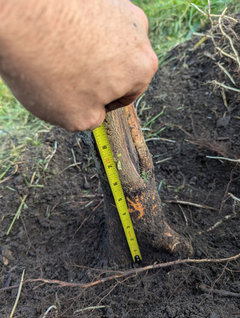
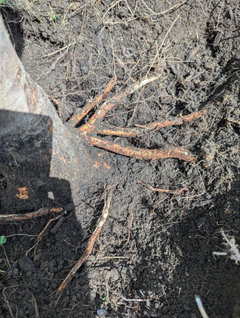
    I did dug around one of the damage trees. I found that the root flare is at 5 to 6 inches under the soil. Here is a picture


  • last year
    last modified: last year

    You should be able to find your hardiness zone at this link http://planthardiness.gc.ca/?m=1

    The 'winter protection' is to protect the trunk bark from sun, not from cold.

  • last year
    last modified: last year

    Is a common mistake. Sometimes it's because the root ball was planted on soil that had been dug up, and after planting the soil settles under the root ball.

  • last year
    last modified: last year

    @partim

    I can't disagree with most of that Autumn Blaze pros and cons list. The 'deer-resistant' pro made me chuckle a bit. Deer love to carve up that smooth, young maple bark during the rut. But I suppose they won't bother Blaze once the trees are bigger. Not saying it can't happen, but I've actually never seen a Blaze uproot either. Seems like they will usually split off large limbs and lose half their top long before the roots will give way during storms. Also, 'only lives 30 or 40 years'. What are they basing that on? I think Blaze has only been on the market for 40 years or less.

    @BillMN-z4a

    Thanks for sharing that video, Bill. 2" of mulch is what I tell my customers. No more than that. Scraping old mulch away before adding fresh mulch seems to always get skipped over by many, too. I wonder how many maintenance crews dressing up commercial sites and HOA neighborhoods adhere to this or just keep piling it on.

  • last year

    With the added information that the trunk damage faces the southwest, I think it's almost certain that you are dealing with sunscald. The wound doesn't extend below the surface and into the root flare and the dead bark sloughed off very cleanly - which also suggests you aren't dealing with any kind of canker / fungal issue. The wounds are dried-out looking. The two trees already have begun the process of healing over and closing the wound area. If the trees remain healthy, have good growth over the next 2 to 3 year, they should heal up just fine. Blaze are fast-growing. Storm winds could be an increased threat to that first one though for a while.


    I think the white corrugated tree protectors (with the slit down one side) work the best. But remember - white, not black. Black will heat up in the winter sun and warm the trunk underneath. Buy them as tall as you can or double two shorter ones up. They will also help protect your trees from buck rub in the fall, if you have deer in your area. And keep desperate rodents from gnawing on the trunks.


    Was that tree with root flare you dug out mounded at all, I hope? Or is that completely 5" below grade? I think you should dig out and locate the root flare on all 5 trees, if you haven't done so already. Hopefully, that one you showed us is the worst of the group and the others aren't nearly as deep.

  • last year

    I'm not sure what you mean by "Was that tree with root flare you dug out mounded at all, I hope so?". The root flare for sure is 5" to 6" below grade. I imagine the other trees will be the same.


    I'm learning a lot. Thanks for all the valuable information and links to other resources. This coming weekend will be my trees project.


    TTT

  • last year

    In addition to nursing the five remaining trees, have you considered planting two or three new little guys this fall?

  • last year
    last modified: last year

    @ cecily I will replace the dead tree as I work on the others

    @ mntreegrower I have my work cut out for this weekend. I have only dug out the root flare on one of them so I will see what I will find on the other tree

    Question for you and others. As I work on this, my plan of attack is as follows:

    Dig out the root flare on the four remaining trees. I have a gut feeling that they will all be the same

    Dig up the soil in a 5 feet circle around each tree after digging for the root flare

    Considering the root flare will be below the surface, how should I fill in the mulch to expose it? Should I also first use a layer of topsoil an then the mulch and angle it toward the root flare to expose it? In the video, they show adding topsoil first and then the mulch.

    What other steps should I take as I work on the trees?

  • last year

    Dig out the root flare on the four remaining trees. Yes. You are looking for girdling roots, i.e. any roots that are over crossing over the root flare. Cut them off on either side where they cross the root flare.

    Dig up the soil in a 5 feet circle around each tree after digging for the root flare You don't need to dig deep. Just remove the grass and weeds.

    Considering the root flare will be below the surface, how should I fill in the mulch to expose it? Should I also first use a layer of topsoil an then the mulch and angle it toward the root flare to expose it? In the video, they show adding topsoil first and then the mulch. No topsoil is needed anywhere. Leave a one foot ring around the tree trunk totally bare, no mulch. It will be below the level of the other soil and that is OK. 2 inches of mulch will do the job.

    gerhardpeters thanked partim
  • last year
    last modified: last year

    This is a local Master Gardeners group. It's worth joining to get some advice from them. It has an "ask us" section. https://mgottawa.ca/

    They also have a facebook group which seems very active. https://www.facebook.com/groups/819730788084134

  • last year

    My hope had been that, beneath the grass and weeds, extra dirt was piled on top of the area around the tree. Above grade. So that 5" of dirt over the flare didn't mean the flare was a full 5" below grade. Which you confirmed wasn't the case. That's all.


    I pretty much agree with partim. Add no topsoil. Then only 2" of mulch, no closer to the trunk than 8" or so. You want that area left nice and clear.


    Since you are likely making sort of a shallow dish or depression around the base of these trees, I do have one critical question. What type of soil are you in? How well does your soil drain after heavier rains? You don't want water pooling around these trees every time it rains and then taking days to drain down. Your soil does have a nice "crumbly" look to it in the photo where you are measuring the flare depth. Or is that just the potting soil that was in the pot?

    gerhardpeters thanked mntreegrower
  • last year

    To answer the question of how well your soil drains;

    Dig a 12x12x12 inch hole in undesturbed soil,fill with water then let it drain.,

    Soon as water has drained,refile hole and time how long it requires to drain this second time.

    If it drains within 2-3 hours your soil drains well. The amount of water still standing after 2-3 hours is indication of soil drainage. 2 hours in hot weather,3 hours in cool weather.


    The issue is that trees can not tolerate wet feet.

    gerhardpeters thanked klem1
  • last year

    The maple sprouting from the base is obviously not dead. One might allow the sprouts to grow and eventually cut off the original dead part and extra sprouts. However, very hard to determine why the original part died. If it was girdled roots, then any sprout is still going to suffer.

  • last year

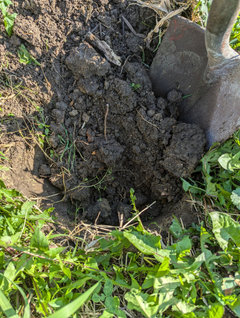
    I dug a roughly 12x12x12 hole filled it up, let it drain and then fill it up again. It took 1:47 minutes to drain


    This considering that it has been raining here lots in the last 2 weeks. Last time it rained was on Sunday and Monday.


    Here is what the soil look like while digging the hole


  • last year

    When I looked at picture of soil I thought "oh no,gumbo black clay" then I realized a shadow made it look that way. By appearance of soil in good light coupled with how quick it drained when you tested, even during wettest season you shouldn't have any drainage problems.

  • last year

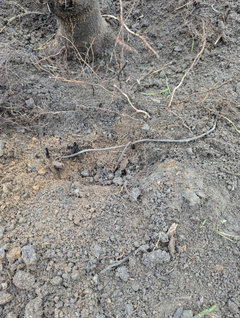
    While digging I discovered something else, which I'm wondering if it will be a problem. When the maple trees were dropped off, the roots came bundled up what was like a sack of some sort. It must have had a steel wire around it to contain the roots. While digging I discovered that that wire is still around the tree trunk. Here's a picture to show what I found. This is the second tree and the root flares were about 8 in from the surface.


  • last year
    last modified: last year

    The presence of wire near a tree is of no consequence unless it wraps around trunk or roots which can do massive harm.

  • last year
    last modified: last year

    Wire is not a problem. The burlap is a problem but only if it sticks up above the ground. If you find any burlap, cut off anything that sticks up.

    The burlap can wick moisture out of the ground, but it rots pretty quickly underground.

    You're doing a good job exposing the root flare.

  • last year
    last modified: last year

    Ok so it is called burlap (learning something new everyday). I don't see any of it.

    Should I cut the wire where it loops and then just leave it in the ground or just leave it as is. If you will take a close look at the picture. The wire goes around the tree with loops going down. Should I just snip it so that it won't wrap around the root?

  • last year

    Here is a picture of the tree that had small branches coming out at the bottom. This is after I cut them off. This is one of the trees where the bark has come off at the bottom


  • last year
    last modified: last year

    Maybe it's a goner, but I have an ornamental cherry tree that got badly split bark in its first year. The split never really healed but it's 35 years old now. So you never know. I would leave it. I don't know any specific treatment for this.

  • last year

    I very much appreciate all the help! Here is a picture of the third tree. These roots here are all above the root flare. Should I cut these? The root flare starts at about another 2 in down


  • last year
    last modified: last year

    These roots above the root flare are called adventitious roots or sucker roots. Cut them off at the trunk and remove what you can easily see. No need to dig deep to get them all out. https://www.dirtdoctor.com/garden/Root-Flare-Management_vq616.htm#google_vignette

  • last year

    Two camps of opinion have emerged on possibility or advisability to do so if it's possibly to save these trees. I'm in the camp that think those trees have a limited life which means nursing them along can easily result in them blowing down after they are large enough to be dangerous. If you lived near me and was a gambling man I would lay 2 to your one that new trees properly planted alongside would pass them in size and even odds you regretted not removing them while easily manageable.


    Tree in last picture you posted has long since passed the stage of mending it's self. It is and will remain basically hollow and reach the point it isn't strong enough to support top during strong wind. Too little too late.

  • last year
    last modified: last year

    @gerhardpeters

    You posted that one tree was 5" deep and another was 8" so far. What were the other three at?


    If I put myself in your shoes, as a homeowner, I couldn't see myself trying to save 5 trees that were all planted too deep. 8" too deep is just a back-breaker. I'd take a chance on a couple if they were only slightly too deep. But even 5" is pushing the limit.


    My final advice is, if you have a couple that are only 2 or 3 inches too deep, is to dish out the dirt around the root flares yearly and inspect for any poor surface root development. I think you can definitely save those. But if most are 5" or more deep, you are better off just biting the bullet on this.


    And if you replace any or all of them, my strongest recommendation is to diversify. Don't replace with only just more Autumn Blaze. Take note of what Emerald Ash borer and Dutch elm have done. Don't put all your eggs in one basket. Plant a few other types of trees as well, should another insect or blight or disease come along.


    Good luck with whatever you decide.

  • last year

    @mntreegrower @klem1 Thank you for the positive feedback. My action plan will be to give the two trees with the bark off a year or two to see what they will look like. The three other trees' root flare were at 3-5 inches below the surface. I have dug around all the trees now and will get the mulch in a few days to fill in as suggested. At this point, I don't have much to lose

  • last year

    Should I have the corrugated tree protectors only for the winter or year-round? Also, for how long?

  • last year

    Year round and until the tree splits them open.