Software
Houzz Logo Print
sushipup2

Medicare Part D open enrollment

2 years ago

This is for people with regular Medicare, and get Part D. It is not a discussion of Medicare Advantage plans.


For 2025, there will be no more donut hole in coverage. When I went to Medicare.gov, I saw a real difference in plans, and most had a pricey deductible. Jim and I each take one medication that is pricey. Two years ago in 2023, we purchased both from Canadian pharmacies, in 2024, they have been covered, but pushed me into the donut hole, but not Jim.


So I found one plan that had no deductible, but the premium is a bit higher (78/mo vs 125/mo) and I'll have to change pharmacies. But the pharmacy that is preferred is in the grocery store I use most of the time (well, the one that isn't Trader Joe's). It's several hundred dollars less every year than the other pharmacies (Walgreens, CVS) in the area. In the end, with a higher premium and olwer drug costs, we come out well ahead,


So my reminder here is be sure to check all the pharmacies in your area for the best prices.


Know that every insurance company that sells Part D plans has contracts with both the manufacturers and the retailers. And what you had last year may be very different this time.

Comments (93)

  • 2 years ago
    last modified: 2 years ago

    Every state/County has different plans by different companies. I am saying research thoroughly. Know exactly where you may end up if you have surgeries. Most Advantage plans will have an out of pocket max somewhere in the range of $6 k.

    I have assisted 3 people in the last year with selecting the best plan based on in depth analysis of costs given a potential for a serious medical event.

    Of the three 2 were in a better financial situation over a 10 year period choosing the Mutual of Omaha Part N plan with a separate Part D plan than they were with any of the Advantage plans.

    Mutual of Omaha had a higher cost year one than United Health Care, but the premium for UHCs part N plan goes up faster then MOH and surpasses the cost quickly.

    One person was better served by their available Medicare Advantage programs, but they were eligible for premium discounts and lower Out of Pocket thresholds due to their limited income.

    In all three cases, the first suggested plan from the counselor they were using was an Advantage Plan and they didn't even discuss other plans until prompted to do so.

    sushipup2 thanked Jennifer Hogan
  • 2 years ago

    Another low cost option available in most states is a High Deductible Plan G. Premiums are very low for these plans. Medicare still pays 80% after the Part B deductible is met ($240 this year), and the High Deductible supplement starts paying after you have paid $2800.

    sushipup2 thanked terezosa / terriks
  • 2 years ago

    I still work, am covered by my employer plan. After Nov. 1 the plan will no longer cover the major provider group and hospital in the city where I live and I have no options other than paying out of network premiums or traveling 30 minutes or more to go to providers in the current network. This can happen in any PPO or HMO plan. (Private - not employer or group based plans after having cancer and a heart attack are way out budget.)


    Part N has no designated network.

    sushipup2 thanked Jennifer Hogan
  • 2 years ago

    @Jennifer Hogan


    I’m pretty sure our Health Insurance Provider doesn’t know our income. Do they only know it if the insurance is bought through the government’s Marketplace?

    sushipup2 thanked maddielee
  • 2 years ago
    last modified: 2 years ago

    I am not yet eligible for Medicare, but I thought premiums were based on taxable income with a two-year lookback? This would be based on your AGI on your tax return. Maybe I dreamed this, but I used to manage my parents finances and thought I had read this at some point. They had traditional Medicare.

    sushipup2 thanked texanjana
  • 2 years ago

    Yes @texanjana, Medicare premiums are income based and deducted from SS. I think I answered my own question.

    sushipup2 thanked maddielee
  • 2 years ago

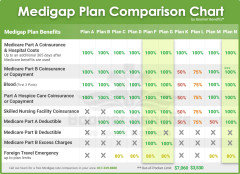
    @Jennifer Hogan It's Medigap supplement Plan N, not Part N.


    These are all of the different Medigap plans.


    sushipup2 thanked terezosa / terriks
  • 2 years ago

    @
    terezosa / terriks - you are absolutely correct - my mistake - not being careful.


    sushipup2 thanked Jennifer Hogan
  • 2 years ago

    @maddielee - It isn't just your AGI. We live in an age of big data. They likely know your AGI, your credit score, your marital status, the value of your home, if you rent or own, your education level along with information on where you shop, what you purchase and how much TV you watch.


    They not only need to know how to manage your healthcare profitably, but how to market to the people who will cost them the least to insure.


    sushipup2 thanked Jennifer Hogan
  • 2 years ago

    @Jennifer Hogan - Whoever thought that it was a good idea to give the Medigap plans some of the same lettered names as the parts of Medicare (A, B, D, & C) was an idiot!

    sushipup2 thanked terezosa / terriks
  • 2 years ago

    Medicare Part A is free for most people - you must have a certain number of work credits/income or can qualify via a spouse's record.


    The basic premium for Part B is fixed - this year it's $174.40/month unless you are super low income and qualify for a program that will pay it for you. Or if your Modified Adjusted Gross Income is over $103,000 single/$206,000 joint you will pay an additional Income Related Monthly Adjustment Amount (IRMAA). Your tax return from two years prior determines what this amount would be. You can appeal the IRMAA if you have a one time life event that changes your income level, such as retirement.


    https://www.nerdwallet.com/article/insurance/medicare/what-is-the-medicare-irmaa


    All of the information about plans, payment, IRMAA, etc. is on the Medicare.gov site.

  • 2 years ago

    "Whoever thought that it was a good idea to give the Medigap plans some of the same lettered names as the parts of Medicare (A, B, D, & C) was an idiot! "

    I suspect you haven't spent much time working with government agencies. . .


    My favorite example came from when I worked with Animal Control in California where we had one law that stated that wildlife that came into a facility had to be euthanized, but there was another later law that allowed facilities to rehabilitate and release injured or sick wildlife. So we really only had to euthanize perfectly healthy wildlife.


    sushipup2 thanked Jennifer Hogan
  • 2 years ago
    last modified: 2 years ago

    “The basic premium for Part B is fixed - this year it's $174.40/month…”

    I still don’t completely understand the ”Give Back” benefit a friend of ours receives for her Part B. Her insurance refunds the maximum ($174.40) of her premium each month. Sounds like the Give Backs can range from $1 to the full amount.

    ETA - I do believe she has an Advantage plan, so maybe not relevant to this thread.

    sushipup2 thanked chloebud
  • 2 years ago

    @chloebud - The payments made to insurance companies who manage Medicare Advantage plans is complex, but one of the rebates that an insurance company can earn has to be spent by either lowering cost sharing, paying for extra benefits or providing a premium rebate. The government helps the companies that keep costs low by giving them money to make these plans more attractive to consumers.

    sushipup2 thanked Jennifer Hogan
  • 2 years ago

    Thanks, Jennifer! It certainly is complex. I’ve asked lots of people we know, and no one’s even heard of the Give Back Benefit. Also interesting some had no clue the Part B monthly premium was being deducted from their SS benefits.


    “So we really only had to euthanize perfectly healthy wildlife.”

    😳😖!!!

    sushipup2 thanked chloebud
  • 2 years ago

    " With an Advantage plan ppo will you want to pay the higher deductsbles to go out of the preferred network. "

    I may not be following the details of this refreshed thread or have misunderstood. But I saw this and wanted to contribute that with my Medicare Advantage PPO, there are no out of network providers and no differences in deductibles between in and out of network for providers that accept Medicare.

    There's also something complicated about whether a provider has or hasn't opted out of Medicare, whatever that means. I had a provider that had opted out and didn't accept it. I had to submit a statement to that effect from her office to my insurance company. Thereafter, the procedure was that I paid her for services and to the extent the charges didn't exceed what Medicare would cover, I was reimbursed as if the provider DID accept Medicare. I couldn't make sense out of why it was handled as it was.

    It's a complicated area and maybe there are obviously nuances I don't understand.


    sushipup2 thanked Elmer J Fudd
  • 2 years ago

    It is complex and more money than most of us can begin to comprehend. Projected payments to Medicare Advantage plans in 2024 is $462 billion.

    sushipup2 thanked Jennifer Hogan
  • 2 years ago

    " Projected payments to Medicare Advantage plans ....."

    Why is that relevant to anyone?

    You could post what total Social Security payments are for this year too. Does that change anyone's personal conduct?

    I think the link is wrong, it talks about military retirement payments.

    sushipup2 thanked Elmer J Fudd
  • 2 years ago

    Some Advantage plans opt to "Give back" part of the money they receive monthly from Medicare to the subscriber, so that can reduce the Part B payment that they owe.

    sushipup2 thanked terezosa / terriks
  • 2 years ago

    terezosa, right, that’s the part I do understand. What makes me curious is why wouldn’t most people opt for a plan with a Give Back Benefit? I’m only basing that on what my friend told me since she’s extremely happy with her plan. As I mentioned before, we know several people with Advantage plans, and, with the exception of the one friend, none have ever heard of a Give Back.

    sushipup2 thanked chloebud
  • 2 years ago

    Elmer - Your PPO plan does have in network providers. Not every doctor in your geography who accepts Medicare is also contracted to provide services through your Medicare Advantage Insurance provider. This can be based on the physician not liking the Insurance company or the terms that the insurance company has offered or may be based on the insurance company not wanting to work with the provider. Depending on the agreement between your insurance provider and your physician or the medical group the providers may have agreed to provide care at 90% of Medicare standard payment with the option to earn bonuses based on performance. An out of network provider would charge the full Medicare Standard payment and your insurance provider will charge you the difference or in some states the providers can charge up to 15% more than the standard Medicare payment and you would be responsible for the additional amounts.

    Most of the time the PPO Plan has a separate in-network and out-of-network deductible.

    Providers who have opted out of Medicare do not accept payment from Medicare and cannot bill Medicare for services rendered. They cannot be contracted to provide services through a Medicare Advantage insurance provider for a Medicare Advantage Plan. They can be contracted to provide services through employer plans or other non-Medicare managed by the insurance company.

    sushipup2 thanked Jennifer Hogan
  • 2 years ago

    Elmer - there are 5 major insurance companies that manage 80% of all Medicare Advantage Plans - They are each taking their slice of the $462 billion dollar payout. It is a lot of money and they play a lot of games to keep their share and grow their share. It is a highly profitable area for those who are big enough to manage all the ins and outs of the process. Smaller companies have largely abandoned MA because of the complexity.

    sushipup2 thanked Jennifer Hogan
  • 2 years ago

    Elmer - From KFF In 2021, Medicare Advantage insurers reported gross margins averaging $1,730 per enrollee, at least double the margins reported by insurers in the individual/non-group market ($745), the fully insured group/employer market ($689), and the Medicaid managed care market ($768).

    sushipup2 thanked Jennifer Hogan
  • 2 years ago

    @ chloebud - it is not just a gift from the insurance company - it is an incentive from CMS that they have to pass on to the member in one of 3 ways, one of which is a premium reduction. They do market research to see what incentives will grow membership. You wouldn't believe the number of people who choose the plan with Silver Sneakers! It is a really popular incentive. Ugggghhh - not what would incentivize me, but market research says I am in the minority.

    Only a few plans earn this incentive - they have to be the most efficient plans in the county, costing CMS less than the other plans in the county per member. Companies also have to be fairly confident that this efficiency will continue into the future. If they offer the premium reduction and next year fail to get the incentive they will have to remove that perk or eat the cost. Your less likely to shop for a new plan if they take away your silver sneakers than if they take away your premium reduction.

    sushipup2 thanked Jennifer Hogan
  • 2 years ago
    last modified: 2 years ago

    Jennifer, my plan doesn't work the way you describe. Perhaps some do and some don't.

    An example -over the years, we've migrated to using various flavors of clinical faculty at the local medical school. At the beginning of a plan year, I checked and was initially concerned to find that Stanford and its many hospitals and clinics were not in-network providers for my Medicare Advantage plan.

    I called Stanford's admin offices and wound up with someone in the Finance group who managed insurance affairs or something like that. In response to my question and expressed concern, the woman chuckled. She said something to the effect of "this is something that's widely misunderstood. We don't bother negotiating specific agreements with insurance carriers insofar as it affects Medicare Advantage participants. We accept Medicare, our rates to the insurance company are the Medicare rates, and there's no reason to have a specific contract. Both sides agree no contract is needed. So we're theoretically not in-network but that makes no difference." How it would be for other types of plans or coverage, I don't know.

    Your description of my out of network experience is also not what happened. The provider I went to has no connection with the insurer, doesn't accept Medicare, has no connection with an employer plan and is a completely independent provider. Because my plan treats all out of network providers as in network, the procedure for billing/payment was different but the outcome was exactly the same as far as my cost and coverage were concerned. Had I gone to a provider that accepted Medicare or was in-network, my net cost (limited to the plan's normal deductible for the type of appointment) would have been the same.

    Medical plans aren't designed with cookie cutters. 100 different plants could operate 100 different ways.

    sushipup2 thanked Elmer J Fudd
  • 2 years ago

    @chloebud - you also need to weigh every incentive against the plan costs.

    CMS may have only offered $25.00 per member, but the insurance company knows in this particular county where they have great competition with another insurance company is an area where people are really looking for that monthly savings. They offer $100.00 premium reduction on one of their plans, but made the deductible larger and the out of pocket max larger and by the end of the year you are not any further ahead than if they hadn't offered the additional premium reduction.


    The best way to analyze any plan is by looking at what you would be paying out throughout a year with at least one major medical event and one year without a major medical event.

    Compare the results and see where you land. Plan on major medical events occurring more frequently as you age.

    sushipup2 thanked Jennifer Hogan
  • 2 years ago

    " Elmer - there are 5 major insurance companies that manage 80% of all Medicare Advantage Plans "

    Why is that relevant? If you're concerned about companies doing business with the government, then consider that there are only 2 or 3 aerospace companies that make planes for the military. 5 or 6 major oil companies that provide fuel. Only a few companies that make military land vehicles. Does any of that matter?

    sushipup2 thanked Elmer J Fudd
  • 2 years ago
    last modified: 2 years ago

    Medicare is really confusing, but no matter what plan you have beyond the basic A&B - either gap coverage or Advantage you should be okay.

    What scares me is nursing home coverage. I wish I would have recognized the need when I was young enough and healthy enough to qualify for an affordable LTC policy.

    I knew nursing home care was expensive, but I didn't realize how expensive it can get when you are really sick. My sister's care near the end of her life when she was in hospice was running $800 a day. Triple what the average costs are, but average means that you can get to the dining area and eat by yourself and can swallow pills and go to the bathroom with assistance. Once you are bed bound and unable to help yourself the charges keep adding and adding and adding until they have taken everything you have.

    Experts say we should save $300k for every woman and $200k for every man toward long term care before we retire. (Men don't live as long in nursing care as women). I don't have that extra cushion and will need to figure out how to supplement my SS income so I don't need to take as much from my retirement savings and can build a bigger buffer or figure out how to avoid LTC in a state that doesn't allow for dying with dignity.

    sushipup2 thanked Jennifer Hogan
  • 2 years ago
    last modified: 2 years ago

    “They offer $100.00 premium reduction on one of their plans, but made the deductible larger and the out of pocket max larger and by the end of the year you are not any further ahead than if they hadn't offered the additional premium reduction.”

    Got it! Thanks again, Jennifer. You are the first person who’s given me some clarity on the Give Back. I’ve asked the question many times and tend to get ”dear in the headlights“ expressions. You’re so right regarding weighing all incentives!

    Gotta be honest, I had to look up what CMS is!

    sushipup2 thanked chloebud
  • 2 years ago

    @ Elmer J Fudd - actually it really does matter to me. The lack of competition and growth of monopolies is an important factor in the economic welfare of the middle class.

    I was never in the top tiers of the middle class - always fairly close to the 50-60 percentile and have scraped and saved like crazy, been terrified of debt and lived well within my means because I do have a very real fear that I will be one of the many who fall from middle class into poverty as the divide grows.


    sushipup2 thanked Jennifer Hogan
  • 2 years ago

    Re: LTC policies. We cancelled ours after ten years -- as premiums rose as they had to do in concert with costs. Our ten years of premiums still entitle us to a pittance towards care. We're self-insuring.

    We cancelled after betting that our individual odds do not put us in great actuarial danger of requiring long term care. (Caucasian, excllent health care all our lives, family histories, etc.) People 'like us' generally spend about three months at the end of our lives in nursing homes. At 86 and 83, our bet has held...so far. I do fear mental impairment, although *I* can pull the plug by quitting treatment for my blood cancer. The vitual warehousing I see terrifies me.

    sushipup2 thanked chisue
  • 2 years ago

    " actually it really does matter to me. The lack of competition and growth of monopolies is an important factor in the economic welfare of the middle class. "

    Allow me to put your mind at rest on this particular question. Any market that has 5 solid companies competing against one another for business is a good example of a free and open competitive market. That's the opposite of a market where one or two big players has monopolistic powers.

    I know that not all 5 provide services in all states but still, having more than two along with the attendant governmental regulation is more than enough to protect customers.

    sushipup2 thanked Elmer J Fudd
  • 2 years ago

    I scroll through this and dear lord why on earth do we as Americans have to live with supporting all these for profit companies who pretend they are helping us get health care? Why do we even have insurance? Why don't we all pay into some central fund that we are all going to be covered by? Not in America of course.

    sushipup2 thanked Patriciae
  • 2 years ago
    last modified: 2 years ago

    " Why don't we all pay into some central fund that we are all going to be covered by? "

    Can you name a country or two where this is done and it works satisfactorily? I don't know of one and would like to know more.

    In several European countries I know of, there is universal coverage but managed in a way that may or may not be feasible here as these are of course smaller countries than the US. Insurance charges and provider reimbursements are fixed. The choice of insurance company is made by each employee from among the several available. Employer and employee cost shares are paid monthly. In the case of people who are unemployed or employed but with earnings at the low end of the income spectrum, the government pays all or a porition of the insurance cost.

    Providers submit their charges to the patient's insurance company and the fixed fee for service reimbursement is paid.

    These systems recognize that putting anything as complicated and bulky as billing insurance costs and benefit payments in the hands of the government, any government, is unlikely to be successful. Having the admin done by insurance companies who are geared up to do such work and who have a profit motive to do it efficiently is a much better approach.

    sushipup2 thanked Elmer J Fudd
  • 2 years ago

    Companies having a profit motive is what has gotten us where we are now. Obviously other countries have to be managing that profit since they deliver excellent care at a tiny percentage of what we pay. The profit motive is all the motive I see with health care. Companies make massive profits and we get some really indifferent or maybe fabulous care. I have a fair amount of experience on being at the receiving end of medical care.

    sushipup2 thanked Patriciae
  • 2 years ago

    Profit motive negatively affects health care available in non-urban communities probably more than in large cities. ln places where, perhaps, the population is lower income, maybe more on Medicaid or Medicare, where there are fewer employers providing health benefits. With low reimbursement rates for public benefits and insurance companies, or large portions of the population uninsured or underinsured, health care providers don't stay in business if they can't make a profit. It's a crisis in many rural areas and growing.


    Rural health care crisis

    sushipup2 thanked Olychick
  • 2 years ago

    @Jennifer Hogan - A close friend is all impressed with Silver Sneakers, reminded her that she can join a nice gym that includes senior classes for around $10 a month, should really not be a deal breaker. She used to belong to a gym and quit because she did not go. The Medi-Gap plan I joined includes Silver Sneakers but it is not why I chose the plan, just a bonus.


    Glad that this is a discussion topic here, hoping that this will encourage everyone to research the available options and consider what works for them now and in the future based on best guess scenarios.

    sushipup2 thanked jill302
  • 2 years ago
    last modified: 2 years ago

    So, Patricia, apparently you have no examples to cite in response to my question. Think about why that is.

    " The profit motive is all the motive I see with health care."

    For-profit organizations call it profit. Non-profit organizations call it Surplus of receipts over expenses or something similar.

    Whatever the word is, no matter what kind of organization it is, absent governmental support, for- profit and non-profit health organization don't survive if they don't produce an excess of receipts over expenses.

    There are many non-profit health providers. Also often in the news, many poorly run non-profit hospitals that run up deficits and either close or sell to a for-profit provider. Why do non-profits get into financial trouble? By not adequately running their operations to produce a surplus (profit) to sustain their existence into the future.

    Profit is not a pejorative word. If you're looking for one in this area, consider bankruptcy or closure as one often encountered. Usually in reference to a non-profit going out of existence.

    sushipup2 thanked Elmer J Fudd
  • sushipup2 thanked Jennifer Hogan
  • 2 years ago

    Maybe there are some things that profit shouldn't be sought from, like people's health, or more accurately their illnesses.

    sushipup2 thanked Olychick
  • 2 years ago

    I know that we have challeges due to our size and diversity, but we are so far behind other industrialized countries. We should be able to do better.

    sushipup2 thanked Jennifer Hogan
  • 2 years ago

    Jennifer, do you have any knowledge or experiences of your own to add from these countries listed in your linked piece? Anything can be found from searches on the internet. I won't respond to you other to ask: Do you know anyone in those countries? In the UK and Australia, as examples, while their universal coverage does extend to everyone, did you know that many people (more than half of those with national coverage in Australia) pay to have private insurance as a supplement? Do you know why?

    sushipup2 thanked Elmer J Fudd
  • 2 years ago
    last modified: 2 years ago

    Not to go too far off tangent, but my Onepass ( which is Silver Sneakers equivalent) allows me to go to any gym that participates so I currently actually go to 3 gyms. (I'm not a gym rat, but I take classes and this allows me to go when it's convenient for me, which means I actually really go).

    One of the gyms is a real deluxe gym and membership is included - for anyone else it's at least $100 per month.. All the insurance companies I have had my Advantage plans with offered Silver Sneakers or One Pass and it is a feature I use and appreciate.

    I have friends who have supplemental plans and depending on the insurer, they also have Silver Sneakers.

    sushipup2 thanked salonva
  • 2 years ago

    " Maybe there are some things that profit shouldn't be sought from, like people's health "

    Your misunderstanding shows by insisting on using the word "profit" as a club. Change the word to surplus. Are you okay with non-profit hospitals operating at a surplus? If they can, why can't for-profit hospitals?

    Are you okay with non-profit hospitals closing because of their inability to manage their operations? I don't doubt there are shuttered hospitals in your area that had to close because of operating deficits, especially in areas not near urban population centers. Do you have a problem with that? What might have happened if they'd been managed more competently and in more of a business- like way?

    sushipup2 thanked Elmer J Fudd
  • 2 years ago

    I won't respond further so have at it. Some of you might have different views if you spent some time to gather information to have a better understanding and then could inject that into your thinking before emoting.

    There are many problems with medical care and coverage in the US. I won't defend it. I do think everyone with the right to live here should be entitled to coverage. Not free coverage, but coverage. That figure is over 85% now but the gap is inexcusable.

    Those of you who think it should be otherwise are welcome to point out places of reasonably similar size where you think the systems are better. I don't personally think you'll find any, healthcare costs are a problem everywhere, including where systems are government run. Countries with publicly supported systems manage to cover the equivalent of a king-size bed with a twin size sheet do so by having long waits for needed services. Most of you wouldn't like that.

    A single payer system is not the answer.

    sushipup2 thanked Elmer J Fudd
  • 2 years ago

    Same thing, different day. Rinse, lather, repeat.

    sushipup2 thanked Olychick
  • 2 years ago

    People in the US have long waits for needed services.

    sushipup2 thanked terezosa / terriks
  • 2 years ago

    " Same thing, different day. Rinse, lather, repeat. "

    What's boringly repetitive is that the only way you know how to deal with an opinion you disagree with is by insult. Try something else, it doesn't make you seem to have the more thoughtful or compelling idea. Perhaps the opposite.

    sushipup2 thanked Elmer J Fudd
  • 2 years ago
    last modified: 2 years ago

    Instead of profit/non-profit, perhaps the concept of better managed care might be one where more agree. I was a nurse during the dawn days of modern hospital managed care, and it was not managed well. Hospitals would send nurses home if the numbers of patients did not seem to support the need for that nurse, that day. This led to nurses quitting at hospitals, and this then led to higher mortality figures.

    As those who managed continued to learn their craft, these issues improved somewhat but remain far from perfect. Denials and long waits for care lead to dissatisfaction, and various articles about insurance shenanigans uncovers parts of the overall system that badly need work. There is a lot of micromanagement going on- for instance, I had to go through a bunch of paperwork to get more than one diabetes test strip per day paid for by insurance. Yet even there I found after a little digging around that the incentive for micromanagement were patients who would over order and then be able to sell unopened boxes of strips to cottage industry companies for cash who would then resell them.

    Whether the business is profit or non profit, I think better managing a budget is important, just like it is for people and their personal budgets. Whether you are a person or a hospital, you have to raise enough money to pay the bills. But how you allocate the available money is where better informed management is useful.

    sushipup2 thanked lucillle
  • 2 years ago

    I won't claim to have all the answers, but I do know that things have changed and not for the better.

    My dad was a physician and was so happy when my sister decided to follow in his footsteps and become a physician.

    By the time my sister retired she didn't want her sons to follow in her footsteps. The practice of medicine had changed from a very rewarding field where you did everything in your power to help your patients to a field where you had to worry about the potential of being sued and spent hours and hours fighting burocrats to get needed care approved and more and more practices were being bought out and enjoined into physician groups / health systems that dictate how you practice medicine.


    A recent poll conducted by Doximity is quite revealing. Of approximately 12,000 physicians who responded to an online surveyopens in a new tab or window in January 2022, 60% said they would probably or definitely not want their children to work in medicine.


    The most common reasons were those we've been reading about for the past decade: heavy caseloads, long hours, loss of autonomy, third party intrusions, and toxic workplace cultures. One family medicine physician even asked: "Why make them [our children] suffer what we are suffering in this horrible situation created by EHRs, insurers, burocrats (sic), and so on and so forth?"


    I also know that big pharma is far more focused on profits than the health of those who need medicines. Meds in the US cost far more than in most other countries.


    I remember the articles when the Hep C cure was rolled out at some outrageous price point and the pharmacuitical company was not shy about saying that since most people with Hep C will be on government subsidized care, they could charge whatever they wanted because the government had no choice but to pay the price they asked and could not deny care to the recipients.


    It is true - go to jail when you have Hep C and they are required to provide you with the medicine that will cure your Hep C. If they don't it is considered cruel and unusual punishment. So they spend nearly $100k per inmate with Hep C.


    How many people don't take the meds they are prescribed because they can't afford their medications? That should not happen in this country or any industrialized nation.


    sushipup2 thanked Jennifer Hogan