Software
Houzz Logo Print
sfandrew51

Benjamin Moore White Dove - Samples off?

last year
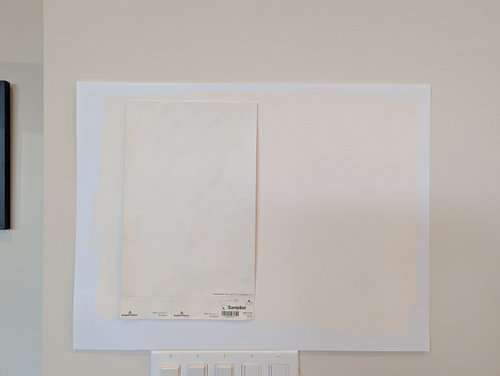
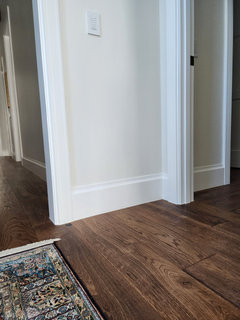
I loved the look of White Dove in my friend's home, so I bought a Samplize sample and liked it, then I bought a small pint sample at a BM store and it is noticeably more yellow/orange!. Even my husband says so and he normally can't tell the difference in white paint colors. Just a bad mix from the BM store you think? I want the version of White Dove with the slightly gray cast to it, the way the Samplize sample looks like on the left side. Anyone having similar issues? Or has the formula changed?


Comments (21)

  • last year

    How long has the paint dried? It might take a while until the true color appears.

    sfandrew51 thanked Yvonne Martin
  • last year

    It's been about 24 hours so I will wait a little longer to see if it looks less peachy.


  • last year

    Could be a bad mix when tinting it down to a pint size container.

    But ... BM White Dove is YELLOW. No gray there.

    The sheen of the sample also makes a difference ... flat will look different than eggshell.

    My BM White Dove walls with BM Chantilly Lace trim. I have filtered west sun hitting that wall right now and it is even more yellow in person.


    sfandrew51 thanked chispa
  • last year

    I would get a quart and test it right on the wall. At some point you just have to go for it!

    sfandrew51 thanked chispa
  • last year

    You might also grab a sample chip at the BM store--compare it to both your painted sample and the Samplize swatch. I did get one really off sample from them once. A Chantilly Lace sample that was much yellower than the BM fan deck sample and a previous sample from Samplize.

    sfandrew51 thanked mcarroll16
  • last year

    Maybe head back to the store with both examples/the paint can and ask them to check if the formula was correct. In the article below it references a grey undertone, but note section regarding a yellow issue for some people.

    https://poshpennies.com/benjamin-moore-white-dove/


    sfandrew51 thanked Maureen
  • last year

    White-Dove fans-


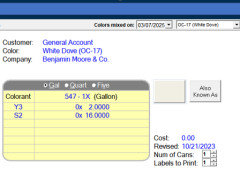
    The only 2 Colorants WD has are S2 & Y3.

    * Dark-Gray S2 (NOT Black!), & Yellow-Oxide Y3.

    * Technically.......and I hate to say this.....these Colorants make a shade of very light OLIVE.


    Faron


    sfandrew51 thanked Faron79
  • last year

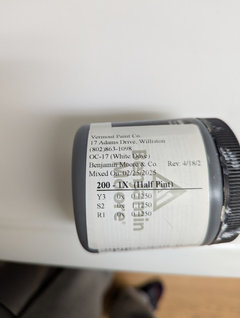
    Dear Faron79, that is so interesting about the formula. So I looked at my little half pint sample and it has R1 in it as well. This was mixed at a Benjamin Moore store. Maybe the sample size paints are formulated differently than say a Regal paint?


  • last year

    I have found that the sample cans aren't always the same color as gallons because it's hard to get the microscopic bits of colorant right. We sample on drywall and do two coats. DH bought a standard size piece of drywall and cut it into four pieces. I think the big box stores also sell smaller pieces to be used for patching walls, so that's an option. If you're planning on doing a whole room or more with this color it is certainly worth buying a gallon for a true test. Of course colors do look different under different conditions. Colors do tend to look warmer (more yellow) in south facing rooms for instance. You might need more gray in your situation. Maybe look at Dove Wing (OC-18) if White Dove really doesn't work for you.

  • PRO
    last year

    Maybe the sample size paints are formulated differently than say a Regal paint?


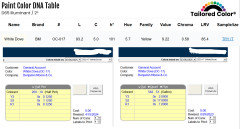
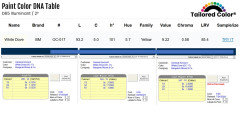
    It's the same formula in sample (200) and Regal Select Interior Paint- Matte (N548). In terms of color appearance, it belongs to the end-ish of the yellow hue family kind of approaching the green-yellow hue family.


    sfandrew51 thanked Lori A. Sawaya
  • last year

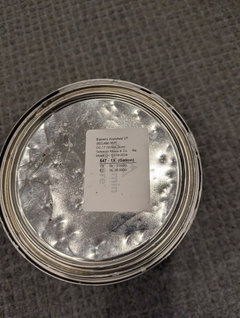
    Lori A. Sawaya, my neighbor's formula for her gallon looks like this, no R1 in it. This was paint from just last year 2024. Has the formula changed recently and some places are using the old and some the new formula?


  • PRO
    last year
    last modified: last year

    That's a different base - 547 is flat - and it's the old formula 10/21/2023.


    I added 547 as of 7/24/2024 to the slide below for comparison.

    Unfortunately, colorant, hide, coverage and color models conversations on this forum always devolve into utter stupidity which is one of the reasons why I don't post here anymore.

    So, I'm going to keep it short.🙂

    There is more than one way to mix the same color and the formula is useless in terms of defining, describing and predicting a color's appearance once installed. A color data profile DOES define and describe a color's appearance which is why I included it here.

    Bottomline, trying to 'decode' a formula in order to understand color characteristics is a waste of time because the formula is just a list of ingredients, it's just a recipe.

    The only thing that matters is what the color looks like when it's DRY.


  • last year

    We miss your posts Lori - learned a lot about color and color choice from them!

  • last year

    "We miss your posts Lori - learned a lot about color and color choice from them!"


    Yes!

  • last year

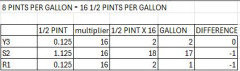
    The 1/2 pint formula shown by Lori is not the same as the gallon. Same 3 colors, but not the same quantities.


    This could be due to a difference in the base that the paint was mixed in (they don't always start out the same) or the machines they have cannot mix less than .125.. Both the black and the red are more heavily represented in the sample. The black is only slightly over represented (18 vs 17), but the red is double (2 vs 1).

    White bases vary but the only difference I have noted is that some are grayer and some more pure white, less gray. I have never noted any red tones in a white base.


    Obviously the sample is more orange than the Samplize sample.

    I think the formula is telling you why.

    Sometimes the only option is to get a sample of the actual paint you intend to use.

    A quart sized can should give you a much better sample than the "sample" size.


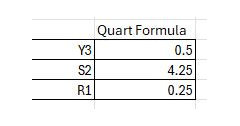
    Based on the Gallon formula Lori Provided this would be the quart formula


    I don't work in the paint industry.

    I am a data scientist and artist, have mixed a lot of colors with pigment over the past 50+ years and been helping solve interior color issues for 30 years.


    I honestly believe it is the sample that was not able to accurately reflect the formula and you will be happy with the match when you get the quart. If by some chance the quart is still too orange/peach you can use it inside a closet and no one will ever notice the difference and you can have the paint store mix a new quart with even less red or eliminate the red all together.


    I have at times gotten a sample that was too something, had the paint store mix two quarts with two different formulas and used oral syringes to mix my own color and figure out the exact formula I wanted, but usually I can see what is wrong and just ask the store to fix the formula based on what I am seeing.


  • last year

    Bought White Dove today and touched up a couple of walls. It is MUCH less yellow than my original walls (painted a year ago). It contains R1. I bet the original did not. Ugh

    sfandrew51 thanked HU-724133577
  • PRO
    last year

    It all depends on the bases and dates, the devil is in the details with formulas.


    Paint formulas are chemistry first, arithmetic second — and the math isn’t linear because of the chemistry.


    Which is why whether R1 is in the formula or not may or may not get to the root of the issue.

  • PRO
    last year

    I use the samples directly from Ben Moore, never the little sample pots. In over 25 years of being in the design business, I had exactly ONE sample that wasn't true to the actual paint color. Snowfall White, OC-118, was much whiter and brighter in person than the sample. Luckily it was for my own kitchen and it worked out just fine--the trim is a bit lighter than the cabinets, but no one except me notices it.

    But I would get new samples before I purchased the paint. Even though I have an extensive library of samples, they get old, or the company changes the formula, so to be double sure I always request the most recent samples to avoid surprises.

    I can't be bothered going down the rabbit hole of looking at formulas. The color on the wall after it dries is the only thing that matters.

  • PRO
    last year
    last modified: last year

    For touch ups I always save a glass jar full of the paint I choose for anything. Yes formulas change and IMO you use the paint companys samples not any other . Even the difference in sheen can have an rffect on how sample is perceived . BTW all the things in you r space have an effect on color and aslo your lighting so what looks great in your friends house might not be the answer for yours


  • last year

    50 years ago all paints were mixed and packaged at the factory and people picked from the 35 colors on the paint store shelf.


    Now we have these amazing machines that measure miniscule amounts of colorants to be added to a gallon of paint producing the exact color you want every time - kind of/sort of.


    They are very accurate machines and each new version is a bit more accurate, but it isn't a perfect system.

    The colorants that are used in the machine may have very slight variations from one lot to the next.

    The machines must be calibrated regularly and every time they are calibrated and adjusted the color is now a bit different than it was prior to the machine being adjusted.

    One machine may be better than the next machine and not every store has the latest and greatest identical machine as the next store.


    Even when getting 2 gallons of paint from the same store on the same day doesn't guarantee that there won't be a slight variation in the color. This is why professional painters box paint (mix the gallons together).


    Paints also dry to slightly different colors based on temperature and humidity, so the same color painted on a hot dry day may be ever so slightly different than the same paint painted on a cool, rainy day.


    Paint also changes color over time. It may fade or yellow or absorb color from the atmosphere. Go into a home where they smoke and even after scrubbing the walls there is still yellow residue that was absorbed by the paint on the walls.


    Sometimes, if you have kept some of the original paint, you can successfully touch up a wall, feather the edges and get a result that is not noticeably different than the rest of the wall. Often you end up just repainting the one wall.