Software
Houzz Logo Print
cristina_s37

What To Do When Roses Gradually Decline?

I have read many reports where people get enthusiastic about a rose for the first 3 years or so only to see the rose bush growing a bit smaller after that, with a bit less bloom, until it is not what it used to be anymore, even if no disease is present. I have noticed this trend with my Easy Does It.


What happens in such cases and what can be done about it?

If they are in pots, my understanding is they should be re-potted, roots trimmed etc.

But what if they are in the ground? What are the best remedies to restore a rose's glory if it has been declining? Or is this not possible?


I wonder how some roses manage to bloom in wild places year after year without anyone doing anything about it.

Comments (56)

  • last year

    A lot of people blame virus.

  • last year

    The second most important way to turn around a rose's decline is three pronged:

    1. Good soil.

    2. Good drainage.

    3. Abundant watering.

    Moses.

    Artist-FKA-Novice Zone 7B GA thanked Moses, Pitt PA, cold W & hot-humid S, z6
  • last year

    The type of decline you describe is typical of grafted roses. The solution is to choose rose varieties that grow well on their own roots.

  • last year

    Can you give some scientific evidence for your beliefs? Diane

  • last year


    Thank you so much, everyone.


    I will add more manure during the next season and will re-pot as needed.

    I always thought that after a few years, the soil must be getting too compacted to still work. I have seen a rosarian from Canada poking holes with the long stick in the soil to aerate the roots of potted roses that may have become too compacted.


    The ones I seem to have most trouble with are those that came as bands, on own root. They remained less vigorous all the way through.

  • last year

    I'll just address your own-roots that are in pots. You need to make sure that they are in a decent enough sized pots. It's always best to slowly up-pot own-roots to gradually bigger pots. (I'm reknown for leaving my own-roots in 3-5 gallon pots for too long). That said, the very best thing you can do for roses in small to medium pots is to fertilize them every two weeks with something like MiracleGro or fish emulsion at half strength. I much prefer the MG because it's much more complete in NPK and micros. Or maybe do MG and fish emulsion at alternating two week intervals. If you really want great results, do them at quarter strength every week. It's crucial that they be well-watered before fertilizing. I grow >200 roses permanently in 15 gallon pots, and I have a different process for them. Maybe this can get you started :-D

    Artist-FKA-Novice Zone 7B GA thanked susan9santabarbara
  • last year

    @susan9santabarbara


    Thank you, Susan! I may have to up the weakly-weekly fertilizing habit since I have kind of treated my potted roses the same as those in the ground. I just follow the feeding schedule from a David Austin calendar they send with orders, and I give them organic Rose-Tone.

    I may need to increase the liquid fertilizing for the pots.

    Is the MiracleGro liquid?


    My containers are quite large.


  • last year
    last modified: last year

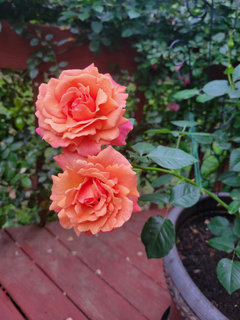
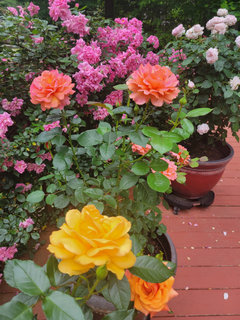
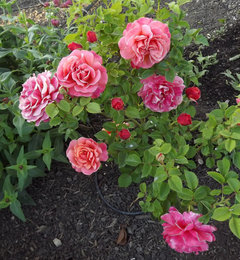
    You can see EDI in the pot below, very healthy but not large enough and less bloom than in previous years. Also the stems can flop in the rain. The color this morning was incredible though, due to the cooler weather we've had. I love this rose so much I just want more of it. More bush, more blooms and a bit more sturdiness :).


  • last year

    When roses gradually decline, start by pruning dead or diseased branches and improving soil drainage. Ensure they get enough sunlight, water deeply but infrequently, and feed with a balanced fertilizer to revive their health.

    Artist-FKA-Novice Zone 7B GA thanked Zinavo
  • last year

    On top of usual renewing compost in the top couple of inches and applying slow-release inorganic granular feed, what worked miracle revivals and gave an increase in bloom quantity and quality for me was a splash of fish emulsion in the can every time I water pots. I have become a fervent convert to the weakly (2-3 times) weekly method!


    In the ground, my poor soil needs all the help it can get, but just generally increasing the fertiliser and water works to force the droopy, feckless, reluctant mitherers to pull up their socks.

    Artist-FKA-Novice Zone 7B GA thanked NollieSpainZ9
  • last year
    last modified: last year

    @NollieSpainZ9

    Do you mean you mix some Fish emulsion with the water in the can and water at the roots or is it a

    foliar spray?

    To me, the problem with the weakly weekly method is that it's ...well, weekly, meaning too frequently. It gets very hot and humid here during the summer, and this would not be a problem if the area didn't support Lords know what kind of microspcopic creatures in the air (not just mosquitos) that I am most probably allergic to worse than others since I get welps and bites after just a few seconds of being outside in this climate.

    It makes it very difficult to care for roses in the peak of summer, so any methods that involves less of me outside at this time is tempting.

  • last year

    Osmocote Plus is great in pots, Artist. Apply every 6 months.

  • last year

    Sheila,


    Do you suggest I skip the Rose Tone in pots and use Osmocote Plus instead? Also, should I try to work in the granules a few inches down when I apply?

  • last year

    If you're having issues with roses grown on their own roots, you've really got to look at the specific varieties. Some roses just aren't all that vigorous on their own roots.

    Artist-FKA-Novice Zone 7B GA thanked ElfRosa
  • last year

    @ElfRosa


    I have an Easy Does it and a Belinda's Dream on their own roots. They bloom (some) but they always have those floppy stems and the bush never grows very large or luscious.

  • last year

    Artist. I didn't notice that Easy Does It was particularly floppy when I grew this rose, but it wasn't very vigorous and suffered more than my other roses when we had an abnormally cold winter in 2016-7. It never got back its mojo back, so I removed it to grow something I liked better--Evelyn. But Easy Does It was quite beautiful, and the blooms looked a bit like a darker Augusta Luise, though smaller. Diane


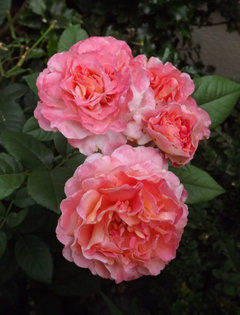
    EDI from the past


  • last year

    Gorgeous. I wish I could get that many blooms at one time from EDI. Here the winters are not that bad so it is healthy - it just doesn't produce as much as I've seen it advertised for.

  • last year

    I read somewhere that roses in pots will surely decline after a few years no matter how large the container and how well taken care of.


    Does it mean that rose will be done for and needs replacement, or does it mean it needs to be planted in the ground and it can be revived? Or does it mean it can be re-potted in brand new soil, roots trimmed, and can go on again a few years in that pot.

    I am a bit confused about this.


    I grow quite a few of my roses in pots since I have a large deck in a good sunny spot and have only so much space in the ground. So I am trying to figure out how to grow roses indefinitely in pots and not see them decline after just a few years.

  • last year

    You just use Osmocote Plus alone. Sprinkle on top of the soil and it leaches when you water into the pot.

  • last year

    Osmocote Plus works great for roses in large pots (agree with Sheila). Just be sure to follow the instructions for application. For my large pots, I put down Osmocote Plus, then a 2:2:1:1 mix of a Tone and my local feed store's landscape mix (they're similar but different enough for me to mix them), and composted chicken manure and earthworm castings. I give each rose in a 15 gallon pot a heaping 2 cups of this mix on top of the Osmocote. Most of my large pots are on 12" square stepping stones, but are always full of earthworms.

    My previous comment about using MiracleGro and/or fish emulsion was for smaller pots. (Credit should got to Kim Rupert (Roseseek) for the weekly/weakly recommendation!) MiracleGro is a solid fertilizer that you dilute with water. I would not recommend using it in a hose-end sprayer, just apply to the pot. MG and/or fish emulsion will work fine for large pots, but I find the other method overall better for them. Due to a soil fungus (long story), most of my roses are in large pots, and I have some that have been in pots happily for >20 years, so the idea that all potted roses will decline is nonsense. Sometimes they need to be pulled up and "processed" to remove old roots and add fresh soil for optimal performance. Sorry for going on so long!

    Artist-FKA-Novice Zone 7B GA thanked susan9santabarbara
  • last year

    Artist, just had my post disappear so I will try and remember what I wrote! I always water at the roots - it really is a weak solution, a splash in the can probably equates to about 2% in volume. I keep my pots well hydrated and have never suffered from fertiliser overload.

  • last year

    “.. Or does it mean it can be re-potted in brand new soil, roots trimmed, and can go on again a few years in that pot”


    Yes to that, I aim to repot every 3yrs but if it’s a big Susan-sized pot, I have gotten around 5yrs, so far.


    The trick is to unpot and scrape off as much of the old, exhausted soil as possible, so, once root pruned, they can go back in the same pot in as much new potting soil as possible. Soaking the rootball overnight in a big bucket helps loosen it up and makes sure the dense centre of the rootball is thoroughly soaked.

  • last year
    last modified: last year

    Susan, what a lovely garden you have! Talk about a,'Bed of Roses,' that is it! The visual impact is awesome!

    Moses.

  • last year
    last modified: last year

    Repot with:

    1. Organic soil-add new soil or amend it. seasonally.

    2. add Plant Tone or Rose Tone fertilizer system, regularly.

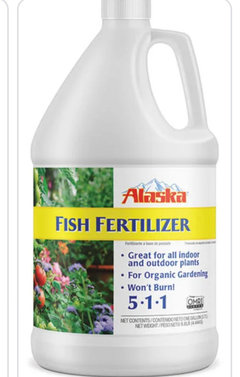
    3. apply fish fertiluzer weekly until revived. Then apply fish fertizers monthly.

    Create “living soil.” for living roses by using organic soil and fertilizers. Give your olants ”organic-“real food as opposed to chemical processed food.” Organic soil and organic fertilizers create bacteria and earth worms which help the soil to be alive and make nutients absorb into your rose roots and into the canes and leaves.

    4. Give your rose enriched new soil yearly by adding amendments to it such as bone meal, manure, alfalfa. Soil looses it’s nutientsnutrients seasonally and needs replenished.

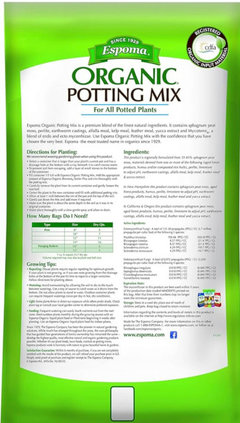
    If you use organic potted soil such as Espoma -it has already all the amendments needed in it. Then just organically fertilize regularly and your rose will receive a balance of nutrients to revive it.

    Stay with this system and they will always be generally healthy.

    Organic spraying for insects and diseases is another matter. To be discussed another time.


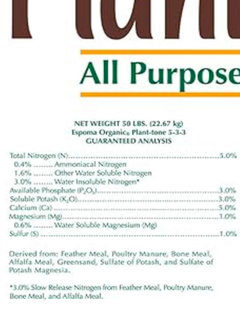
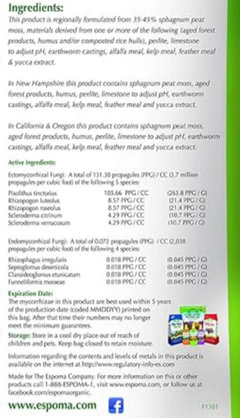
    ESPOMA-Plant Tone Ingredients (Rose Tone is similar, too) Both are good for roses.


  • last year
    last modified: last year

    ESPOMA POTTING SOIL INGREDIENTS LABEL has fish products, humus, spagnum peat moss, earth worms, perlite, alfalfa , mycorrhiza, and more….(Living i ingredients which create bacteria to make soil process nutients s and make them absorb into rose roots and throughout your roses system. Areates soil, too.

    ORGANIC-ESPOMA POTTING SOIL


    Try Espoma Garden Soil and Espoma compost, too. I use them all.


    Other organic soils work well, too.

  • last year

    @susan9santabarbara Wow, your potted garden is an explosion of color, I love it!! Like you, I also grow most of my roses in 15 gallon pots due to intense gopher pressure and your advice posts are incredibly helpful, so thank you.


  • last year

    Thank you all so much for the time you took to write this helpful information. Reading all this, I wonder if my fertilizing regimen may have been on the "not enough siode." I wanted to err on the side of less is more because last year or two years ago I must have burned my potted roses with some chemical fertilier which I my have applied a tad too much. Since then I changed what I do but now I am not sure if my fertilizing regimen has been enough.


    I will submit it for your evaluation.


    Roses in pots (large containers, roughly 20-24 inch diameter):


    February/Early season: top dress with manure or Soil3 (a brand), feed with 1 cup of Rose-tone, and 1 cup of alfalfa pellets. During the following months leading to the first glorious flush, I may add a bit of liquid fertilizer (soluble MG), once or twice max. I once used Great Big Roses fertilizer.

    May, after first flush (just did): 1 cup of Rose-Tone, sprinkle 1 tsp of Langbeinite and I addded about 1/2 cut of Epsom salt too.

    Again, I may add some soluble when I remember.


    June-July - I try to keep the feeding low since I read it is not good to try to force roses in heat,


    September - 4th feed, Rose-Tone again.


    I think I may have to feed with liquid more often and more diluted. 4


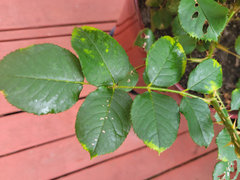
    Right now, I am noticing a tendency of several of my roses to get yellowed leaved on the edges. I will post a picture below.


    I know I will get advice to "test my soil" but I tried twice and the local extension is horrible, they never got back to me, and they are difficult to reach.

  • last year

  • last year

    @susan9santabarbara


    Thank you so much for your post. It is so heartening to know I can keep them going in pots for a long time. Your roses are spectacular and I love the way that happy garden frames your house.


    All of my roses are in 20-24 inch diameter pots, so pretty large.

    I probably need to get better about the weakly-weekly method and just accept that I will have to re-pot with fresh soil once every few years instead of just top dressing.


    The problem is that my EDI is one I repotted most recently and it is still not growing much.


    By contrast, I've had Olivia Rose for five years now untouched, and she still performed beautifully this spring - although I think I would like to report her anyway next season.

  • last year

    Artist,

    Epson salt is high in magnesium and needs only to be used if ”magnesium deficient.” I don’t recommend epson salt as excessive amounts can harm plants.


    Rose Tone or Plant Tone has alfalfa in it. if you read the ingredients, it is oacked with bone meal, poultry manure, alfalfa, greensand and all organics a rose needs-fabulous for soil.


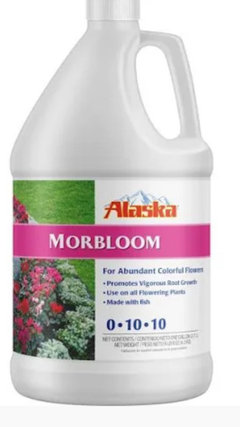
    I really dont think roses need more than Rose Tone/or Plant Tone & Fish fertilizers plus Morbloom-my system. I now add an alfalfa treatment because of its rich texture & cheap.


    KEEP IT SIMPLE:

    1st new soil & cow manure.

    1. April or May -Plant Tone

    2. June Alfalfa (pour it on thick-work into soil around rose stem.)

    3. August Plant Tone again


    4. Alaska Fish Fert mix w/ Mornloom-Fert. weekly on babies and monthly on mature healthy roses.


    No needed extra chemicals.

  • last year

    @Kittysrosegarden


    That's roughly what I have been doing. Rose-tone and alfalfa but not as consistent with the liquid. Once a month on mature roses makes sense. Weekly sounds like a lot of work, especially in heat and pinchy creatures in the air.

    I think I may also be a bit unrealistic in expecting the same flour production from a potted rose that one could get from the same rose planted in the ground in fertile soil with ideal light.


    Pots may never give me that level of bloom, no matter how well cared for.

  • last year
    last modified: last year

    Artist,

    Yes, weekly may be a kit if work when mosquitos are out in the Georgia summer. I do as much as I can for baby roses less than a year old. Sometimes it’s weekly when I can, but you do what works for you. Your programs sounds good!

  • last year
    last modified: last year

    I hear about roses growing for 20 years or more up north . For me in central FL , roses usually do start to decline after 3 years , own root or grafted .

    Canes will die one by one , no new canes will emerge although I take good care of my roses , I add manure & mulch yearly & fertilize mostly with organics . Eventually the rose would just dry up & die or live with a cane or two.

    I think maybe because of the long growing season with no down time ? Or maybe because of our intense heat & humidity ? or maybe because of bugs/fungal diseases ? Or maybe the soil nematodes got the roots eventually?

    I really don't know . I have accepted my fate and just replace the dying ones with new different ones .

  • last year

    Geez, I use Plant Tone once a year, and you're talking about using it once a month or once a week. That's known as overfertilizing.


    Pink Rose, I've read about the nematode problem in some Florida soils for years. Can you try growing roses grafted on fortuniana rootstock, which is supposed to be nematode resistant? K&M Nursery sells such roses. Diane

  • last year

    @Pink Rose(9b, FL )


    Here in Georgia I wouldn't quite say they all go down after just 3 years, especially if they are in the ground, but those in pots seem to go in that direction.


    In the ground, they stagnate and max out at less than the typical reported size. I suspect this is because they have tree root competition and clay soil in the area they are now.


    My first rose was Good as Gold - I got it in Spring of 2018, planted it in the area with tree roots (all I had) and it has been performing fine every since, mostly for the first flush in spring. In summer they struggle but that's also because I can't seem to keep up with the waterting properly. Too hot and too many insects that bite me out there.


    I haven't seen any new basal shoots on my GAG in years, but it still blooms well in Spring.

    Then again, the roses I have in the ground are hardly in an ideal location.


    I am looking to make a new garden bed with fluffy soil and no tree root competition, so we'll see what happens then.


    The potted ones need re-potting with fresh soil after a few years.


    Only Olivia has been performing great in her pot for five years now, without any re-potting.

  • last year

    As a fellow Central Florida gardener, I'd suggest getting fortuniana grafted roses from either Nelson's (I think they're in Winter Garden) or from K&M. I spoke to Mr. Mills of K&M and he told me to check back in the fall about fortuniana grafted roses so try Nelson's first. Both have been very successful for me, the rootstock in nematode resistant and puts on a lot of canes and thick ones at that. It's just perfectly suited for the Florida soil. They will last a good deal more than 3 years, with some minimal care, probably decades.


    I have a few Austins that are Dr. Huey and some that are own root that are doing well. I think that is in part due to the fact that I fertilize regularly and am always adding mulch here and there to build and protect the soil. Florida soil is very nutrient light, you just have to keep feeding it. Clay soils are more nutrient dense but won't drain as easily, some people's soils are more alkaline, some less, just the natural variation of gardening across the country.


    As we're about to go into the rainy season, I'd suggest some slow release fertilizer like a Plant Tone as suggested by someone so it doesn't wash away as easily with all the water we're about to get.

  • last year
    last modified: last year

    Diane,

    Artist & I are talking about fish fertilizer once a month. (Plant Tone is recommended on label for once a month-but I do other things.)


    And I mentioned fish fert. weekly on tiny baby roses under one year I don’t quite do it weekly for miy babies except weekly maybe dor for 1--2 months if it’s needed-if I can fit it in when possible). If they are growing well with green leaves, fertilize less.

    However, with organic fertilizers you can use more or less and I have been told by some experts one can’t over fertilize w/ organics.

    .

    (over fertilizing with chemical fertilizers burns.)

    I use several cups of Plant Tone or Rose Tone on each larger rose (a couple cups maybe in babies) and heaps of alfalfa at beginning of season-mixed into soil. Then once a month-fish fertilizer. Then end of season Plant Tone, again.

    I did see a person’s garden with dark blue green leaves roses-the darkest ever. He teally was ysing too much fish fertilizer-then they grow more green, but less blooms.

    I never have that dark green of leaves, LOL

    So far I really need to keep up my fish fertilizing achedule. it really helps. It rains a lot, then I don’t do it until it’s drier. I need to do it now….. but roofers have taken over my yard. I can’t go out my kitchen door for a few days now, to finish fertilizing. LOL!

  • last year

    Diane & Knightsgambit ,


    Actually most of my roses are on Fortuniana either from Nelsons or K& M roses . Recently I starting adding own root roses from HCR , Heirloom & Edmunds because I got tired from the same old selections . Of course not all roses decline after 3 years but most do .


  • last year

    That’s strange @Pink Rose(9b, FL ) because I feel Fortuniana is the rootstock with which I’ve had the most success. Did you amend the soil before planting?


    As Kitty mentioned, this year I’ve added alfalfa meal to all my roses with resounding success. Lots of basal breaks and density of new growth which is what we all want. The triacontonol in alfalfa meal is what I believe acts as a stimulant to pushing this new growth. Fraser Valley has a great youtube video on this.

  • last year

    Knightsgambit

    Yes l do amend at planting time . Also l fertilize every month because my soil is fast draining sand .

  • last year

    @Artist-FKA-Novice Zone 7B GA how old are the floppy own-root roses? I think by about year three you will have a strong sense of the vigor, but in the first couple of years, almost all own-root roses match this description. The hybrid tea types take the longest, of course, and it's hard to wait for them to catch up to their grafted counterparts, if they are ever able to do so.


    I have a few grafted hybrid teas that are now 30 years old, which is well beyond the 15ish year lifespan that is generally attributed to grafted roses. However, the graft was dead in every single one of these old plants - the reason they survived for so many years is because they had started growing on their own roots. It's a pretty interesting looking root system when that happens - the own-roots sort of sit on top of and wrap themselves around the old grafted rootstock remnants.


    One of the things that should be considered (but that most rose growers don't consider) when roses are in pots is soil temperatures - if the soil is exposed to direct sun and hitting over 90-95F, root health (especially new roots) can be severely impacted. Mulch, shadecloth, drip systems are probably the best way to keep soils cool.

  • last year

    Pink rose, Is the problem Soil nematodes? I've read many people grow their roses on Fortuniana rose stock for that reason.

  • last year

    Vaporvac

    Nematodes might be the problem . The roses do great for the first few years .The decline is gradual . I add organics to the holes but nearby soil is pure beach like gray sand .

  • last year
    last modified: last year

    @ElfRosa

    Those floppy, less vigorous roses (EDI and Belinda's Dream) are five years old. They've never been as sturdy as a grafted rose.


    So interesting that you roses reverted to own root! I should probably do a better job with mulching.

  • last year

    One thing I've done to add fertility to my Florida soil which initially took on a light brown to taupe color has been to constantly mulch and before mulching take either fresh hedge clippings or dried leaves and set a heavy pine bark (Timberline pine bark, the green bag). Over time, the leaves turned into a humus and has slowly darkened the color of the soil. With a healthier soil and one that drains well, you shouldn't have an issue with nematodes. The only time I had issue with nematodes was with tomato plants and that was before I seriously worked on improving the soil. After that, I've been able to plant roses of different rootstocks and they've managed to do well. Of course, this process doesn't happen overnight, it will take years to get a couple inches of dark loamy soil. Until then, I'd suggest growing and sizing up your roses in containers. Given Heirloom's come in one gallons, that's probably a perfect time frame of about 1-3 years in a container before going in the ground.

  • last year

    Elfrosa, I know exactly what you are talking about. I think most of my roses (aside from the newer implants, of course) have "gone own root". In my warm climate (Tuscany, Italy) I try always to plant grafted ones with the graft more or less at soil level, so in time ,once the scion has become vigourous enough, it can form it's own roots. This is my preferred way of doing it,since own-root roses can be too slow to get started in my harsh conditions.

  • last year
    last modified: last year

    @Pink Rose(9b, FL )

    I have consulted tegarding rises olanted in sandy climates before. I do not know how sandy your soil is. Hiwever, I have read anout olanting in sandyvsoil. First, it is recimmended to put leaf compost around the boarders of the soil to slow down drainage and the fill the holes with enriched organic soil. If the future as you plant roses, if you do this, you may slow down the declining rose issue.

    My roses have not declined after 3-6 years. However, I enrich their soil and fertilize regularly/seasonally, as mentioned before.

  • last year
    last modified: last year

    Love Susan’s front rose garden! It must stop the traffic! Do you have a nighttime photo? I’d love to see those lights too under the moonlight.

  • last year

    @Artist-FKA-Novice Zone 7B GA that is disappointing. Unfortunately, sometimes we find out which roses are vigorous on their own roots the hard way. It's my preferred way to grow them, but I can't deny that the instant results from grafted roses are pretty incredible.


    @User that sounds like the ideal way to grow roses! I have a mixed garden of OGRs and modern grafted roses, and I hope I can get a similar result.