Software
Houzz Logo Print
ivan_turbinca_2

Why do roses die like this ? (certain branches dies after mild winter)

I am located in Toronto.

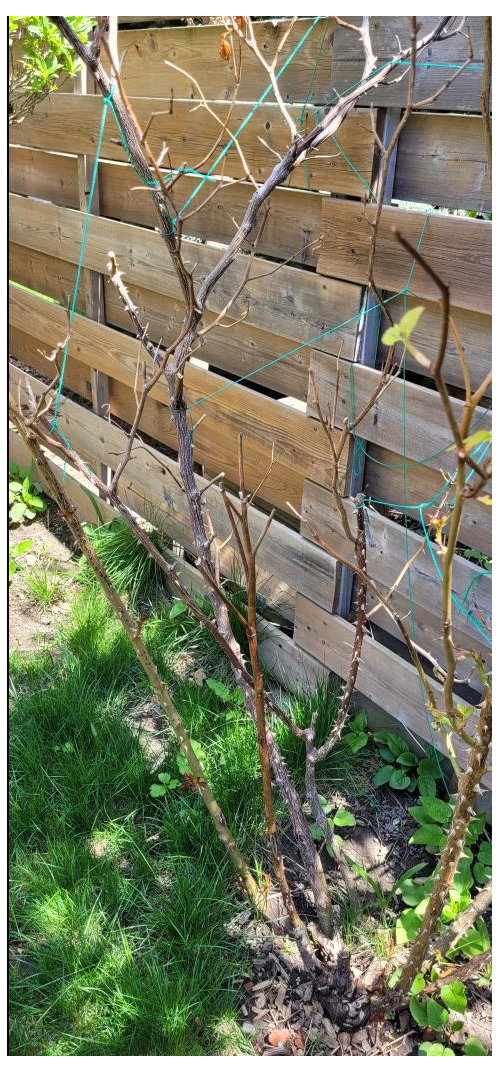
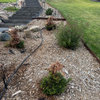
I have been trying for years to get this rose to climb above the fence level to cover a gap between trees and improve the privacy in our backyard. I was under the impression that the plant is struggling to get higher because of ddying back due to frost. I hoped that once it is stronger it will survive easier and I hoped to see that branch established and to see the plant growing up from there.

To my surprise this year it is dead and I had to remove it. There is a new stem(the one most to the left) that is thinner than this one, higher, younger and that one survived but I am wondering if next year it will have the same fate as it older sister. Who can explain me what is happening here


Comments (19)

  • last year

    Do you know the variety of rose? The rose may have been rated for your zone ,but it is too tender. The ratings only refers to the roots surviving and sprouting new growth. A good approach is to go at least one zone lower to ensure both root and cane survivability. This is especially important for climbers.

    Unfortunately, I've personally experienced this enough times to have given up on zone pushing any more for climbers.

  • last year

    Yes this is called wedding roses, white rich flowers and yes sold as a climber

  • last year

    I am about 2 hrs away from you on the other side of the lake. Most of my climbers don’t grow tall. The one I really love is called Dream Land from Palatine. It’s hardy and repeats well. Now I have to find a way to dig them up from the old garden at previous home to the current place. I used to have many New Dawn and White Dawn, but they were gone, voles took them all one by one.

  • last year

    Bottom line is that it's nothing you've done wrong. I can't find a climber called "Wedding Rose" in the database helpmefindroses.com, but regardless this pattern looks like a climber that is root hardy (survives at the base) but not necessarily cane hardy (all the canes survive) in your zone. It has good fresh growth at the base and will recover faster than you might think if you just prune off the dead bits down to just above where you see green growth. It's fine to trim the canes down to the ground - the other green growth will compensate.

    You do want to check that the new growth is coming from the actual Wedding Rose you planted and not a grafted rose underneath that rose. Assuming this is a grafted rose (most roses you buy from garden centers are), there will be a knobby bit at the base of the rose that is where the chosen rose is growing. I think that's what you have just above the soil line in this picture. As long as the new growth is sprouting from that knobby part or higher you still have the rose you want. If it changes its bloom to a dark red or small white bloom (or something different from what you planted), then the rootstock rose has taken over. In that case, you'd usually dig up the rose and find a more hardy one as people mention.

    In the meantime, assuming it's still the wedding rose, you can either grow it as a large bush or small climber. Unless you need the space for something else, you can wait this season and see how it recovers from regrowing. Some of my roses including climbers regrow from the base every year and can get 8' or more in the season.

    Cynthia

  • last year

    I also have this problem in Denver Colorado. I can't tell from the zone ratings what will be cane hardy. One thing to try is go to your botanical garden in the spring or a nearby rose garden and see if there is a climber you like that has held on to its cane.


    This last year was mild for us and all but one of my roses held on to its cane so this year may not be the best evidence of what is possible. If you have a local rose society you could ask them what does best in your local climate.

  • last year

    thank you guys

    The part that puzzles me is that the young ones don't seem to die in the first year, they will eventuall die in the next two years

    I am wondering, if I properly protect the canes over winter would they survive no matter what ?

  • last year

    Ivan you need to pick hardier roses. Protecting over the winter is a hassle. Hardier roses would thrive there.

  • last year

    Victorian Memory is a Canadian Climber that I put in last year on the recommendation of a forum member. They have a picture of it climbing in the Denver Rose Society so I am hopeful.


    https://www.denverrosesociety.org/wp-content/uploads/2016/02/CG-0616-PG16-17-min.pdf

  • last year

    During the time I've been growing roses, we experienced two very cold winters—the first a few years ago, and the most recent one. During the first, I didn’t take any special precautions for my climbers compared to regular roses, and as a result, I had to cut all of them back to ground level in spring. This past winter, however, I was prepared: I bundled all the climbing canes together and, when temperatures dropped to around 0°F, I covered them with blankets, towels, and other insulation. Interestingly, while most of my non-climbers were cut back to ground level this year, all of my climbers' canes survived.

  • last year
    last modified: last year

    TTTTThhhhhheerrrrTTTTh I can't write on my tablet for the moment sorry. There are many things that you can do to protect your rose over the winter but they are a lot of work and have to be done every winter. For instance, you can dig out half your rows and dig a trench out and bury it in the trench. This is called the Minnesota tip method then you cover it with the dirt you dug out. In the spring. You put it back up on the support And plant the other half. Then you hope it doesn't freeze after you do all of that.

    It's a lot easier to find a rose that you like that is hardy in your area And plant that. You can still keep this rose and just grow it as a bush. I'm sure people here could help with suggestions for a new climber.

    Great article M.

  • last year
    last modified: last year

    Toronto is in Zone 6, so it shouldn't be too difficult to keep most roses safe over the winter. I can recommend Peach Melba (I got mine from Palatine)—this climber grows like crazy. I originally placed it on an obelisk, but by the end of the season, I had no choice but to cut it back significantly —it was like an octopus! And that was just in its first year. This season, I replanted it to grow over an arch.

  • last year
    last modified: last year

    Is that Canadian zone Elena? Because they are off by 1 zone. They are not the same. I seem to recall that our zone 5 is their zone 6.

    Peach Melba is a beautiful rose! I hope you'll post pictures of yours this season.

  • last year
    last modified: last year

    Toronto is in USDA Hardiness Zone 6a, with some areas falling into Zone 5b, depending on microclimates and elevation.

    For practical gardening:

    • Zone 6a: Average minimum winter temperature is -10°F to -5°F (-23.3°C to -20.6°C).
    • Zone 5b: Dips slightly lower, to -15°F to -10°F (-26.1°C to -23.3°C).

    If you're growing roses or other perennials in Toronto, it’s safe to select plants hardy to Zone 5b for added protection against occasional colder winters.


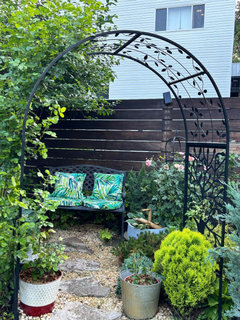
    This is how Peach Melba looks now, a little behind due to replacing, but hope that an the end of the season will cover the arch.


  • last year

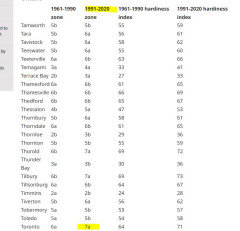
    OK, 7a Canadian is 6a USDA. From your link:


  • last year
    last modified: last year

    Yes. That is what I said that we are zone different. I just wanted to be sure Because in my experience And this is my experience alone, it's better to zone to a lower Zone for a rose and not have to worry about it. Many roses are rated to zone 6 and are not hardy here at all without protection. For example don Juan, climbing crimson glory, And a few others. Some will have minimal die back Which doesn't matter so much.

    Your garden is beautiful Elena and is a testament to your care.

  • last year


    I have to confess—I never really pay attention to rose hardiness zones unless it’s clearly stated that a rose is only suitable for zone 7 or warmer. So far, out of the 100+ roses I grow, only one—Amour de Molène from Palatine—has struggled in my climate. That said, I’ve learned I can usually bring any grafted rose back to life. In general, most roses should do fine in zone 6 and up without major issues. Maybe I’ll learn my lesson with my new collection of florist roses, but so far, so good!

  • last year
    last modified: last year

    I strongly recommend at least tying climber branches together—it makes a big difference in reducing dieback. Cold wind is a serious problem.