

The own root craze? I think, 'Not so fast, buddy!'.
After growing own root roses now for 35 or so years, I have come to the conclusion that not all varieties do well on their own roots, and almost all varieties do better grafted onto an appropriate root stock (for me, it's multiflora).
More flowers, bigger flowers, faster repeat bloom, tall & bigger bushes, better disease resistance, better fragrance, longer lasting blooms, better winter hardiness, better shipping outcomes.....the list can go on, so why is the current rage of own root bushes in full throttle?
It's easier and cheaper for any 'Who shot John,' to start up a business selling own root, bootlegged roses (as in the current Asian based online rose nurseries), and for the many American containerized rose bush nurseries to sell their own, own root stock than sell their own propagated grafted roses.
Gone are the days of: well grown, full root system (not mercilessly chopped back), carefully harvested and kept dormant until shipped, double and triple grafted roses, and shipped at the right time rose bushes. I think we're stuck with own root roses predominating. It's a sign of the times.
Moses.
Comments (88)
 last yearlast modified: last year
Hi bart, thanks. Yes there are always a few exceptions, there was La Roseraie du Désert in France too, specialising in old teas, chinas, noisettes etc. The owners sold a few years ago so I’m not sure whats happening with it now. There may well be others, but its not the norm.
That must be more than a coincidence your MW is better, more rounded habit too, Kitty. It does seem to have a really awkward habit when grafted. last year
My grafted roses tend to be more vigorous, have larger flowers and better repeat. But some roses do almost as well as own root like munstead wood, so I prefer own root when it does really well, but grafted if it does much better that way. I have many grafted roses and have not had any suckers. I think the prevelence of mosaic virus is what has put a lot of people against grafted roses, and also against Dr huey. I think many of the grafted roses sold from the big growers have mosaic virus with minimal or no visible symptoms but a general lack of vigour and susceptibility to disease and winter damage, so it being grafted gets the blame. Really wish the growers would focus on getting clean rootstock but it seems they aren't interested
Related Professionals
Middletown Landscape Architects & Landscape Designers · Billings Landscape Architects & Landscape Designers · Hilton Head Island Landscape Contractors · Johnson City Landscape Contractors · Lafayette Landscape Contractors · Miami Home Builders · Bainbridge Home Builders · Lawton Home Builders · Burlington Home Builders · Lebanon Home Builders · Kenosha Home Builders · Yuma Home Builders · Salem Home Builders · Leamington Home Builders · Bronx Home Builders last year
I love this discussion, thank you @Moses, Pitt PA, cold W & hot-humid S, z6 for starting it! I live in Oakland CA where I don't have to worry about winter die-back and would love to experiment with various rootstocks. I'm currently growing Dr Huey and Pink Clouds to try some of my fussier florist varieties on. I've also got a couple of other experiments going on with some of my favorite varieties on own-roots vs grafted: Munstead Wood, Jude, Constance, Soeur Emmanuelle, Koko Loko, etc. Zero statistical power since I've only got one of each lol. I'll report back once I've come to any conclusions. A rose friend and I were recently discussing this topic and she's also going to try grafting some of her favorite roses that are less vigorous i.e. Osiria etc.
@Diane Brakefield is your twig own-root or grafted? I have an own-root Abe that is a very slow grower and I'm wondering if it might be worthwhile to obtain one budded on fortuniana or multiflora since I love the blooms SO much.
For those of you who've tried multiple rootstocks, which do you prefer, and why? Or is it a crapshoot? last year
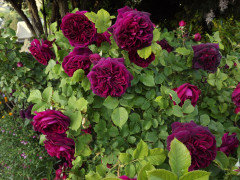
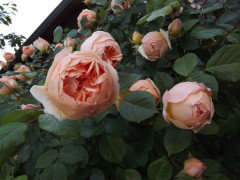
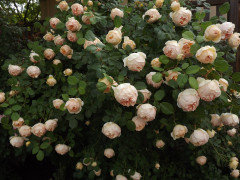
SD, Twig is own root, and a major reason why I don't trust own root roses here. I've grown him 7 or 8 years, so slow is an understatement. Of the two rootstocks on roses in my garden, I prefer Dr Huey, but just slightly. Multiflora does well here, too. I'd try fortuniana, but it's too cold in winter here. I can tell you that Munstead Wood (I have two) and Jude the Obscure do beautifully grafted on Dr Huey. Jude is 21 years old. Diane
2025Munstead Wood

Jude the Obscure
- last year
@SD Shine -Z10a Bay Area In your zone fortuniana would be an excellent root stock - the roses budded on that seem to be rockstars! If I lived in a warmer zone I think all of my roses would be budded on her
@Diane Brakefield Your Munstead Wood is beautiful, as always. I have a few of her in my front garden and she never fails to impress
I wish more of these smaller vendors would sell grafted roses, you would think that would be easier for them - especially for hard to root varieties. I wonder if they get a lot of requests for own root and that's why they go that route instead - last year
Thanks, Elestrial. I'm a huge fan of Munstead, which I think is one of Austin's best. UK/EUR says Munstead has been retired over there. I can't imagine why. It's still under patent here and I think in UK, too. Austin has so few good dark roses. I haven't been able to figure out Austins' strategy over the last 15-20 years. As Far as own root goes, I think it's a combo of requests for the current in thing, but I think rose bootleggers like own root because, as Moses said, it's easy to sell as is. Diane
- last year
I have quite a few dark roses and Munstead outperforms them all, I will never understand DA's decision to retire her in the UK, and I've got a feeling her days are numbered here. She's been slowly pushed out of their catalogue books - only mentioned in the index at the end now, probably just a matter of time :(
 last year
This is a great thread. I would like to find a source for Multiflora grafted roses. The few that Ive had have performed way better than Dr Huey, and mostly better than own root with a few exceptions.

Moses, Pitt PA, cold W & hot-humid S, z6
Original Authorlast yearlast modified: last yearNollie,
Do you know what species or variety of rose root stock is used in Europe? Also, is it seed grown or cutting grown? Thank you!
Moses.
- last year
The rootstock most commonly used is laxa, Moses, or rosa canina laxa to be precise. That was the one I was describing earlier. Sorry I have no idea how it is propagated. I believe Multiflora has occasionally been spotted but it‘s not standard. The interstem on my old Ghislaine de Feligonde tree rose is de la Grifferie but the rootstock is still laxa.
- last year
Elestrial and Al Mitchell - there are starting to be some smaller vendors in the US selling grafted roses on multiflora. Thank heavens, as with Palatine and Regans closing we need more grafted vendors. Sweet Hilltop Farm sells fantastic grafted roses on multiflora including a rich variety of Jalbert roses. I ordered about 15 from them and they're all doing very well for me. They're based in Oklahoma and the owners are apparently the ones that answer the phone if you call, with great customer service. They also have some potted versions of roses later in the season, but I'm relying on them as a new source of grafted bare roots.
Cynthia
- last year
I hadn't checked Hortico in Canada for quite a while. Years ago, I got some good roses on several occasions from them, and which were grafted on multiflora. So I went to their website. They had lots of interesting roses, though not as many as in the old days. And the photos were so much better than years ago. But nowhere could I find whether Hortico would ship to the US anymore, if the low price listed was wholesale or retail, and if the roses were grafted or own root, and if grafted on what. There was no home page that I could find this info on, either. So, unless you are more persistent than I was on limited time, you might find more useful information, and you can email or phone them. They're still as odd as ever with their info, I think. Diane
 last year
I've also grown own root roses for years, most of my roses came from Heirloom back in the days when the Clements owned it. Those roses were known to grow well on their own roots and none were duds. I am a huge fan of these roses - many are OGRs, hybrid musks, and ramblers.
The current problems seem to come from the "trendy" roses - the DAs, double flowered floofy pastel wedding roses, florist roses, etc. It seems like people who are growing these on their own roots are starting to realize these plants might not thrive.- last year
Well, as I've mentioned on other threads, I have two old grafted Julia Child (like 20 years old), and they outbloom by far the own root Julia I grow in another spot in full sum, just like the oldies grow full in full sun. The grafted Julias' blooms are larger and just a bit nicer than the own root rose, which I got by accident around 8 years ago. I couldn't figure out why it didn't rebloom as nicely as the older grafted roses, so I checked the tag--yes, I keep tags, and there it was. This was purchased locally at my favorite nursery, Edwards, as a five gallon rose. I noticed on Edwards rose list that they now sell both OR and grafted, and are up front about it and other roses available as own root. I don't consider Julia Child to be trendy, nor is own root Abe Darby, which is a real problem for me. Diane
- last year
@Diane Brakefield it is interesting to have more than one of a variety so you can see the differences in their vigor. I have some very old hybrid teas that were originally grafted but eventually took off on their own roots - some thrive, some don't. I'm also watching a historic garden that has some own root mid-century rare hybrid teas grown from cuttings, and it's the same - some look great, the others look stunted. One has already died. It's such a mixed bag.
I don't feel confident about purchasing any hybrid tea types on their own roots, whether mid-century or modern/trendy.  last yearlast modified: last year
& Rosie Friends,
I have been purchasing own root roses since 1987, to oresent, 38 years. I have own root most types of modern roses & some OGRs.
I have been purchasing from Heirloom Roses, own root roses, since about 1994 to present. I acquired hundreds & hundreds if own-roots of all tyoes, hybrid teas, English, DA, OGRs & more. . I also bought own roots from other vendors. I grew tons of them in CA & Oregon with no problems-very vigorous-too vigorous! . Everything I ordered did well
. Finally, I moved to NY 8 years ago and bought more HR & other vendor own roots. I found I needed in NY to buy “special disease resistant/hardy roses for NY to make it through freezing winters & rainy humid warmer seasons. However, I found I could grow most types of roses when planting them in good locations on my property.
However, I have found “my 30 OWN ROOT florist/Japanese roses” most of which are more hardy and have stronger stems, stronger leaves and thicker petals which do not loose their petals and stay intact and bloom longer in the sun. They are my best roses. Blooms and all oarts of the florist rose are stronger than my other 60 regular roses. I have been growing florist roses 3 years now. This year I ordered about 17 new florist roses.
My DA own roots florist roses are some of my best roses, with amazing bloom power, thick staying petals, long vase life, bloom forever in very hot sun 107F, beautiful dark leaves and vigorous growth! Disease resistance is exceptional, too.
Constance, Effie, & Juiet, DA wedding roses, are outstanding in the garden!
My other florist own root roses are great thriving roses, too: I have a 5 ft Miyabi own root, almost 3years old right now-she is super vigorous. Eisvogel is super vigorous, 4ft, 2nd year so far. I have 3 Yves roses which are now thriving. Georgia Peach spray rose is a super disease resistant vigorous & fabulous prolific bloomer. Blushing Parasol spray, is my new biggest most vigorous rose-exceptional & gorgeous long lastong blooms in 88-94-107F I have 7 own roots from April & Ashley that are growing rapidly & blooming. I ordered 4 more from A&A. The list is so much longer of all my thriving florist roses.
I see people have problems with own root florist roses dye to improper care or buying the wrong rose for their climate or zone.
I am buying many Interolant, Jan Spek, . & VIPRisrs grown in the Netherlands whixh are well suited for my climate-winter hardy & disease resustant. I see others having orobkems with florist rosrs such as plant them in freezing weather, have them delivered during freezing weather-in both cases the roses freeze. i have seen people not know how to care for any roses, over/under fertilize, plant them in poor soil, improper pest or other types of improper care and the florist roses do not survive. Also, they may be buying too young an own root florist rose and not pamper the young rose enough. In addition, some roses are not meant for some climates. I had a couple florist rosrs which were prone to mildew. I have had some regular roses prone to mildew. I try to ourchase more disease resustant fkorust rose varieties now.
I also have had 7 grafted florist roses & a very rainy humid spring/summer. The 5 GRF grafted roses, with too far cut back canes/roots-only 3 of them have survived-they were not vigorous which would hapoen to any rose cut back too far. My 2 grafted A&A florist roses were very vigorous and grew very well .
In conclusion, Florist own root roses or grafted roses generally have stronger petals, stems, leaves made ro stay in vases longer and do well in the garden-growing vigorously, in my experience.
I am now focusing on mainly buying florist & Japanese roses as they bloom longer and grow all around better than regular roses, in my experience.
Keep in mind, I provide for all my roses some new soil, new compost ,fish fertilizers, alfalfa, organic Espoma fertilizers & cow manure each season-so all my roses grow well usually. .
I had a friend come visit in June 2025 for a luncheon & garden tour. She is starting to sell roses to florists and wants to learn more how to grow roses in NY. She was amazed seeing my florist roses out bloom my regular roses and how my florist roses didnt loose petals to the ground-they just bloomed a lot in the hot sun & stayed intact. Constance was one of her favorites.
- last yearlast modified: last year
Constance, own-root, in my garden
Blooms from June 2025
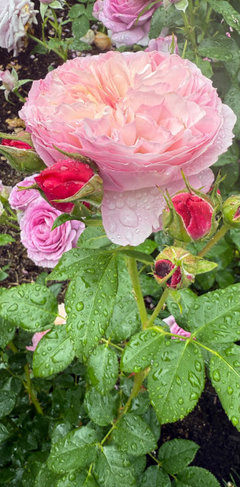
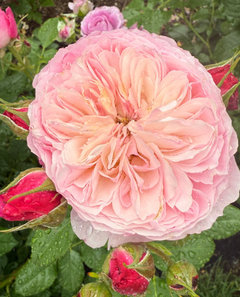
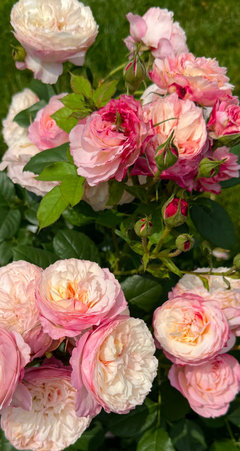
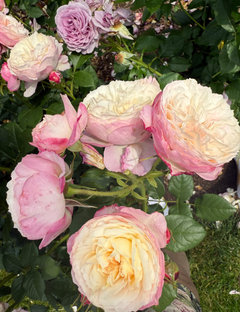
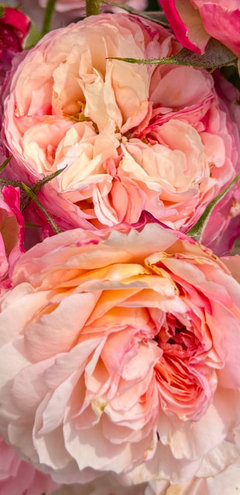
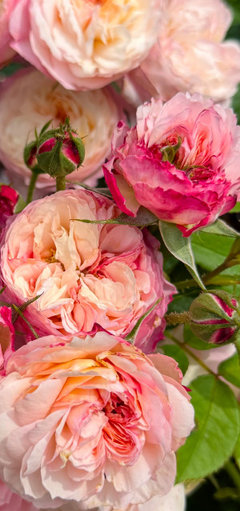
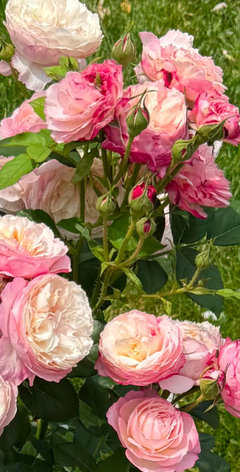
Constance is quite large, very vigorous & a prolific bloomer , own root, 2nd year.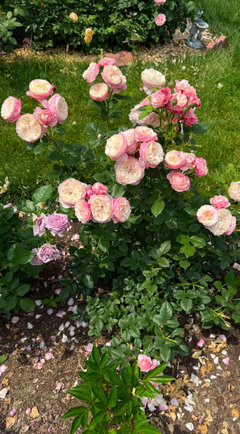
 last year
Kitty, I do love your Constance and that is an exceptional photo of a bloom. I want Constance but can’t find it..
 last year
Holy Moley, Kitty!!! Your Constance is a delight!! What a great bloomer with gorgeous picotee edging!!
- last yearlast modified: last year
Thank you, Judi & Carol!
Constance may be available in fall or winter sales on Etsy or JessiesrosesUSA. Many sellers are out of special florist rose varieties right now in mid-summer. Best Wishes! 🥀🌺.
- last year
Kitty, your Constance looks amazing. Mine is still pretty puny in year 2, yours is much happier!
- last yearlast modified: last year
My Constance came as a large 18 month old rose bush from JessiesroseUSA, I think. She sends big roses! Last year it was a better spring-summer for roses & I planted her in ground in May so she had all season to grow. I also give my florist roses extra Alaska Fish Fert. & Alaska Morbloom, mixed liquid fertilizers for a few weeks until leaves turn dark green & only when they are in ground garden beds. Plant Tone, too. Then Fish fertilizer once a month afterwards-it really soeeds their healthy & growth. (Not sea weed, but I am sure sea weed is good,too.)
I may give my potted roses once a month fish fertilizers, only. I don’t give them any fertilizer when I first pot roses because they need time to adjust to a new environment. Stsrt feeding in 4 weeks.
Your Constance may be small, but feed her monthly & in a year she will grow up. Hee hee! She’s probably a teenager right now. 😊🥀
order on Amazon Prime, free shipping:
(Less expensive than other fish fertilizers I have seen & really concentrated-excellent!!)
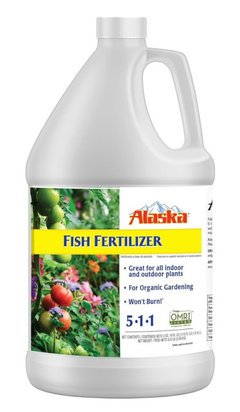
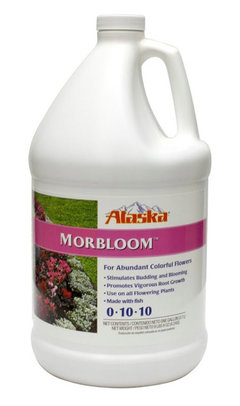
Akaska Fish Fertilizer is mainly Nitrgen-great for ”green leaves/canes growth.”Morbloom is mainly potassium & phosphorous-good for root growth & blooming power!
Mix Alaska Fish Fert. with Morbloom in a gallon of water & apply to rose soil. zdertilize early morning before sun comes out so don’t burn roses. Don’t fertilize if sun is very hot temps may burn rose in summer. . i.e. I i had 88-95F + humid, heat index says feels like 104-107F, don’t fertilize.) 😊🥀
Elestrail,
Join us weekly on the Houzz Summer thread? I post all my florist roses & garden tips (& disasters-hee, hee) mainly there. 😊🥀😊
- last yearlast modified: last year
Rosie Friends,
Neptune is more expensive than, my combo: Alaska Fish Fert mix w/ Morbloom.
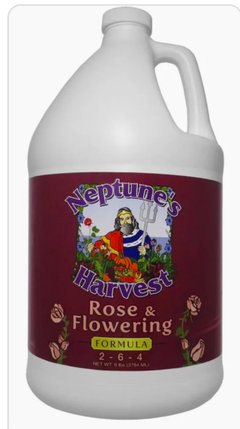
Neptune NPK 2-6-4Alaska Fish Fert NKP 5-1-1
Alaska Morbloom NPK 0-10-10. (More blooms! )
My mixtire of Alaska Fish F & Morbloom= NPK 5-11-11. It seems to work great! Less expensive for me.
American Rose Society recommends for roses NPK 6-12-6.
NPKNitrogen promotes green growth.
Phosphorous promotes roots & blooms growth.
Potassium helps a plant stay healthy, ward off diseases.
 last year
Aside from nitrogen, which is tricky to measure, everything else starts with a soil test.
 last yearlast modified: last year
With roses especially, pH is critical — it affects how well nutrients are absorbed, regardless of how much NPK is present. Even perfectly fertilized soil can leave roses hungry if the pH is off. Most roses prefer a slightly acidic range, around 6.0 to 6.5, for optimal uptake.
Also, humic acid plays a valuable role in nutrient absorption. It helps chelate micronutrients and makes them more available to rose roots, especially in heavier soils. Plus, it improves soil texture and microbial activity — all of which support stronger, healthier roses.
PS. Learned from experience with tomatoes.
 last year
Remember Carol, for roses in pots, you can just use Osmocote Plus twice per year and (dose according to directions depending on your pot size) and not stress.
- last year
Amen to that, Sheila! I just fed my roses their 2nd serving of Osmocote. If it works as it did in the spring, I’ll be running out to buy more vases …
- last year
Sheila - yes, I do remember that you recommended Osmocote, but part of the joy of roses, to me, is fertilizing weakly, weekly. I love fussing over my roses. It's good exercise for me too, to haul buckets of water around. When I'm older and not as strong, I'll remember that you recommended Osmocote, and I'll use it then. :) :) Thanks for thinking of me.
Thanks, Kitty, you're always on top of what to do. :) - last yearlast modified: last year
Carol,
You are welcome! Lovely enjoying fertilizing and your garden! Good exercize and enjoyable therapy being in the garden. I enjoy it, too! Fun nurturing my garden! Fun to read & learn about it, too!
Elena,
I enjoyed seeing your PH & humic acid (humus) comments. Humus (humic acid) is interesting! Horticulture is so much fun! Very enjoyable!
Why do My Roses Love Humic Acid?
Humic Acid (Humus) a great benefit to soil for roses to grow by enhancing soil: chelating it-to absorb better nutrients such as NPK & more…, breaking up clay to drain better so roots can grow, but improving water retention in drought & sandy soil, decreasing pathogens in soil (like BS!-Woohoo! ), improves systemic growth of roses to ward off diseases, improves rose health by better being able to absorb nutrients from soil, & increase beneficial microbes in the soil.
Wowza!
So where do we get this “fabulous humic acid (humus)??” We can easily get it from our compost w/ leaves or other organics, grass clippings, Plant Tone or Rose Tone, composted seaweed, composted fish manure, cow manure , Alaska Fish Fertilizer, or alfalfa meal/pellets. After these fertilizers are composted they create humic acid (humus.) (These are more sources of humus, too. Pretty cool!
I get some grass clippings tossed in my rose beds by my gardener. Good! Lol!
Testing for PH would be important, too.
Need a fertilizer thread??
 last year
I thought my grafted evelyns died down to the rootstock here in zone 5. Fortunately I buried them pretty deep and they've recovered. and are churning out roses. I got two own roots to replace them (how horrible!) and will get to compare them directly.
 last year
I would love to see some famed weaklings that are available only as own roots at this point be offered grafted. Paul Barden's "Little Grey Pearl" comes to my mind.
Almost everyone who's posted a picture of it online includes a mention of its poor vigor along with it.
Would be interesting to see how much vigor could be added through good feet.
It worked for the original Grey Pearl! last yearlast modified: last year
Late to the party here, but the reason I started growing own-root roses is that after a wildfire swept through my garden in 2008 all the roses came back -- but nearly all came back as the rootstock. The other reason I like own-roots: because I live in gopher territory, I plant roses in gopher wire cages. So when I get suckers, it is nearly impossible to really tear the sucker out. I had to get rid of a rose bush last year, and fear I may have to do it again with Love Song this year because of suckers. Having said that, however, I am getting older and more impatient, so waiting for my own-roots to catch up really chaps my hide. Some exceptions -- super vigorous own-roots: Distant Drums, Munstead Wood, Reine Victoria, High Hopes, Mel's Heritage, Chocolate Sundae, Hot Cocoa, St. Elisabeth of Hungary, Eden, Moonlight in Paris, Sweet Mademoiselle, Princesse Charlene de Monaco, Madame Alfred Carriere, Fragrant Lavender Simplicity.
- last year
I LOVE my Love Song! But it’s getting suckers that I can’t really get rid of due to gopher wire cage. May have to dig it up to see if I can get the sucker. If not, will have to replace. I won’t be without it! Gorgeous photos, Diane (as always).
Moses, Pitt PA, cold W & hot-humid S, z6
Original Authorlast yearlast modified: last yearDD,
You wrote above that you grow Lavender Simplicity. Can you please give a report on it, particularly regarding its black spot resistance? Thank you.
Moses.
- last year
Thanks, Deborah. That's too bad about your Love Song. I had no idea your gophers were so terrible. I thought it was those ground squirrels. You really have the varmint problem in spades. Speaking of Lavender Simplicity, my daughter grew that rose for years as a hedge, and it was lovely, but it really was mostly pink. I never thought it was lavender. Diane
- last year
Oh Diane….gophers, rabbits, ground squirrels, deer….banes of my existence. I can see Fragrant Lavender Simpliicity as a hedge. Dense, upright. Moses - I don’t have a ton of BS pressure here, except maybe in May with drippy fog (May Gray & June Gloom at the coast). I have to battle rust & PM more than BS. If I do get BS I get rid of that rose! My FLS is super healthy, able to cope well with some shade, upright growth (5 feet ish?). Blooms are a bit on small side, very fragrant, very lavender for me, and come in little bouquets - like a spray rose? I got an own root on sale from J&P, it did well, and then I took a cutting that rooted, and now I have 2. Both are in challenging spots. One is on a slope. I will see if I have any photos.
- last year
But Deborah, where are your California Quail? I'll tell you where. They're all at my place. Hundreds of them and all intent on eating every seed I sow, and every seedling that manages to show a leaf. All, except for penstemon, thank heaven. I have more self seeded penstemon than I know what to do with. I would like to return the C. quail to their native habitat, but I can't afford the plane fare. They seem to have displaced our native Bob White quail. Then there is all the damage they do in general (dust bowls, anyone?). These C. quail are just chickens with topknots. Totally off topic, and I apologize. Diane
- last year
I totally get your angst over the quail, Diane. We have them here too and some of my neighbors think they’re cute and feed them. They come in droves. For some reason they hardly show up at my house anymore… I’m guessing they don’t like my beagle in the back yard. He likes to eat birds and it makes me cross, but I can forgive him for that since I don’t have quail problems in my garden anymore.
- last year
Diane -- I would like to see some quail! They've been scarce. Maybe because we had the hawk family in the tree above our back patio...
I can't seem to find the photos I wanted to post...I need a better system.
- last year
Deborah, we have hawks all over the place. They often perch on various trees in our backyard, eyeing the bird feeders with all those tasty little birdies to be had for lunch. The hawks don't deter the quail, but I've seen some close encounters of the hawk/quail kind.
Judi, I'm sure your beagle has scared off the canny quail. My kitty Finn likes to crouch down and observe them and once every so often, he'll leap out, and the quail laugh at him. I've seen families of quail walk by our patio with Finn a few feet away staring at them, and they pay no attention to the dumb cat. I was not exaggerating when I stated that we have hundreds of quail around here. They bring their families to Diane's place from the gully and from the hills across the road. And it's all my fault because I love to feed the little birdies who use my quail and squirrel proof feeders. The problem is the little birds are slobs who drop black oil sunflower seed all over the ground as they eat in the feeder (it's an enclosed jail type feeder), and quail below think they've found Mecca. They teach each new generation to come to below the feeder. The little birdies mostly live in my huge snowball bush, and I'm a bird addict. Diane
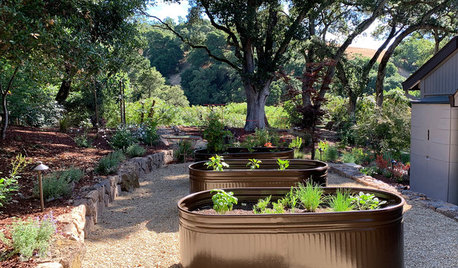
Home to ten thousand birds....really. Those little flower beds usually grow calendula, but this year the quail ate all the seed despite the bamboo stakes which usually work. Don't you like my worn out sort of red bird bath? The birds love it. They don't care.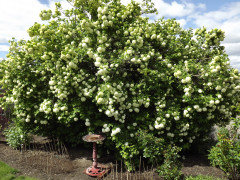
- last year
Diane - I've seen Snowball bushes growing around the city in public areas and the tallest they get is about 4 feet high. Yours is HUGE and glorious...what a bird sanctuary. :) :)











Diane Brakefield