Software
Houzz Logo Print
bill_mn_z3b

Odd occurrence with growing maples.

last year
Could use some help.

This spring and early summer, I potted up sever seedlings I found around the yard.

Two I thought were Acer ginnala. I've grown them before.


One was a 2-3" high seedling growing in a mulch bed. I carefully dug out a sizable root ball and put it in a container of water, washed all the soil off the roots and planted it in a (1 gal?) pot with a slightly modified 5-1-1 mix (bark mulch with perlite). The bark mix was a little dirty so used more perlite than peat.


The other seedling was 4" tall and growing in the soil along the lilac hedge. I didn't want to disturb the roots as it was leafed out and actively growing, so I dug a large enough root ball that I could place it in a (1-1/2 gal?) pot without breaking it up so it's in the same soil as it was in when I dug it. The leaves appeared a little larger than the other one, but it was growing in deep shade and thought the leaves were trying to make better use of what little light there was.


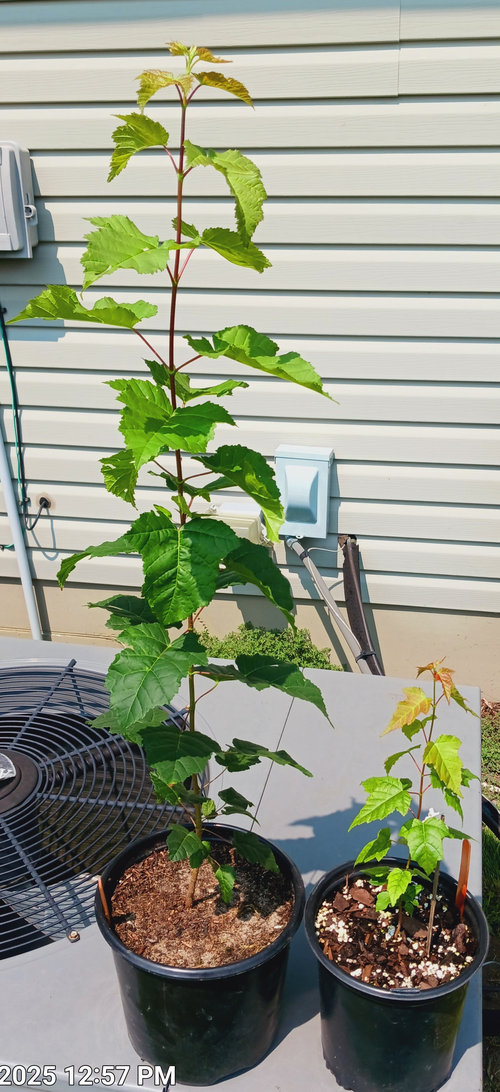
The puzzling thing about this it, the one in the bark mix is growing normally and is about 12" tall, healthy looking and appears to be like other A. g's. I've grow before (might be a little chlorosis going on but it's growing fine.


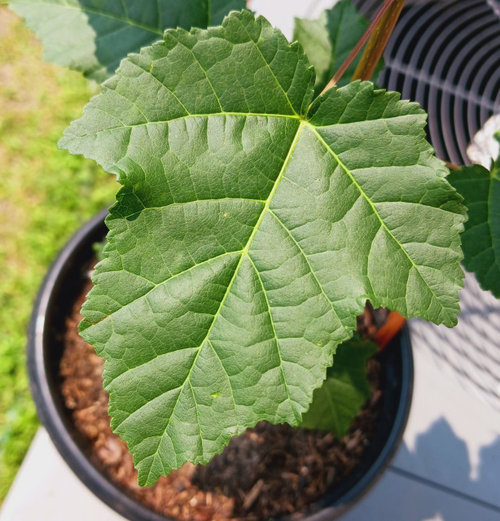
The one I potted in its own native soil root ball, is growing at least twice as fast and is 30" tall already and although the leaves are generally the same shape as A.g. they are 4" long.

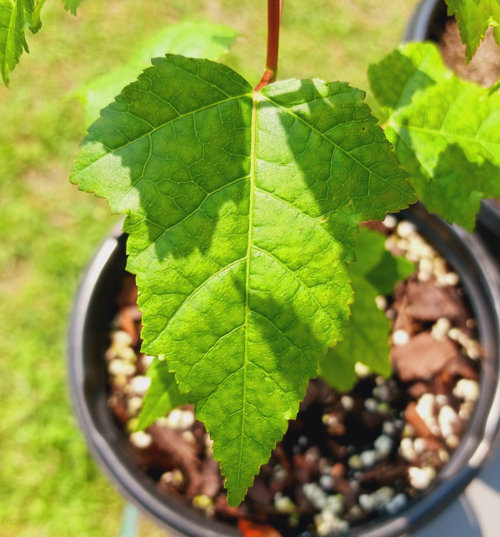
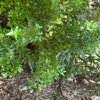
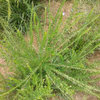
Left Mystery tree, Right Acer ginnala.


At first I though hybrid, but the leaf shape is right, just 4" instead of 2-3".

Acer ginnala leaf:


My question is,

Do I have two acer ginnala?

Or the larger one is something entirely different?


TIA.

Bill

Comments (10)

  • last year
    last modified: last year

    Genetics? Can A ginnala hybridize w/something?

    BillMN-z4a thanked bengz6westmd
  • last year

    Ha! Nothing out of the ordinary but drats, still haven't found my first stunning new variety. ;-))


    I think I ran into my first seedling from my neighbors 'Hot Wings' Tatarian maple.

    Leaf size 2 to 4 inches long and 1 to 3 inches wide with greater mature height and growth rate. Leaf shape too. I never knew there was such a difference in those two Acers ;-)


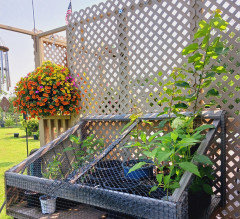
    I'm growing a variety of plants from seedlings, found around the yard (plant table's full), for my son's new yard (2 years living there now) so I wanted to know what's what, so I can inform him correctly about things. End of August tentative plant date.

    I thought something was different between the two, but it took a while for light to go on. ;-)

    Thanks!

    bill

  • last year

    Couldn't the bigger, greener one just be a happier youngster who hasn't been upset very much in the potting? He's got perhaps a more balanced and better food from the soil. A lot of perlite in the other pot doesn't sound very appetising to me.

    BillMN-z4a thanked tete_a_tete
  • last year
    last modified: last year

    It's two different trees, as I mentioned above.

    The potting mix I made, was an astute way to quickly makeup a quantity of well-draining potting mix, to be used just for a few months, for one summer. And I used a method I learned from Al, the originator of 5-1-1.

    You need to understand how to balance 511 components, so the drainage is correct.

    How I did that was; There was a fair amount of organic matter (dirt), fines and even wood pieces in the bag of Bark mulch when I bought it, so instead of using 5 parts mulch 1 part peat and 1 part perlite, I just substituted perlite instead of peat, otherwise the mix would've been too tight and mucky to have good drainage.

    And it worked! I know because, everything else on the table (20 plants?) are using that same mix and all have grown incredibly well. I'm watering almost every day.

    What I first thought, was that the pot with the native sandy loam soil in it, would not have drained good enough.

    Initially, I only watered that one about once for every three times as the ones in the bark mix.

    But as I observed how well that plant did, I increased watering to about the same as all the other pots and the results have been obviously good!

    P.S: Remember when using 511 bark mix, you can't just use plain water on your plants.

    You have to include nutrients when you water or your plants will starve or grow anemically.

    It doesn't take much, I mix a wide spectrum soluble fertilizer, one teaspoon per gallon of water.

    I also add magnesium sulphate at the same rate because Mirical Grow, sold in the US, does not contain magnesium, or sulphur for that matter.

  • 11 months ago

    The large particle size 511 and gritty mixes do not always work best in real-world conditions for some plants.


    If a plant in 511 does not get water and nutrients as soon as it needs them, its growth will be stunted and it won't do well overall. I would guess that that seedling in 511 needs to be fertigated more than once per day. I have had plants in gritty mix that did much worse than they had done in the much-maligned peat-based Miracle Gro-type bagged mixes, until I increased watering to twice per day for 30 minutes each time, and added CRF so they never lacked any nutrients.


    Dry mixes can also get too warm in my climate as well, and really harm the plant's roots. Turface in my climate conditions holds heat too well, and cooks the roots.


    Very fast drainage has its disadvantages.

    BillMN-z4a thanked andersons21
  • 11 months ago

    'The large particle size 511 and gritty mixes do not always work best in real-world conditions for some plants.'

    You are absolutely correct andersons21!

    But as with most things that don't work, it will work if adjustments are made. :-)


    It does take astute observations and frequently, to have success with this method.


    I'll just share my own experiences below. ;-)


    5-1-1 has this drawback. After a time, the bark can and will dry out internally (all the way through to the middle), even with frequent waterings.


    The remedy is to occasionally place the pots, in a deep enough container of water, every week or two as needed, to fully submerge the pot, almost to the rim and allow the bark to soak and rehydrate, for several hours to a day in some cases.


    It's the hydrated bark, emitting moisture continuously, that keeps a high humidity environment available to the roots, so they don't suffer or have drawbacks.


    If you get enough rain and fog, the bark dries out a lot slower, but this is important to watch out for this.


    I check my plants 3 times a day when temperatures climb in July and August.


    I don't wait for the plants to wilt.

    If the pot, when lifted by hand, begins lightening up noticeably, it's time to water (After a while you get to know which pots dry out faster than others and handle that accordingly).

    Some get watered more than others depending on size and depth of the pot, variance in media mix, etc.

    And I water so it drains through the bottom of the pot for 10-15 seconds or so.

    This flushes fertilizer salts from the media that can build up over time.


    When it comes to fertilizing one must note that 5-1-1 mix is totally devoid of nutrients, for all intents and purposes.


    So, I use a method, that I learned from this site, during my years growing trees from seeds indoors, during winter and spring, using 511 as a media mix.


    Putting just a little miracle grow, soluble fertilizer, in a clear plastic (or glass) bottle, just enough to turn the water, a very light tinge of blue (1/4 tsp. per liter, no more).

    I also add some Epsom salts (approx. same amount).


    My plants get this formula, every single time I water. So, there's never a question of whether or not the plants are nutrient deficient.


    HTH

    bill

  • 11 months ago

    Just to add:

    I didn't soak any pots to hydrate bark this season, with the plant table above.

    We had a rainy, misty, foggy spring and early summer.

    Later in the summer I just kept everything fairly wet during the dry spells by frequent watering.


    I just haven't found a better way to grow plants this big, this fast, during summer, like the method above. ;-)

  • 11 months ago

    If I understand you correctly, you are attributing the difference in seedlings to differences in the varieties. But the seedling in native soil is not only bigger, it looks much healthier than the seedling in the 511.

    BillMN-z4a thanked andersons21
  • 11 months ago

    no, I was actually addressing the comment you made about 511.

    'The large particle size 511 and gritty mixes do not always work best in real-world conditions for some plants.'

    This to me is a little confusing because 'some plants' is a vague statement and 511 *does work* for most common plants, although there may be some more exotic or xeric plants that it *might* not work for but It's worked for me with every variety of plant that I've ever grown.


    Further on you said:

    'If a plant in 511 does not get water and nutrients as soon as it needs them, its growth will be stunted, and it won't do well overall.


    I don't think that was my problem and I'll explain again: if you keep the bark nuggets in 511 hydrated and in addition, use a mild mix of fertilizer every time you water, then the plants *do* get water and nutrients as soon as they need them, every time.


    Your next comment:

    'I would guess that that seedling in 511 needs to be fertigated more than once per day. I have had plants in gritty mix that did much worse than they had done in the much-maligned peat-based Miracle Gro-type bagged mixes, until I increased watering to twice per day for 30 minutes each time, and added CRF so they never lacked any nutrients.'


    I feel I already covered that when I said: I check things multiple times a day and 'fertigate' as needed. ;-)

    In fact, when the weather is hot, I've found it's hard to over water potted plants outside in 511 mix.

    Finally, the two maples in question were identified as two separate varieties, as stated earlier in the thread, so that would explain the growth differences between the two.


Sponsored
Hope Restoration & General Contracting
Average rating: 4.7 out of 5 stars35 Reviews
Columbus Design-Build, Kitchen & Bath Remodeling, Historic Renovations