Software
Houzz Logo Print
joyce_mcreynolds16

How are your knees?

last year
last modified: last year

I ask because my husband is scheduled for double knee replacement in early Sept. Today he went for a CAT scan and the technician really frightened him---tales of people whose knee surgery had gone awry, etc. Does anyone here have exxperience with knee replacement, and double knee in particular? So much conflicting advice, but I feel I can trust people here to be honest about your experience. TIA

Comments (31)

  • last year

    What a horrible technician! What are your specific concerns about the replacement surgery? Do you have confidence in the surgeon? Did you seek multiple opinions?

    Re Tired thanked Kendrah
  • Re Tired thanked Still trailing
  • last year

    My DH had double knee surgery a few years ago. He came home same day, and returned to driving and work within two weeks. he was skiing again within six months. He has had many cancer resections and reconnect surgeries and the knees were far easier according to him. He was in his mid fifties and is very physically active which helps. They do it at the same time so you miss less time recovering from work. Good luck!

    Re Tired thanked roarah
  • last year

    That's just wrong and that tech stepped way over the line. That said, if you have worries about what they said, take those specific questions to the surgeon and ask to have them addressed.

    Re Tired thanked DLM2000-GW
  • last year

    Not me but a good friend of mine had a double knee replacement. He was in his mid-60's and extremely active. They did a double knee because of the blood thinners that he was on which would require a substitute each time he had a knee replacement. Because of his excellent shape otherwise they did a double knee. He had it in August a few years ago and by December he was skiing. The best thing he did was to get a cold therapy machine.

    Re Tired thanked blfenton
  • last year

    I do not (yet) have knee issues, at least not the kind needing knee replacement. (I did have knee surgeries in my teens for a genetic defect and have been so happy with the results.) However, I do have friends in their 70s from a rec center where I used to regularly swim that had knee and hip replacements. I'm fairly certain they have been pleased with the outcome of those surgeries because it has allowed them to return to favorite activities (skiing, hiking) after a period of healing. (Also never ever swim after any kind of surgery or open wound until your doctor clears you. Staph infection is a serious concern!) I do think there have been incredible advancements in hip and knee replacement operations in the past 10+ years that have made these game changing operations for people who want to remain active.

    Re Tired thanked pricklypearcactus
  • last year

    My DH just had a knee replacement in April. he did quite well and has already scheduled the other knee for January of ’26. He is a very ”young” 79 and has been bone on bone for a long time, having synvisc injected every 6 months for years. It stopped working, thus the replacement. It was suggested (by our dental hygienist, whose DH had a replacement) to invest in a cold machine - best decision ever!

    Re Tired thanked 2pups4me
  • last year
    last modified: last year

    My BIL wouldn’t invest in the cold machine instead a friend loaned him some kind of Coca Cola ice thing. Anyway he is STILL having bad enough pain , he had only 1 knee done, that he still uses a narcotic pain reliever at times. It has been a couple months .

    GET THE COLD ICE MACHINE.

    Re Tired thanked Still trailing
  • last year
    last modified: last year

    Both done. 2018 and 2019. they are perfect and i totally forget they were even replaced unless at an airport. an experienced surgeon is key. westsider40

    Re Tired thanked HU-864750314
  • last year
    last modified: last year

    Well, my mother had hers done one at a time, and one went very well, and the other not so well. But this was related to other systemic issues: she was a long term rheumatoid arthritis patient who had already passed her projected survival date at the time she had her second knee done, and her knee was very deteriorated. And they didn't really take into account the amount of disability she had owing to the rheumatoid during her rehabilitation, and she severely injured her back during knee rehab and then the knee rehab stopped. So it wasn't so much the knee itself.

    But I think it's unrealistic to promote the idea that most joint replacement patients are going to be skiing or playing tennis within months. It depends on the patient. I have had a few patients over the years (all medically complex) who have had one joint replacement that went well, and one that went south, actually very south.

    So it depends on where your husband is on the continuum of current joint condition, other systemic conditions, and overall physical activity levels, things like that.

    Also...is your husband's dental health and periodontal health good? I have gotten (new) patients very close to the surgery date, for "clearance" that their dental/periodontal health did not make them a risk for joint infection from bacteremia from the oral cavity. As if it was a formality only. And their periodontal condition was Terrible. Highest diagnostic category of disease. And not any of their medical providers had even noticed. It was almost one year of treatment before we could clear one patient.

  • last year

    So sorry you are having doubts. I know a few people but none that did both at once.

    I don’t think you needed the tech to tell you of the possible pitfalls. This can happen in any surgery.

    I second DLM’s advice to talk to your doctor with your concerns.

    Speedy healing and recovery to your DH.

    Re Tired thanked eld6161
  • last year

    Totally forgot the dental component, Pal. From the time DH had his first replacement until he died (from other causes), he could not have his teeth cleaned or other dental work done without a large dose of antibiotics, which was minor in the overall scheme of things!

  • last year

    There is no consensus on the use of Prophylactic Antibiotics after joint replacement on a routine basis.

    My primary concern is for the diseased oral cavity at the time of the surgery itself.


    I think in a patient with normal systemic health it is Probably not necessary, but unfortunately their academy can't come to a consensus. I have had couples as patients, both seen at the same hospital, but by two different surgeons and one has had to take antibiotics only for the first six months, and the other patient is required to "for life".

    And if I had to choose which one I would give antibiotics, its the one whose surgeon said he does not need to take them.

    There is an issue with patients being repeatedly exposed to short dosages of antibiotics in the absence of actual infection and multiple-resistant bacteria.

    Re Tired thanked palimpsest
  • last year
    last modified: last year

    I had one knee done TKR just under 2 months ago 2 hours away at a top notch hospital. My experience was very different from what I expected. Kept overnight. no pain. Did not need a walker, cane or crutches that were supposed to be necessary. Cut the oxy's down to quarters and stopped day 5, Never any pain. Used the bucket with a hose and knee wrap provided by hospital for "icing' (put frozen water bottles in it then fill with water) alternating with a knee wrap I bought with fitted ice packs. Discontinued after 2nd week, Had bought a 4-legged potty chair with arms that fits over the toilet (and has a slip in removable bowl for future use) - that was a worthwhile purchase. Never went back to PT after 1st session leaving me on a bike for a long time.. Feel I'm doing fine, and attribute to a very experienced surgeon.

    Edited as I forgot to say I hope your husband will have a positive experience.

    Re Tired thanked Indigo Rose
  • last year

    I have had both knees replaced, but not at the same time. My surgeon has a great reputation for knee replacements and had done a number of friends knees, so I had seen the results of their replacements. I also read everything I could beforehand to know what to expect. The ice machine was a godsend, just read the instructions and don't ice more than the recommended time. Mine took 16 oz water bottles and I had extra frozen ,so when one batch thawed another was frozen and ready. Although I assume if he's having both done at the same time he is going to a rehab center after?

    Re Tired thanked lizbeth-gardener
  • last year
    last modified: last year

    The tech was completely out of line and should be reported to his supervisors and to your own physician.

    I had both knees done 12 years ago when I was 63. DH researched hospitals and surgeons and decided on HSS (Hospital for Special Surgery) in NYC. I had the option to donate my own blood - in the event that I might need a transfusion it would be autologous. It wasn't needed.

    I had the surgery on Monday, remained in the hospital until Friday and then transferred to an in-patient re-hab unit at DH's hospital for another 5 days. After discharge I continued with at-home PT for 4 weeks, then 2 or 3 more months of out-patient PT.

    Just a few words of advice from my experience. Pain meds may cause constipation and/or nausea; the cold machine is very handy; sleeping may be difficult since it's hard to get comfortable (I know a few people who slept in recliners for a while); don't despair if initial PT progress seems slow; an ADA height toilet or a toilet seat riser with handles is handy;

    Do all the PT - it will make a huge difference in recovery.

    Pal is right about the lack of consensus on prophylactic antibiotics. My surgeon said to take them for 3 years. My dentist at the time said to take them for life. I took them for about 5 years but then subsequent dentists and periodontists said that is no longer required.

    I hope all goes well for both you and your DH.

    Re Tired thanked maire_cate
  • last year

    I haven't needed it, my knees are fine although DH has one that has given him trouble since a high school sports injury. That was a very long time ago! He wears a Tommie Copper compression knee sleeve on it just about daily and manages just fine.

    My cousins husband had both done at once about 5 years ago. He has a good friend who is a physical therapist who tried hard to talk him out of doing both together but he wanted 'one and done; - and he's a smart man, an atty. Was approaching age 70 that year.

    He managed OK. I don't know how he managed the bathroom and things that take place in one but he healed and was back to playing doubles tennis in just a few weeks. He did have PT and faithfully did all the exercises.

    Ditto what was said about the ice machine above. BIL bought his own when he had a hip replaced and took very little by mouth for pain, managed with the ice. He had the prescription pain pills and found he didn't need many at all.

    Re Tired thanked morz8 - Washington Coast
  • last year

    No experience here but I just had dinner with a friend last night who is having his second knee done this fall - 12 years after the first one. He had some complications with swelling the first time. He didn't have the ice machine the first time but has already borrowed one from a friend for this time around. Another friend of mine got the ice machine for shoulder replacement. It seems to be the way to go.

    Re Tired thanked 3katz4me
  • last year

    My friend had both done at the same time because she said she was afraid she wouldn't go back for the second one. She said she is glad she got it all over with at one time. She was religious about the PT and bounced back very quickly. Her gait was a little "funny" for a few months, but went back to normal pretty shortly and no more pain. Also no more holding on to walls to get down a hall.

    Re Tired thanked cooper8828
  • last year
    last modified: last year

    I am sitting in the waiting room of an orthopedist, waiting for my knee injection. i get a series of three shots over three weeks of gel to help cushion the joint. My joint is not damaged enough for a replacement and if it was I’m not sure I would want to have the surgery. The possibility of hardware becoming infected is one of my most profound fears.

    Re Tired thanked Kswl
  • last year

    FWIW, now I'm wondering if the name of the surgeon or facility came up and that tech was warning your husband in a veiled way...?

    Re Tired thanked carolb_w_fl_coastal_9/10
  • last year
    last modified: last year

    Carol might have a point.

    Picking the right surgeon and the procedure/technique they are using is key. There have been advancements in the way replacements are done in the last 10 years. Not every doctor will be trained on the best procedures.

    Spouse of someone that has had knee, hip and shoulder replacements (and many other ortho procedures) in 3 different states.

    Re Tired thanked chispa
  • last year

    I am good it seems. DH no issues, but he is a little younger. Although I've read that by our ages there is probably some radiographic evidence of arthritis even though there is no pain. My sister is 10 years older has had both her knees replaced about 10 years ago a year apart, but she maybe held out too long to get them done and could've had a better quality of life sooner. Recovery was pretty good because she could go to short-term rehab for a few days and then home. No problems since then.


    Now so many are done outpatient which seems crazy.

    Re Tired thanked gsciencechick
  • last year
    last modified: last year

    I have one TKR. It has been great, have had it for 3.5 years. I am getting my second one done in September-I am 73. I had mine done at my doctor's surgery clinic with an epidural and went home the same day. They got me up practically right away once I was awake. PT started the next day. The first week he came to my house and then I went to the office. It is very important to do the PT! The doctor also had some exercises he wanted me to do like sitting with my leg straight out and pushing down on my leg to straighten the knee flat on the floor. The PT worked on range of motion in bending my knee.

    I have a friend from high school who had both of hers done at the same time. I think her recovery may have been a little harder, but she is fine now. Had hers done 4 or 5 years ago. I am not sure I would want both done at the same time. After less than a week, I had ditched the walker. Went up and down stairs the third day with my husband right in front of me going down and behind me going up-PT told me to step up with the good and down with the bad (the replaced knee)-like a toddler who doesn't alternate feet. I don't know what they do when both are done at the same time. Was that your husband's choice?

    Oh and my doctor suggested an ice machine which he ordered and I paid for-don't think insurance covered it. That really helped . I uesed it a lot.

    One funny story is that my son called to see how I was when I got home after surgery. I told him I felt great! No problems at all. He said, "That's the meds talking, mom."

    He was right. The second day was the worst, but then it was pretty much smooth sailing. I didn't like the Tramadol and Oxycodone, so I stopped them pretty quickly.

    I would say get the best surgeon you can-one who specializes in replacements and who has done many.

    Shame on that technician. Really, how dare he or she say that to a patient. Your husband's orthopedist can tell him everything he wants to know.


    ETA: I chose outpatient and it was terrific.

    Re Tired thanked cyn427 (z. 7, N. VA)
  • last year

    You have good advice here -- pick a good surgeon who is known for doing great knee replacements. I will add that I would want a surgeon who uses robotic assist. AT first I was concerned that DH's doctor said that was the way he did all TKRs now, but when he explained it and when I saw the results in DH and my sister, I was sold. You have more precision with the cut and joint fit determined by presurgical imaging, the surgery is quicker, time under anesthesia is reduced and recovery is faster. That precision known fit can reduce the amount of trauma and itself speed recovery and lessen pain. Both were outpatient. I thought that was crazy for such major surgery, but now I see there is no reason for most people not to do it outpatient. They do need a helper available at home.

    Eat well before and after surgery -- more protein and less sugar - good hydration too. The body needs more protein to heal and sugar is not only empty calories, they say it can feed bacteria and promote infection.

    Everyone who knows or cares will tell you that PT is super important. I agree. It will feel like a full-time job for both of you at least the first 2-3 weeks and up to 6-8 weeks. Expect 3x wk office visits and 3x a day at home. If you don't' do office PT, you have to be all the more vigilant about exercises at home. He might not make all the exercises each session, or all the reps every time, but he should do as many as he can and not be afraid to push a little. If office PT is at all an option, so it at least 1-2 times a week. You get a lot of encouragement, reassurance and the pushing when you need it because someone who has seen hundreds of patients or more go through this is checking on you. They are a recovery consultant - use them. DH also had a rented interactive bike (Rom Tec) that he did 3 times a day - icing and resting in between. That is one thing that wouldn't be double -- but you also wouldn't have a good leg for pushing and getting things going.

    I do differ about an ice machine or the jug with frozen water bottles. The hospital here sends everyone home with the cooler jug and ice pack. I hated it. I bought an extra set of Igloo ice bubble sheets $10 total in the camping and outdoor gear at Target) and DH had a large flexible ice pad (like a heating pad but it goes in the freezer) bought on Amazon, and we just rotated them through the freezer and into use. It was less complicated and worked better for us. They were portable in a lunch size cooler when we went out.

    Every person I have heard of getting both knees done at the same time has been a man. Until I read this thread, every one of them did so out of fear of the pain and recovery - which they made worse and harder on themselves buy doing two at once. There is an element of self-fulfilling prophecy at play. There is also the risk that any infection or complication will have twice the impact and potentially twice the risk of blood clots. I heard a distant family member had a lot of pain and some trouble with his,. I don't know him well, but I suspect he is the kind of man who thinks the rules don't really apply to him and he didn't do what he was told or tried to cut corners. I was concerned about our neighbor who did both. He was bowlegged and apparently incapacitated by the pain in his knees by the time he finally had the surgery. His wife is an occupational therapist and a dynamo. She didn't want him to do both but wanted him to do it, and if that was the only way.... I'm sure kept him on track with everything. It was a lot, but he did great.

    Final note -- I've talked about the fact that my DH started into an addiction with oxy. I think patients with major surgery fear pain and are primed for thinking they need more meds than they do. We are told to stay ahead of the pain -- not to wait until it is a 9 or 10 to take the meds. DH is a pain wimp. He saw me go through the worst of my neck problems and I had a definite tendency to let it get away from me. He didn't want to do that, so I think he felt the need to take each dose like clockwork for the first couple or few days -- nothing wrong with that, but looking back, I don't know if he needed it. I stretched his doses out from 4 to 6 hours and tried 8 -- I thought he was doing great, but he would ask for the oxy at bedtime to make sure he slept well. When I questioned his pain level, he told me he was "uncomfortable." He was needing it, but not for pain. I was trying to ease him away from it and the oxy was calling him back. Once he realized it, he went cold turkey and we had a few uneasy days. Could have been a lot worse. Be aware that dependence is not like the movie you think you know -- it can start very early and very easily. If they are taking pain meds, they are under the influence -- it is your job to monitor. Look for subtle changes in their desire for the medications, changes in attitudes or moods or a desire for medication that seems out of step with the reported pain levels. It's much easier to deal with if you see it early.

    There are millions of knee replacements on all types of patients in all levels of fitness and compliance. Take that into consideration when you hear stories.. The first two weeks are the hardest -- bandages and swelling limit mobility and cause discomfort, but every day gets better. Without the surgery, those who need it only get worse. My sister was scared of the pain and recovery for over 20 years. The surgeon told us he wasn't surprised at how happy she was afterwards and how little pain she had -- almost none. He said the ones who have really bad knees tend to be the ones who are the happiest with having a new one. When you need it, you need it. I would favor doing one at a time but he can do both if the surgeon agrees, you can support his recovery for the first 2-4 weeks and he is determined to do all the PT (our surgeon said he won't do both at the same time). Wish you and him the best.

  • last year

    Many thanks to all responded with their story and good advice. DH has read all of them and is feeling more comfortable now about going ahead. This doctor did two of my friends' knees and spoke highly of him, and DH thought he was very good when he met with him.

  • last year
    last modified: last year

    I think my frozen water bottles may have been misunderstood. I have an ice machine that cold water flows thru a tube to the pad covering your knee. The frozen water bottles are an easier way to cool the water than messing with ice and I keep extra in the freezer so that when one set of four thawed they could easily and quickly be replaced. I also had the portable rectangular ice pack that I used when traveling in the car to PT.

    And would second maire_cate's suggestion of getting a toilet riser with handles, even if you have an ADA toilet. It makes bending to sit on the toilet much less painful.

  • last year

    Another FWIW: my insurance co. has an online tutorial with videos that walks you through all the steps when preparing for surgery. I went through the entire thing, even tho I'm not in need of any surgery at this point, because they offered a gift card for completing it, and there were a lot of good tips, checklists and suggestions about what you should ask your surgeon. You might check to see if your ins. co. has something like that available.

  • last year

    I understood the frozen water bottles -- they are big reusable ice to keep the water cold longer. That is essential if you are going to use that device and don't have a second ice maker or an ice machine. You would go through so much ice! I just found having to swish adn raise adn lower and coax the valve to be more bother than walking to the fridge and swapping out ice packs. Maybe ours just didn't work well for some reason. The definite thing is you need a reliable source of cold to wrap around the knee and most home ice makers aren't going to be able to keep up after a while.

    We were advised by the medical supply store to rent or buy a used walked so DH would have Medicare benefits for another walker with more features later if he needed it. Good advice -- he used it a few days and had it in the car just in case for a while after that. It has been loaned to two other people since then. On the toilet seat, they suggested one that can be used in the shower or over the toilet. Flexibility, but used once in the shower and removed -- for the toilet a little longer - mostly for the handles. If you buy yourself, check amazon before buying at a medical supply.

    Re Tired, I'm glad he's feeling better. I think the hardest part is deciding to do it and then waiting and thinking about it. The recovery starts a bit slow -- like any surgery, but the progress is steady and quicker than you would think. If he didn't worry or get a bit scared, eh wouldn't be normal, but if he's said he's ready, it will be worth it. Expect to do little else for 2 weeks and then divide time between PT and life for a few more. It will go faster than you think.

  • last year

    Rt TKR 3/4/22-done robot assisted-home same day 👍🏻

    ✔️ Ice machine w/frozen water bottles

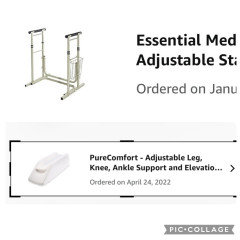
    ✔️ Standing adj toilet riser (life safer)

    ✔️Adj knee/leg support ( great help)

    I had ”bone on bone ” no cartilage left

    Went to prehab for PT for 3 wks prior

    started inhome PT 3x per wk for 3wks then went to outpt PT …need to strengten quads

    (I was 73 😉)


Sponsored
The Steele Group
Average rating: 5 out of 5 stars1 Review
Industry Leading General Contractors in Franklin County, Ohio