Software
Houzz Logo Print
westmichiganflorafau

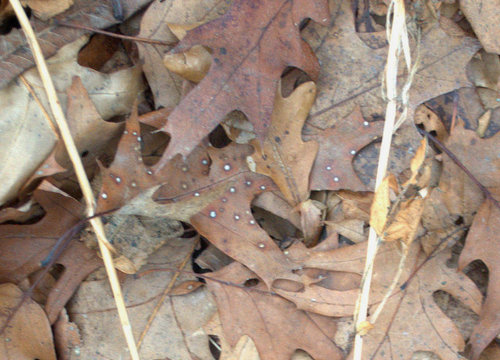
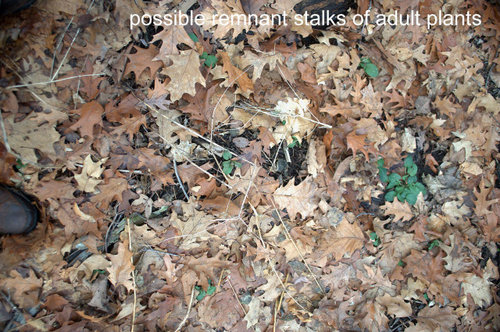
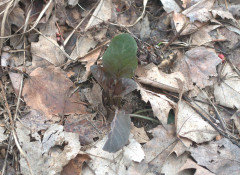
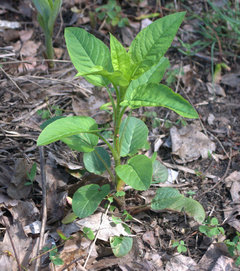
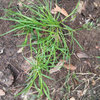
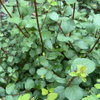
Does anyone recognize these sprouts?

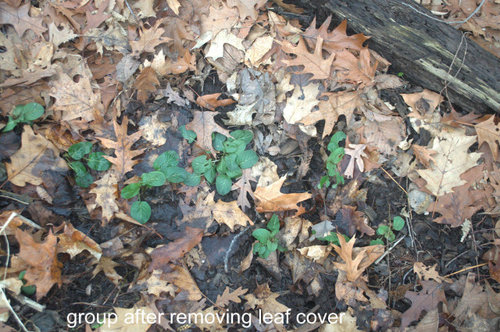
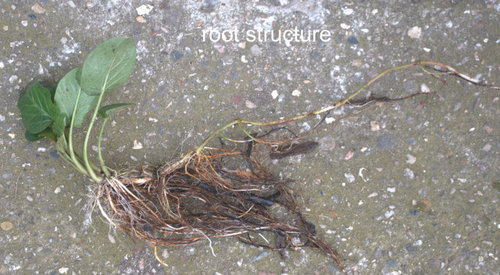
Spotted in SW Michigan, Ottawa county, USA, on December 23, 2025. They were mostly buried under leaf litter in a very wet, marshy area. This area had recently also been covered in snow. Uncovering more leaf litter there was a good sized group in an area about 6 feet long and 3 feet wide. When I pulled up a plant I had to break the roots free so it is very likely that this entire group is connected. There were some dead stalks present which may have been the original adult plants.


Comments (21)

  • 7 months ago

    Excellent set of pictures and information. But sadly I don't recognize it.

  • 7 months ago

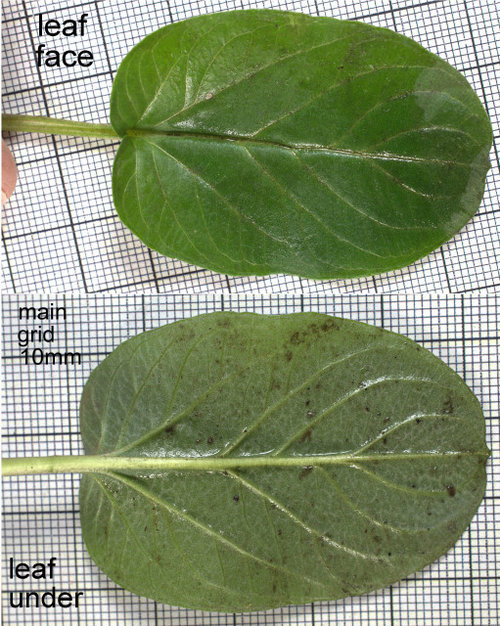
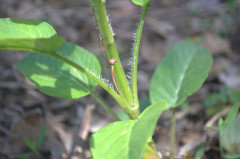
    I have seen that species in this park before but never in this area. I did an image search for basil leaves of Lysimachia ciliata but didn't find anything, only upper leaves of adult plants but did find this description:

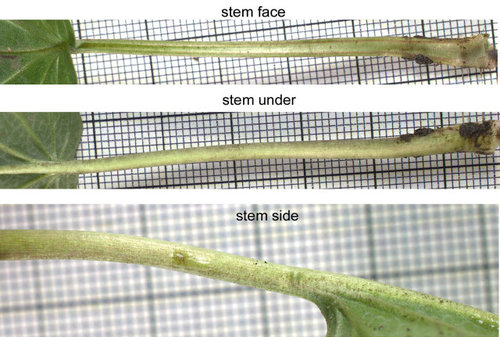
    "opposite, oval below to lanceolate above, entire with very small teeth, rounded base and pointed tip, petioles winged with dense fringe of hairs". I don't see any sign of "hairs" but do notice a "ridge" on the stem. I may have to wait until spring/summer when these sprouts mature and maybe bloom to confirm what they are. Thanks for the comments.

  • 7 months ago

    Yes please update here. I am fairly certain but confirmation would be good.

  • 7 months ago

    A guess, watercress, Nasturtium officinale?

  • 7 months ago

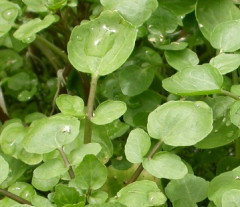
    Interesting, this is a very muddy, wet, area and the leaves are similar but none of them seem to have the classic watercress leaf layout that I see in this photo I found - thanks for the suggestion:


  • 7 months ago
    last modified: 7 months ago

    No, it's 100% not watercress. Nothing matches. I don't know what this is but I am very familiar with watercress and it's not that.

    westmichiganflorafau thanked floral_uk z.8/9 SW UK
  • 5 months ago

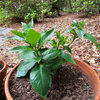
    I dug up a small section of the plant mentioned above and after taking pix I re-planted it in my backyard. It has begun to sprout.

    We are still getting night time temps in the teens so further development may be slow.

    If anyone is still following this thread I will keep it posted as the plant develops.


  • 5 months ago

    Judging by the first set of pictures this is a spreading plant with a creeping rootstock. Personally I wouldn't plant it in the ground until I was sure of the id. It might be a nightmare to control.

    westmichiganflorafau thanked floral_uk z.8/9 SW UK
  • 5 months ago

    Thanks for the advice. I can't imagine it spreading underground, out of sight, for any great distance by the time it's identifiable. However, forewarned is forearmed so I will keep a close eye on it. I do note that it was hastily, and rather carelessly, planted in Dec. before frost set in and now it seems to be off to a sort of vigorous start considering we are still seeing temps in the teens at night and mostly below freezing during the day. So it's definitely a cold weather lover, overwintering type.

  • 5 months ago

    Thank you for the update! Looking forward to more. The toughness and vigor of this plant still leads me back to Lysimachia ciliata. Do keep a close eye on this because if I am correct it is a rampant spreader.

  • 4 months ago

    Your leaves look a lot like Crepe Myrtle. But difficult to tell from your top picture if you have a spreading plant, or just has a lot of small plants. Of course, loads of Crepe Myrtle stems will erupt from one buried root stock. Would be useful to know if leaves are opposite or alternate. Crepe Myrtle is opposite or sub-opposite. Though they don't do particularly well with wet feet. They can survive USDA zone 6, but barely. Will die back with temps less than 0F. But you now say someone planted it?

  • 4 months ago

    Sorry, but this is not Crape Myrtle in a million years.

  • 3 months ago


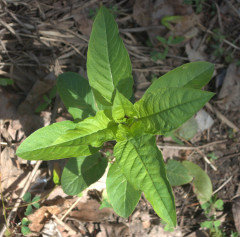
    This is the plant in my backyard that I transplanted from our local park. I did visit the local park and both plants are at the same stage of developement. As you can see the plant has begun to develope upper leaves which are quite different than its basal, sprout, leaves.


    I think Impatiens pallida and I. capensis can be ruled out now that upper leaf shape is visible.

    "peren.all Zone 5a Ontario Canada"'s hypothesis of Lysimachia ciliata is looking very probable.

    It is described as having hairy petioles, grows in wet, marshy, habitat and spreads by rhizomes.

    If that's correct then it probably won't do to well in my backyard because it's much too dry but I will let it grow to see if it might actually bloom later, which will be a certain confirmation.

  • 3 months ago

    Another great set of pics. I look forward to when it blooms but yes most probably L. c. I would be quite surprised if it was anything but.

  • 2 months ago

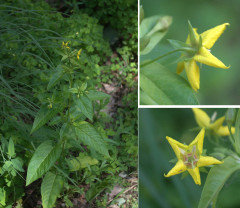
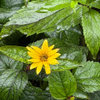
    The sprout I transplanted in the backyard from a local park is blooming. The petals are not completely open yet but I think the ID is certain, Lysimachia ciliata. It is a native Michigan plant so I think I will leave it to grow and see how it grows outside of its preferred habitat.


  • 2 months ago

    I will give you as much as you want, as I have been unable to rid my woodland garden of the wretched thing. ;)

  • 2 months ago

    Good point - even though it is not technically considered "invasive", as per USDA or any other source that I could find, I did find a site that called it "too vigorous for most gardens". So, obviously it has the potential of readily spreading under the right conditions, especially if it is not carefully maintained.

  • 2 months ago

    At least now you know for cetain that it is L. c. It will be somewhat less vigorous in less than ideal conditions....but not by much. It will travel underground and spread by seed if not deadheaded. You would have to be beyond fastidious keeping it in check. I would strongly suggest you rid yourself of it now.

  • 2 months ago

    Thanks for the advice/warnings, indianagardengirl , peren.all Zone 5a Ontario Canada .

    I will seriously take them under consideration. It has more or less serviced its purpose - I now have a nice set of time lapse growth study photos.

  • 2 months ago

    Now that your experiment has served it purpose, I would gently ask you to consider not repeating it with furture poached plants from parklands. Taking plants, even invasive non-natives, from public or private spaces without permission is generally illegal in most localities. Many also consider it unethical. I totally understand people thinking it's harmless (e.g., it's "just one small seedling") but it's discouraged in most gardening circles. Not judging, but just a suggestion to consider.

Sponsored
Miller Woodworks
Average rating: 5 out of 5 stars23 Reviews
Franklin County's Trusted Custom Cabinetry Solutions