Software
Houzz Logo Print
designingforfun

bathroom remodel to include a curbless shower,

last month

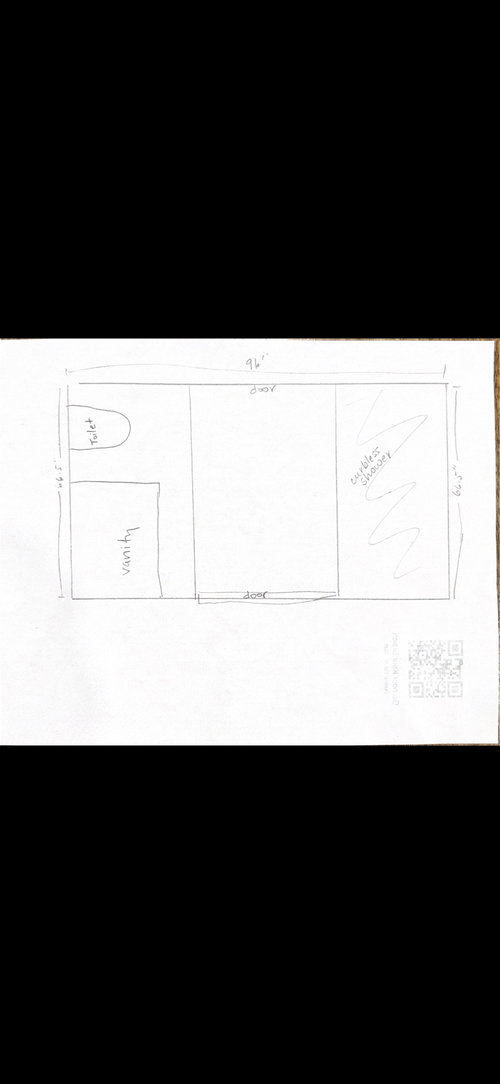
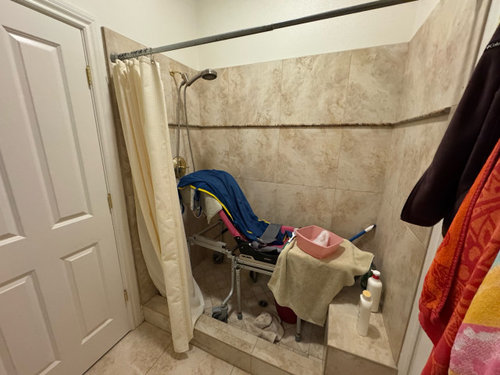
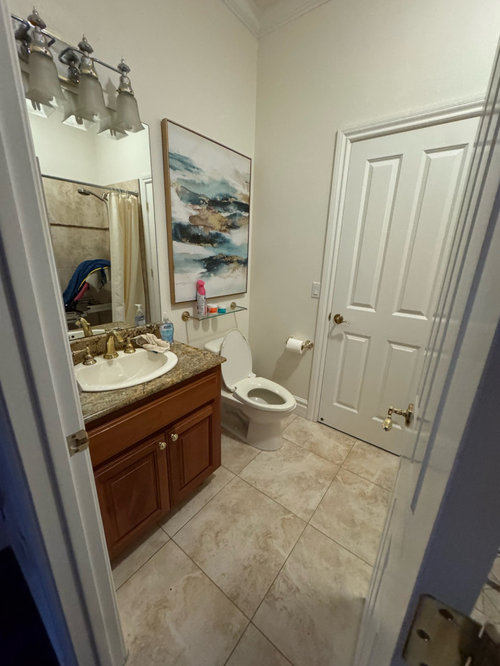
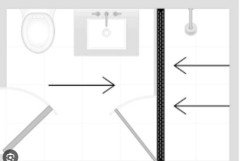
I am remodeling a small bathroom to a curbless shower. Dimensions are 66.5” x96”. My daughter is disabled and I need to be able to roll the bath chair in without a curb. I will also need to use a shower curtain and no glass. We will install a European style wall toilet to save space.
I am going to use large format tiles on the walls. Just concerned about using them on the floor since the floor will all be the same for bathroom floor and shower floor. We are going to try to put a pocket door for the entry for ease of access to shower. Currently it’s tough to get the shower chair in and then close the door.
Does anyone habe any experience with such a shower in a small bathroom, tips?
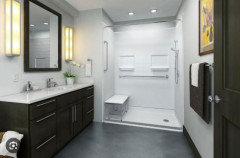
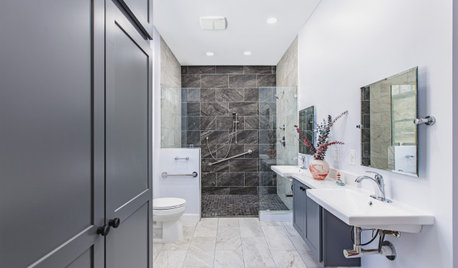
Also would love to see pics of bathrooms that are curbless in a smaller bathroom versus primary baths.

Comments (32)

  • PRO
    last month
    last modified: last month

    You require structural alterations to lower the subfloor, slope the whole room, and to waterproof the entire room as a wetroom, as that room is really too small for what you need.

  • last month

    Yes, we will be making the whole room a wet room. We are having a licensed contractor the work. I don’t have any other options, this is the only bathroom that will work for her. She’s in a wheelchair and has to stay on the first floor.

  • PRO
    last month

    I would be looking at someone with ADA experience for this whole job. Awet room is not ideal and in that size space it trully will be a WET room

  • last month

    Can you steal a bit of room from any adjoining spaces?

  • last month

    @patricia do you have suggestions on how I can find someone with ADA experience in the Bay Area? My daughter is a client of the regional center and I asked them but they did not have any suggestions.

  • last month

    I bathe her in there right now and since I am using a handheld there is not much splashing even without the curtain. I do have the curb for the floor and that is what I am worried about since it’s a small space and there is hardwood tile right outside the door.

  • last month

    I know if we close off the giver door it will be better: that door leads to a bedroom for my son. Just hesitant bc it’s nice to have the access from the bathroom.

  • last month

    *other not giver.

  • PRO
    last month

    Google ADA designers in the Bay Area there are a few .

  • last month

    We installed curbless, wateroroof rooms in 2 bathrooms. In the smaller 1st floor we were lucky to use 2 adjacent closets bc you need space for the slope.


    In that space the contractor built custom showerpan below grade. But you need to have someone look at the how floor is installed. It was an unfinished basement below so access was easy. BUT entrance to the bathroom was still raised a bit.


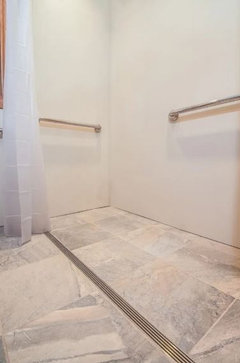
    This shower used linear planks (18x4) of matching porcelain tile and a french drain.(which seems to drain slowly.) I can't imagine this bathroom would be good for every day). I have seen barrior free acrylic or solid surface, which is a better choice for your needs.


    My masterbath was much larger so we had the installer build up the main bathrom floor (alot). That bathroom used 2x3foot tiles everywhere except shower. (Love the minimalist look) in this space. Shower was a center drain witn one inch tile which seems to drain better but harder to keep clean. BUT THERE IS Still a 1/2 Inch rise at the entrance threshold.

    Mamaof4 thanked Sew Nice
  • last month

    Close off the other door - this is going to be your daughter's bathroom now. Move the door to outswing that will free up floor space as the bedroom will be larger and better able to accommodate the door swing.


    This is enough space once you remove the curb - hospital bathrooms are this size or smaller and it works.


    You will need to slope the floor a larger distance - but you only need 1/8" per foot I think. The drain location looks to be in the right place to direct the water out of the center area. And yes - you will need to alter the subfloor. If you have a basement or crawlspace this should be doable with doubling up some shorter floor joists. You'll definitely want someone with structural experience.


    Also - on the tile - you don't want a large format tile - you need smaller tiles to do the multi directional sloping that will be critical for drainage.


    I think that having a curved shower rod installed and a long curtain will also help you contain the water. If she requires assistance - you will do a decent job of managing the spray anyway.


    Perhaps also some resrouced for the disabled will have referrals, or, the homebuilders / remodelers association. You want someone without claims against them - as this is a challenging enough time for you without getting someone shady.

    Mamaof4 thanked just_janni
  • last month
    last modified: last month

    You absolutely do not have to comply with ADA codes. Those are for public spaces and do not apply to private homes. What you do need to comply with is your local building code. What municipality do you live in in the Bay Area?

    The Bay Area is a hub of disability rights activism. I think you'd do well to look on a local disability discussion board to find a good contractor. However, it isn't up to the contractor to necessarily design the space. You may have to submit drawings from an architect or other professional.


    Also try posting on https://www.reddit.com/r/wheelchairs/ as you will find others who have been in the same situation.

  • last month

    @Kendrah- we live in Alameda County. We own our home and don’t plan to move. It’s just for our needs with our daughter so I am not worried about ADA laws. I just want to make sure to think about things that may not be on our radar. I will check Reddit.

  • PRO
    last month

    Make sure to do a floating vanity as well. You can do a linear drain for the shower. Put it on the outside edge of the shower area and slope the floor towards it from both sides


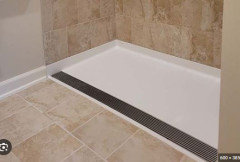
    You can also get barrier free shower pans if you don't want to tile the shower floor.


    You won't be able to do a pocket door unless it can slide toward the vanity side. Not sure if there is enough room.

    Good luck.

  • PRO
    last month

    You need a minimum of 1/4" per foot, and a maxium of 1/2" per foot slope for the room. The sloped area needs to extend out into the room, and be waterproofed correctly, to account for all of the splash bounce generated. 4' is generally the minimum for all of those issues. The door shown will be a trouble point, and needs to go away, as the slope for the shower needs to extend past that area, leaving a sloped wedge plane of "shower slope" at the entry, where it encounters the flat plane of the other room. Planning this is a lot of basic geometry and math. You also need to cut out the concrete slab to get the slope right, or the support joists need to be lowered for the slope to be right.

    Mamaof4 thanked Minardi
  • last month

    To save $$ or if sliding door nor possible redo hinge of entrance door to swing out into corridor. Also a safety feature. If you and/or daughter in the bathroom (I assume she never alone in the bath) and you need help then very difficult to open door inward. A simple cost effective solution you could do now while waiting for bath redo.

    Mamaof4 thanked husterd
  • PRO
    last month

    BOTH doors are a problem for a curbless shower there. The shower area is too small for a safe and waterproofed full curbless. The shower needs to be extended into whatever rooms are to the right. The only real way to make this work is to drop the entire bathroom, so that there is a small "ramp" down into the bath from the room. Then the whole thing can be a total wet room, with a pedestal vanity, and ADA toilet, etc.

  • PRO
    last month

    If someone in your home is in a wheelchair you for sure need to make sure about ADA itmes. That bathroom is too small for proper curbless shower and thta door must swing out in fact IMO all bathroom doors should be outswing for safety sake From what Ican see it would be difficult for her to access the shower or the toilet in that space in a wheelchair That door swing has to change .

  • last month

    Not sure how old your daughter is. Are you part of the Berkeley Parents Network? You do not have to live in Berkeley to be a part of it. It is an incredible resource. There are so many great disability advocates in the Bay Area, I wonder if posting on there could lead you to a good designer or contractor in your area who knows the ins and outs of homes like yours and disability needs.


  • last month

    Go to the local rehab center and ask to speak to an OT. They are trained to assess handicap-friendly spaces - especially bathrooms and kitchens. They might have ideas and resources you haven’t thought of.

    Mamaof4 thanked RedRyder
  • last month

    @Patricia Colwell Consulting - I did not mean to sound like I don't care about the ADA guideline. My daughter sadly is not mobile at all, and won't use the sink or toilet. For our purposes we just need the shower to accessible via a rolling barh chair without the curb.

  • last month

    @just_janni - thank you for all your suggestions. I was hoping not to close off the other door because in the future my daughter may move to the room on the other side of that door. However for the current situation it makes sense to close it off. That way I don't have to worry about water leaking into that room. I will uses smaller tile on the floor so we can slope accordinly.

  • last month

    @Kendrah thank you for the tip! I will look up Berkely parents network and look into disability advocates in the Bay Area.

  • last month

    @Debbi Washburn - I wonder why the drain is next to the exit by the shower pans? I typically see them farther of by the wall.

  • last month

    My daughter sadly is not mobile at all, and won't use the sink or toilet.


    Who does use the sink and toilet in this room? Can you make this entire room just a shower and not put a toilet or sink in here? Or maybe you just need a very small sink for handwashing.

  • PRO
    last month

    A curbless shower in a small bathroom can absolutely work, but in your case it should be treated like a true wet room, meaning the whole floor and lower walls need full waterproofing and the entire room needs to be designed around drainage. Since you’re removing the curb, the biggest technical success factor will be floor slope + drain strategy + waterproofing continuity, not the size of the tiles. Large format tiles tend to be a problem on wet-room floors because you need multi-directional slope, so smaller mosaic or smaller-format floor tile usually performs better and reduces the risk of standing water.


    Also, because you’ll be using a curtain (not glass), it’s smart to use a curved shower rod and longer curtain to control splash, and to assume that “some water outside the shower zone” is normal, so plan the room finishes accordingly. From a layout standpoint, your goal should be to protect maneuvering space. Closing off extra doors or switching the main door swing can help free up floor area, and it’s common for accessible bathrooms to be compact, hospitals do it all the time, but the construction must be done correctly (subfloor modification, joist adjustments, and full waterproofing).


    If there’s hardwood or wood-look flooring outside the bathroom, consider adding a small transition zone and making sure the threshold is protected from water migration. Most importantly, this type of project is worth involving someone with ADA/universal design experience, because a small miscalculation on slope, drain placement, or waterproofing can create constant maintenance issues later.

  • PRO
    last month

    To do that successfully in that room involves eliminating and moving doors. The slope needed interferes with the door access. Or, you drop the whole room (structural changes) do a large center drain in the center of the room, and the whole bathroom drains to it. That is not ideal because of the costs and the fact that the floor will be wet entering and exiting.

  • PRO
    last month

    I would assume that the drain is by the outside of the shower pan because it allows for a slight incline into the shower. If it were at the back wall then there would be a curb you would have to get over.

  • last month

    I had thought it would be by the shower wall too so the whole room would slope in that direction and water would be directed away from the wall.

  • PRO
    last month

    I am strictly speaking about a premade acrylic shower pan - not a tile floor. All the ADA shower pans I have seen have the drain at the entry.

  • 27 days ago

    I have decided the door on the opposite side will be closed off. We will widen the entry door and make it a pocket door.
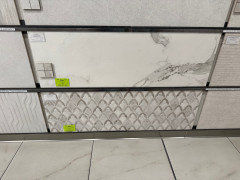
    Question- what kind of tile should I put on the wall we will walk into? I’m thinking of making it a statement tile, therefore that whole
    Wall can have a statement tile. Can someone mock it up for me so I can visualize it? I’m thinking the large format tiles on walls to left and behind entry door: the small accent tile access from entry door wall to wall.