Software
Houzz Logo Print
christina_leonard92

Exterior foundation crumbling 1890s home

2 days ago

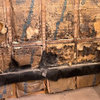
Attached are some photos of one side of my homes exterior.

Upon inspection there were no issues with the foundation.

Water does not get into the basement thanks to the gutters and we set up a (not so pretty) rain barrel last summer.

But this is an issue I’d like to address since it looks very bad.

We were thinking of filling in the cracks and masking this issue with some landscaping. Any tips on how to do so? Lime mortar?

Then once repaired and when we have the budget, I’d like to add some stone or brick along this area (I do not know what it is called) to match a front brick patio we plan to add in the near future.

Again we were told the foundatio n was fine.

Comments (13)

  • 2 days ago

    Photos here I forgot to add to original post

  • yesterday
    last modified: yesterday

    Problem is from people painting the gray with paint. Paint traps in the moisture, moisture freezes and starts the cracking.

    What you need to do is dig down below the surface and see where it ends. Remove all the paint and pressure wash, let dry, then use a a high-strength, polymer-modified structural repair mortar to patch things up It has a strength of about 5000PSI compared to type M mortar's 2500 PSI. It's expensive but the best to use. After you've finished the repair skim coat the exposed parts of the wall with Type M mortar, mixing in the additive Titanium Dioxide to make the walls white, to stay white for life. Do not paint it.

  • yesterday

    Thank you- the paint was the work of the previous owner so this is very good to know!!

  • yesterday

    If you have a fieldstone, brick, or block foundation that is original to a century home, then there is a very specific protocol and material spec to use. It appears fieldstone is peeking out in the first pic.

    First, that is a mortar parge coat. It is not paint that causes it to crack. Paint actually passes moisture, because ALL materials pass moisture, it is just a matter of how large a molecule, and materials are then classified as to that sieve.

    But water does cause it to crack, along with movement. The main culprit is parge coatings being nearly always applied without regard to touching the ground/slabs/pavement. So moisture wicks up, and along with the ground/slab/pavement moving independently of the wall, it cracks and chunks off. This is common.

    You do NOT use a Type 'M' mortar for a century home foundation parge coat. It is too stiff, and will pull the inherent moisture out of the limey joints, and may cause stones/brick/soft block to crack. You would use a "softer" mortar, like Type 'N', or a mason can mix it themself.


  • yesterday

    Your advice is much appreciated because I don’t know what anything is! And before I hire someone I like to have

  • yesterday

    I like to have an understanding of what everything is, thank you!!!!!

  • yesterday

    Also regarding the question adding a brick (or stone to match the front of house) veneer to the foundation - that is probably not going to happen here. A veneer wythe of stone or brick would have a 4" nominal dimension, so it would stick out past the siding, and need supported from below. It could be chosen to replace the fieldstone at the above grade portion of wall, but that's very involved for little return on the work and expense.

    A thin brick/stone veneer ("stuck" directly to the wall) is probably not a good choice because of the movement of the fieldstone. You could, however, use a prefabricated panel system, but the detailing at the ground, flashing at the siding, and transitioning at windows may be a bit involved.

    And brick used for a patio would (should) be different than brick used for a wall veneer.

  • yesterday

    Thanks again for the great tips!!!

  • yesterday

    Ok, after running the possibility it's flag stone or block through AI the correct answer is 3onthetree. The mortar should be softer than the stone or block and is sacrificial, otherwise the stone or block will crack. Type S is recommended. The opposite applies to poured concrete walls and a high strength polymer modified mortar should be used to patch it up.

    But 3onthetree is wrong about the paint. Standard latex paint will act as a vapor barrier, and the more coats the less permeability there is. And I'm not sure I should tell my neighbor who has been a brick layer for 30 years he is wrong when he told me I should use Type M to rebuild my chimney. It should of been S but I don't see any issues after 10 years. I did skim coat the exposed exterior block on my house with type M and it has held up very well of the last 25 years, and none has fallen off. If I painted it I'm betting It would start flaking off with the block in a decade.

  • yesterday

    You should get quotes from masons. You don't need to be an expert, ask questions, listen to what they say. You'll probably be able to hear expertise.


    It looks to me like you have a mortar issue in your foundation. A parge coat will hide it, but it won't fix the problem of crumbling mortar. What does the inside of the foundation look like? Is it stone? Is the mortar solid or crumbly?


    We have a fieldstone foundation and without gutters, water will seep in, but through the rocks, which are somewhat porous, not through cracks in the mortar. As long as water is kept away from the foundations (easy enough, we have a near-wrap-around porch, we're good.

  • yesterday

    Inside it is stone, water doesn’t get in unless it’s A LOT of rain. I wouldn’t say it is crumbly but it is very old rock. Not in bad shape overall

  • yesterday

    @kevin9408 Your AI input was wrong if it said Type S. Using AI to answer questions you didn't already know, or didn't know how to ask with proper variables, leads to incorrect advice. For this original 1890s fieldstone foundation, if you are choosing a maximum amount of portland mix it would be Type N. If there is pointing involved, Type O/L hand mixed based on what a mason sees.

    And yes you should tell your mason to take a deep dive into mortar mixes if he doesn't understand about old limey mortar. If I had a nickel for every tradesman that said "been doun it this way fer 30 years and never a callback" I'd have enough to buy a lobster dinner. But, you probably didn't have that situation with rebuilding a chimney from scratch. And, if your exterior block is actually modern CMU, then you are not worried about limey mortar joints either, eh?

    Saying paint causing damage to cementious materials borders on ludicrousness. All over the internet I read people, who are only repeating old wives tales and have no knowledge of their own, saying paint will cause a CMU to deteriorate. If you have too much moisture in the unit, the paint will just bubble and peel off.

  • 21 hours ago

    Masking with landscaping won't fix the structural issue. Water will keep getting behind whatever you cover it with. Remove the loose stuff first. Repoint the gaps with lime mortar. Then you can think about adding stone or brick over it . Do it right or do it twice.