Software
Houzz Logo Print
searcher35

Need Help With Blackout Shades!

last month
last modified: last month

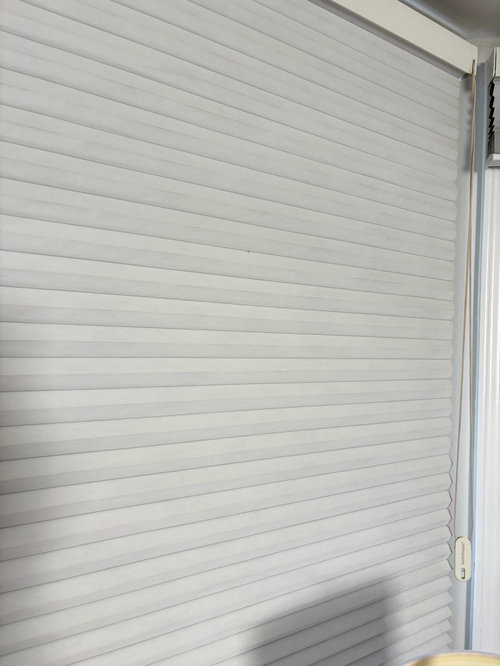
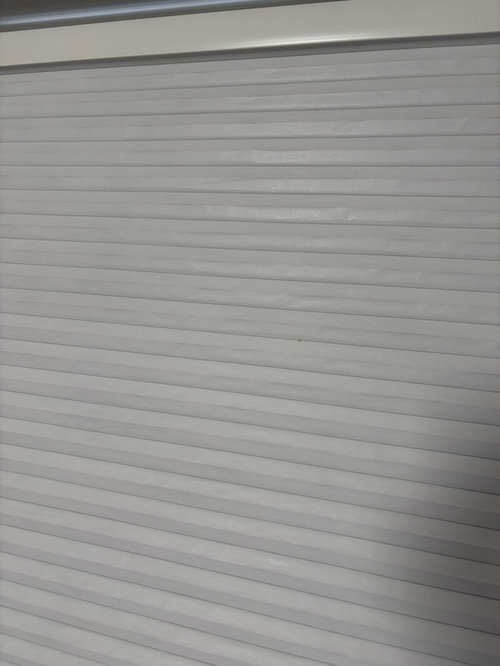
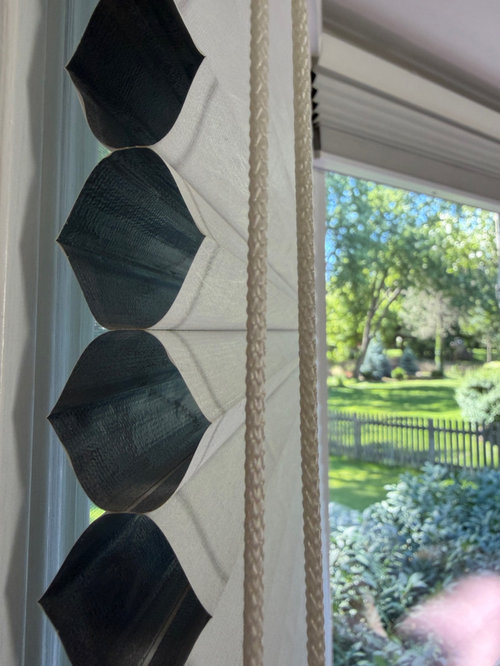
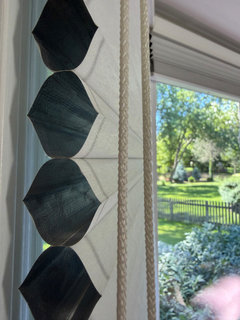
For 15 years, we’ve had three HunterDouglas blackout cellular shades with a black interior fabric in our family room. They cover our bay window, and I admit that the window is 34 years old! After one year, they became puckered, as pictured. What caused this (humidity, or something else like the fabric?), and what should I buy to replace them that will still darken our room, but not pucker? I’d prefer not to replace the window, because money.


Comments (22)

  • last month

    I have used Hunter Douglas Duette shades in 3 house, going back 26 years, and have never had that problem with their opaque or room darkening fabrics.

    Other than the puckering, do they work well?

    I would price out new blinds and then decide if I want to spend money or ignore the puckering! Shades, like many other things, have gotten quite expensive.

  • last month

    Have you contacted Hunter Douglas about the puckering?

  • last month

    have you tried a light steaming?

    Searcher 96 thanked Lyn Nielson
  • last month

    Is the window single glazed or double? If single, maybe you are getting a lot of heat (summer), cold (winter) and maybe some moisture on the inside of the glass when inside and outside temperatures and humidity are very different.

    What is your climate?

    Searcher 96 thanked chispa
  • PRO
    last month

    Why backout in the LR ? There are other ways of controlling UV and even heat . Your windows are probably leaking air into the back side of the blind and then the sun comes along and heats up the moisture . You probaly need new windows . In the meantime you can use solar shades to contol the amount of light in the space just not blackout.

    Searcher 96 thanked Patricia Colwell Consulting
  • last month

    @Lyn Nielson I haven’t tried steaming. I’ll try that. Thanks.

  • last month

    @Patricia Colwell Consulting We have a 60” TV directly opposite the window, the only wall available for a TV in our family room.

  • last month

    @chispa I was wondering the same thing, but 3 other rooms have windows with Duet Honeycomb shades that don’t pucker. The only difference is that the puckered shades have what looks like an aluminum material lining them and are called ”blackout”, whereas the others don’t have that lining and are called ”room darkening.”


  • last month

    @apple_pie_order Thanks! A HunterDouglas rep is coming to our home in two days. I won’t buy through them next time, though, as their online limited warranty has lots of big loopholes.

  • last month

    @Searcher 96, I've only had "opaque" and "room darkening" HD duette shades, so maybe you are on to something with the "blackout" version being different.

    Searcher 96 thanked chispa
  • last month

    @chispa Thanks for your help!

  • last month
    last modified: last month

    I have Bali inside-mount, single-cell, blackout cellular shades that I purchased from blinds.commany years ago. The blinds are still smooth, no puckering. Perhaps the difference is that blackout material inside the Bali cells is a smooth plastic-looking material which looks quite different than the material pictured inside your HunterDoublas shade.

    The only problem was that I purchased a triple-shade-on-one head-rail and two of the shades were attached so close to one another that they bind unless I raise them together very carefully. However, triples are no longer offered anyway.

    I selected Bali after researching several companies because its shades had the shortest "stack" (the height of the fabric when open) and I wanted the stack to block the top of the window as little as possible.

  • PRO
    last month
    last modified: last month

    The Mylar within the shade heated up.AND?

    ...." [1]Because blackout shades bond two completely different materials together—a woven polyester fabric on the outside and a metallic Mylar barrier on the inside—they are highly susceptible to "differential expansion and contraction." [1]Why the Mylar Causes Puckering

    • Thermal Expansion Discrepancy: When intense sunlight hits the window, the dark or opaque Mylar liner absorbs heat rapidly and expands. The interior decorative fabric expands at a much slower rate. This mismatch forces the bonded layers to fight against each other, resulting in puckers, ripples, or waves. [1]
    • The "Hot Roll" Effect: If you raise your blackout shades while the fabric is still hot from direct sunlight, the tightly compressed honeycomb cells will trap that heat unevenly. As the shade cools while rolled up inside the headrail, the Mylar can "set" into a puckered or wrinkled shape. [1]

    Other Common Causes of Puckering

    • Internal Cord / Tape Friction: On Hunter Douglas ⁠Duette® models, internal lift cords or motorized tapes run through the center of the cells. If a cord is snagged, twisted, or under uneven tension, it pulls harder on specific cells, creating a vertical line of puckering or a pinched look. [1, 2, 3]
    • Uneven Bottom Rail Weights: If your window frame is slightly unlevel, the weight inside the bottom rail can shift. This causes uneven tension across the fabric, making certain sections sag while others pucker or buckle. [, 2, 3, 4]

    How to Fix or Prevent It

    1. The Gravity Method: Fully lower the shades and leave them down for 48 to 72 hours. The continuous weight of the bottom rail can naturally pull out minor Mylar memory creases. [, 2]
    2. Never Roll Up Hot Shades: Get into the habit of leaving the shades down during peak sunlight hours. Wait until the window area cools down before raising them into the headrail. [1]
    3. Use a Garment Steamer (With Caution): You can use a handheld garment steamer on a low to medium setting to relax the polyester fabric fibers. Keep the steamer a few inches away from the shade, and avoid staying in one spot for too long so you do not melt the internal glue bonds or warp the Mylar"
    4. There you go. Everything at the click of a mouse. Don't watch daytime tv for a few days.....and do as above, because your money should go to fixing a "bad" window.?
    5. ___________________________________________________
  • PRO
    last month

    The "bad window"?

    Perhaps numero Uno?

    Thermal Expansion Discrepancy: When intense sunlight hits the window, the dark or opaque Mylar liner absorbs heat rapidly and expands. The interior decorative fabric expands at a much slower rate. This mismatch forces the bonded layers to fight against each other, resulting in puckers, ripples, or waves. [1]

  • PRO
    last month
    last modified: last month

    ^^^^

    It's helpful to actually read the thread, and the real issue involved? : )

    " After one year, they became puckered, as pictured. What caused this (humidity, or something else like the fabric?), and what should I buy to replace them that will still darken our room, but not pucker? I’d prefer not to replace the window, because money."

  • last month

    At least Win Curtains "tried" to answer a current/active thread and not zombie 16 year old ones! lol

  • last month

    My Bali inside-mount, single-cell, blackout cellular shades are installed on a south-facing window and I have never had to follow any rules to prevent puckering. Note that there are actually three blinds on one header and none have puckered. I have left an awning window open a few inches behind one blind during nighttime rain storms, the sun hit the blind later around noon, the blind did not pucker. I would consider Bali cellular shades.

    Searcher 96 thanked wdccruise
  • last month

    @wdccruise Thanks! I’ll check that out, along with Bali’s warranty and customer service reviews. Are there Bali reps that can come out to your home?

  • last month

    @Win Curtain Thanks. I’ll make sure there’s extra overlap on the top and sides. Our current shade dimensions are good in that regard.

  • last month

    Home Depot sells Bali blinds and blinds.com will send you fabric samples all of which you can view on its website.

  • 25 days ago

    @JAN MOYER Thanks for this information. I think this explains the puckering in my shades. The Mylar and the polyester fabric were glued together, and the Mylar heated up faster than the polyester fabric. Hunter Douglas still has Mylar in their blackout shades, although they are no longer glued to fabric, but I’m not taking any chances with them.