Software
Houzz Logo Print
ladderclimber

What’s a healthy relationship?

2 months ago

Today’s letter from Paul Weinfield. It makes an excellent point.


“ I recently heard an interesting definition of trauma: what happens when you spend your life trying to get difficult people to treat you well.

In one sense, I like this definition because it expands our understanding of trauma beyond bruises and humiliations. Not being seen, understood, or valued can wound us just as deeply. In one way or another, we’ve all been wounded.

But I resist the idea that there’s a special category of “difficult people.” If we’ve all been wounded, then we’re all difficult in some way, which means no one really is.

Western psychology, which emerged alongside the rise of industrial machines, has taught us to imagine relationships as frictionless exchanges. So naturally, when there's friction, we look for the faulty part of the machine.

But people aren’t machines, and friction isn’t necessarily a sign something is wrong in a relationship. Moreover, pathologizing “difficult people” causes us to stop asking the more important question: Given that everyone's imperfect, what do I actually need relationships for?

In my coaching practice, I’ve found that people rarely come to me because they’ve encountered “difficult people.” They come because they’re not really sure what they need relationships for, so they default to models that ask them to endure harm or sacrifice deeper needs.

The Buddha proposed four signs of a healthy relationship: the people in it are generous, kind, responsive, and consistent. If you have people like that in your life, hold them close, no matter how weird or dysfunctional they seem.

Maybe your partner takes forever to leave the house. Maybe your friend can't make conversation at parties. Is that really a problem? Or is your idea of relationship shaped more by social pressure than by what truly nourishes you?

At some point, you’ll come to a fork in the road and have to choose.

Comments (14)

  • 2 months ago
    last modified: 2 months ago

    Interesting take - also I do wonder if the psychic discomfort with another person's quirky behavior that's not actually harmful is really a result of anxiety that's creating a need to feel in control...?

    Still trailing thanked carolb_w_fl_coastal_9/10
  • 2 months ago

    If you remove people with untreated mental illness from the definition , I’m more inclined to agree. Growing up with Narcissistic people is not the same as growning up with difficult people.

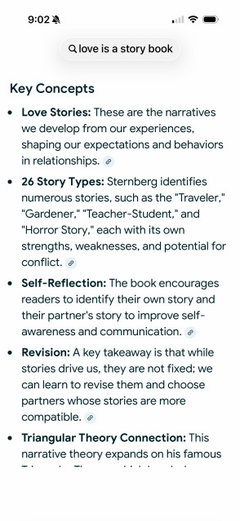
    This is a little Pop-Psyc, but years ago it helped me understand how seemingly poor relationships could be viewed differently by the participants.


    https://www.goodreads.com/en/book/show/110612.Love_Is_a_Story 


    Still trailing thanked 1929Spanish-GW
  • 2 months ago

    A part of this phenomenon is also that we sometimes bring out the worst in certain other people. Two strongwilled individuals can both be fine with others but don’t mix well with each other.


    Generous,kind, responsive and consistent are definitely attributes to be worked toward . These can make all the rest fall into perspective when dealing with others. c ( houzz again messes with my log in )

  • 2 months ago
    last modified: 2 months ago

    Oh my judge much! No one can stand outside and judge what's going on in most relationships. (excluding obvious ABUSE). People love differently , have differen't needs and standards. The layers of why some relationships work for one while everyone else says NO WAY is beyond the picking apart of another. This new age pop psychology is exhausting and really needs to just go away.

  • 2 months ago

    Arcy I think that sometimes if you read the original posts and actually considered what they had to say you would not have such extreme reactions to things no one actually said.

    Still trailing thanked Kswl
  • 2 months ago

    @arcy_gw thats the exact message the pop psyc book I mentioned discusses.


    That the people in relationships have different expectations of the roles that make a happy pairing.

    And the idea that trying over and over again to change other people’s behavior impacts you more than the person who won’t change doesn’t really involve judgement.

    Lastly, the point that relationships are not realistically “two people skipping through a field of flowers“ 100% of the time acknowledges the normal ups and downs.


    Which point do you disagree with?


    The idea of posing a framework for thinking is not radical or unusual. The constitution is a framework for our country. The Bible and Koran serve as frameworks for their followers. Building codes provide a framework for safe habitable spaces.

    In 2020 there was a great article in The Medium about the addictive nature of outrage. It’s a good read.

    Still trailing thanked 1929Spanish-GW
  • 2 months ago

    Thank you @Kswl and @1929Spanish-GW


    I couldn’t answer any better than y’all have. Four basic tennets already stated for how we all can hopefully go forward.


    Generous

    Kind

    Responsive

    Consistent. ( @arcy_gw has this one down pat) 🙏

  • 2 months ago
    last modified: 2 months ago

    This reminded me of an article I read recently about a 'new' term being applied to people who make life more difficult: hasslers.

    Still trailing thanked carolb_w_fl_coastal_9/10
  • 2 months ago
    last modified: 2 months ago

    Trailrunner/Still Trailing, thank you for sharing this insightful excerpt. Yes, there is true psychosis, abuse, etc., but what ruins most lives, and in turn relationships, is not that unvarnished psychosis/trauma but the infinite variations and shades of one’s own expectations, desire to be right (conscious or not), and the lack of understanding of the obvious variety of personalities, each shaped by unique experiences, choices and circumatsance. Great post.

    Still trailing thanked nutsaboutplants
  • 2 months ago
    last modified: 2 months ago

    Nutsboutplants, 💯%

  • 2 months ago

    I find with the right combination of personalities my best self seems to shine. I have let go of relationships inwhich I do not bring my best self forward. This included a parent after decades of trying my best to stay in an unhealthy familial relationship inwhich I was not always the best version of myself, but over all less than a handful of people made my cut list. If I am unable to remain generous, kind, responsive and consistent I feel it best that I walk away and surround myself with those that do inspire my better qualities.

  • 2 months ago

    @roarah that’s it in a nutshell for me. I kept thinking “ something is so wrong with me” . Not that I don’t have faults, because I definitely do , but the people that were making me feel inadequate and unworthy and doubting my ability to function well were people I finally decided I needed to cull from my contacts.


    The number is much smaller now but when we talk and go places together we mesh so well and the strain and self-doubt is gone as well.


    I appreciate all the insightful views. c

  • 2 months ago
    last modified: 2 months ago

    Why is it, I wonder, that even when I know it's a 'them' problem', not a 'me' problem, I still can't seem to put it out of my mind? I think it's because I seem to be sensitive to other people's moods, and have forever been very disturbed/distressed by negative emotions - even as a small child.

    P.S. I think my tolerance for loved ones' 'faults' has most definitely increased with age and maturity. I like the phrase 'be a duck, let it roll off your back'. Plus, I've been working with children for decades, which requires loads of patience 😉

Sponsored
Bella Casa LLC
Average rating: 5 out of 5 stars17 Reviews
The Leading Interior Design Studio in Franklin County