Software
Houzz Logo Print
bkfollon

Range Hood Needed?

12 years ago
We are currently mid-project with our house build and deciding on kitchen appliances/cabinetry. I would like to put my cook top in the island but do not want a range hood over it at all.... we have 10 foot ceilings in the kitchen, is one necessary???

Comments (62)

  • 12 years ago
    I currently have a nonfunctional hood and I have no idea how the pro chefs manage without - just boiling water for pasta steamed up the kitchen annoyingly.
  • 12 years ago
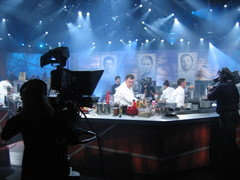
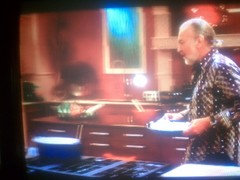
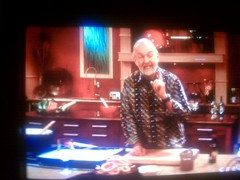
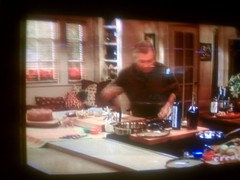
    My confusion in this lies exactly with the pictures Fred S provided.... HGTV and cooking shows have cook tops in their islands without the hood..... what's their secret?
  • PRO
    12 years ago
    Perhaps TV sets are not regulated the same as homes? Perhaps their mechanical systems exchange the air enough so as to compensate for not having a hood?
  • PRO
    12 years ago
    last modified: 12 years ago
    The code does not require a hood - unless the range manufacturer requires it. If the manufacturer of the cooktop or range requires it for their unit, then our inspections department requires it. They require that we have the manufacturer's installation instructions on site for the inspection so they can check this.

    I still believe some sort of ventilation is needed from a practical viewpoint.
  • 12 years ago
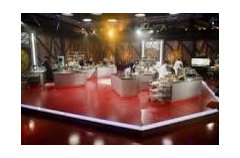
    A cooking show that's filmed in a studio (rather than the ones filmed on location in someone's home kitchen) is working with what is likely a HUGE space even though it looks quite cozy and normal on camera - there's a minimum of several feet above the 'ceiling' of the kitchen, for example, for hanging studio lighting. And most often the whole kitchen will be built on a sound stage, which is usually a big warehouse type space. The volume of air would be such that the steam/etc. produced from the cooking they're doing would be quickly diluted to the point of not being particularly apparent, and that's before adding in the effect of any kind of HVAC system that might be in place.

    (If you've ever seen a live cooking demonstration at a convention, it's usually similar - convention spaces are often expansive enough that you can get away without a hood for the sake of better viewing lines or camera positioning. It's not that the cooking isn't producing steam/etc. it's just that it's harder to notice it in the volume of air.)

    It's possible that some of the shows shot at home are making similar sacrifices for the sake of TV - the kitchens seem to be designed with filming in mind (range isn't up against the wall, place for the cameras, etc.) so maybe they skipped the hood for the sake of filming, and have some kind of system that doesn't work as well in a non-purpose-fitted space?

    Like I said, I dunno how they'd do it on a regular basis. This house is 1930s so it's hardly a tightly sealed up new build and it was really annoying the other night just making pasta. That hood has got to be repaired or replaced.
  • PRO
    12 years ago
    last modified: 12 years ago
    NKBA guidelines state "All major appliancess used for surface cooking should have a ventilation system, with a fan rated at 150 CFM minimum." This is not a code but a guildeline.
  • 12 years ago
    Yikes, built a new house last year and put in a great hood...place on the wall of course. Cannot imagine if we didn't have it as with an open concept, the place would constantly stink of cooked food! may smell good while cooking but not the next day after you've made say, a curry! and then layers and layers of smells. It exhausts steam and grease too although not completely. Get one that really sucks or you'll be sad!
  • 12 years ago
    @bkfollon: that was 1 picture w/o a range hood... but look at the majority of cooking shows where the same kitchen is used on a regular basis...
  • 12 years ago
    last modified: 12 years ago
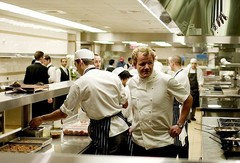
    Iron Chef - Michael Symon - dual-chimney range hood clearly visible in the background.
  • 12 years ago
    last modified: 12 years ago
    Top Chef - every range has a hood over it
  • 12 years ago
    Hell's Kitchen - portion of the massive commercial range hood visible in the upper-right (with the fire-suppression system nozzles).
  • 12 years ago
    "Chopped" also provides a ventilation hood over each range.
  • 12 years ago
    ...and the chefs' own home kitchens:

    Ina Garten ("Barefoot Contessa") has a classic-style range hood over her range.
  • 12 years ago
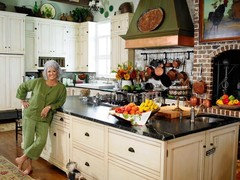
    ...so does Paula Deen:
  • 12 years ago
    So, whether it's the "stadium kitchens" or the personal kitchens of "celebrichefs" (yes, we just came up with that one, you're welcome) - it looks like the range hood is an integral part of the overwhelming majority of kitchen setups.
  • 12 years ago
    last modified: 12 years ago
    Before you go comparing apples to oranges, Futuro, maybe since your in the range hood business, you should do your homework first.

    http://publicecodes.cyberregs.com/icod/irc/2012/icod_irc_2012_19_sec001.htm


    M1901.3 Prohibited location.
    Cooking appliances designed, tested, listed and labeled for use in commercial occupancies shall not be installed within dwelling units or within any area where domestic cooking operations occur.

    Your examples are mostly commercial and studio locations. Mine are chef's personal homes. One of them doesn't even do a show from the house.
    bkfollon thanked User
  • 12 years ago
    OK, I apologize... This appears to be personal opinion whether we want one installed or not. We'll leave it at that. Thanks.
  • 12 years ago
    A great question BKFollon. Sounds like the answer lies in giving a call to see if one is required in your area.
  • 12 years ago
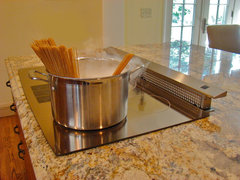
    Our friends had one similar to this, so you keep the clean lines, but when you ARE cooking, the smells get sucked down and out!! awesome!!

    Kitchen Remodel, South Harriet · More Info
  • PRO
    12 years ago
    I have 10.5' ceilings and even if it were not code, I'd highly recommend a hood. Otherwise you will have a greasy film all over the entire kitchen area within a couple of months. There are some very low profile hoods that look very attractive under a high ceiling. You can even design a custom hood with an external blower so the body of the hood is smaller. I'd also hang the hood with the bottom at 72" so you don't have to look around it. Just make sure your capture area is big enough (at least 6" wider than the cooktop).
  • 12 years ago
    @Fred S: in case you've missed it, we EXPLICITLY separated the examples of commercial kitchens, and the chefs' personal homes. We placed a text comment between the 2 blocks of photos, AND, in summary, made it clear that there's a difference, via the use of the words "whether" and "or".

    The last 2 examples are the chefs' own kitchens - not TV studio kitchens. As in, "the kitchens in the houses where they actually live". As in, "residential kitchens".

    Paula Deen's kitchen in Savannah, GA:
    http://hookedonhouses.net/2009/12/09/its-paula-deens-house-in-savannah-yall/

    Slideshow of Ina Garten's house in East Hampton: http://www.housebeautiful.com/decorating/ina-garten-barn-1108#slide-7

    It seems that you're not even reading what's posted, just jumping on any mention of a range hood, in any thread, and spamming code regulations, whether the discussion calls for it or not. Nobody in this thread suggested placing a commercial range hood into a residential kitchen. Speaking of "doing your homework", it seems you should brush up on the whole "reading comprehension" thing.
  • 12 years ago
    @bkfollon: there's nothing to apologize for... we're disagreeing with Fred S. Please, don't feel constrained from participating in a discussion, just because someone seems to have an issue with an entire category of appliances (that borders on obsession, frankly).
  • 12 years ago
    If you look closely at all the pictures Futuro provided, all the hoods are above 6'. And the stove "Iron Chef - Michael Symon - dual-chimney range hood clearly visible." Is cooking on does not even appear to have a hood. It is in the background! LOL LOL LOL at least you are good for a laugh, Futuro.
  • 12 years ago
    @Design Details: agree 110%. One of the main benefits of having a range hood is capturing the airborne grease before it settles all over the cabinets & countertops, and drifts through the house, soaking into soft furniture.
  • 12 years ago
    last modified: 12 years ago
    Fred S: you can't see the hood above Symon's head because of CAMERA ANGLES. And the one in the background is situated over a range, it's not there just for decoration. FFS, man...
  • 12 years ago
    last modified: 12 years ago
    No, Futuro, I have an obsession about people misrepresenting codes to further bolster their own phobia. A house by code has to have 5 air changes per hour regardless of a range hood or not. THAT means new air in the kitchen every 12 minutes whether you want it or not, leaving all the air polution arguments to the misinformed. I am not at all against range hoods, but someone needs to keep the conversation on an intellectual level. Otherwise, this topic keeps getting overrun by germaphobes.
  • 12 years ago
    wwawait, Futuro, what happened to your previous stance that range hoods had to be much lower?
  • 12 years ago
    We just had a similar issue and built a low-profile custom hood with Imperial. They did a great job and our hood really blends in now and is so high you don't really notice it...good luck!
  • 12 years ago
    Cooking without an extractor fan (balanced to the make up air house system) is a mechanical fundamental no matter what the codes require.

    Every cooking appliance, every kitchen must have one- no exceptions. Never even contemplate cooking without exhaust considerations.

    Having no exhaust for your kitchen is like not hooking your toilets to the sewage system.

    This really isn't that hard!
    Do I really need an extractor fan? Huh? Yes, alway yes!
  • 12 years ago
    Fred, we're not "misrepresenting" a damn thing. You claimed that celebrity chefs do not use range hoods in their own homes, we offered a dissenting opinion. That's it. That's the scope of the discussion. Same goes for the "stance" on range hood height - not the point.

    You're the one dragging manuals & regulations into a casual discussion, then getting upset when people don't take you up on the fun & exciting topic of "the exact specifications of something or other, as written in Code 123, Volume 14, Paragraph 7, Section C, subsection Q, line 425." This isn't a courtroom, it's a discussion forum.

    Then, you start nit-picking on things like whether a range hood is in the foreground or background in a photo. Seriously?

    Well, whatever, we're officially out of troll-food. Moving on...
  • 12 years ago
    Boys boys.....don't split hairs, you're not helping the original poster are you? take your differences to a private message.....please!!
  • 12 years ago
    last modified: 12 years ago
    Here is Paula Dean's house in Savannah. No camera angle problem here. Notice how high the back range hood is (well over 6') and that it does not stick out over the entire range. And guess what, no hood over the island stove. HMMM, I guess Paula really doesn't agree with you after all. Please take note that this is the same kitchen Futuro pointed out. How lame is that?
  • 12 years ago
    last modified: 12 years ago
    Futuro, if you had bothered to read the previous posts of others, you would know that I was not referring to you this time on the code issue. YOU were not even here when I posted them. It is not all about YOU.
  • 12 years ago
    Futuro, if you think codes don't belong in a house planning discussion, then you have truly stooped to a new low. Looking back on your previous posts, it seems you call everyone a troll that disagrees with you.
    There are no hoods in the Iron Chef studios where people actually cook. They would get in the way of the studio lighting. Again, do your homework and quit misrepresenting things. Where do you think the vents would actually go to in these pictures?
  • 12 years ago
    Fred, go back and re-read what PirateFoxy said 6 hours ago regarding studio kitchens.
  • 12 years ago
    I'm not discussing about what pirate said. I am talking about your bs attempt to explain your Iron Chef picture. "Futuro Futuro Kitchen Range HoodsFred S: you can't see the hood above Symon's head because of CAMERA ANGLES. And the one in the background is situated over a range, it's not there just for decoration. FFS, man..."
    They are just there for looks IT IS A STUDIO. Reading Pirate's statement is what got me looking at your photos again in the first place. Please try to keep up.
  • 12 years ago
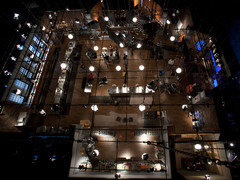
    The one photo there illustrates what I mean about studio kitchens quite nicely, actually - look at that overhead shot and all that space. They'd have to be doing something pretty impressive to actually cause enough smoke/steam/etc. to build up so that people working at ground level would notice. (Possibly the pictured hood is over a grill or something along those lines that can be expected to put out quite large amounts of smoke in a fairly small area? There are some things that are used in commercial settings that would probably benefit from a hood just to keep things under control even in a studio/sound stage environment.)

    Now, how the poor lighting techs feel about it, I dunno, because all that stuff in the air is eventually going to settle SOMEWHERE... I bet cleaning cooking grease off of studio lighting rigs is even less fun than cleaning it off of normal residential kitchen cabinets.

    But anyway - if you have your residential kitchen in an absolutely massive amount of airspace (like open plan with crazy high ceilings) and you don't mind having to pay someone to come and clean off your walls and light fixtures with scaffolding every now and then, I can see how a hood would be optional. In your standard kitchen environment, however, not so much. And if you have gas a proper exhaust system (hood or properly installed downdraft) is safer than just opening a window to clear the air, as the open window can cause drafts that blow out the flame on the stove, which shouldn't be an issue with a proper exhaust set up.

    In the chef home kitchens pictured where there's one cooking surface with visible exhaust and one without, I kind of wonder which surface is actually the one used on a daily basis. If the cooking surface in the island is only really used during filming a show or special, then it's not going to be anything like the problem that you'd have from daily use build up. (And honestly I'd probably be tempted to have my kitchen professionally cleaned after filming a show in it anyway. That's usually a lot of people in and out and stuff can get quite hurried - I wouldn't be surprised if there's a decent mess to be cleaned up once all the filming equipment is out. So having cooking residue removed also would be no big deal.)
  • 12 years ago
    Could you imagine how much the sound guys would complain if those hoods were actually running? :) Just trying to keep the conversation in real life with the facts straight.
  • 12 years ago
    @Fred S - In which, the home kitchens or the studio? In the studio I'd expect them to be doing quite a lot with directional mics anyway because cooking in general is pretty noisy. Hood noise is probably easier to remove in post production if you have to than irregular appliance noises. (I'm not an editing/sound post production expert, though.) Also, in the studio the fan for the hoods could be pretty far away, which would help. Woe to the intern who aimed a directional mic at the hood instead of at whatever they were meant to be recording, though. :)
  • 12 years ago
    All I know is this. We currently have a re-circulating range hood, compliments of our builder, back in 1999, who insisted that it wouldn't work to vent to the outside. He never bothered to ask us if we minded losing a little cupboard space for better ventilation. The answer would have been "NO!"

    I spent a sizable portion of yesterday, soaking the secondary filters in OxyClean, and washing the primary ones in the dishwasher on the scrub cycle. They are still not perfect, but better, and I ordered new secondary filters. This is not the first time I've gone through that, but it's better than having smoke and cooking smells through the entire house for days. As it is, the recirculating fan is much less efficient at removing moisture and odors, and if I make a curry or something with cabbage….you can imagine the house the next day. LOL, I tried grilling pork chops on the stove top last year, and that won't happen again till after we install a ducted range hood next summer.

    And this, with a very good central ventilation system. Unless you live in a climate that's conducive to having the windows open 12 months a year, or, as I noted above, you don't cook on your range, you need a good range hood in your kitchen.

    Anyone who uses building codes to discuss the esthetics/comfort issues of range hoods must not be a cook.
  • 12 years ago
    PirateFoxy, the range hood would be a prohlem, but the big one is the wind noise. It is directly between the cook and the mic. I just finished watching a cooking show with wind noise. No, they don't take it out. Yes, you would be able to tell if the hood was actually on.
    @mickisue, pay attention. The REAL pictures on here of REAL cooks personal kitchens don't have hoods on their island cook tops. And go back and read the topic. If you don't have too much black smoke in your eyes, the statement is she doesn't want one. The question is "is one NECESSARY" I cook at least twice a day and even do the cooking when I am at someone else's house because I am that good.
  • 12 years ago
    Hubert Keller; no hood over island cook top. Range in back only has a fake hood. Why go to all the trouble to make a fake hood if they are so necessary?
    Jacque Pepin; no hood on island. Full disclosure, his old kitchen in the main house has a hood and a range on the wall. This is the guest house.
  • 12 years ago
    @Fred S - They can, whether or not they do would depend on the show and how much they've budgeted for post-production and how much they think it's a problem.

    I still can't imagine voluntarily cooking in a situation without an exhaust system of some kind. The steam and smoke and smells building up just annoy me. If I was looking at a house to buy and there wasn't some system installed, that would be a problem. I don't even like to see recirculating ones.
  • 12 years ago
    How do we even know the chefs who film 'at home' don't have kitchens specifically to film in, which might be set up very differently to the ones in daily use? I know some chefs who actually don't really cook at home at all - so if they were to film at home they'd likely have to have a kitchen added because the SO wouldn't let them mess around in the actual kitchen.
  • 12 years ago
    PirateFoxy, these are all low budget productions.
    I know these things because I always double check my facts before posting on here. Look them up yourself if you need further reassuring. That is how I know Jacque's filming kitchen is now in the guest house, his wife apparently threatened divorce :)

    Here is another one for you. Behind the scenes at America's Test Kitchen (not for show or filming)
  • 12 years ago
    Again look at the volume of air in the Test Kitchen, though. And there may be some kind of whole room system that's more effective than what would be standard in a residential situation.

    Also, have you noticed in the credits for a lot of cooking shows how many appliance companies and similar are listed? The expense for installing a secondary kitchen if everything is donated in exchange for on-air exposure is going to be pretty low relative to the total cost of producing a show. Or the chef could elect to pay out of pocket if a secondary kitchen is going to be helpful. I'm not saying that that is what happens so much as saying that I don't think we can go by what we say on TV as firm evidence that cooking exhaust systems aren't necessary in a standard residential kitchen environment.

    (Personal experience in residential kitchens would, I imagine, depend quite a lot on factors like how often you cook, how you cook, what you cook, what the air space is like, possibly even things like climate. I seem to recall having less trouble with not having an exhaust system in one of my houses in England than I do here, and my cooking hasn't changed.)
  • 12 years ago
    last modified: 12 years ago
    This is my point, you do not NEED a STANDARD range hood. It may be a combination of a down draft and a vent in the ceiling, or nothing at all. Smoke from something burning can fill even a large room in a hurry. The test kitchen does have provisions for that. The space may be large, but it is designed to have ALL those gas burner going at one time. I cook in a 468 sq. ft. cabin on the weekends in the summer for a lot of people. There is no range hood. Nobody has ever complained.

    Those are the personal kitchens of chefs that they use everyday, not a second kitchen for filming except for Jacque. That is why I posted them. I did my research and didn't just post pictures like others.
  • 12 years ago
    Hello!
    My name is Evgeny. I am a relative of Michael Polukhin. I am a grandson of Lidya Capitonovna Polukhina.
    Michael, my mother has been looking for your family for the last 32 years.
    Please contact me
    My email- snigurvolga@gmail.com
    earth-999@yandex.ru
    My Skype is Evgenyanat31
    I am looking forward to hearing from you
  • 11 years ago

    I've noticed that friends rarely turn on their hoods when cooking. My kitchen's cook-top has a downdraft that is rarely turned on and after 8 years of living here, my furniture is not coated in grease, nor are our kitchen cabinets and walls. It cooking odors bother us, we open a window. We're getting ready to remodel and will not buy a hood unless local codes require it. Our family cooks dinner and eats at home most nights, so our kitchen gets a lot of use! I think it is a matter of preference.

  • 10 years ago

    We had 10' ceilings in our kitchen that had a stove in the island. I cooked more than 5 nights a week, often frying things. We did not have a hood above the stove, and never had a problem with stains on the ceiling. Not a stain in 12 years we lived there. We did have downdraft, but it was broken half the time so I rarely used it. If your ceilings are close to your cooking surface, then it will make a difference, other than that, go without if you want to. Just consider if you'll want to vent the cooking smells-- and if you use your oven a lot. I know the oven caused way more smoke/cooking vapor problems for me than the stove-top ever did.