Software
Houzz Logo Print
ksekeres

14 years ago
Has anyone put radiant heating in walls (behind tile)?
I was told I could do this in shower and tub walls.
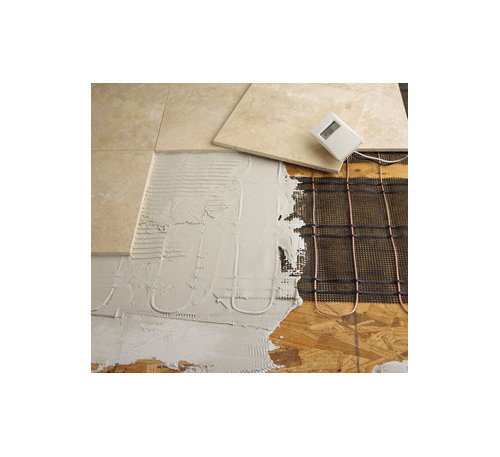
Jacuzzi Home Spa Radiant Floor Warming System · More Info

Comments (15)

  • PRO
    14 years ago
    No, we have not. The idea for radiant heating pads is to add warmth to the tiled pathways that you walk on, not necessarily to heat your home. Being that you create steam in both the shower and the bath, I wouldn't see it necessary to heat the walls. Now this is not to say that the walls can not be done. I would suggest taking the amount budgeted towards this thought and putting those funds into something that you will enjoy in your new space!
    Cheers!
    Monique
  • 14 years ago
    Yes, you can. We just finished putting radiant heat throughout our entire home - including shower.
  • PRO
    14 years ago
    I completely agree, and stated so, J.K. Wiskamp. Just not sure why one would want to do the walls, that is all. I hope that you are enjoying it!
  • 14 years ago
    If the bathroom lies on an exterior wall those tiles can feel pretty cold. We are only doing the floor in our shower. I could be wrong, but I think there was a radiant heat craze in the 70's which featured wall art that sent out radiant heat. It does make the room cozy even in the coldest weather!
  • 14 years ago
    The most efficient use of radiant heat is floor-based. Heat rises and this will warm the entire room.
  • 14 years ago
    Thanks for all your answers! We are keeping our hardwood flooring in bathroom and wanted to have a "heat source." Radiant heating behind the tile in shower and tub area was suggested.
  • PRO
    14 years ago
    last modified: 14 years ago
    Hello all! Just an FYI: Heating wires on walls is expressly forbidden by the National Electric Code. Section 424.38 (B) Uses prohibited, and 424.41 (A). We do offer shower floor heat systems. Floors are the way to go since that's the part you are touching. Great post!
  • PRO
    14 years ago
    It's easy to have a warm wall / warm seating within the bathroom. Waterproof heat panel to be installed --- concealed by the wall finishes such as stone / tile. Just take a look at the attached photos showing a job we did.
  • PRO
    13 years ago
    Adding heat into a retrofit wall assembly may cause condensation inside of the wall cavity if it is not planned and installed correctly. Consult with an architect or structural engineer first. This idea very well may cost you very big in the future with rotting walls and mold issues if it is not planned properly for this use. The illustration above is designed to warm tile, not heat the room. People do use it to heat the room even though the manufacturer's do not sell it for that purpose. Radiant heat panels are installed in the ceiling in older homes which do radiate the heat down onto the person and do not heat the components of the room. "Radiant Heat" feels like you just entered into a microwave oven if the rest of the home does not have the same heat source. Keep the heat under the floor tile and keep electrical heating cables out of your shower. It's not worth the risk of electrocution.
  • 12 years ago
    Hello, I know this site is more about Houses, but for my Masters in Atrchitecture I am intending on using wall embedded radiant heating that utilises the canal water that my ite is adjacent to. My project contains a spa. Most examples I have come across are for timber construction, but because of other elements in my project, I am consering using a masonry and/or steel frame structure and so wondered if this will work as efficiently?!
  • PRO
    11 years ago

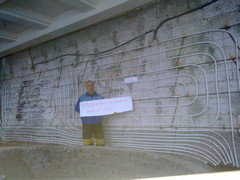
    I'm currently working on heating walls (electric and pipe) in a shower cause I want to build a shower without a door or glass panel. That glass keeps the heat in, open that glass and your shower will feel cold. I know this cause I have tested it, try taking a shower with the door open. I'm doing a bunch of research cause heated walls in a shower make more sense to me than heated towel racks. Stay in touch cause I will figure this one out. davegomez you're correct, Warmly Yours - rules were meant to be changed, look at how many things change in the building code annually, Pataya Flooring - correct and thats why it won't be batt insulation, it will be foam cause one day batt will be hanging out with Beta / VHS and Laser Discs. Renos need to evolve cause there are great renovators all over the world pushing building ideas and challenging the code books. M

  • 11 years ago
    last modified: 11 years ago

    A doorless shower is a great reason for using hydronically heated walls. I would also assume heated walls would help to quickly dry moisture from walls? In this case, perhaps the squeege would not be as necessary on the tiles?? We are also exploring running hydronic pex pipes inside our shower walls. One contractor is recommending the foil backed 3/8 inch insulation for this purpose. We still want to place sound proofing behind the foil insulation too. Our whole house will be heated hydronically with a boilder.

    Here is a link I found that explains how we may run our hydronic coils inside the shower walls. We are also exploring doing a similar set-up on the wall that will have shower hooks or bars for our towels to allow some warming/faster drying of towels (sort of like a heated towel bar -- but not quite as good).

    Carol

    putting hydronic heating in walls

  • 10 years ago

    I have the same intention of using a heated wall in my next project. I generally attempt to keep all walls clear of shelving and storage etc. - concealing all within the wall. Apart from being minimalist it also helps to create the illusion of space.

    I should like to dispense with wall hung electric/hydronic towel rails and run one continuous length of 25mm stainless steel pipe (CHS) mounted at 1000mm high.

    I have been cladding the walls with 10mm plaster board then sheeting this with floor to ceiling white 4mm thick matt/frosted opaque perspex.

    My concern relates to wall finishes. It seems to me the only safe option is tiling which I want to avoid using. I also have reservations regarding plasterboard and perspex. Glass would seem to be the only option but the cost would be considerable.

    In summary I need basically a 10mm thick substrate which I can clad with one of the materials cited above with the exception of tiles. Any assistance would be much appreciated.

  • PRO
    9 years ago


    Dear Members,


    Hydronic wall radiant heating system will be used where the floor radiant is not sufficient to over come heat loss of the place .There are two points which must be considered firstly temperature of the wall finishing surface and nailing due to setting portraits or other things .


    Thank you for pointing out the issue which is so important to analyse .


    Sincerely,


    Roohollah