
Search results for "After sales" in Home Design Ideas
 Tile Doctor Ltd
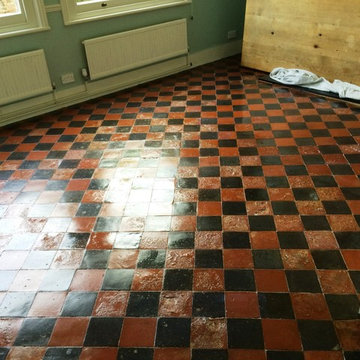
I was contacted recently by a client in East Grinstead, who asked me to restore a large area of damaged Quarry tiles in his house. East Grinstead actually dates back to the 14th century and is a town known for its many interesting houses and historic buildings. Hard-wearing Quarry tiles are most often used in high traffic areas, such as reception areas and hallways, although they are also commonly used for patio areas and porches. In these busy areas, the tiles can get dirty quickly, and this can lead to damage over time if they are not regularly tended to.
In this case, the damage to the tiles had actually been caused by regular flooding over a period of several years. The damage was so extreme that I advised my client that the only means of total restoration was re-tiling. However, my client informed me that the property was currently on the market for sale and this wasn’t an option. Instead, he settled on a deep clean and seal which, while not a complete restoration, would still significantly improve the condition of the tiled floor.
My first day of work was spent moving a significant amount of large furniture out of the room and into the garden. Once the area was completely clear, I was able to apply a layer of Tile Doctor Pro-Clean, using a stiff deck brush to really work it into the damaged stone. Pro-Clean helped to lift out a huge amount of the muck and ingrained dirt revealing, unfortunately, yet more damage beneath.
Once I had finished for the day, my client opened the windows to allow the warm sunshine to dry up any remaining moisture. This was important, as any excess moisture left on the floor may have affected the performance of the sealer when I returned to complete the sealing.
I allowed the floor a two-day drying period, during which time my client decided to colour some of the tiles with red doorstep paint. He counted up to two thousand tiles before giving up!
When I returned after 48 hours, I set about sealing the floor using Tile Doctor Seal & Go, which provided the eye-catching gloss finish and durable protection the client wanted whilst the house was still on the market. As it was another warm day, the homeowners went out cycling around the Ashdown forest, leaving me to complete the sealing carefully and without distraction.
When they returned a few hours later, they were amazed by the results! Although a complete re-tiling was not possible under the circumstances, both myself and my clients were extremely pleased with how great the Quarry tiles were now looking, especially after such significant water damage.

 Pro Dunk Hoops
Marc and his daughter absolutely love the hoop. He was so glad that he went with Pro Dunk Hoops over the Big Box Stores, etc. His Pro Dunk Silver Basketball System is installed on the side of his concrete driveway in front of his residence. The playing area is 39 feet wide and 22 feet deep. His residence is located in Des Plaines, Illinois. This is a Pro Dunk Silver Basketball System that was purchased in March of 2013. It was installed on a 39 ft wide by a 22 ft deep playing area in Des Plaines, IL. Browse all of Marc Z's photos navigate to: http://www.produnkhoops.com/photos/albums/marc-39x22-pro-dunk-silver-basketball-system-594/

 Manhattan Home Design
The Manhattan Home Design Lounge Chair and Ottoman is one of the most famous mid-century modern pieces. Its form and functionality have made it one of the most sought after pieces in modern history. This iconic design can be found in popular films, television shows, businesses and in thousands of residences across the globe. Its designers, Charles and ray Eames, had originally intended to give it the look and feel of a well worn first Baseball mitt. It led to the creation of the Manhattan Home Design Lounge Chair and Ottoman, featuring your choice of multiple leather finishes, high density cushions and imported veneers. Whether you are craving that Mad Men look, or are looking to outfit your living room with a modern design, the Manhattan Home Design Lounge Chair is the right choice for you.
Specifications: What makes the Manhattan Home Design Lounge Chair so special? This premium Manhattan Home Design Lounge Chair is the creme de la creme when it comes to style and comfort. Each of our leather options offer an incredibly supple texture, and develops a wonderful softness over time. Knowing that it will only age, like wine makes the lounge chair a brilliant investment for your home or office.
Find the right local pro for your project


 E. F. San Juan
Private Residence / Alys Beach, Florida
Architect: Eric Watson
Builder: Hufham Farris Construction
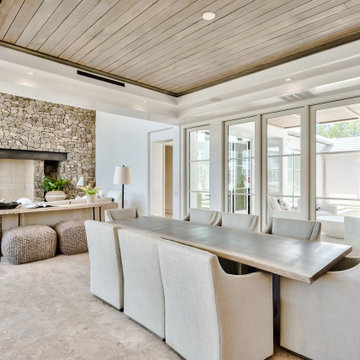
Working with Hufham Farris Construction and architect Eric Watson on this beautiful and unique Alys Beach residence, we supplied a custom E. F. San Juan front entry door, custom interior windows for the wine cellar, custom exterior gates, exterior railings, exterior paneling and trim, and the magnificent Loewen® windows and doors that make a statement the moment you see the home.
Challenges:
Due to our limited production capacity in the wake of Hurricane Michael, providing custom millwork for this home was challenging, but our team was happy and proud to return to work after such a disaster. The primary challenge on this gorgeous 5,050-plus-square-foot residence designed by Eric Watson was the vaulted two-story wall of windows that comprises most of the facade.
Another feature of this home is the incredible 600-bottle wine cellar on the first floor. Watson wanted this amenity to be a focal point for residents and guests, with large glass windows looking into the cellar from a hallway at the front of the house. Due to the delicate nature of wine and the need to protect the bottles from sunlight, this meant creating custom windows that would block the light while still allowing a view of the cellar from the outside. E. F. San Juan provided these custom windows that filter UV light and are airtight to keep out moisture and regulate the cellar’s temperature.
Solution:
We worked closely with our trusted partners at Loewen to supply the large, impact-rated windows for the home’s grand facade and throughout the property, along with exterior doors leading to the courtyard, balconies, and other outdoor living spaces. The E. F. San Juan team also created the accompanying millwork and matching exterior trim, railings, and more.
Providing privacy, security, and beauty, the front entry door and driveway gates were also made by E. F. San Juan. This new-build home, completed in 2020, exudes the quintessential luxury and unique design acumen of Alys Beach. It was recently sold by agent Matt McGuire of Scenic Sotheby’s International Realty for $7.2 million—a record-breaking sale for residences north of Scenic Highway 30-A in the coastal South Walton area of Northwest Florida.
E. F. San Juan is proud to be part of the talented team that created such a standout property in the affluent community of Alys Beach.
—-
Photography by Tim Kramer, courtesy of Scenic Sotheby’s International Realty
 Wood Metal & Beyond
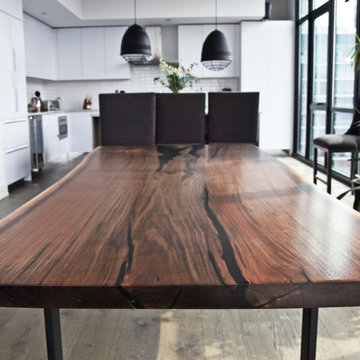
This gorgeous Live Edge Reclaimed Walnut table will be the stand out piece in your home. Its deep reddish brown hue's provide warmth and individuality to any space in your home. Our Timeless Premium Live Edge Tables are handmade specific to your design and specifications. Our tables are unique and will bring a refined look to any room.
We offer a variety of wood types to choose from including but not limited to: Walnut, Oak, Ash, Elm, Maple, Monkeypod, Acacia, Sycamore, and Parota. All of our tables are handcrafted with sustainable materials with visible gorgeous wood grain. Knotholes, voids and cracks are filled with black epoxy which brings out the natural beauty of the texture of the wood with a smooth surface. We can also use different colored epoxies depending on personal aesthetic.
Additional Information
Legs are detached and can be attached after delivery. We also offer white glove delivery and setup for an additional fee. We offer a variety of bases to choose from. Every table comes standard with U shaped metal legs in flat black or raw steel (with clear coat). We also offer our table bases in Stainless Steel, Chrome and Lucite for an additional fee depending on the design. Our tables come with a lifetime guarantee and are available for pick up if ordered in the Chicago area. We can also deliver and setup for a small additional fee.
Note: All of our tables pictured have been sold as every table is made to order.
 Wood Metal & Beyond
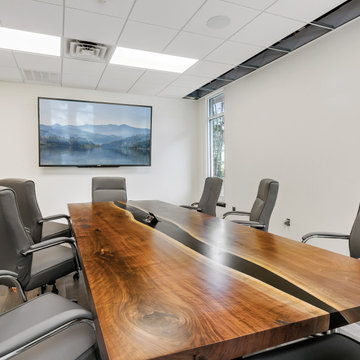
This striking Walnut River Epoxy Conference Table will sure to be the first thing on the agenda. It will give any boardroom or meeting room a stunning breathtaking aura. Our conference tables are made from reclaimed premium wood and handcrafted according to your specifications and design.
Additional Information
Our one of a kind Conference Tables are handmade specific to your design and specifications. Our tables are unique and will bring a refined look to any room. We offer a variety of wood types to choose from including but not limited to: Walnut, Oak, Ash, Elm, Maple, Monkeypod, Acacia, Sycamore, and Parota.
All of our tables are handcrafted with sustainable materials with visible gorgeous wood grain. Knotholes, voids and cracks can be filled with black epoxy which brings out the natural beauty of the texture of the wood and creates a smooth surface. We can also use different colored epoxies depending on preferred aesthetic.
Legs are detached and can be attached after delivery. We also offer white glove delivery and setup for an additional fee. We offer a variety of bases to choose from. Every conference table comes standard with U shaped metal legs in flat black or raw steel (with clear coat). We also offer our conference table bases in Stainless Steel, Chrome and Lucite for an additional fee depending on the design. Our tables come with a lifetime guarantee and are available for pick up if ordered in the Chicagoland area. We can also deliver and setup for a small additional fee.
Prices start at $10,000*
Note: All of our tables pictured have been sold as every table is made to order.
*Prices vary depending on size

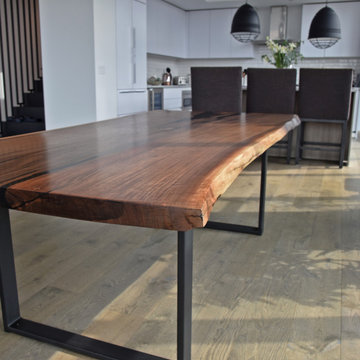 Wood Metal & Beyond
This gorgeous Live Edge Reclaimed Walnut table will be the stand out piece in your home. Its deep reddish brown hue's provide warmth and individuality to any space in your home. Our Timeless Premium Live Edge Tables are handmade specific to your design and specifications. Our tables are unique and will bring a refined look to any room.
We offer a variety of wood types to choose from including but not limited to: Walnut, Oak, Ash, Elm, Maple, Monkeypod, Acacia, Sycamore, and Parota. All of our tables are handcrafted with sustainable materials with visible gorgeous wood grain. Knotholes, voids and cracks are filled with black epoxy which brings out the natural beauty of the texture of the wood with a smooth surface. We can also use different colored epoxies depending on personal aesthetic.
Additional Information
Legs are detached and can be attached after delivery. We also offer white glove delivery and setup for an additional fee. We offer a variety of bases to choose from. Every table comes standard with U shaped metal legs in flat black or raw steel (with clear coat). We also offer our table bases in Stainless Steel, Chrome and Lucite for an additional fee depending on the design. Our tables come with a lifetime guarantee and are available for pick up if ordered in the Chicago area. We can also deliver and setup for a small additional fee.
Note: All of our tables pictured have been sold as every table is made to order.
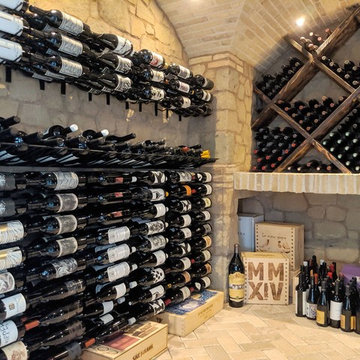
 IWA Wine Accessories
IWA Design Center worked with the homeowner to plan this beautiful wine cellar and cooling system.
Example of a small transitional wine cellar design in San Francisco
Example of a small transitional wine cellar design in San Francisco
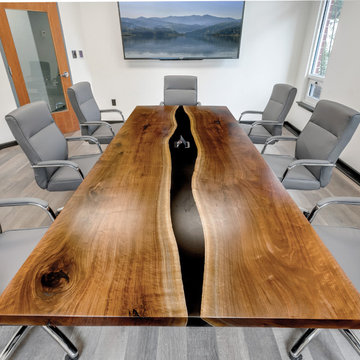 Wood Metal & Beyond
This striking Walnut River Epoxy Conference Table will sure to be the first thing on the agenda. It will give any boardroom or meeting room a stunning breathtaking aura. Our conference tables are made from reclaimed premium wood and handcrafted according to your specifications and design.
Additional Information
Our one of a kind Conference Tables are handmade specific to your design and specifications. Our tables are unique and will bring a refined look to any room. We offer a variety of wood types to choose from including but not limited to: Walnut, Oak, Ash, Elm, Maple, Monkeypod, Acacia, Sycamore, and Parota.
All of our tables are handcrafted with sustainable materials with visible gorgeous wood grain. Knotholes, voids and cracks can be filled with black epoxy which brings out the natural beauty of the texture of the wood and creates a smooth surface. We can also use different colored epoxies depending on preferred aesthetic.
Legs are detached and can be attached after delivery. We also offer white glove delivery and setup for an additional fee. We offer a variety of bases to choose from. Every conference table comes standard with U shaped metal legs in flat black or raw steel (with clear coat). We also offer our conference table bases in Stainless Steel, Chrome and Lucite for an additional fee depending on the design. Our tables come with a lifetime guarantee and are available for pick up if ordered in the Chicagoland area. We can also deliver and setup for a small additional fee.
Prices start at $10,000*
Note: All of our tables pictured have been sold as every table is made to order.
*Prices vary depending on size
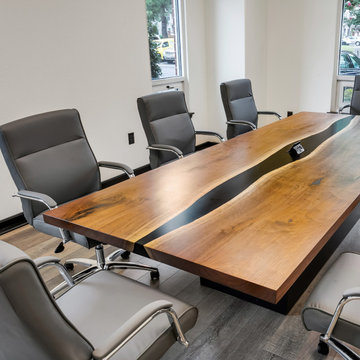 Wood Metal & Beyond
This striking Walnut River Epoxy Conference Table will sure to be the first thing on the agenda. It will give any boardroom or meeting room a stunning breathtaking aura. Our conference tables are made from reclaimed premium wood and handcrafted according to your specifications and design.
Additional Information
Our one of a kind Conference Tables are handmade specific to your design and specifications. Our tables are unique and will bring a refined look to any room. We offer a variety of wood types to choose from including but not limited to: Walnut, Oak, Ash, Elm, Maple, Monkeypod, Acacia, Sycamore, and Parota.
All of our tables are handcrafted with sustainable materials with visible gorgeous wood grain. Knotholes, voids and cracks can be filled with black epoxy which brings out the natural beauty of the texture of the wood and creates a smooth surface. We can also use different colored epoxies depending on preferred aesthetic.
Legs are detached and can be attached after delivery. We also offer white glove delivery and setup for an additional fee. We offer a variety of bases to choose from. Every conference table comes standard with U shaped metal legs in flat black or raw steel (with clear coat). We also offer our conference table bases in Stainless Steel, Chrome and Lucite for an additional fee depending on the design. Our tables come with a lifetime guarantee and are available for pick up if ordered in the Chicagoland area. We can also deliver and setup for a small additional fee.
Prices start at $10,000*
Note: All of our tables pictured have been sold as every table is made to order.
*Prices vary depending on size
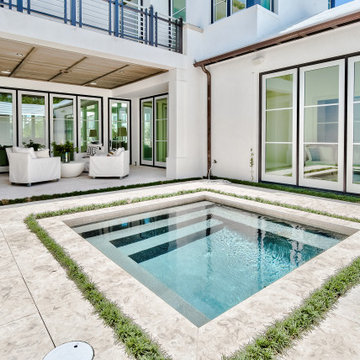 E. F. San Juan
Private Residence / Alys Beach, Florida
Architect: Eric Watson
Builder: Hufham Farris Construction
Working with Hufham Farris Construction and architect Eric Watson on this beautiful and unique Alys Beach residence, we supplied a custom E. F. San Juan front entry door, custom interior windows for the wine cellar, custom exterior gates, exterior railings, exterior paneling and trim, and the magnificent Loewen® windows and doors that make a statement the moment you see the home.
Challenges:
Due to our limited production capacity in the wake of Hurricane Michael, providing custom millwork for this home was challenging, but our team was happy and proud to return to work after such a disaster. The primary challenge on this gorgeous 5,050-plus-square-foot residence designed by Eric Watson was the vaulted two-story wall of windows that comprises most of the facade.
Another feature of this home is the incredible 600-bottle wine cellar on the first floor. Watson wanted this amenity to be a focal point for residents and guests, with large glass windows looking into the cellar from a hallway at the front of the house. Due to the delicate nature of wine and the need to protect the bottles from sunlight, this meant creating custom windows that would block the light while still allowing a view of the cellar from the outside. E. F. San Juan provided these custom windows that filter UV light and are airtight to keep out moisture and regulate the cellar’s temperature.
Solution:
We worked closely with our trusted partners at Loewen to supply the large, impact-rated windows for the home’s grand facade and throughout the property, along with exterior doors leading to the courtyard, balconies, and other outdoor living spaces. The E. F. San Juan team also created the accompanying millwork and matching exterior trim, railings, and more.
Providing privacy, security, and beauty, the front entry door and driveway gates were also made by E. F. San Juan. This new-build home, completed in 2020, exudes the quintessential luxury and unique design acumen of Alys Beach. It was recently sold by agent Matt McGuire of Scenic Sotheby’s International Realty for $7.2 million—a record-breaking sale for residences north of Scenic Highway 30-A in the coastal South Walton area of Northwest Florida.
E. F. San Juan is proud to be part of the talented team that created such a standout property in the affluent community of Alys Beach.
—-
Photography by Tim Kramer, courtesy of Scenic Sotheby’s International Realty

 HOMEREDI
 was commissioned to create a large kitchen for a young couple in the heart of Manhasset. We called on A Direct Distributor's expertise to assist our client in designing a fully commissioned kitchen with all the modern amenities available. The original floors were tile and we seamlessly installed wood flooring in this kitchen and married it to the adjacent hallway and dining room without a need for any threshold or saddles. The free standing Hood and all the modern appliances were supplied to our client through our distributors at All Shore Appliance in Port Washington. Images have been captured by our photographer from Chuck Dana's Photography.
Sponsored
Columbus, OH

Wannemacher Interiors
Customized Award-Winning Interior Design Solutions in Franklin Cnty OH


 Bluworld HOMelements
Large Nojoqui Falls wall fountain is named after the beautiful 164 foot tall Nojoqui Falls waterfall, located in central California where the Water Wonders line was originated. These water fountains are a truly unique, engaging and an elegant addition to any indoor space. Redesigned, the Large Nojoqui Falls fountain includes long-lasting super bright white LED lights rated for over 10,000 hours of use and an ergonomic finger slide remote control to easily dim or brighten the LED lights or turn them on and off.
This water fountain glistens as water sheets over the genuine multi-color Indian Rajah Slate flowing past polished river rock creating a soothing sound and beautiful focal point for any room. This fountain is engineered with Bluworld's clog-free, splash-free design and features the Water Wonders NSI™ genuine light weight slate. Each fountain is hand painted to recreate the beautiful hand-chipped edge so characteristic of the much admired solid stone slabs. Our Lightweight slate fountains offer all the beauty of solid slate but only a fraction of the weight. Installation is super easy with the lightweight nature of the slate panel. Simply hang on the wall per the instructions.
The Large Nojoqui Falls wall fountain will instantly create an relaxing oasis in any living room, foyer, office or lobby. These indoor water falls come with a choice of four finishes: Standard colors; Copper Vein and Black Onyx and premium finishes; Copper Patina,or Brushed Stainless Steel.
This water fountain can be customized with your logo. Etched and hand-painted logos start at only $395.00. Contact our sales department for more information at 1-888-499-5433.

 Envision Web
Stuart Wade, Envision Virtual Tours
The second-largest and most developed of Georgia's barrier islands, St. Simons is approximately twelve miles long and nearly three miles wide at its widest stretch (roughly the size of Manhattan Island in New York). The island is located in Glynn County on Georgia's coast and lies east of Brunswick (the seat of Glynn County), south of Little St. Simons Island and the Hampton River, and north of Jekyll Island. The resort community of Sea Island is separated from St. Simons on the east by the Black Banks River. Known for its oak tree canopies and historic landmarks, St. Simons is both a tourist destination and, according to the 2010 U.S. census, home to 12,743 residents.
Early History
The earliest
St. Simons Island Village
record of human habitation on the island dates to the Late Archaic Period, about 5,000 to 3,000 years ago. Remnants of shell rings left behind by Native Americans from this era survive on many of the barrier islands, including St. Simons. Centuries later, during the period known by historians as the chiefdom era, the Guale Indians established a chiefdom centered on St. Catherines Island and used St. Simons as their hunting and fishing grounds. By 1500 the Guale had established a permanent village of about 200 people on St. Simons, which they called Guadalquini.
Beginning in 1568, the Spanish attempted to create missions along the Georgia coast. Catholic missions were the primary means by which Georgia's indigenous Native American chiefdoms were assimilated into the Spanish colonial system along the northern frontier of greater Spanish Florida. In the 1600s St. Simons became home to two Spanish missions: San Buenaventura de Guadalquini, on the southern tip of the island, and Santo Domingo de Asao (or Asajo), on the northern tip. Located on the inland side of the island were the pagan refugee villages of San Simón, the island's namesake, and Ocotonico. In 1684 pirate raids left the missions and villages largely abandoned.
Colonial History
As
Fort Frederica
early as 1670, with Great Britain's establishment of the colony of Carolina and its expansion into Georgia territory, Spanish rule was threatened by the English. The Georgia coast was considered "debatable land" by England and Spain, even though Spain had fully retreated from St. Simons by 1702. Thirty-one years later General James Edward Oglethorpe founded the English settlement of Savannah. In 1736 he established Fort Frederica, named after the heir to the British throne, Frederick Louis, prince of Wales, on the west side of St. Simons Island to protect Savannah and the Carolinas from the Spanish threat.
Between 1736 and 1749 Fort Frederica was the hub of British military operations along the Georgia frontier. A town of the same name grew up around the fort and was of great importance to the new colony. By 1740 Frederica's population was 1,000. In 1736 the congregation of what would become Christ Church was organized within Fort Frederica as a mission of the Church of England. Charles Wesley led the first services. In 1742 Britain's decisive victory over Spain in the Battle of Bloody Marsh, during the War of Jenkins' Ear, ended the Spanish threat to the Georgia coast. When the British regimen disbanded in 1749, most of the townspeople relocated to the mainland. Fort Frederica went into decline and, except for a short time of prosperity during the 1760s and 1770s under the leadership of merchant James Spalding, never fully recovered. Today the historic citadel's tabby ruins are maintained by the National Park Service.
Plantation Era
By the start of the American Revolution (1775-83), Fort Frederica was obsolete, and St. Simons was left largely uninhabited as most of its residents joined the patriot army. Besides hosting a small Georgia naval victory on the Fort Frederica River, providing guns from its famous fort for use at Fort Morris in Sunbury, and serving as an arena for pillaging by privateers and British soldiers, the island played almost no role in the war.
Following the war, many of the townspeople, their businesses destroyed, turned to agriculture. The island was transformed into fourteen cotton plantations after acres of live oak trees were cleared for farm land and used for building American warships, including the famous USS Constitution, or "Old Ironsides." Although rice was the predominant crop along the neighboring Altamaha River, St. Simons was known for its production of long-staple cotton, which soon came to be known as Sea Island cotton.
Between
Ebos Landing
the 1780s and the outbreak of the Civil War (1861-65), St. Simons's plantation culture flourished. The saline atmosphere and the availability of cheap slave labor proved an ideal combination for the cultivation of Sea Island cotton. In 1803 a group of Ebo slaves who survived the Middle Passage and arrived on the west side of St. Simons staged a rebellion and drowned themselves. The sacred site is known today as Ebos Landing.
One of the largest owners of land and slaves on St. Simons was Pierce Butler, master of Hampton Point Plantation, located on the northern end of the island. By 1793 Butler owned more than 500 slaves, who cultivated 800 acres of cotton on St. Simons and 300 acres of rice on Butler's Island in the Altamaha River delta. Butler's grandson, Pierce Mease Butler, who at the age of sixteen inherited a share of his grandfather's estate in 1826, was responsible for the largest sale of human beings in the history of the United States: in 1859, to restore his squandered fortune, he sold 429 slaves in Savannah for more than $300,000. The British actress and writer Fanny Kemble, whose tumultuous marriage to Pierce ended in divorce in 1849, published an eyewitness account of the evils of slavery on St. Simons in her book Journal of a Residence on a Georgian Plantation in 1838-1839 (1863).
Another
Retreat Plantation
large owner of land and slaves on St. Simons was Major William Page, a friend and employee of Pierce Butler Sr. Before purchasing Retreat Plantation on the southwestern tip of the island in 1804, Page managed the Hampton plantation and Butler's Island. Upon Page's death in 1827, Thomas Butler King inherited the land together with his wife, Page's daughter, Anna Matilda Page King. King expanded his father-in-law's planting empire on St. Simons as well as on the mainland, and by 1835 Retreat Plantation alone was home to as many as 355 slaves.
The center of life during the island's plantation era was Christ Church, Frederica. Organized in 1807 by a group of island planters, the Episcopal church is the second oldest in the Diocese of Georgia. Embargoes imposed by the War of 1812 (1812-15) prevented the parishioners from building a church structure, so they worshiped in the home of John Beck, which stood on the site of Oglethorpe's only St. Simons residence, Orange Hall.
The first Christ Church building, finished on the present site in 1820, was ruined by occupying Union troops during the Civil War. In 1884 the Reverend Anson Dodge Jr. rebuilt the church as a memorial to his first wife, Ellen. The cruciform building with a trussed gothic roof and stained-glass windows remains active today as Christ Church.
Civil War and Beyond
The
St. Simons Island Lighthouse
outbreak of the Civil War in 1861 put a sudden end to St. Simons's lucrative plantation era. In January of that year, Confederate troops were stationed at the south end of the island to guard the entrance to Brunswick Harbor. Slaves from Retreat Plantation, owned by Thomas Butler King, built earthworks and batteries. Plantation residents were scattered—the men joined the Confederate army and their families moved to the mainland. Cannon fire was heard on the island in December 1861, and Confederate troops retreated in February 1862, after dynamiting the lighthouse to keep its beacon from aiding Union troops. Soon thereafter, Union troops occupied the island, which was used as a camp for freed slaves. By August 1862 more than 500 former slaves lived on St. Simons, including Susie King Taylor, who organized a school for freed slave children. But in November the ex-slaves were taken to Hilton Head, South Carolina, and Fernandina, Florida, leaving the island abandoned.
After the Civil War the island never returned to its status as an agricultural community. The plantations lay dormant because there were no slaves to work the fields. After Union general William T. Sherman's January 1865 Special Field Order No. 15 —a demand that former plantations be divided and distributed to former slaves—was overturned by U.S. president Andrew Johnson less than a year later, freedmen and women were forced to work as sharecroppers on the small farms that dotted the land previously occupied by the sprawling plantations.
By
St. Simons Lumber Mills
1870 real economic recovery began with the reestablishment of the timber industry. Norman Dodge and Titus G. Meigs of New York set up lumber mill operations at Gascoigne Bluff, formerly Hamilton Plantation. The lumber mills provided welcome employment for both blacks and whites and also provided mail and passenger boats to the mainland. Such water traffic, together with the construction of a new lighthouse in 1872, designed by architect Charles B. Cluskey, marked the beginning of St. Simons's tourism industry. The keeper of the lighthouse created a small amusement park, which drew many visitors, as did the seemingly miraculous light that traveled from the top of the lighthouse tower to the bottom. The island became a summer retreat for families from the mainland, particularly from Baxley, Brunswick, and Waycross.
The island's resort industry was thriving by the 1880s. Beachfront structures, such as a new pier and grand hotel, were built on the southeastern end of the island and could be accessed by ferry. Around this time wealthy northerners began vacationing on the island.
Twentieth Century
The
St. Simons Island Pier and Village
opening in 1924 of the Brunswick–St. Simons Highway, today known as the Torras Causeway, was a milestone in the development of resorts in the area. St. Simons's beaches were now easily accessible to locals and tourists alike. More than 5,000 automobiles took the short drive from Brunswick to St. Simons via the causeway on its opening day, paving the way for convenient residential and resort development.
In 1926 automotive pioneer Howard Coffin of Detroit, Michigan, bought large tracts of land on St. Simons, including the former Retreat Plantation, and constructed a golf course, yacht club, paved roads, and a residential subdivision. Although the causeway had brought large numbers of summer people to the island, St. Simons remained a small community with only a few hundred permanent residents until the 1940s.
The
St. Simons Island
outbreak of World War II (1941-45) brought more visitors and residents to St. Simons. Troops stationed at Jacksonville, Florida; Savannah; and nearby Camp Stewart took weekend vacations on the island, and a new naval air base and radar school became home to even more officers and soldiers. The increased wartime population brought the island its first public school. With a major shipyard for the production of Liberty ships in nearby Brunswick, the waters of St. Simons became active with German U-boats. In April 1942, just off the coast, the Texas Company oil tanker S. S. Oklahoma and the S. S. Esso Baton Rouge were torpedoed by the Germans, bringing the war very close to home for island residents.
Due in large part to the military's improvement of the island's infrastructure during the war, development on the island boomed in the 1950s and 1960s. More permanent homes and subdivisions were built, and the island was no longer just a summer resort but also a thriving community. In 1950 the Methodist conference and retreat center Epworth by the Sea opened on Gascoigne Bluff. In 1961 novelist Eugenia Price visited St. Simons and began work on her first works of fiction, known as the St. Simons Trilogy. Inspired by real events on the island, Price's trilogy renewed interest in the history of Georgia's coast, and the novelist herself relocated to the island in 1965 and lived there for thirty-one years. St. Simons is also home to contemporary Georgia writer Tina McElroy Ansa.
Since
Epworth by the Sea
1980 St. Simons's population has doubled. The island's continued status as a vacation destination and its ongoing development boom have put historic landmarks and natural areas at risk. While such landmarks as the Fort Frederica ruins and the Battle of Bloody Marsh site are preserved and maintained by the National Park Service, and while the historic lighthouse is maintained by the Coastal Georgia Historical Society, historic Ebos Landing has been taken over by a sewage treatment plant.
Several coastal organizations have formed in recent years to save natural areas on the island. The St. Simons Land Trust, for example, has received donations of large tracts of land and plans to protect property in the island's three traditional African American neighborhoods. Despite its rapid growth and development, St. Simons remains one of the most beautiful and important islands on the Georgia coast.
Sponsored
Columbus, OH
Wannemacher Interiors
Customized Award-Winning Interior Design Solutions in Franklin Cnty OH
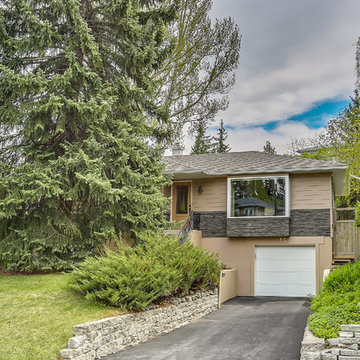
 Steven Hill - Calgary Real Estate
Head To Head Negotiations Gets Results For Happy Sellers:
When I was introduced to Steven Hill, I knew from the minute we met “this was the guy” to represent me. Steven has a very calm, soft approach to his dealing with people, unlike the ego driven who spout their credentials to impress. He listens to understand what the client wants rather than telling them what he wants. He assured me he was confident in his ability to sell my property without over promising and I was skeptical, but boy did he deliver on that promise, and some.
Let’s start with the brochures. Sotheby’s brochures blow everyone else out of the water. A piece of paper, with black and white photos, gets lost in the bottom of a purse, or garbage bin, but a Sotheby’s brochure is a piece of art. Steven’s photographer created fabulous photos that took my breath away when the brochure arrived. My house looked beyond amazing yet true to the property. This alone sets Sotheby’s far above the rest by doing more than photocopying a sheet of paper to leave an impression. Very impressed.
Steven and I corresponded everyday and, after 5 days on the market, we accepted a conditional offer. I was thrilled Steven got the sale price I wanted, so quickly. Unfortunately, we found ourselves in a tense situation when the home inspector found a breach in our sewer line. Immediately I got a quote for the repairs, and was fully prepared to cover the expense, but the buyer’s realtor was insisting on a sizeable holdback. This is where we witnessed Steven’s negotiation skills under pressure. He went head to head with the buyer’s realtor, as the buyers and ourselves stood by and watched. Steven insisted he would not allow his clients to have an open wallet, while the buyer’s realtor pushed harder and harder. Steven never once showed how irritated or upset he was by this realtor’s aggressive nature and, in a calm voice, kept insisting an open wallet was not going to work. This was a little unsettling with three days left to lift the conditions and I wasn’t holding out much hope the deal would close. Things looked grim, but once again Steven’s abilities and strong connections shone through…. he found a back up buyer who presented an offer we could not ignore. Of course, Steven had to bring this to the first buyer’s attention and, to everyone’s surprise, all conditions were lifted and we had a firm sale. Not only did I get my asking price but I no longer had to cover the repair expense. Steven was nothing but brilliant.
I believe somewhere along the way Steven and I became friends. I look forward to a “Hi Jane” text from him that always makes me smile. I thoroughly enjoy his kind, caring, easy going nature and his wicked sense of humor. I like his Porsche too
 Green Gorge Construction
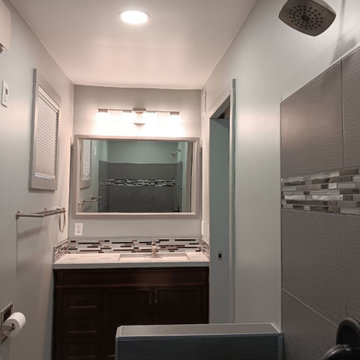
Converting this bare area into a stunning new bathroom was an exciting endeavor. The design features, including a curbless shower with a linear drain, a pocket door, and a pony wall, were thoughtfully implemented to maximize both functionality and aesthetics. Innovative approaches were taken to adapt to the unique layout, with extra care given to ensuring the spacious curbless shower was both practical and visually appealing.
The shower’s design features intricate details, beginning with a stainless-steel linear drain that spans its entire width. This setup accommodates large 12″x24″ tiles and a straight sloped floor, minimizing grout lines and simplifying the cleaning process.
Two shower niches were designed to provide extra storage without clutter. A spacious bench was constructed for comfort, relaxation, and ease of access. A pony wall was added to divide the toilet and shower, eliminating the necessity for a shower curtain. A glass mosaic tile accent band was selected to enhance the aesthetic appeal of the space. Subtle details like edge trim and aligned tile/drywall points contribute to a polished overall appearance.
Our options for vanity selections were somewhat restricted, but we found a mahogany veneer piece on sale at a local big box store that met our requirements perfectly. Given the factory’s light lacquer application and the bathroom’s exposure to humidity and water, I decided to apply two additional coats of lacquer to all exposed wood after a thorough sanding and cleaning.
To achieve a marble-like appearance, we constructed a polished tile countertop and installed an undermount sink for both aesthetics and functionality. After preparing the surface of the sink, I applied an epoxy coating to seamlessly integrate the sink and tile. The same mosaic tile from the shower was used for the backsplash, enhancing the overall luxurious feel. The recessed lighting and vanity bar fixture were connected to a dual dimmer switch for added versatility.
A pocket door featuring latching hardware was installed to maximize space and maintain a sleek appearance. To enhance the sense of openness, a large, full-width mirror was selected. Adequate ventilation was provided by an in-wall fan connected to a standard switch and a programmable humidistat, allowing the fan to activate when humidity levels reached a specified threshold. Additionally, a compact Jeld-Wen window sourced from a local Habitat for Humanity store was fitted with a convenient cordless shade.

 Landry & Arcari Rugs and Carpeting
Michael J. Lee Photography. Custom binding and area rug installation by Landry & Arcari Rugs and Carpeting.
Bedroom - traditional bedroom idea in Boston
Bedroom - traditional bedroom idea in Boston
71