
Search results for "Amusant" in Home Design Ideas
 Envision Web
Stuart Wade, Envision Virtual Tours
The second-largest and most developed of Georgia's barrier islands, St. Simons is approximately twelve miles long and nearly three miles wide at its widest stretch (roughly the size of Manhattan Island in New York). The island is located in Glynn County on Georgia's coast and lies east of Brunswick (the seat of Glynn County), south of Little St. Simons Island and the Hampton River, and north of Jekyll Island. The resort community of Sea Island is separated from St. Simons on the east by the Black Banks River. Known for its oak tree canopies and historic landmarks, St. Simons is both a tourist destination and, according to the 2010 U.S. census, home to 12,743 residents.
Early History
The earliest
St. Simons Island Village
record of human habitation on the island dates to the Late Archaic Period, about 5,000 to 3,000 years ago. Remnants of shell rings left behind by Native Americans from this era survive on many of the barrier islands, including St. Simons. Centuries later, during the period known by historians as the chiefdom era, the Guale Indians established a chiefdom centered on St. Catherines Island and used St. Simons as their hunting and fishing grounds. By 1500 the Guale had established a permanent village of about 200 people on St. Simons, which they called Guadalquini.
Beginning in 1568, the Spanish attempted to create missions along the Georgia coast. Catholic missions were the primary means by which Georgia's indigenous Native American chiefdoms were assimilated into the Spanish colonial system along the northern frontier of greater Spanish Florida. In the 1600s St. Simons became home to two Spanish missions: San Buenaventura de Guadalquini, on the southern tip of the island, and Santo Domingo de Asao (or Asajo), on the northern tip. Located on the inland side of the island were the pagan refugee villages of San Simón, the island's namesake, and Ocotonico. In 1684 pirate raids left the missions and villages largely abandoned.
Colonial History
As
Fort Frederica
early as 1670, with Great Britain's establishment of the colony of Carolina and its expansion into Georgia territory, Spanish rule was threatened by the English. The Georgia coast was considered "debatable land" by England and Spain, even though Spain had fully retreated from St. Simons by 1702. Thirty-one years later General James Edward Oglethorpe founded the English settlement of Savannah. In 1736 he established Fort Frederica, named after the heir to the British throne, Frederick Louis, prince of Wales, on the west side of St. Simons Island to protect Savannah and the Carolinas from the Spanish threat.
Between 1736 and 1749 Fort Frederica was the hub of British military operations along the Georgia frontier. A town of the same name grew up around the fort and was of great importance to the new colony. By 1740 Frederica's population was 1,000. In 1736 the congregation of what would become Christ Church was organized within Fort Frederica as a mission of the Church of England. Charles Wesley led the first services. In 1742 Britain's decisive victory over Spain in the Battle of Bloody Marsh, during the War of Jenkins' Ear, ended the Spanish threat to the Georgia coast. When the British regimen disbanded in 1749, most of the townspeople relocated to the mainland. Fort Frederica went into decline and, except for a short time of prosperity during the 1760s and 1770s under the leadership of merchant James Spalding, never fully recovered. Today the historic citadel's tabby ruins are maintained by the National Park Service.
Plantation Era
By the start of the American Revolution (1775-83), Fort Frederica was obsolete, and St. Simons was left largely uninhabited as most of its residents joined the patriot army. Besides hosting a small Georgia naval victory on the Fort Frederica River, providing guns from its famous fort for use at Fort Morris in Sunbury, and serving as an arena for pillaging by privateers and British soldiers, the island played almost no role in the war.
Following the war, many of the townspeople, their businesses destroyed, turned to agriculture. The island was transformed into fourteen cotton plantations after acres of live oak trees were cleared for farm land and used for building American warships, including the famous USS Constitution, or "Old Ironsides." Although rice was the predominant crop along the neighboring Altamaha River, St. Simons was known for its production of long-staple cotton, which soon came to be known as Sea Island cotton.
Between
Ebos Landing
the 1780s and the outbreak of the Civil War (1861-65), St. Simons's plantation culture flourished. The saline atmosphere and the availability of cheap slave labor proved an ideal combination for the cultivation of Sea Island cotton. In 1803 a group of Ebo slaves who survived the Middle Passage and arrived on the west side of St. Simons staged a rebellion and drowned themselves. The sacred site is known today as Ebos Landing.
One of the largest owners of land and slaves on St. Simons was Pierce Butler, master of Hampton Point Plantation, located on the northern end of the island. By 1793 Butler owned more than 500 slaves, who cultivated 800 acres of cotton on St. Simons and 300 acres of rice on Butler's Island in the Altamaha River delta. Butler's grandson, Pierce Mease Butler, who at the age of sixteen inherited a share of his grandfather's estate in 1826, was responsible for the largest sale of human beings in the history of the United States: in 1859, to restore his squandered fortune, he sold 429 slaves in Savannah for more than $300,000. The British actress and writer Fanny Kemble, whose tumultuous marriage to Pierce ended in divorce in 1849, published an eyewitness account of the evils of slavery on St. Simons in her book Journal of a Residence on a Georgian Plantation in 1838-1839 (1863).
Another
Retreat Plantation
large owner of land and slaves on St. Simons was Major William Page, a friend and employee of Pierce Butler Sr. Before purchasing Retreat Plantation on the southwestern tip of the island in 1804, Page managed the Hampton plantation and Butler's Island. Upon Page's death in 1827, Thomas Butler King inherited the land together with his wife, Page's daughter, Anna Matilda Page King. King expanded his father-in-law's planting empire on St. Simons as well as on the mainland, and by 1835 Retreat Plantation alone was home to as many as 355 slaves.
The center of life during the island's plantation era was Christ Church, Frederica. Organized in 1807 by a group of island planters, the Episcopal church is the second oldest in the Diocese of Georgia. Embargoes imposed by the War of 1812 (1812-15) prevented the parishioners from building a church structure, so they worshiped in the home of John Beck, which stood on the site of Oglethorpe's only St. Simons residence, Orange Hall.
The first Christ Church building, finished on the present site in 1820, was ruined by occupying Union troops during the Civil War. In 1884 the Reverend Anson Dodge Jr. rebuilt the church as a memorial to his first wife, Ellen. The cruciform building with a trussed gothic roof and stained-glass windows remains active today as Christ Church.
Civil War and Beyond
The
St. Simons Island Lighthouse
outbreak of the Civil War in 1861 put a sudden end to St. Simons's lucrative plantation era. In January of that year, Confederate troops were stationed at the south end of the island to guard the entrance to Brunswick Harbor. Slaves from Retreat Plantation, owned by Thomas Butler King, built earthworks and batteries. Plantation residents were scattered—the men joined the Confederate army and their families moved to the mainland. Cannon fire was heard on the island in December 1861, and Confederate troops retreated in February 1862, after dynamiting the lighthouse to keep its beacon from aiding Union troops. Soon thereafter, Union troops occupied the island, which was used as a camp for freed slaves. By August 1862 more than 500 former slaves lived on St. Simons, including Susie King Taylor, who organized a school for freed slave children. But in November the ex-slaves were taken to Hilton Head, South Carolina, and Fernandina, Florida, leaving the island abandoned.
After the Civil War the island never returned to its status as an agricultural community. The plantations lay dormant because there were no slaves to work the fields. After Union general William T. Sherman's January 1865 Special Field Order No. 15 —a demand that former plantations be divided and distributed to former slaves—was overturned by U.S. president Andrew Johnson less than a year later, freedmen and women were forced to work as sharecroppers on the small farms that dotted the land previously occupied by the sprawling plantations.
By
St. Simons Lumber Mills
1870 real economic recovery began with the reestablishment of the timber industry. Norman Dodge and Titus G. Meigs of New York set up lumber mill operations at Gascoigne Bluff, formerly Hamilton Plantation. The lumber mills provided welcome employment for both blacks and whites and also provided mail and passenger boats to the mainland. Such water traffic, together with the construction of a new lighthouse in 1872, designed by architect Charles B. Cluskey, marked the beginning of St. Simons's tourism industry. The keeper of the lighthouse created a small amusement park, which drew many visitors, as did the seemingly miraculous light that traveled from the top of the lighthouse tower to the bottom. The island became a summer retreat for families from the mainland, particularly from Baxley, Brunswick, and Waycross.
The island's resort industry was thriving by the 1880s. Beachfront structures, such as a new pier and grand hotel, were built on the southeastern end of the island and could be accessed by ferry. Around this time wealthy northerners began vacationing on the island.
Twentieth Century
The
St. Simons Island Pier and Village
opening in 1924 of the Brunswick–St. Simons Highway, today known as the Torras Causeway, was a milestone in the development of resorts in the area. St. Simons's beaches were now easily accessible to locals and tourists alike. More than 5,000 automobiles took the short drive from Brunswick to St. Simons via the causeway on its opening day, paving the way for convenient residential and resort development.
In 1926 automotive pioneer Howard Coffin of Detroit, Michigan, bought large tracts of land on St. Simons, including the former Retreat Plantation, and constructed a golf course, yacht club, paved roads, and a residential subdivision. Although the causeway had brought large numbers of summer people to the island, St. Simons remained a small community with only a few hundred permanent residents until the 1940s.
The
St. Simons Island
outbreak of World War II (1941-45) brought more visitors and residents to St. Simons. Troops stationed at Jacksonville, Florida; Savannah; and nearby Camp Stewart took weekend vacations on the island, and a new naval air base and radar school became home to even more officers and soldiers. The increased wartime population brought the island its first public school. With a major shipyard for the production of Liberty ships in nearby Brunswick, the waters of St. Simons became active with German U-boats. In April 1942, just off the coast, the Texas Company oil tanker S. S. Oklahoma and the S. S. Esso Baton Rouge were torpedoed by the Germans, bringing the war very close to home for island residents.
Due in large part to the military's improvement of the island's infrastructure during the war, development on the island boomed in the 1950s and 1960s. More permanent homes and subdivisions were built, and the island was no longer just a summer resort but also a thriving community. In 1950 the Methodist conference and retreat center Epworth by the Sea opened on Gascoigne Bluff. In 1961 novelist Eugenia Price visited St. Simons and began work on her first works of fiction, known as the St. Simons Trilogy. Inspired by real events on the island, Price's trilogy renewed interest in the history of Georgia's coast, and the novelist herself relocated to the island in 1965 and lived there for thirty-one years. St. Simons is also home to contemporary Georgia writer Tina McElroy Ansa.
Since
Epworth by the Sea
1980 St. Simons's population has doubled. The island's continued status as a vacation destination and its ongoing development boom have put historic landmarks and natural areas at risk. While such landmarks as the Fort Frederica ruins and the Battle of Bloody Marsh site are preserved and maintained by the National Park Service, and while the historic lighthouse is maintained by the Coastal Georgia Historical Society, historic Ebos Landing has been taken over by a sewage treatment plant.
Several coastal organizations have formed in recent years to save natural areas on the island. The St. Simons Land Trust, for example, has received donations of large tracts of land and plans to protect property in the island's three traditional African American neighborhoods. Despite its rapid growth and development, St. Simons remains one of the most beautiful and important islands on the Georgia coast.
 Jessica Locas Design
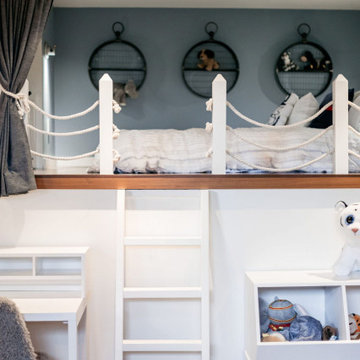
Mezzanine, échelle et rangement amusant.
Fun and decorative bed on mezzanine with toys space near the ladder.
Large minimalist medium tone wood floor bedroom photo in Montreal with gray walls
Large minimalist medium tone wood floor bedroom photo in Montreal with gray walls
 Etheredge Design Associates, Inc.
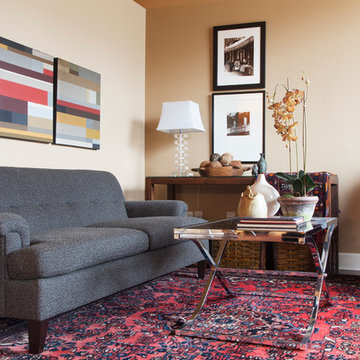
Our challenge was taking a client’s quirky sense of style and making her home into a sophisticated retreat. Working with a limited budget, we guided our young client toward purchases that are contemporary and timeless. Blended with a few antiques, her home has become the envy of her friends. We incorporated unique accent pieces that add style and amusement to her space.
Find the right local pro for your project
 Surface to Surface Interior Design/Construction
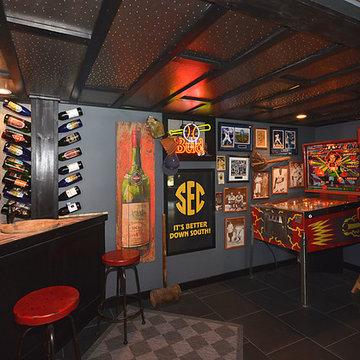
Inspiration for a contemporary basement remodel in Kansas City
 Jackson & Perkins
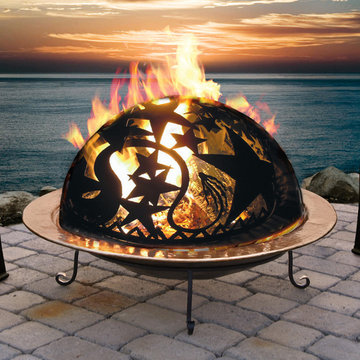
Named for the famous constellation, this star-themed fire screen invites you to gaze at the stars all night while a warming fire burns safely at your feet. Light your porch, patio, or back yard with the warm, romantic light of a real fire, without sending dangerous embers into the air! This alluring FireDome catches screens out embers while casting star-shaped shadows and adding a charming touch to your fire.
Stay warm long after the sun has gone down with this hot, complete set. In addition to the Orion FireDome, this set includes the Fire Pit, Stand, and Dome Lifting Rod--everything you need to safely contain a blazing little fire. The fire pit is made from powder-coated steel and wrought iron for years of durability. This objet d'art will amuse and captivate onlookers while adding a warm ambiance to any outdoor gathering. The handcrafted steel components will endure scorching fires and the trials of the elements for years to come. Dimensions: 27¼" High x 33½" Wide x 27¼" Long. Weight: 34 pounds.
 Boca do Lobo
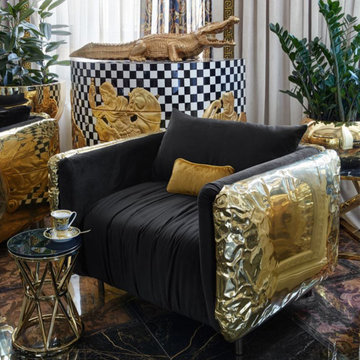
Designed exclusively for the Director of the Royal Circus of Russia, Giya Eradze, the apartment’s interior design was carefully thought by Tatiana Mironova’s experty in American Neoclassical style. The interior designer, who is famous for her glamorous and luxurious interiors, gathered the owner’s passion for entertainment and amusement using Boca do Lobo’s unique and iconic gold accent design to make the living room of the contemporary apartment a circus honor.
 Boca do Lobo
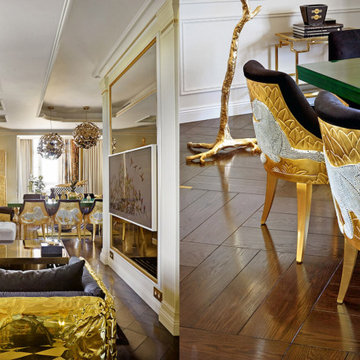
Designed exclusively for the Director of the Royal Circus of Russia, Giya Eradze, the apartment’s interior design was carefully thought by Tatiana Mironova’s experty in American Neoclassical style. The interior designer, who is famous for her glamorous and luxurious interiors, gathered the owner’s passion for entertainment and amusement using Boca do Lobo’s unique and iconic gold accent design to make the living room of the contemporary apartment a circus honor.
 Fama Living Montreal
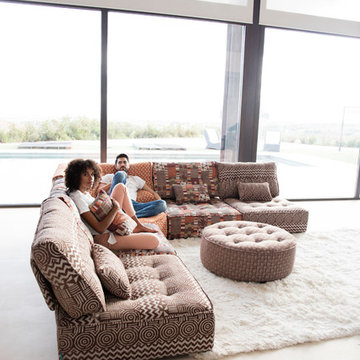
You will fall madly in love with Arianne Love! Our Mah Jong modular sofa is so chic and avant-gard, inspired by the modern sofa from the 60s, that this update version is already a modern icon among contemporary sofas. With endless possibilities to compose the sofa you want, you will have freedom of function and form, and with our exclusive selection of fabrics and leathers, your personalised sofa will be one-of-a-kind; combining different patterns you will achieve a daring and unique concept for your modern and sophisticated sectional.
The modern sofa Arianne Love comes with the following options:
• More than 1000 different combinations of fabrics and colors
• Different possibilities in terms of configuration
• Lifetime warranty on the frame and 10 years warranty on the webbing
• Water cleanable fabrics (Aquaclean Technology)
Arianne Love has a wide number of modules to create the configuration that best suits your living room, your tv room, your family-entertaining space, its versatile style will be perfect at your urban condo or at your chalet. Once you have the ideal layout you will amuse yourself with the choices of colours, textures, prints to express your taste and uniqueness. The seats are deep enough to transform the modern sofa to a comfortable bed just by removing the back cushions, by switching the modules you will be able to create a lounge setting, the multi-purpose puff can help you to achieve the composition that you need, the chaise-longue provides comfort and relaxation and the round-end module gives an organic feeling to your sectional.

 Envision Web
Stuart Wade, Envision Virtual Tours
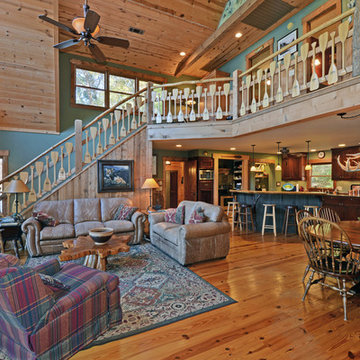
Envision Virtual Tours and High Resolution Photography is your best choice to find just what you are looking for in the Lake Burton Area . Knowing the areas and resources of Lake Burton is our specialty
Lake Burton is a 2,775 acre man-made lake with 62 miles of shoreline located in the northeastern corner of Georgia in Rabun County. It is the first lake in a five-lake series called the Tallulah River Watershed that follows the original course of the Tallulah River. The series of lakes starts with Lake Burton as the northernmost lake followed by Lake Seed, Lake Rabun, Lake Tallulah Falls and the eastern arm of Lake Tugalo (the western arm is formed by the Chattooga River. The lakes are owned and operated by the Georgia Power Company to generate hydroelectric energy for Georgia's largest city, Atlanta. At one time these lakes were the largest producers of electricity in the state of Georgia. Now, they only provide peak power supply.
The lake was built in a deep valley located along a 10 mile section of the Tallulah River. The Lake Burton Dam was closed on December 22, 1919 and the lake started to fill. The dam is a gravity concrete dam, with a height of 128 feet and a span of 1,100 feet. The spillway is equipped with eight gates 22 feet wide by 6.6 feet high. The total capacity at an elevation of 1,866.6 feet is 108,000 acre-ft, of which 106,000 acre-ft is usable storage. The generating capacity of the dam is 6,120 kilowatts (two units).Lake Burton is the highest Georgia Power lake in Georgia.
Lake Burton gets its named from the town of Burton, which was the second largest town in Rabun County with a population of approximately 200 but now lies below the lake's surface. The town (and the lake) was named after local prominent citizen Jeremiah Burton and was situated along the road from Clayton, Georgia to the Nacoochee Valley. Andrew Jackson Ritchie served as the postmaster for the area for several years. Gold was first discovered in Rabun County where Dicks Creek and the Tallulah River come together and was the reason for the town's founding in the early 1800s.
The Lake Burton Fish Hatchery and Moccasin Creek State Park are located on the western side of the lake. Lake Burton is home to several species of fish, including Spotted Bass, Largemouth Bass, White Bass, Black Crappie, Bluegill, Redear Sunfish, White Catfish, Walleye, Brown Trout, Rainbow Trout, and Yellow Perch.
The residents of Lake Burton are a mix of permanent residents and seasonal vacationers who together make-up the Lake Burton Civic Association, a local organization who goal is to maintain the lake through volunteer clean-ups and other such events. Let a Lake Burton resident and expert show you the way
The Lake Burton Civic Association is an active homeowners association for residents of the Lake Burton area and sponsors many events throughout the year such as:
burton, custom, envision, georgia, lake, mountain, nc, north, photography, web, western, Lake Burton, Lake Rabun, Seed Lake,Virtual Tours.
 Fama Living Montreal
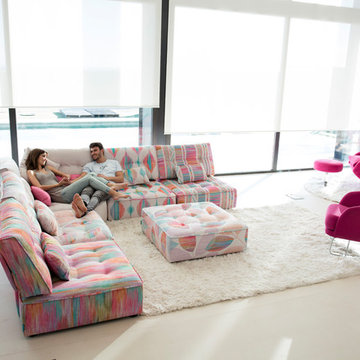
You will fall madly in love with Arianne Love! Our Mah Jong modular sofa is so chic and avant-gard, inspired by the modern sofa from the 60s, that this update version is already a modern icon among contemporary sofas. With endless possibilities to compose the sofa you want, you will have freedom of function and form, and with our exclusive selection of fabrics and leathers, your personalised sofa will be one-of-a-kind; combining different patterns you will achieve a daring and unique concept for your modern and sophisticated sectional.
The modern sofa Arianne Love comes with the following options:
• More than 1000 different combinations of fabrics and colors
• Different possibilities in terms of configuration
• Lifetime warranty on the frame and 10 years warranty on the webbing
• Water cleanable fabrics (Aquaclean Technology)
Arianne Love has a wide number of modules to create the configuration that best suits your living room, your tv room, your family-entertaining space, its versatile style will be perfect at your urban condo or at your chalet. Once you have the ideal layout you will amuse yourself with the choices of colours, textures, prints to express your taste and uniqueness. The seats are deep enough to transform the modern sofa to a comfortable bed just by removing the back cushions, by switching the modules you will be able to create a lounge setting, the multi-purpose puff can help you to achieve the composition that you need, the chaise-longue provides comfort and relaxation and the round-end module gives an organic feeling to your sectional.
 Kansas City Landscape
WATER FEATURE, FOUNTAIN, RAINBARS,
SPRAY RINGS, FLOATING FOUNTAINS
~BAPTISMAL FONT KANSAS CITY
~ARCHITECTURAL PARKING LOT FOUNTAIN KANSAS CITY
~INFINITY EDGE FOUNTAIN KANSAS CITY
~CURRENT WATER FEATURE PROJECT
KANSAS CITY
~FIRE AND WATER FOUNTAINS
KANSAS CITY
~HOSPITAL FOUNTAIN KANSAS CITY
~AMUSEMENT PARK FOUNTAINS
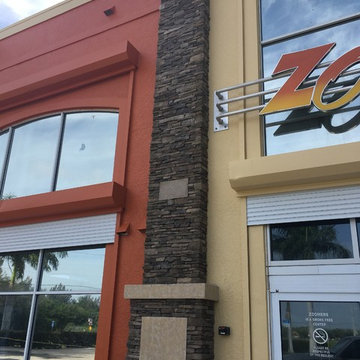
 ACCENT MASONRY LLC
Zoomers Amusement Park Fort Myers
Evan Forsyth
Example of a large beach style two-story stone exterior home design in Miami
Example of a large beach style two-story stone exterior home design in Miami
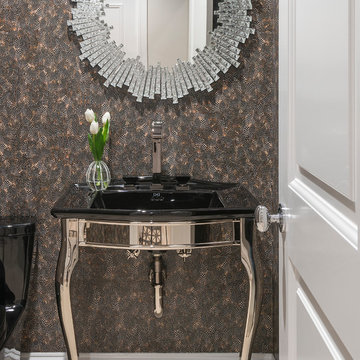
 Plum Interiors
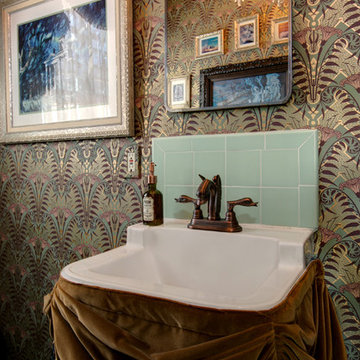
Hen Feather custom Wall covering in this bathroom meant to amuse and enchant guests
Photographer Nat Rea www.natrea.com
Small transitional limestone floor and beige floor bathroom photo in Miami with a two-piece toilet, brown walls and a console sink
Small transitional limestone floor and beige floor bathroom photo in Miami with a two-piece toilet, brown walls and a console sink
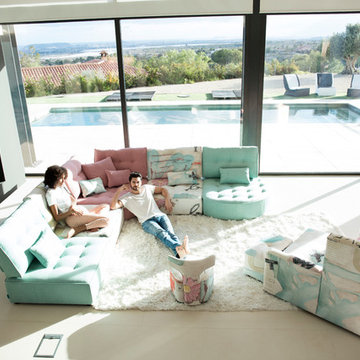 Fama Living Montreal
You will fall madly in love with Arianne Love! Our Mah Jong modular sofa is so chic and avant-gard, inspired by the modern sofa from the 60s, that this update version is already a modern icon among contemporary sofas. With endless possibilities to compose the sofa you want, you will have freedom of function and form, and with our exclusive selection of fabrics and leathers, your personalised sofa will be one-of-a-kind; combining different patterns you will achieve a daring and unique concept for your modern and sophisticated sectional.
The modern sofa Arianne Love comes with the following options:
• More than 1000 different combinations of fabrics and colors
• Different possibilities in terms of configuration
• Lifetime warranty on the frame and 10 years warranty on the webbing
• Water cleanable fabrics (Aquaclean Technology)
Arianne Love has a wide number of modules to create the configuration that best suits your living room, your tv room, your family-entertaining space, its versatile style will be perfect at your urban condo or at your chalet. Once you have the ideal layout you will amuse yourself with the choices of colours, textures, prints to express your taste and uniqueness. The seats are deep enough to transform the modern sofa to a comfortable bed just by removing the back cushions, by switching the modules you will be able to create a lounge setting, the multi-purpose puff can help you to achieve the composition that you need, the chaise-longue provides comfort and relaxation and the round-end module gives an organic feeling to your sectional.
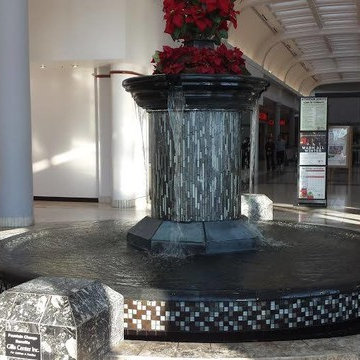 Kansas City Landscape
>
Services
CATEGORIES OF SERVICES
~MEMORIAL FOUNTAINS KANSAS CITY
~ARCHITECTURAL POOL FOUNTAINS
KANSAS CITY
~SPRAY RINGS KANSAS CITY
~FLOATING FOUNTAINS KANSAS CITY
~ARCHITECTURAL FOUNTAINS KANSAS CITY
~INTERACTIVE FOUNTAINS KANSAS CITY
~STATUARY FOUNTAINS KANSAS CITY
~ROCK - BOULDER FOUNTAINS
KANSAS CITY
~WATERWALLS KANSAS CITY
~DISPLAY FOUNTAINS KANSAS CITY
~WATERFALL - FOUNTAINS KANSAS CITY
~RAINBARS AND RAIN CURTAINS
KANSAS CITY
~INTERIOR FOUNTAINS KANSAS CITY
~WATER FEATURE CONSTRUCTION
KANSAS CITY
~WATER FEATURE DESIGN AND
ENGINEERING KANSAS CITY
~CUSTOM FOUNTAIN FABRICATION
KANSAS CITY
-WATER FEATURE, FOUNTAIN, RAINBARS,
SPRAY RINGS, FLOATING FOUNTAINS
~BAPTISMAL FONT KANSAS CITY
~ARCHITECTURAL PARKING LOT FOUNTAIN KANSAS CITY
~INFINITY EDGE FOUNTAIN KANSAS CITY
~CURRENT WATER FEATURE PROJECT
KANSAS CITY
~FIRE AND WATER FOUNTAINS
KANSAS CITY
~HOSPITAL FOUNTAIN KANSAS CITY
~AMUSEMENT PARK FOUNTAINS
KANSAS CITY
~CORPORATE HEADQUARTERS FOUNTAINS KANSAS CITY
~POND FOUNTAIN KANSAS CITY
~RAINBARS *FEATURED ON CURB APPEAL*
KANSAS CITY
~FOUNTAIN PUMPS/PARTS KANSAS CITY
-LAKE MANAGEMENT KANSAS CITY
-POOL CONSTRUCTION KANSAS CITY
-POOL MAINTENANCE AND MANAGEMENT
KANSAS CITY
FOUNTAIN SERVICES KANSAS CITY
Fountain Design and Construction
Tile and Stone Installation
Underwater Fountain Lighting
Plumbing, Filtration and Waterproofing
Regular Fountain Maintenance
Water Feature Integration
Clean Pump Intake Screens
Clean Mechanical/Biological Filter Media
Clean Skimmer Baskets/Strainers
Clean Decorative Spitters, Nozzles, Art Pieces
Brush Interior Fountain Basin
Skim Surface Area to Remove Debris
Fountains - Monitor Water Chemical Levels
Add Water Chemicals as Required
Repair Fountain Equipment as Required
Ponds - Monitor Pond Water Levels
Add Natural Pond Products as Required
Repair Pond Equipment as Required
Evaluate if Replacement Parts are Needed (example: filter media pads, light bulbs)
Test Fountain/Pond Electrical & Lighting
 User
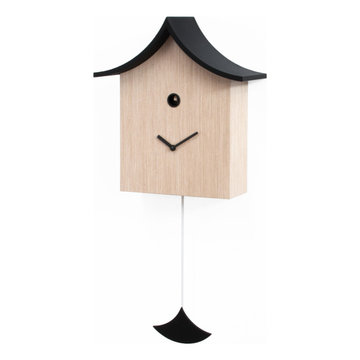
UserThe compositional symmetries of Chinese architecture relive with Ku Ku Kina, a wall or table cuckoo clock. A play on words, and on shapes, which gives a nod to elongated oriental profiles, capable of combining straight and slender lines and curved, amusing and harmonious appendages. Made of painted wood, the particularity is in the roof which recalls Chinese architecture giving the cuckoo clock a particular aspect, refined but without excesses. A decorative piece that makes itself noted, of character and elegance, ideal for both classic and contemporary homes. Battery quartz movement.
 Custom Wine Cellars San Francisco
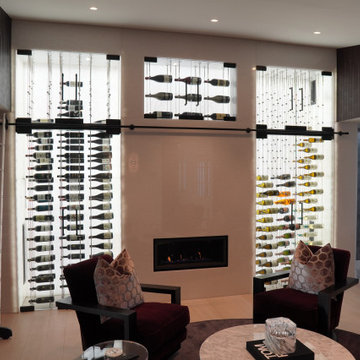
The most subtle yet powerful innovation in this wine cellar are the LED light walls. Apart from the puk lights installed on the ceiling, the walls were also fitted with LED panels concealed behind luxurious alabaster panels. It's amusing to see the wine cellar upclose because you also get to clearly see the effect the light has on the alabaster panels.
Learn more about this project here: https://www.customwinecellarssanfrancisco.com/wine-cellar-innovations-marina-district/
Custom Wine Cellars San Francisco
610 Leavenworth St.,
San Francisco, CA 94109
+1 (415) 508 - 8419
https://www.customwinecellarssanfrancisco.com/
 Good Directions, Inc.
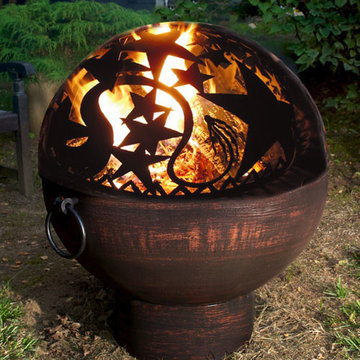
The sun may go down, but the warmth continues with our FireDome - the hottest product to hit the patio for as long as we can remember. The FireDome offers a unique take on outdoor entertaining, marrying form and function in an object of art that will amuse, delight, and add warm ambience to any outdoor gathering. Our Oversized Fire Bowls are a dramatic conversation piece for the patio or deck that provide a brilliant glow, and heat up any outdoor gathering! They're great for roasting marshmallows, too! The FireDome features a built-in Spark Screen; enjoy a captivating blaze in added safety! They're handcrafted of the finest material with exacting workmanship to withstand the elements

11