
Search results for "Apply equalization" in Home Design Ideas
 Best Home Renovations
James Jordan Photography
Home design - mid-sized contemporary kids' white tile and porcelain tile porcelain tile home design idea in Chicago with raised-panel cabinets, dark wood cabinets, a two-piece toilet, gray walls, an undermount sink and marble countertops
Home design - mid-sized contemporary kids' white tile and porcelain tile porcelain tile home design idea in Chicago with raised-panel cabinets, dark wood cabinets, a two-piece toilet, gray walls, an undermount sink and marble countertops

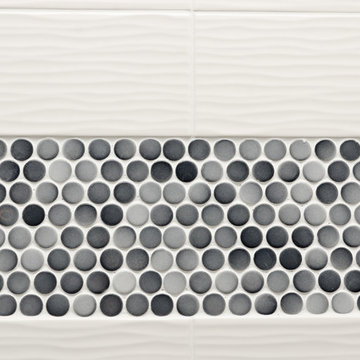
 MEC
*Get any pattern resized or recolored to better fit your unique requirements. MEC offers free customization and alteration on all mosaic patterns.
**AddTek mosaic render is visually similar but may have slight variations due to factors like; textural diversity in mosaic tesserae and light conditions.
See the full collection here: http://www.mecartworks.com/pixl/introduction

Find the right local pro for your project
 Board & Vellum
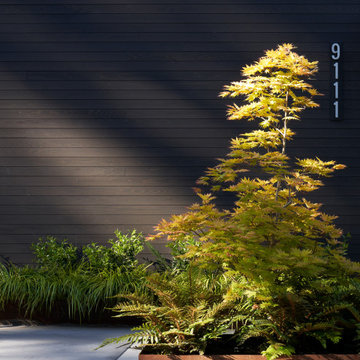
Landscape at Makai House | Photo by Kevin Scott
This is an example of a large asian partial sun wood fence walkway in Seattle.
This is an example of a large asian partial sun wood fence walkway in Seattle.



Sponsored
Columbus, OH
Free consultation for landscape design!

Peabody Landscape Group
Columbus' Reliable Landscape Design & Contracting
 Jeid Studio
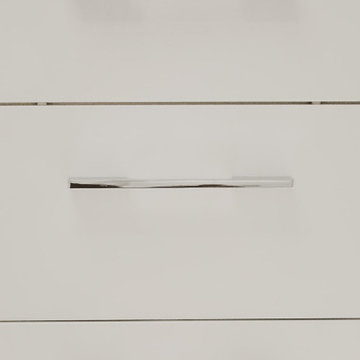
Flat panel cabinet drawers in Clive painted soft white with slim polished chrome bar pulls.



 Stephanie Wilson
Elegant white linen draperies hang from wooden rods in a chocolate finish with clear crystal finials.
Example of a classic bedroom design in Austin
Example of a classic bedroom design in Austin

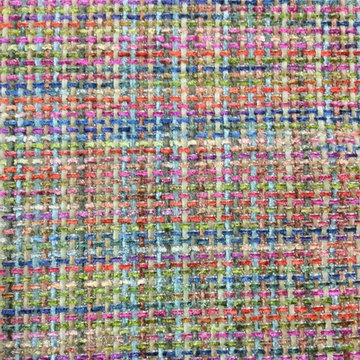
 Jon Allen Fine Metal Art
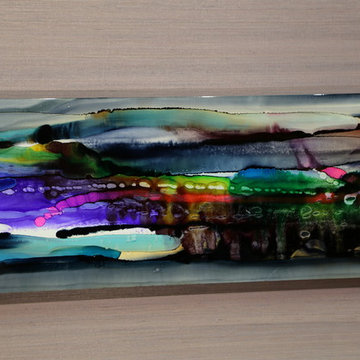
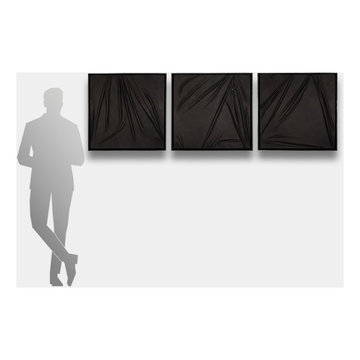
JAC 140 - Twilight in Space by Jon Allen
The Jon Allen Collection is an exclusive, hand-selected group of my most personal work to date. Each piece is hand-painted on aluminum. My art itself and my chosen medium, aluminum, are blissfully married. You may not think of the word organic when you hear the word metal, but this is some of my most organic art and that’s simply because metal allows my work to achieve true sentience. Aluminum’s naturally reflective nature enables each color, shape, and stroke to reach its full potential. A new aspect of the painting will reveal itself to you as it basks in the light that surrounds, evades, or envelops it in that moment. When you see the piece from different angles, you will appreciate how vibrant, dynamic, and environmentally influenced these pieces are. What you may see and feel by morning is not what you’ll see or feel by dusk and in many ways, and as such I feel these pieces capture the ever-ebbing and complex nature of human emotion and perception.
Some of these pieces are truly abstract while others are modern takes on traditional landscapes, marine life, and portraits. I hope you enjoy them a fraction of how much I enjoyed creating them. If you have any questions, please don’t hesitate to reach out.
Number of Pieces: 1
Dimensions: 46" x 13" x 2" off the wall
Care & Cleaning: Clean with a soft cloth and plain soap & water
Other Features: Hardware is pre-installed for simple hanging and art will “float” 2” off the wall
Sponsored
Columbus, OH
Free consultation for landscape design!
Peabody Landscape Group
Columbus' Reliable Landscape Design & Contracting






 Neumann & Rudy Architecture
**I. Spatial Composition & Architectural Volume**
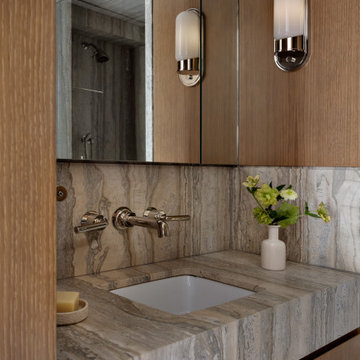
The image frames a primary bathroom vanity zone through a deliberately compressed aperture — the vertical edge of a rift-sawn oak door jamb occupying the left third of the frame, functioning as a proscenium that stages the composition beyond. This device establishes a layered sightline sequence: foreground threshold, mid-ground vanity plane, and a tertiary reflected depth revealed in the mirrored cabinetry, where a travertine-clad shower enclosure and polished nickel showerhead appear as a spatial echo. The result is an interior that reads as considerably more expansive than its actual footprint, a classic strategy of volumetric borrowing through specular surfaces.
Architecturally, the wall is resolved as a single continuous joinery composition — a full-height run of flush-fronted oak millwork with mirrored upper cabinet fronts, articulated only by hairline reveals rather than applied hardware or framing. This shadow-gap detailing establishes rhythm through negation, allowing the plane to remain monolithic while acknowledging its constituent modules. The vanity itself is conceived as a solid stone monolith, a thick-slab plinth with a generous mitred apron that cantilevers over recessed oak drawer fronts below, the base set back to create a shadowed float line. Geometry throughout is orthogonal and rectilinear: the square undermount basin, the deck's stepped perimeter, the horizontal datum of the backsplash terminating precisely at the mirror's lower edge. The only curvilinear intrusions are the capsule-form sconces and the ceramic vessel, deliberate soft counterpoints within an otherwise strictly Cartesian field.
**II. Materiality, Color & Texture**
The palette is a study in tonal adjacency rather than contrast — a restrained duet of oak and veined stone, held within a narrow chromatic band of taupe, greige, and warm sand. The joinery appears to be quarter- or rift-sawn white oak in a matte, open-grain finish, its tight vertical figure reading as a subtle striation that lends verticality and tactile warmth without pattern-making. Against this, the stone — a silver travertine or vein-cut quartzite with pronounced linear striation — provides the composition's dominant graphic energy. Crucially, the fabricator has book-matched and continued the veining from backsplash to deck to apron, so the stone's fluvial banding reads as a single geological event rather than assembled panels. This vein-matching is the project's most consequential craft decision.
Textural interplay is calibrated across three registers: the low-sheen absorbency of the oak, the honed, slightly chalky matte of the stone, and the high-specularity of polished nickel fittings. The wall-mounted lever taps and spout, with their crisp escutcheons and knurl-free tapered levers, introduce a jewel-like precision — cool-toned metal against warm mineral. The white porcelain basin functions as a chromatic pause, the palette's only true neutral. Accent moments are equally disciplined: a ribbed ceramic soap dish holding a block of butter-yellow soap, and a matte bone-white bottle vase carrying hellebores in acid-green — a single saturated note that activates the surrounding earth tones through complementary tension.
**III. Lighting, Atmosphere & Style Profile**
Natural light enters obliquely and is largely inferred rather than depicted: a soft, diffuse wash across the upper mirror and a pale ceiling plane glimpsed in reflection suggest a clerestory or adjacent glazing beyond the frame. The primary illumination is architectural and task-oriented — two opal glass capsule sconces in polished nickel, surface-mounted directly to the mirrored fronts. Their pill-shaped diffusers emit a soft, omnidirectional glow that flatters skin tones and, critically, provides cross-lighting at facial height rather than the unflattering top-down wash of downlights. The reflected sconce in the mirror doubles the light count perceptually, reinforcing the sense of symmetry and depth. Shadow is used compositionally: the recessed toe of the vanity, the reveal lines in the joinery, and the raking light across the stone's striation all rely on controlled darkness to describe form.
The resulting atmosphere is one of hushed, tactile luxury — sensory rather than declarative. Stylistically, the project sits within a contemporary Warm Minimalism, inflected with the material gravity of Milanese modernism and traces of a Japandi sensibility in its reverence for grain, joinery reveals, and the studied placement of a single floral gesture. There is nothing decorative in the additive sense; ornament is entirely subsumed into material and detail. The design's authority derives from restraint and fabrication rigor — the mitre, the reveal, the vein-match — positioning it as a mature exercise in what might be called quiet monumentality: a small room made consequential through the discipline of its surfaces.

 Wine Cellar Specialists
The custom wine racks we utilized were crafted from mahogany; a sturdy wood, with minimum odor and a beautiful hue.
As pictured in the wine cellar renderings, X-bin and individual bottle wine racks comprise a great deal of this storage space. A horizontal display rack can also be seen, to the bottom left.
You can also see the curved racking. It creates a smooth transition from one wall to another.
Learn more about the whole project: http://www.winecellarspec.com/custom-wine-cellars-seattle-washington-reynolds/
Wine Cellar Specialists
+1 (773) 234-0112
info@winecellarspec.com
See what other people say about us: https://www.google.com/search?q=Wine+Cellar+Specialists&ludocid=8538802152238743744#lrd=0x0:0x767feb51238800c0,1
83