
Search results for "Average monthly" in Home Design Ideas
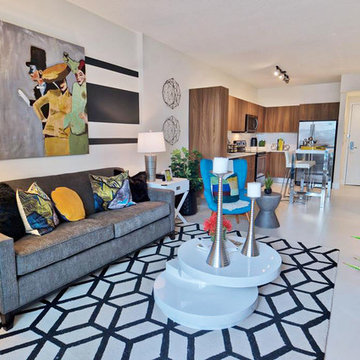
 Beasley & Henley Interior Design
 The Fitzgerald is a $60 million mid-rise apartment project with 300 units in eight stories and ground-floor retail near its entrance along Kennedy Boulevard. Apartment rent is expected to average just under $2,000 a month. The Beasley & Henley Interior Design team is creating the interiors based on an Art Deco-inspired theme.
“For this gorgeous project we are creating fresh interior details, with furnishings that are comfortably hip and elegant, and an atmosphere that is energetic and fun, “
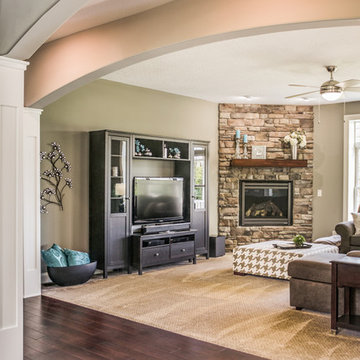
 Charis Homes
This 5,505 sq. ft. home is a Department of Energy Zero Energy Ready Home featuring 4 bedrooms and 4 baths. It has been awarded the 2016 Housing Innovation Award. It has a Home Energy Rating Score of 31 and averages $193 a month for ALL utilities.
Key Features
• High-performance insulation system for enhanced quiet and comfort
• Comprehensive draft protection
• Fresh air system for cleaner, healthier indoor air
• High-efficiency comfort system
• High-efficiency appliances and advanced lighting technology for energy and water savings
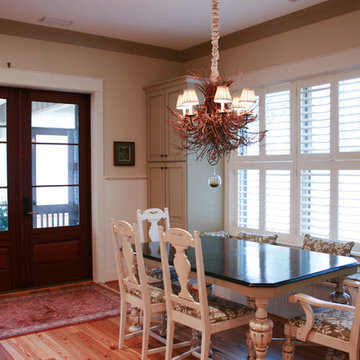
 Bob Chatham Custom Home Design
The overall goal of this project was to build a house that was congruent with Fairhope's traditional cottage-style designs and was structurally certified to withstand a Category 5 Hurricane. The owners also wanted to incorporate the most energy efficient HVAC, lighting and appliances available in order to have a truly energy efficient home. In addition to the reclaimed pine from the lot, the floors throughout the house and upstairs garage apartment are 1850 heart pine reclaimed from beams from a Kentucky textile mill and were milled locally. The finished home has exceeded the design and energy efficiency goals. The 3200 sq. ft. home averages less than $100 per month in electricity costs. In addition, the home and garage have a 20KW GE natural gas generator that provides full operation in the event of any power outage.
Find the right local pro for your project
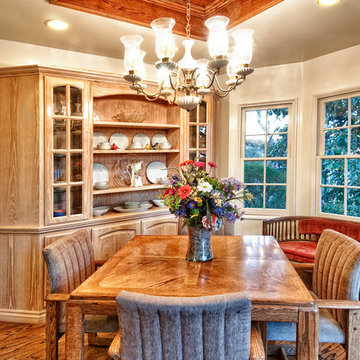
 The Boutique Real Estate Group
In the hills of La Habra Heights sits this large 4 bedroom, 4 bathroom house with an office that could also be a 5th bedroom. The detached 2 car garage has an attached mother in law unit with a bedroom and bathroom. Sitting on the peak of Pinto Drive you have views in many directions. On a clear day you have views all the way out to Catalina Island. The home has a large master bedroom and master bath with walk-in closet. The land is primarily flat with a large open area that is gently sloping. This home has lots of outdoor sitting spaces for relaxing and enjoying the views. As an added bonus, this property averaged $1000/month in oil royalties for 2012.
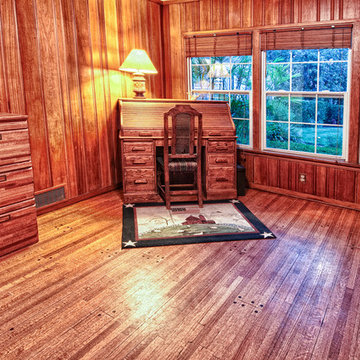 The Boutique Real Estate Group
In the hills of La Habra Heights sits this large 4 bedroom, 4 bathroom house with an office that could also be a 5th bedroom. The detached 2 car garage has an attached mother in law unit with a bedroom and bathroom. Sitting on the peak of Pinto Drive you have views in many directions. On a clear day you have views all the way out to Catalina Island. The home has a large master bedroom and master bath with walk-in closet. The land is primarily flat with a large open area that is gently sloping. This home has lots of outdoor sitting spaces for relaxing and enjoying the views. As an added bonus, this property averaged $1000/month in oil royalties for 2012.
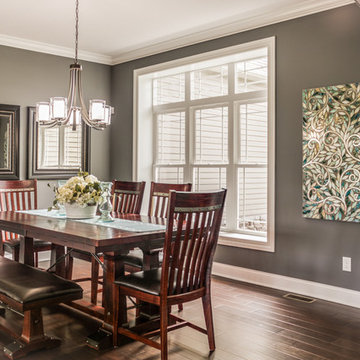 Charis Homes
This 5,505 sq. ft. home is a Department of Energy Zero Energy Ready Home featuring 4 bedrooms and 4 baths. It has been awarded the 2016 Housing Innovation Award. It has a Home Energy Rating Score of 31 and averages $193 a month for ALL utilities.
Key Features
• High-performance insulation system for enhanced quiet and comfort
• Comprehensive draft protection
• Fresh air system for cleaner, healthier indoor air
• High-efficiency comfort system
• High-efficiency appliances and advanced lighting technology for energy and water savings
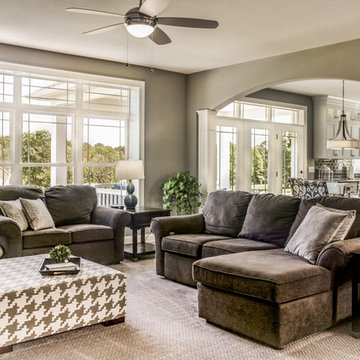 Charis Homes
This 5,505 sq. ft. home is a Department of Energy Zero Energy Ready Home featuring 4 bedrooms and 4 baths. It has been awarded the 2016 Housing Innovation Award. It has a Home Energy Rating Score of 31 and averages $193 a month for ALL utilities.
Key Features
• High-performance insulation system for enhanced quiet and comfort
• Comprehensive draft protection
• Fresh air system for cleaner, healthier indoor air
• High-efficiency comfort system
• High-efficiency appliances and advanced lighting technology for energy and water savings
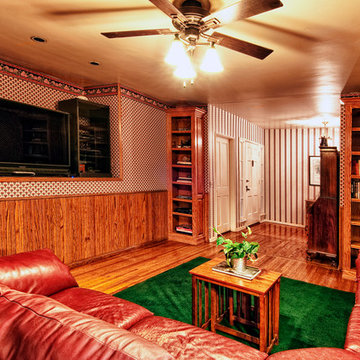 The Boutique Real Estate Group
In the hills of La Habra Heights sits this large 4 bedroom, 4 bathroom house with an office that could also be a 5th bedroom. The detached 2 car garage has an attached mother in law unit with a bedroom and bathroom. Sitting on the peak of Pinto Drive you have views in many directions. On a clear day you have views all the way out to Catalina Island. The home has a large master bedroom and master bath with walk-in closet. The land is primarily flat with a large open area that is gently sloping. This home has lots of outdoor sitting spaces for relaxing and enjoying the views. As an added bonus, this property averaged $1000/month in oil royalties for 2012.
 SunPower Builders
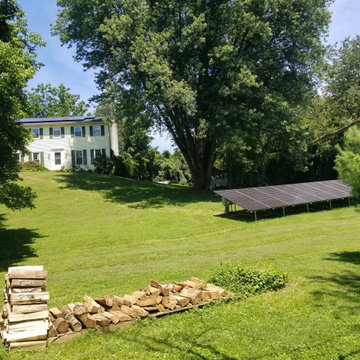
Trees and slopes, oh my! Discover how we designed an effective solar system on this shaded and rolling property that not only exceeds production estimates but maintains the aesthetics and beauty of this gorgeous home and landscape.
We work hard to get our customers what they want. This project required 44 modules. The roof area was constrained by trees, and the ground was constrained by a steep slope, property line setbacks. Additionally, we did not want to interrupt the views from the house across this lovely country property and into the woods.
Our solution, split the system up by using approx. 1/3rd of the modules on the roof with microinverters (due to shade possibilities), and the remaining 2/3rds on the ground. We kept the ground array at a low slope* to better conceal it from view. It was remarkably successful and has been exceeding production estimates.
*Tilt or slope of an array is not nearly as critical as orientation. 42*, roughly equal to our latitude, is good for a better average monthly production. A steeper slope will give you increased winter production, and a lower slope will give you greater summer production, which is really the best choice.
Why? The ideal angle of incidence at which the sun hits a module is 90*. At our latitude, on winter solstice Dec.21st, the sun is roughly 22.5* degrees above the horizon. At summer solstice it is approximately 70* above the horizon. Therefore, when the days are longer in the summer, a lower sloped array will be closer to 90* to the sun, and since the days are longer, the collection time is greatly increased.
 Charis Homes
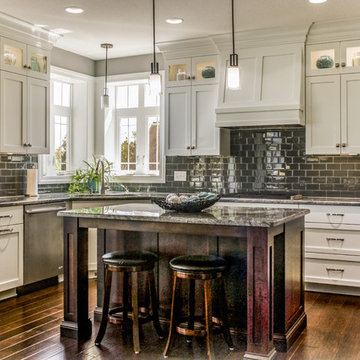
This 5,505 sq. ft. home is a Department of Energy Zero Energy Ready Home featuring 4 bedrooms and 4 baths. It has been awarded the 2016 Housing Innovation Award. It has a Home Energy Rating Score of 31 and averages $193 a month for ALL utilities.
Key Features
• High-performance insulation system for enhanced quiet and comfort
• Comprehensive draft protection
• Fresh air system for cleaner, healthier indoor air
• High-efficiency comfort system
• High-efficiency appliances and advanced lighting technology for energy and water savings

 safe ZOnea
If you’re active on GardenWeb sharing plant photos, asking for advice, tracking seasonal progress you already understand how much detail goes into gardening. Soil pH, rainfall, emerging leaves, bloom counts, fertilizer schedules it adds up fast. But all that rich information often remains buried in posts, lists or memory. What if you could visualize that data and turn it into clear quick insights? That’s where a graph maker becomes a game-changer for your gardening workflow.
1. Why garden data belongs on a graph
On GardenWeb, you’ll find forums for everything from perennial care, vegetable gardening, patios, herbs, even cooking and craft projects. While plant lovers share observations and ask questions, many track progress manually in spreadsheets or memory. A graph maker flips that around:
Instead of a list of numbers (e.g., “Soil test: pH 6.4 in May, 6.1 in October”), you get a line graph showing the decline over time.
Instead of guessing which plant bloomed most, you see a bar chart comparing counts across plants.
Instead of manually calculating average rainfall effect, you plot scatter points of bloom count vs. rainfall.
By turning your data into visuals, you’re not just recording—you’re analysing, learning and improving. For GardenWeb users this means smarter decisions: Which fertilizer actually improves bloom count? Which shady spot recovers slower? A graph maker gives clarity.
2. What is a graph maker and how to use one
A graph maker is a web tool or software that lets you input raw data (numbers, dates, categories) and output visual charts like line graphs, bar charts, scatter plots, etc. It might allow you to import a spreadsheet, select chart type, customize colours, label axes, and export the image for your blog, forum post or personal log.
Here’s how you could apply it for gardening:
Log blooms per week for each rose plant.
Using the graph maker, choose line graph to track changes over weeks.
Label your y-axis “Number of Blooms”, x-axis “Week of Year”.
Add colour lines for each plant for easy comparison.
Export as PNG and embed it in a GardenWeb forum post: “See bloom trend for my ‘Peace’ vs ‘Knock Out’ roses”.
This isn’t just pretty-to-look-at: it makes the trend obvious, invites discussion (“Hey, your ‘Knock Out’ line dips after week 28—what changed?”) and helps you refine your routine.
3. Use these specific scenarios on GardenWeb
A. Soil pH and plant health tracking
After multiple tests you have pH values over time and bloom results. Upload both datasets into the graph maker, produce a dual-axis line graph: soil pH on one axis, bloom count on the other. Post your findings in the “Soil, Fertility & Nutrients” forum and get feedback.
B. Seasonal pest or disease appearance
Record number of aphids spotted each month and whether you used treatment. A bar chart via the graph maker can show pre- and post-treatment figures. Then ask the “Insect & Disease Control” forum for advice based on your visual data.
C. Yield comparison between varieties
You grow two zucchini varieties. You keep weekly yield in pounds. Use the graph maker for a side-by-side bar chart. Share in the “Vegetable Gardening” forum: “Which was better this year? See the chart”.
D. Rainfall vs growth rate
You log weekly rainfall and growth (in cm) of your tomato plants. Use scatter plot in graph maker. If a pattern emerges, you’re ready to post: “Is my growth plateau due to drought? Chart shows a clear correlation.”
4. Why this elevates your GardenWeb contributions
When you post with a chart made by a graph maker, you’re doing more than asking or showing off. You’re investigating. You’re analysing. You invite the community to give feedback on data, not just anecdotes. That elevates the discussion. Instead of “My plant died, any ideas?” you post “See this graph of pH drop and bloom count—what might be the limiting factor?” High-quality visuals raise your post’s value and garner more thoughtful responses.
Plus, your posts become useful references for others: someone else can say, “Cool graphic, can you share your data sheet?” You build credibility and help the forum become a learning hub—not just a Q&A board.
5. Tips for using a graph maker effectively in the GardenWeb context
Keep it simple: One chart, one insight. Don’t overcrowd.
Label clearly: Titles, axis labels, units (e.g., cm/week, mg/L, °F).
Use readable colours: Avoid faint tones that vanish on mobile.
Annotate when needed: Add notes like “Fertiliser switched week 12” or “Shade cloth added”.
Provide context in your post: Don’t leave the chart alone—write a few sentences explaining what it shows and what you’re seeking.
Embed carefully: Make sure your image displays properly in GardenWeb; check mobile view.
Share raw data: If possible link to your spreadsheet so others can replicate or comment.
Be open to feedback: The chart invites questions; embrace them.
6. Possible pitfalls and how to avoid them
Bad data = bad chart: If your measurements aren’t consistent, your graph will mislead. Use standardized data collection.
Too much complexity: Multi-axis charts, too many variables—confusing. Stick to one or two variables.
Overlooking mobile viewers: Many GardenWeb users browse via phones. Use large fonts and simple visuals.
Ignoring the narrative: Chart alone won’t answer. Explain what it means and what you need.
Outdated charts: If you update your data annually, keep your visuals current or label them clearly as “2024 data”.
7. Final thoughts
On GardenWeb you’ll find a vibrant community of gardeners, DIYers, cooks and design lovers.Using a graph maker for your posts and progress turns your experience from casual hobby-logging into smart data-driven gardening. You’ll not only learn more—your peers will learn more, too.
So next time you log your plant growth, record your yield, test your soil or track pests—don’t just note it. Plot it. Use a graph maker. Share it in the forum. Let your garden tell the story, and let the community help you write the next chapter.
 Charis Homes
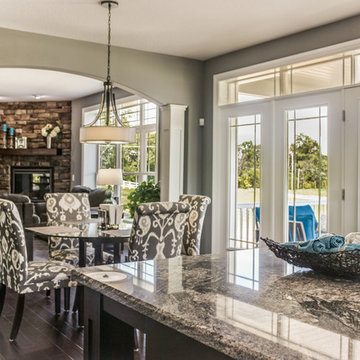
This 5,505 sq. ft. home is a Department of Energy Zero Energy Ready Home featuring 4 bedrooms and 4 baths. It has been awarded the 2016 Housing Innovation Award. It has a Home Energy Rating Score of 31 and averages $193 a month for ALL utilities.
Key Features
• High-performance insulation system for enhanced quiet and comfort
• Comprehensive draft protection
• Fresh air system for cleaner, healthier indoor air
• High-efficiency comfort system
• High-efficiency appliances and advanced lighting technology for energy and water savings
 The Boutique Real Estate Group
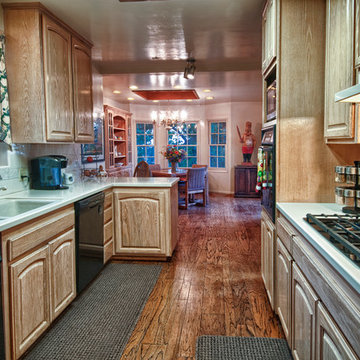
In the hills of La Habra Heights sits this large 4 bedroom, 4 bathroom house with an office that could also be a 5th bedroom. The detached 2 car garage has an attached mother in law unit with a bedroom and bathroom. Sitting on the peak of Pinto Drive you have views in many directions. On a clear day you have views all the way out to Catalina Island. The home has a large master bedroom and master bath with walk-in closet. The land is primarily flat with a large open area that is gently sloping. This home has lots of outdoor sitting spaces for relaxing and enjoying the views. As an added bonus, this property averaged $1000/month in oil royalties for 2012.
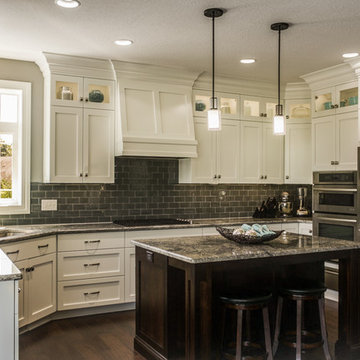 Charis Homes
This 5,505 sq. ft. home is a Department of Energy Zero Energy Ready Home featuring 4 bedrooms and 4 baths. It has been awarded the 2016 Housing Innovation Award. It has a Home Energy Rating Score of 31 and averages $193 a month for ALL utilities.
Key Features
• High-performance insulation system for enhanced quiet and comfort
• Comprehensive draft protection
• Fresh air system for cleaner, healthier indoor air
• High-efficiency comfort system
• High-efficiency appliances and advanced lighting technology for energy and water savings
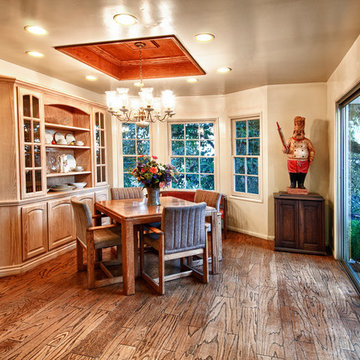 The Boutique Real Estate Group
In the hills of La Habra Heights sits this large 4 bedroom, 4 bathroom house with an office that could also be a 5th bedroom. The detached 2 car garage has an attached mother in law unit with a bedroom and bathroom. Sitting on the peak of Pinto Drive you have views in many directions. On a clear day you have views all the way out to Catalina Island. The home has a large master bedroom and master bath with walk-in closet. The land is primarily flat with a large open area that is gently sloping. This home has lots of outdoor sitting spaces for relaxing and enjoying the views. As an added bonus, this property averaged $1000/month in oil royalties for 2012.
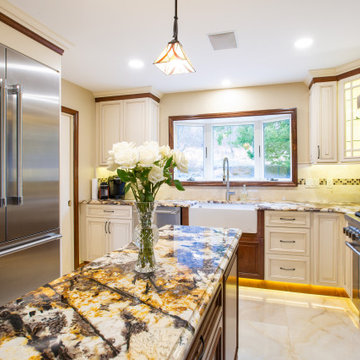
 Designer Appliances
This kitchen was transformed in only 6 weeks compared to the average 6 months. The homeowners were able to schedule contractors, My House Kitchen and appliance deliveries to meet their short time span, including bumping out the back wall of the kitchen to give them more space to entertain. In general they wanted more counter space, a heavy duty range for cooking, a bar area and a multipurpose speed oven for everyday tasks. The all stainless steel appliance package compliments the kitchen style as well as the custom toe kick accent lighting.
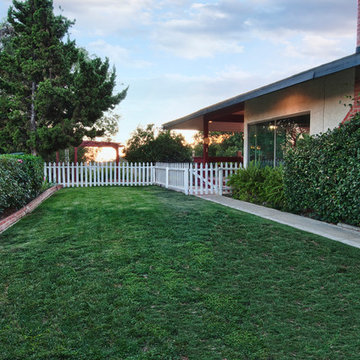 The Boutique Real Estate Group
In the hills of La Habra Heights sits this large 4 bedroom, 4 bathroom house with an office that could also be a 5th bedroom. The detached 2 car garage has an attached mother in law unit with a bedroom and bathroom. Sitting on the peak of Pinto Drive you have views in many directions. On a clear day you have views all the way out to Catalina Island. The home has a large master bedroom and master bath with walk-in closet. The land is primarily flat with a large open area that is gently sloping. This home has lots of outdoor sitting spaces for relaxing and enjoying the views. As an added bonus, this property averaged $1000/month in oil royalties for 2012.

 Sherry Frederick Interior Designs & Co
Here’s what some people may refer to as the “fun part” of a redesign—picking out all the pretty stuff. First, choose your appliances. Many higher-end brands such as Sub-Zero and Wolf currently have a lead time of six to 12 months due to COVID. The cabinets, which have a shorter lead time of eight to 12 weeks on average, says Frederick, will then be built around them. From there, you’ll work with your designer to solidify all the details, such as cabinet door style, countertop material, decorative hardware, fixtures, flooring, backsplash and the sink.
“This is the stage where you finalize the design and prepare final floor plans, elevations, details and, if applicable, mechanical and electrical drawings, lighting switch plans and exterior elevations,” says Terrill. It’s essentially an extension of step No. 4, except here you’re confirming all the details and making sure everything is going as scheduled. For example, at this point your builder will give the interior designers a schedule so the designer can make sure everything (such as the countertop marble) is on-site and ready for installation.
Assuming you’re changing the footprint of the kitchen, you’ll need to figure out specific details as they pertain to the construction, our designers note, such as:
How will the construction team remove debris? With a dumpster or will they keep it in your garage or yard?
Will there be a staging area for cutting wood and tile?
When will you need to be out of the house, and for how long?
Where can crew members use the bathroom?
Can/should the crew work on weekends and if so, during what hours?
Keep in mind too that certain requests might require more money, such as having the crew clean-up their dusty mess daily rather than, say, once a week.
 The Boutique Real Estate Group
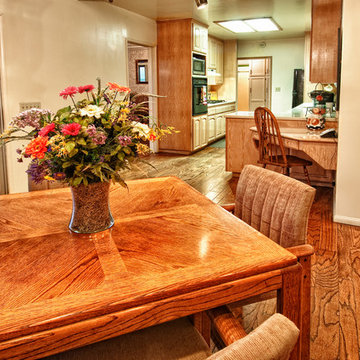
In the hills of La Habra Heights sits this large 4 bedroom, 4 bathroom house with an office that could also be a 5th bedroom. The detached 2 car garage has an attached mother in law unit with a bedroom and bathroom. Sitting on the peak of Pinto Drive you have views in many directions. On a clear day you have views all the way out to Catalina Island. The home has a large master bedroom and master bath with walk-in closet. The land is primarily flat with a large open area that is gently sloping. This home has lots of outdoor sitting spaces for relaxing and enjoying the views. As an added bonus, this property averaged $1000/month in oil royalties for 2012.
 The Boutique Real Estate Group
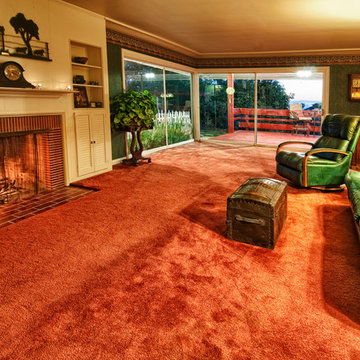
In the hills of La Habra Heights sits this large 4 bedroom, 4 bathroom house with an office that could also be a 5th bedroom. The detached 2 car garage has an attached mother in law unit with a bedroom and bathroom. Sitting on the peak of Pinto Drive you have views in many directions. On a clear day you have views all the way out to Catalina Island. The home has a large master bedroom and master bath with walk-in closet. The land is primarily flat with a large open area that is gently sloping. This home has lots of outdoor sitting spaces for relaxing and enjoying the views. As an added bonus, this property averaged $1000/month in oil royalties for 2012.
7