
Search results for "Background movement" in Home Design Ideas
 Rocky Tops Granite & Marble LLC
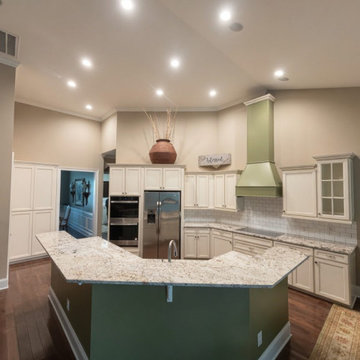
This kitchen in Lexington came together in BSI Zurich granite, and it's the kind of stone that does a lot of the work in a room just by sitting there. Zurich has a cool gray background with movement that breaks up into darker flecks and softer crystal patches, so it reads calm from across the room but keeps your eye busy up close. That range makes it easy to live with next to most cabinet colors, whether the boxes are painted white, a soft gray, or a warmer wood tone.
Granite like this is quarried in big blocks and cut into slabs, and no two slabs come out exactly the same. That's part of why we template each kitchen on site instead of working off a generic plan. We measure the actual cabinets, account for the sink and cooktop cutouts, and lay out the slabs so the veining and pattern flow the way they should across the island and the runs of counter, especially where two pieces meet at a seam. Getting that seam tight and matched so it disappears into the pattern takes a steady hand and slabs picked with the layout in mind from the start.
Granite is one of the toughest countertop materials you can put in a kitchen. It shrugs off hot pans, resists scratching from everyday knife work, and holds up to the kind of daily traffic a real kitchen sees, dishes, coffee, kids doing homework at the island, all of it. It does need to be sealed, and staying on top of that keeps it looking like day one for years. We finished this one with an eased edge, clean and simple, which is the right call for a stone with this much going on in the surface. It doesn't need extra shaping to look finished.
Lexington's seen a lot of kitchens go through updates like this one, and granite remains a favorite around the Midlands because it holds up to how people actually cook and live. This Zurich kitchen is a good example of why: a stone with real character, installed tight and clean, that's going to keep earning its keep for a long time.
 Rocky Tops Granite & Marble LLC
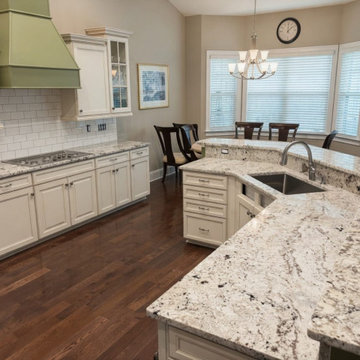
This kitchen in Lexington came together in BSI Zurich granite, and it's the kind of stone that does a lot of the work in a room just by sitting there. Zurich has a cool gray background with movement that breaks up into darker flecks and softer crystal patches, so it reads calm from across the room but keeps your eye busy up close. That range makes it easy to live with next to most cabinet colors, whether the boxes are painted white, a soft gray, or a warmer wood tone.
Granite like this is quarried in big blocks and cut into slabs, and no two slabs come out exactly the same. That's part of why we template each kitchen on site instead of working off a generic plan. We measure the actual cabinets, account for the sink and cooktop cutouts, and lay out the slabs so the veining and pattern flow the way they should across the island and the runs of counter, especially where two pieces meet at a seam. Getting that seam tight and matched so it disappears into the pattern takes a steady hand and slabs picked with the layout in mind from the start.
Granite is one of the toughest countertop materials you can put in a kitchen. It shrugs off hot pans, resists scratching from everyday knife work, and holds up to the kind of daily traffic a real kitchen sees, dishes, coffee, kids doing homework at the island, all of it. It does need to be sealed, and staying on top of that keeps it looking like day one for years. We finished this one with an eased edge, clean and simple, which is the right call for a stone with this much going on in the surface. It doesn't need extra shaping to look finished.
Lexington's seen a lot of kitchens go through updates like this one, and granite remains a favorite around the Midlands because it holds up to how people actually cook and live. This Zurich kitchen is a good example of why: a stone with real character, installed tight and clean, that's going to keep earning its keep for a long time.
 Efesus Stone
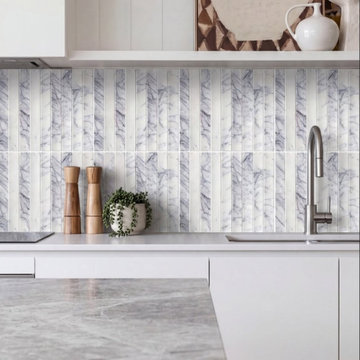
Lilac Marble Kit Kat Mosaic brings the elegant character of natural stone into contemporary kitchen interiors. Featuring a bright white background enriched with distinctive lilac, violet and soft grey veining, this marble mosaic creates a refined and visually striking backsplash. Its slim, vertically arranged Kit Kat pieces add rhythm, height and a modern architectural appearance to the wall surface.
The elongated mosaic format highlights the natural movement of Lilac Marble while creating a clean and balanced composition. It pairs beautifully with white, cream, grey and wood-toned kitchen cabinets, as well as stainless steel, brass or black fixtures. The subtle contrast between the white base and purple-grey veins makes it suitable for minimalist, modern and luxurious interiors.
Lilac Marble Kit Kat Mosaic can be used for kitchen backsplashes, bathroom walls, shower areas, vanity surrounds, feature walls, niches, bar fronts and decorative interior panels. Mesh-mounted sheets allow easier installation and help maintain consistent spacing between individual pieces. Custom dimensions, patterns and surface finishes can also be produced according to project requirements.
Available finishes may include polished, honed or other project-specific options. Since Lilac Marble is a natural material, variations in colour, veining and pattern are expected. These natural differences give every mosaic application a distinctive and authentic appearance.
Efesus Stone by Reisoğlu Mermer provides precision cutting, CNC processing, waterjet cutting, surface finishing and custom fabrication services. With natural stone experience dating back to 1943, we supply Lilac Marble mosaics and project-specific stone solutions for residential, commercial and hospitality developments worldwide.
Find the right local pro for your project
 Rocky Tops Granite & Marble LLC
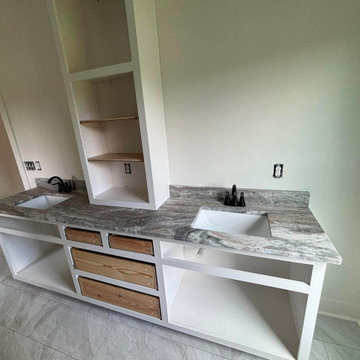
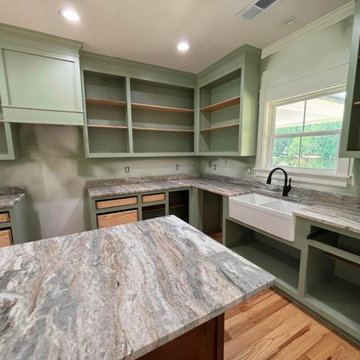
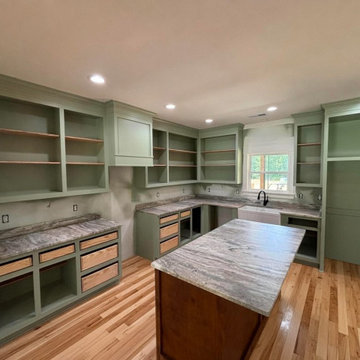
This one covered the whole house, or close to it. A kitchen and the bathrooms all done in Fantasy Brown dolomite with a leathered finish, out near Orangeburg. The photos catch it mid-install with Lowe's floor protection still down, so you can see the tops going in before the space gets dressed up. There's an island, a farmhouse apron sink, some open shelving, and undermount bowls in the baths. It's the kind of job we like, where one stone carries through the whole home and ties everything together.
Fantasy Brown is a dolomite, and that matters. People see the soft browns and grays and the flowing veins and assume it's a marble, but dolomite sits a step harder and holds up better in a working kitchen. The movement in it runs long and watery, brown and taupe drifting through a lighter background. No two slabs are the same, so a big part of the job is laying out the material and deciding which piece goes where. On the island we want the veining to feel like it belongs, and across a corner we do our best to keep the flow moving instead of stopping cold at the seam.
The farmhouse apron sink is where the extra work shows. That kind of sink needs the front edge of the stone cut just right, and the reveal has to be even the whole way across. The undermount bowls in the bathrooms get polished on the inside edge so there's nothing rough to catch on. We template tight, cut to the template, and set the seams where they're least likely to bother you. An eased edge keeps it simple and easy to wipe down, which fits a house that's actually lived in.
Dolomite likes to be sealed and it likes to be wiped up after acidic things like lemon or wine, but treated with a little sense it wears beautifully for years. It takes heat better than a lot of people expect, though we still say use a trivet. In a kitchen and baths that get daily use, it's a stone that looks high-end without being fussy to the point of stress.
Orangeburg's a bit of a drive for us, but we go where the work is, and this was a repeat customer we think a lot of. Running the same dolomite through the kitchen and the bathrooms gave the whole place one voice. That's the payoff on a job like this, one material, careful layout, and a finish that reads the same room to room.
 Rocky Tops Granite & Marble LLC
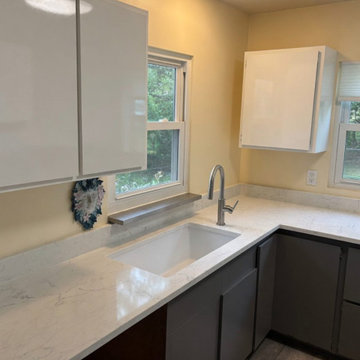
We put MSI Calacatta Aidana quartz into a kitchen out in Hopkins, and it's the kind of stone that changes how a room feels the day it goes in. Aidana's got that bright white background with soft veining moving through it, the kind of pattern that reads clean and calm from across the room but still has movement when you get up close to it. For a kitchen that gets used every day, that's exactly what you want. It doesn't compete with cabinets or fight the light coming through the windows, it just sits there looking good year after year.
Quartz like this is engineered, so the slabs come off the line consistent. That matters more than people think when you're templating a kitchen with a lot of linear footage, corners, and a sink cutout to deal with. We're not chasing a wild vein across a seam or hoping two slabs happen to match. The veining in Aidana is soft enough that seams disappear into the field instead of announcing themselves, and that's a craftsmanship thing as much as a material thing. Getting a seam tight and a pattern lined up right takes patience at the saw and patience setting it, not just a good slab to start with.
The kitchen itself got the full treatment, counters and an eased edge, which is the right call for a stone with this kind of quiet pattern. An eased edge keeps the eye on the surface and the veining instead of on the edge detail, and it's a practical choice too, it holds up well and doesn't chip the way a sharper profile can over time.
Day to day, this is a stone that just works. Quartz doesn't need sealing, it resists staining better than natural stone, and it shrugs off the usual kitchen abuse, knives set down too hard, hot pans set too close, kids leaning on the counter doing homework. It's a surface built for a family that actually cooks and lives in the space rather than one that's roped off for company.
Hopkins has been getting more of these kitchen jobs lately, and it's easy to see why homeowners out that way keep landing on Calacatta Aidana. It's a stone that photographs well and lives even better, bright and clean without being cold, and it gives a kitchen that finished, put-together look the moment you walk in.
 Rocky Tops Granite & Marble LLC
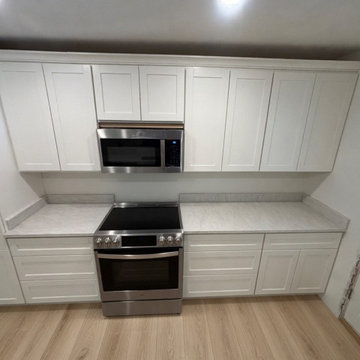
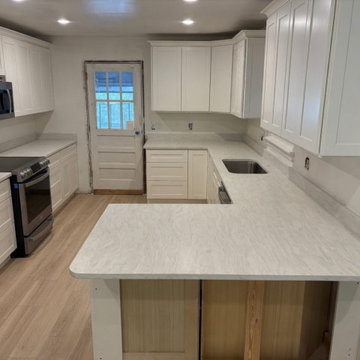
We put BSI Vernazza Matte quartz into a kitchen in Columbia, and it's the kind of stone that works quiet in a room. Matte quartz doesn't throw light around the way a polished slab does, it settles into a kitchen and lets the cabinets and the fixtures do some of the talking. Vernazza's got a soft background with movement that reads more like natural stone than a lot of engineered material does, and that matte finish takes the glare off without taking the depth out of it.
Quartz like this comes off the line consistent, which matters more than people think once you get into fabrication. We're not chasing a wild vein across a seam or hoping a cutout doesn't land on something funny in the pattern. That consistency lets us focus on the parts that actually take skill, tight seams at the island, a clean line where two pieces meet at a corner, getting the overhang right for seating if that's part of the layout. Templating is still templating no matter how forgiving the material is. We measure twice, we dry fit, and we don't cut until we're sure.
Day to day this stone's built for a working kitchen. Engineered quartz doesn't need sealing, it's non-porous out of the box, so spills from wine or oil or tomato sauce wipe up without soaking in and staining. It holds up to knives and daily wear better than people expect, and the matte finish actually hides light scratching and fingerprints better than a glossy top does. Heat's the one thing we always tell folks to respect, quartz can take a hot pan for a second but a trivet is still the smart move over time.
We kept the edge eased, simple and clean, the kind of detail that doesn't fight with the stone for attention. Columbia's got a lot of kitchens getting this kind of update lately, and a quartz like Vernazza Matte fits right into that Midlands style, practical, good looking, built to actually get used. It's the kind of job that doesn't need a lot of extra dressing up because the material's doing the work.
 Rocky Tops Granite & Marble LLC
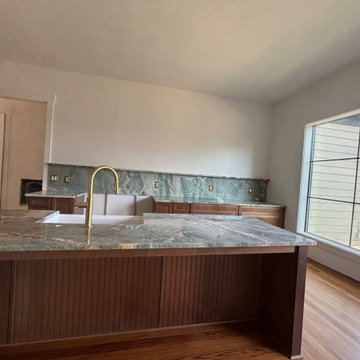
Tiffany Crystal quartzite is one of those stones that earns its keep in a kitchen. It's got that cool, crystalline background, whites and grays moving quietly across the surface with enough sparkle in the light to keep it from feeling flat. It reads clean and bright without going stark, which is why it works so well in a kitchen where people actually cook and gather, not just admire counters from across the room.
Quartzite is real stone, not engineered, so it comes with natural hardness that holds up to daily kitchen abuse. It resists scratching and handles heat well, though we still tell folks to use a trivet, because no counter needs a hot pan set straight on it just to prove a point. Sealing it right after install and keeping up with it over the years keeps the surface performing the way it should, and Tiffany Crystal takes a seal well because of its tight, dense structure.
Fabricating a slab like this takes some care in the layout. We spend real time bookmatching and dry-fitting pieces so the movement in the stone flows across seams instead of fighting itself at the corners. On a kitchen island or a run of perimeter counters, getting that continuity right is what separates a good installation from one that just gets the measurements correct. We kept the edge eased here, which is the right call on a stone with this much personality. It doesn't need extra shaping to draw the eye, the stone's already doing that work.
Day to day, this is a kitchen counter that's going to live hard and look good doing it. Quartzite shrugs off knife marks, stands up to acidic spills, and cleans up with regular dish soap and water. It's the kind of surface you stop babying after the first few months because it simply holds up.
Jobs like this one in Lexington are what we like seeing come through the shop. It's a straightforward kitchen application done with a stone that's got real depth to it, installed by people who care about how the seams and the veining line up when the job's done. That's the kind of work that keeps the Midlands trade honest.
 Rocky Tops Granite & Marble LLC
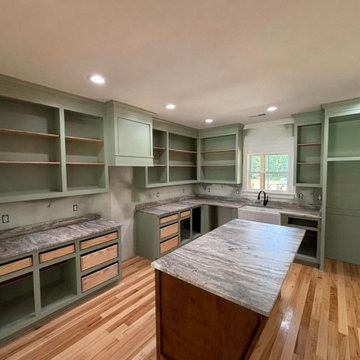
This one covered the whole house, or close to it. A kitchen and the bathrooms all done in Fantasy Brown dolomite with a leathered finish, out near Orangeburg. The photos catch it mid-install with Lowe's floor protection still down, so you can see the tops going in before the space gets dressed up. There's an island, a farmhouse apron sink, some open shelving, and undermount bowls in the baths. It's the kind of job we like, where one stone carries through the whole home and ties everything together.
Fantasy Brown is a dolomite, and that matters. People see the soft browns and grays and the flowing veins and assume it's a marble, but dolomite sits a step harder and holds up better in a working kitchen. The movement in it runs long and watery, brown and taupe drifting through a lighter background. No two slabs are the same, so a big part of the job is laying out the material and deciding which piece goes where. On the island we want the veining to feel like it belongs, and across a corner we do our best to keep the flow moving instead of stopping cold at the seam.
The farmhouse apron sink is where the extra work shows. That kind of sink needs the front edge of the stone cut just right, and the reveal has to be even the whole way across. The undermount bowls in the bathrooms get polished on the inside edge so there's nothing rough to catch on. We template tight, cut to the template, and set the seams where they're least likely to bother you. An eased edge keeps it simple and easy to wipe down, which fits a house that's actually lived in.
Dolomite likes to be sealed and it likes to be wiped up after acidic things like lemon or wine, but treated with a little sense it wears beautifully for years. It takes heat better than a lot of people expect, though we still say use a trivet. In a kitchen and baths that get daily use, it's a stone that looks high-end without being fussy to the point of stress.
Orangeburg's a bit of a drive for us, but we go where the work is, and this was a repeat customer we think a lot of. Running the same dolomite through the kitchen and the bathrooms gave the whole place one voice. That's the payoff on a job like this, one material, careful layout, and a finish that reads the same room to room.
 Rocky Tops Granite & Marble LLC
This one covered the whole house, or close to it. A kitchen and the bathrooms all done in Fantasy Brown dolomite with a leathered finish, out near Orangeburg. The photos catch it mid-install with Lowe's floor protection still down, so you can see the tops going in before the space gets dressed up. There's an island, a farmhouse apron sink, some open shelving, and undermount bowls in the baths. It's the kind of job we like, where one stone carries through the whole home and ties everything together.
Fantasy Brown is a dolomite, and that matters. People see the soft browns and grays and the flowing veins and assume it's a marble, but dolomite sits a step harder and holds up better in a working kitchen. The movement in it runs long and watery, brown and taupe drifting through a lighter background. No two slabs are the same, so a big part of the job is laying out the material and deciding which piece goes where. On the island we want the veining to feel like it belongs, and across a corner we do our best to keep the flow moving instead of stopping cold at the seam.
The farmhouse apron sink is where the extra work shows. That kind of sink needs the front edge of the stone cut just right, and the reveal has to be even the whole way across. The undermount bowls in the bathrooms get polished on the inside edge so there's nothing rough to catch on. We template tight, cut to the template, and set the seams where they're least likely to bother you. An eased edge keeps it simple and easy to wipe down, which fits a house that's actually lived in.
Dolomite likes to be sealed and it likes to be wiped up after acidic things like lemon or wine, but treated with a little sense it wears beautifully for years. It takes heat better than a lot of people expect, though we still say use a trivet. In a kitchen and baths that get daily use, it's a stone that looks high-end without being fussy to the point of stress.
Orangeburg's a bit of a drive for us, but we go where the work is, and this was a repeat customer we think a lot of. Running the same dolomite through the kitchen and the bathrooms gave the whole place one voice. That's the payoff on a job like this, one material, careful layout, and a finish that reads the same room to room.
 Rocky Tops Granite & Marble LLC
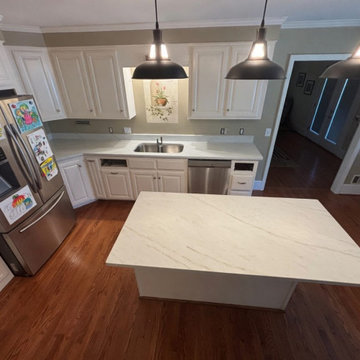
Spectrum Quartz Splendid went into this kitchen in West Columbia, and it's the kind of stone that does a lot of the work in a room without shouting about it. It's an engineered quartz, so what you're looking at is a mix of ground quartz and resin, pressed and cured until it's hard, dense, and consistent from one end of the slab to the other. The background reads soft and light, with a scatter of movement through it that keeps the surface from looking flat under kitchen lighting.
We templated the counters the way we do every job, laser measuring the base cabinets so the slabs come back from the shop cut to the exact lines of that kitchen. With quartz, that precision matters a lot, because the pattern repeats in a controlled way and you can plan your layout and your seams instead of chasing anything. That's part of why quartz suits a working kitchen so well. What you see in the showroom is what you get on the counter, corner to corner, with the pattern lining up the way it should.
Day to day, this material is about as forgiving as it gets. It doesn't need sealing, ever, because it's non-porous straight out of the fabrication shop. Wine, coffee, tomato sauce, none of it soaks in if you wipe it up in a reasonable time. It stands up to knives and daily wear better than most kitchen surfaces, though we still tell folks to use a trivet, since quartz doesn't love direct heat from a hot pan sitting right on it. Scratches aren't something you have to worry about with normal use in a busy kitchen.
We set the counters with an eased edge, clean and simple, which is what most of our customers land on once they see it doesn't take anything away from the stone itself.
Jobs like this one are what keep us busy across the Midlands. West Columbia kitchens see a lot of quartz these days, and Spectrum Quartz Splendid is a slab that holds up to real cooking and real family life while still looking sharp enough to notice the first time you walk into the room.
 Rocky Tops Granite & Marble LLC
We put BSI Vernazza Matte quartz into a kitchen in Columbia, and it's the kind of stone that works quiet in a room. Matte quartz doesn't throw light around the way a polished slab does, it settles into a kitchen and lets the cabinets and the fixtures do some of the talking. Vernazza's got a soft background with movement that reads more like natural stone than a lot of engineered material does, and that matte finish takes the glare off without taking the depth out of it.
Quartz like this comes off the line consistent, which matters more than people think once you get into fabrication. We're not chasing a wild vein across a seam or hoping a cutout doesn't land on something funny in the pattern. That consistency lets us focus on the parts that actually take skill, tight seams at the island, a clean line where two pieces meet at a corner, getting the overhang right for seating if that's part of the layout. Templating is still templating no matter how forgiving the material is. We measure twice, we dry fit, and we don't cut until we're sure.
Day to day this stone's built for a working kitchen. Engineered quartz doesn't need sealing, it's non-porous out of the box, so spills from wine or oil or tomato sauce wipe up without soaking in and staining. It holds up to knives and daily wear better than people expect, and the matte finish actually hides light scratching and fingerprints better than a glossy top does. Heat's the one thing we always tell folks to respect, quartz can take a hot pan for a second but a trivet is still the smart move over time.
We kept the edge eased, simple and clean, the kind of detail that doesn't fight with the stone for attention. Columbia's got a lot of kitchens getting this kind of update lately, and a quartz like Vernazza Matte fits right into that Midlands style, practical, good looking, built to actually get used. It's the kind of job that doesn't need a lot of extra dressing up because the material's doing the work.
 Rocky Tops Granite & Marble LLC
This one covered the whole house, or close to it. A kitchen and the bathrooms all done in Fantasy Brown dolomite with a leathered finish, out near Orangeburg. The photos catch it mid-install with Lowe's floor protection still down, so you can see the tops going in before the space gets dressed up. There's an island, a farmhouse apron sink, some open shelving, and undermount bowls in the baths. It's the kind of job we like, where one stone carries through the whole home and ties everything together.
Fantasy Brown is a dolomite, and that matters. People see the soft browns and grays and the flowing veins and assume it's a marble, but dolomite sits a step harder and holds up better in a working kitchen. The movement in it runs long and watery, brown and taupe drifting through a lighter background. No two slabs are the same, so a big part of the job is laying out the material and deciding which piece goes where. On the island we want the veining to feel like it belongs, and across a corner we do our best to keep the flow moving instead of stopping cold at the seam.
The farmhouse apron sink is where the extra work shows. That kind of sink needs the front edge of the stone cut just right, and the reveal has to be even the whole way across. The undermount bowls in the bathrooms get polished on the inside edge so there's nothing rough to catch on. We template tight, cut to the template, and set the seams where they're least likely to bother you. An eased edge keeps it simple and easy to wipe down, which fits a house that's actually lived in.
Dolomite likes to be sealed and it likes to be wiped up after acidic things like lemon or wine, but treated with a little sense it wears beautifully for years. It takes heat better than a lot of people expect, though we still say use a trivet. In a kitchen and baths that get daily use, it's a stone that looks high-end without being fussy to the point of stress.
Orangeburg's a bit of a drive for us, but we go where the work is, and this was a repeat customer we think a lot of. Running the same dolomite through the kitchen and the bathrooms gave the whole place one voice. That's the payoff on a job like this, one material, careful layout, and a finish that reads the same room to room.
 Rocky Tops Granite & Marble LLC
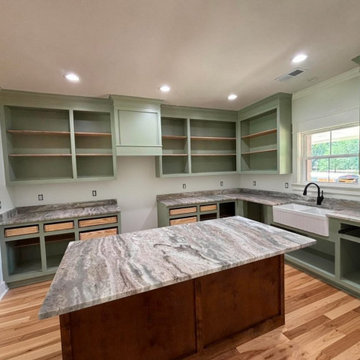
This one covered the whole house, or close to it. A kitchen and the bathrooms all done in Fantasy Brown dolomite with a leathered finish, out near Orangeburg. The photos catch it mid-install with Lowe's floor protection still down, so you can see the tops going in before the space gets dressed up. There's an island, a farmhouse apron sink, some open shelving, and undermount bowls in the baths. It's the kind of job we like, where one stone carries through the whole home and ties everything together.
Fantasy Brown is a dolomite, and that matters. People see the soft browns and grays and the flowing veins and assume it's a marble, but dolomite sits a step harder and holds up better in a working kitchen. The movement in it runs long and watery, brown and taupe drifting through a lighter background. No two slabs are the same, so a big part of the job is laying out the material and deciding which piece goes where. On the island we want the veining to feel like it belongs, and across a corner we do our best to keep the flow moving instead of stopping cold at the seam.
The farmhouse apron sink is where the extra work shows. That kind of sink needs the front edge of the stone cut just right, and the reveal has to be even the whole way across. The undermount bowls in the bathrooms get polished on the inside edge so there's nothing rough to catch on. We template tight, cut to the template, and set the seams where they're least likely to bother you. An eased edge keeps it simple and easy to wipe down, which fits a house that's actually lived in.
Dolomite likes to be sealed and it likes to be wiped up after acidic things like lemon or wine, but treated with a little sense it wears beautifully for years. It takes heat better than a lot of people expect, though we still say use a trivet. In a kitchen and baths that get daily use, it's a stone that looks high-end without being fussy to the point of stress.
Orangeburg's a bit of a drive for us, but we go where the work is, and this was a repeat customer we think a lot of. Running the same dolomite through the kitchen and the bathrooms gave the whole place one voice. That's the payoff on a job like this, one material, careful layout, and a finish that reads the same room to room.
 Rocky Tops Granite & Marble LLC
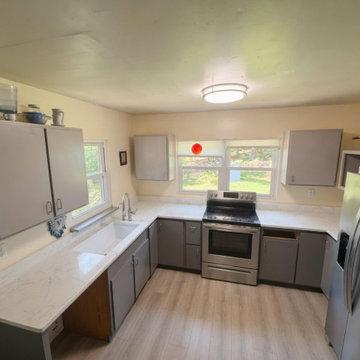
We put MSI Calacatta Aidana quartz into a kitchen out in Hopkins, and it's the kind of stone that changes how a room feels the day it goes in. Aidana's got that bright white background with soft veining moving through it, the kind of pattern that reads clean and calm from across the room but still has movement when you get up close to it. For a kitchen that gets used every day, that's exactly what you want. It doesn't compete with cabinets or fight the light coming through the windows, it just sits there looking good year after year.
Quartz like this is engineered, so the slabs come off the line consistent. That matters more than people think when you're templating a kitchen with a lot of linear footage, corners, and a sink cutout to deal with. We're not chasing a wild vein across a seam or hoping two slabs happen to match. The veining in Aidana is soft enough that seams disappear into the field instead of announcing themselves, and that's a craftsmanship thing as much as a material thing. Getting a seam tight and a pattern lined up right takes patience at the saw and patience setting it, not just a good slab to start with.
The kitchen itself got the full treatment, counters and an eased edge, which is the right call for a stone with this kind of quiet pattern. An eased edge keeps the eye on the surface and the veining instead of on the edge detail, and it's a practical choice too, it holds up well and doesn't chip the way a sharper profile can over time.
Day to day, this is a stone that just works. Quartz doesn't need sealing, it resists staining better than natural stone, and it shrugs off the usual kitchen abuse, knives set down too hard, hot pans set too close, kids leaning on the counter doing homework. It's a surface built for a family that actually cooks and lives in the space rather than one that's roped off for company.
Hopkins has been getting more of these kitchen jobs lately, and it's easy to see why homeowners out that way keep landing on Calacatta Aidana. It's a stone that photographs well and lives even better, bright and clean without being cold, and it gives a kitchen that finished, put-together look the moment you walk in.
 Rocky Tops Granite & Marble LLC
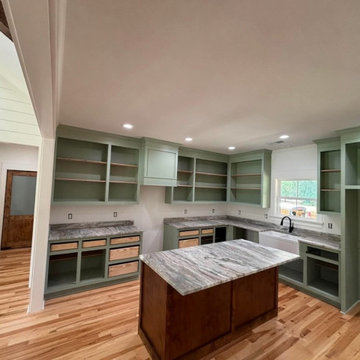
This one covered the whole house, or close to it. A kitchen and the bathrooms all done in Fantasy Brown dolomite with a leathered finish, out near Orangeburg. The photos catch it mid-install with Lowe's floor protection still down, so you can see the tops going in before the space gets dressed up. There's an island, a farmhouse apron sink, some open shelving, and undermount bowls in the baths. It's the kind of job we like, where one stone carries through the whole home and ties everything together.
Fantasy Brown is a dolomite, and that matters. People see the soft browns and grays and the flowing veins and assume it's a marble, but dolomite sits a step harder and holds up better in a working kitchen. The movement in it runs long and watery, brown and taupe drifting through a lighter background. No two slabs are the same, so a big part of the job is laying out the material and deciding which piece goes where. On the island we want the veining to feel like it belongs, and across a corner we do our best to keep the flow moving instead of stopping cold at the seam.
The farmhouse apron sink is where the extra work shows. That kind of sink needs the front edge of the stone cut just right, and the reveal has to be even the whole way across. The undermount bowls in the bathrooms get polished on the inside edge so there's nothing rough to catch on. We template tight, cut to the template, and set the seams where they're least likely to bother you. An eased edge keeps it simple and easy to wipe down, which fits a house that's actually lived in.
Dolomite likes to be sealed and it likes to be wiped up after acidic things like lemon or wine, but treated with a little sense it wears beautifully for years. It takes heat better than a lot of people expect, though we still say use a trivet. In a kitchen and baths that get daily use, it's a stone that looks high-end without being fussy to the point of stress.
Orangeburg's a bit of a drive for us, but we go where the work is, and this was a repeat customer we think a lot of. Running the same dolomite through the kitchen and the bathrooms gave the whole place one voice. That's the payoff on a job like this, one material, careful layout, and a finish that reads the same room to room.
 Rocky Tops Granite & Marble LLC
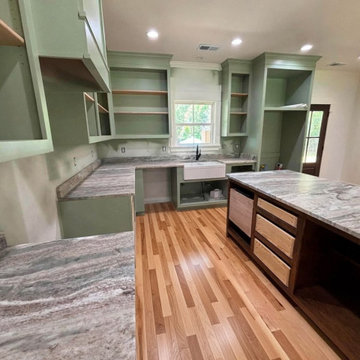
This one covered the whole house, or close to it. A kitchen and the bathrooms all done in Fantasy Brown dolomite with a leathered finish, out near Orangeburg. The photos catch it mid-install with Lowe's floor protection still down, so you can see the tops going in before the space gets dressed up. There's an island, a farmhouse apron sink, some open shelving, and undermount bowls in the baths. It's the kind of job we like, where one stone carries through the whole home and ties everything together.
Fantasy Brown is a dolomite, and that matters. People see the soft browns and grays and the flowing veins and assume it's a marble, but dolomite sits a step harder and holds up better in a working kitchen. The movement in it runs long and watery, brown and taupe drifting through a lighter background. No two slabs are the same, so a big part of the job is laying out the material and deciding which piece goes where. On the island we want the veining to feel like it belongs, and across a corner we do our best to keep the flow moving instead of stopping cold at the seam.
The farmhouse apron sink is where the extra work shows. That kind of sink needs the front edge of the stone cut just right, and the reveal has to be even the whole way across. The undermount bowls in the bathrooms get polished on the inside edge so there's nothing rough to catch on. We template tight, cut to the template, and set the seams where they're least likely to bother you. An eased edge keeps it simple and easy to wipe down, which fits a house that's actually lived in.
Dolomite likes to be sealed and it likes to be wiped up after acidic things like lemon or wine, but treated with a little sense it wears beautifully for years. It takes heat better than a lot of people expect, though we still say use a trivet. In a kitchen and baths that get daily use, it's a stone that looks high-end without being fussy to the point of stress.
Orangeburg's a bit of a drive for us, but we go where the work is, and this was a repeat customer we think a lot of. Running the same dolomite through the kitchen and the bathrooms gave the whole place one voice. That's the payoff on a job like this, one material, careful layout, and a finish that reads the same room to room.
 Rocky Tops Granite & Marble LLC
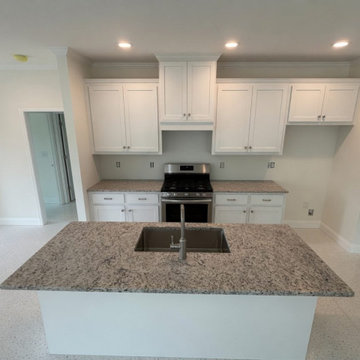
This kitchen in Bamberg came together in Dallas White granite, a stone that reads clean and bright without going stark. The background carries soft grays with subtle movement through it, enough character to keep the eye interested but calm enough to work with just about any cabinet color a builder picks for a spec house like this one. That's part of why it gets used so often in kitchens meant to show well and live well at the same time.
Granite's still one of the best choices you can make for a kitchen countertop, and Dallas White in particular holds up the way granite's supposed to. It's dense, it resists heat, and you can set a hot pan on it without worrying about scorching. Scratches aren't a concern with normal use, and the surface takes a polish that lasts for years. We seal it going in and that's about all the maintenance it ever needs.
Getting a granite slab like this into a kitchen right takes more than just cutting to size. We template the space first to make sure the seams land where they won't draw attention, usually tucked near the sink or stove, and any countertop longer than about 8 to 9 feet is going to need one. Matching the pattern across a seam so it reads as one continuous piece is where the work actually happens. The edge here is eased, a clean, simple line that lets the stone itself do the talking instead of competing with it.
Day to day, this is the kind of countertop that just works. Wipe it down, don't worry about it, and it'll look the same ten years from now as it does today. That durability is exactly what a spec house kitchen needs, something that shows well to a buyer walking through and keeps performing long after they've moved in.
We do a lot of work through the Midlands, and Bamberg jobs like this one are a good example of what granite still does better than almost anything else on the market. It's a straightforward material that never stops earning its keep in a kitchen, and this one turned out exactly the way it should.
 Rocky Tops Granite & Marble LLC
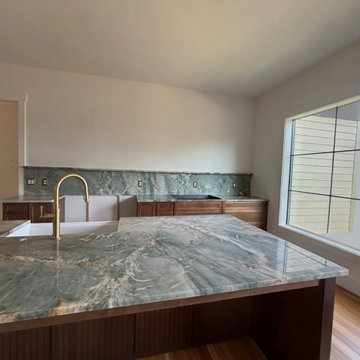
Tiffany Crystal quartzite is one of those stones that earns its keep in a kitchen. It's got that cool, crystalline background, whites and grays moving quietly across the surface with enough sparkle in the light to keep it from feeling flat. It reads clean and bright without going stark, which is why it works so well in a kitchen where people actually cook and gather, not just admire counters from across the room.
Quartzite is real stone, not engineered, so it comes with natural hardness that holds up to daily kitchen abuse. It resists scratching and handles heat well, though we still tell folks to use a trivet, because no counter needs a hot pan set straight on it just to prove a point. Sealing it right after install and keeping up with it over the years keeps the surface performing the way it should, and Tiffany Crystal takes a seal well because of its tight, dense structure.
Fabricating a slab like this takes some care in the layout. We spend real time bookmatching and dry-fitting pieces so the movement in the stone flows across seams instead of fighting itself at the corners. On a kitchen island or a run of perimeter counters, getting that continuity right is what separates a good installation from one that just gets the measurements correct. We kept the edge eased here, which is the right call on a stone with this much personality. It doesn't need extra shaping to draw the eye, the stone's already doing that work.
Day to day, this is a kitchen counter that's going to live hard and look good doing it. Quartzite shrugs off knife marks, stands up to acidic spills, and cleans up with regular dish soap and water. It's the kind of surface you stop babying after the first few months because it simply holds up.
Jobs like this one in Lexington are what we like seeing come through the shop. It's a straightforward kitchen application done with a stone that's got real depth to it, installed by people who care about how the seams and the veining line up when the job's done. That's the kind of work that keeps the Midlands trade honest.
 Rocky Tops Granite & Marble LLC
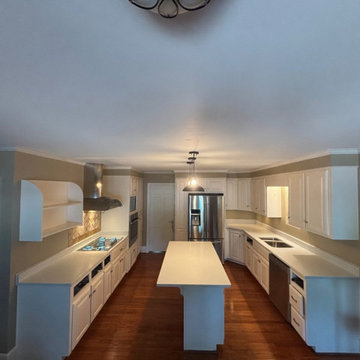
Spectrum Quartz Splendid went into this kitchen in West Columbia, and it's the kind of stone that does a lot of the work in a room without shouting about it. It's an engineered quartz, so what you're looking at is a mix of ground quartz and resin, pressed and cured until it's hard, dense, and consistent from one end of the slab to the other. The background reads soft and light, with a scatter of movement through it that keeps the surface from looking flat under kitchen lighting.
We templated the counters the way we do every job, laser measuring the base cabinets so the slabs come back from the shop cut to the exact lines of that kitchen. With quartz, that precision matters a lot, because the pattern repeats in a controlled way and you can plan your layout and your seams instead of chasing anything. That's part of why quartz suits a working kitchen so well. What you see in the showroom is what you get on the counter, corner to corner, with the pattern lining up the way it should.
Day to day, this material is about as forgiving as it gets. It doesn't need sealing, ever, because it's non-porous straight out of the fabrication shop. Wine, coffee, tomato sauce, none of it soaks in if you wipe it up in a reasonable time. It stands up to knives and daily wear better than most kitchen surfaces, though we still tell folks to use a trivet, since quartz doesn't love direct heat from a hot pan sitting right on it. Scratches aren't something you have to worry about with normal use in a busy kitchen.
We set the counters with an eased edge, clean and simple, which is what most of our customers land on once they see it doesn't take anything away from the stone itself.
Jobs like this one are what keep us busy across the Midlands. West Columbia kitchens see a lot of quartz these days, and Spectrum Quartz Splendid is a slab that holds up to real cooking and real family life while still looking sharp enough to notice the first time you walk into the room.
 Rocky Tops Granite & Marble LLC
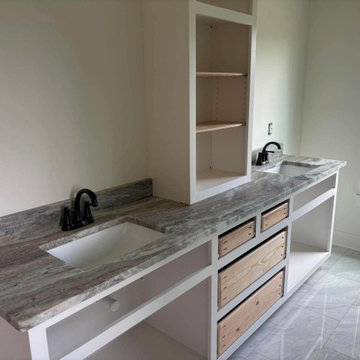
This one covered the whole house, or close to it. A kitchen and the bathrooms all done in Fantasy Brown dolomite with a leathered finish, out near Orangeburg. The photos catch it mid-install with Lowe's floor protection still down, so you can see the tops going in before the space gets dressed up. There's an island, a farmhouse apron sink, some open shelving, and undermount bowls in the baths. It's the kind of job we like, where one stone carries through the whole home and ties everything together.
Fantasy Brown is a dolomite, and that matters. People see the soft browns and grays and the flowing veins and assume it's a marble, but dolomite sits a step harder and holds up better in a working kitchen. The movement in it runs long and watery, brown and taupe drifting through a lighter background. No two slabs are the same, so a big part of the job is laying out the material and deciding which piece goes where. On the island we want the veining to feel like it belongs, and across a corner we do our best to keep the flow moving instead of stopping cold at the seam.
The farmhouse apron sink is where the extra work shows. That kind of sink needs the front edge of the stone cut just right, and the reveal has to be even the whole way across. The undermount bowls in the bathrooms get polished on the inside edge so there's nothing rough to catch on. We template tight, cut to the template, and set the seams where they're least likely to bother you. An eased edge keeps it simple and easy to wipe down, which fits a house that's actually lived in.
Dolomite likes to be sealed and it likes to be wiped up after acidic things like lemon or wine, but treated with a little sense it wears beautifully for years. It takes heat better than a lot of people expect, though we still say use a trivet. In a kitchen and baths that get daily use, it's a stone that looks high-end without being fussy to the point of stress.
Orangeburg's a bit of a drive for us, but we go where the work is, and this was a repeat customer we think a lot of. Running the same dolomite through the kitchen and the bathrooms gave the whole place one voice. That's the payoff on a job like this, one material, careful layout, and a finish that reads the same room to room.
21