
Search results for "Center professional" in Home Design Ideas

 Robert Thomas Homes
This home is built by Robert Thomas Homes located in Minnesota. Our showcase models are professionally staged. FOR STAGING PRODUCT QUESTIONS please contact Ambiance at Home for information on furniture - 952.440.6757

 Envision Web
Stuart Wade, Envision Virtual Tours
The second-largest and most developed of Georgia's barrier islands, St. Simons is approximately twelve miles long and nearly three miles wide at its widest stretch (roughly the size of Manhattan Island in New York). The island is located in Glynn County on Georgia's coast and lies east of Brunswick (the seat of Glynn County), south of Little St. Simons Island and the Hampton River, and north of Jekyll Island. The resort community of Sea Island is separated from St. Simons on the east by the Black Banks River. Known for its oak tree canopies and historic landmarks, St. Simons is both a tourist destination and, according to the 2010 U.S. census, home to 12,743 residents.
Early History
The earliest
St. Simons Island Village
record of human habitation on the island dates to the Late Archaic Period, about 5,000 to 3,000 years ago. Remnants of shell rings left behind by Native Americans from this era survive on many of the barrier islands, including St. Simons. Centuries later, during the period known by historians as the chiefdom era, the Guale Indians established a chiefdom centered on St. Catherines Island and used St. Simons as their hunting and fishing grounds. By 1500 the Guale had established a permanent village of about 200 people on St. Simons, which they called Guadalquini.
Beginning in 1568, the Spanish attempted to create missions along the Georgia coast. Catholic missions were the primary means by which Georgia's indigenous Native American chiefdoms were assimilated into the Spanish colonial system along the northern frontier of greater Spanish Florida. In the 1600s St. Simons became home to two Spanish missions: San Buenaventura de Guadalquini, on the southern tip of the island, and Santo Domingo de Asao (or Asajo), on the northern tip. Located on the inland side of the island were the pagan refugee villages of San Simón, the island's namesake, and Ocotonico. In 1684 pirate raids left the missions and villages largely abandoned.
Colonial History
As
Fort Frederica
early as 1670, with Great Britain's establishment of the colony of Carolina and its expansion into Georgia territory, Spanish rule was threatened by the English. The Georgia coast was considered "debatable land" by England and Spain, even though Spain had fully retreated from St. Simons by 1702. Thirty-one years later General James Edward Oglethorpe founded the English settlement of Savannah. In 1736 he established Fort Frederica, named after the heir to the British throne, Frederick Louis, prince of Wales, on the west side of St. Simons Island to protect Savannah and the Carolinas from the Spanish threat.
Between 1736 and 1749 Fort Frederica was the hub of British military operations along the Georgia frontier. A town of the same name grew up around the fort and was of great importance to the new colony. By 1740 Frederica's population was 1,000. In 1736 the congregation of what would become Christ Church was organized within Fort Frederica as a mission of the Church of England. Charles Wesley led the first services. In 1742 Britain's decisive victory over Spain in the Battle of Bloody Marsh, during the War of Jenkins' Ear, ended the Spanish threat to the Georgia coast. When the British regimen disbanded in 1749, most of the townspeople relocated to the mainland. Fort Frederica went into decline and, except for a short time of prosperity during the 1760s and 1770s under the leadership of merchant James Spalding, never fully recovered. Today the historic citadel's tabby ruins are maintained by the National Park Service.
Plantation Era
By the start of the American Revolution (1775-83), Fort Frederica was obsolete, and St. Simons was left largely uninhabited as most of its residents joined the patriot army. Besides hosting a small Georgia naval victory on the Fort Frederica River, providing guns from its famous fort for use at Fort Morris in Sunbury, and serving as an arena for pillaging by privateers and British soldiers, the island played almost no role in the war.
Following the war, many of the townspeople, their businesses destroyed, turned to agriculture. The island was transformed into fourteen cotton plantations after acres of live oak trees were cleared for farm land and used for building American warships, including the famous USS Constitution, or "Old Ironsides." Although rice was the predominant crop along the neighboring Altamaha River, St. Simons was known for its production of long-staple cotton, which soon came to be known as Sea Island cotton.
Between
Ebos Landing
the 1780s and the outbreak of the Civil War (1861-65), St. Simons's plantation culture flourished. The saline atmosphere and the availability of cheap slave labor proved an ideal combination for the cultivation of Sea Island cotton. In 1803 a group of Ebo slaves who survived the Middle Passage and arrived on the west side of St. Simons staged a rebellion and drowned themselves. The sacred site is known today as Ebos Landing.
One of the largest owners of land and slaves on St. Simons was Pierce Butler, master of Hampton Point Plantation, located on the northern end of the island. By 1793 Butler owned more than 500 slaves, who cultivated 800 acres of cotton on St. Simons and 300 acres of rice on Butler's Island in the Altamaha River delta. Butler's grandson, Pierce Mease Butler, who at the age of sixteen inherited a share of his grandfather's estate in 1826, was responsible for the largest sale of human beings in the history of the United States: in 1859, to restore his squandered fortune, he sold 429 slaves in Savannah for more than $300,000. The British actress and writer Fanny Kemble, whose tumultuous marriage to Pierce ended in divorce in 1849, published an eyewitness account of the evils of slavery on St. Simons in her book Journal of a Residence on a Georgian Plantation in 1838-1839 (1863).
Another
Retreat Plantation
large owner of land and slaves on St. Simons was Major William Page, a friend and employee of Pierce Butler Sr. Before purchasing Retreat Plantation on the southwestern tip of the island in 1804, Page managed the Hampton plantation and Butler's Island. Upon Page's death in 1827, Thomas Butler King inherited the land together with his wife, Page's daughter, Anna Matilda Page King. King expanded his father-in-law's planting empire on St. Simons as well as on the mainland, and by 1835 Retreat Plantation alone was home to as many as 355 slaves.
The center of life during the island's plantation era was Christ Church, Frederica. Organized in 1807 by a group of island planters, the Episcopal church is the second oldest in the Diocese of Georgia. Embargoes imposed by the War of 1812 (1812-15) prevented the parishioners from building a church structure, so they worshiped in the home of John Beck, which stood on the site of Oglethorpe's only St. Simons residence, Orange Hall.
The first Christ Church building, finished on the present site in 1820, was ruined by occupying Union troops during the Civil War. In 1884 the Reverend Anson Dodge Jr. rebuilt the church as a memorial to his first wife, Ellen. The cruciform building with a trussed gothic roof and stained-glass windows remains active today as Christ Church.
Civil War and Beyond
The
St. Simons Island Lighthouse
outbreak of the Civil War in 1861 put a sudden end to St. Simons's lucrative plantation era. In January of that year, Confederate troops were stationed at the south end of the island to guard the entrance to Brunswick Harbor. Slaves from Retreat Plantation, owned by Thomas Butler King, built earthworks and batteries. Plantation residents were scattered—the men joined the Confederate army and their families moved to the mainland. Cannon fire was heard on the island in December 1861, and Confederate troops retreated in February 1862, after dynamiting the lighthouse to keep its beacon from aiding Union troops. Soon thereafter, Union troops occupied the island, which was used as a camp for freed slaves. By August 1862 more than 500 former slaves lived on St. Simons, including Susie King Taylor, who organized a school for freed slave children. But in November the ex-slaves were taken to Hilton Head, South Carolina, and Fernandina, Florida, leaving the island abandoned.
After the Civil War the island never returned to its status as an agricultural community. The plantations lay dormant because there were no slaves to work the fields. After Union general William T. Sherman's January 1865 Special Field Order No. 15 —a demand that former plantations be divided and distributed to former slaves—was overturned by U.S. president Andrew Johnson less than a year later, freedmen and women were forced to work as sharecroppers on the small farms that dotted the land previously occupied by the sprawling plantations.
By
St. Simons Lumber Mills
1870 real economic recovery began with the reestablishment of the timber industry. Norman Dodge and Titus G. Meigs of New York set up lumber mill operations at Gascoigne Bluff, formerly Hamilton Plantation. The lumber mills provided welcome employment for both blacks and whites and also provided mail and passenger boats to the mainland. Such water traffic, together with the construction of a new lighthouse in 1872, designed by architect Charles B. Cluskey, marked the beginning of St. Simons's tourism industry. The keeper of the lighthouse created a small amusement park, which drew many visitors, as did the seemingly miraculous light that traveled from the top of the lighthouse tower to the bottom. The island became a summer retreat for families from the mainland, particularly from Baxley, Brunswick, and Waycross.
The island's resort industry was thriving by the 1880s. Beachfront structures, such as a new pier and grand hotel, were built on the southeastern end of the island and could be accessed by ferry. Around this time wealthy northerners began vacationing on the island.
Twentieth Century
The
St. Simons Island Pier and Village
opening in 1924 of the Brunswick–St. Simons Highway, today known as the Torras Causeway, was a milestone in the development of resorts in the area. St. Simons's beaches were now easily accessible to locals and tourists alike. More than 5,000 automobiles took the short drive from Brunswick to St. Simons via the causeway on its opening day, paving the way for convenient residential and resort development.
In 1926 automotive pioneer Howard Coffin of Detroit, Michigan, bought large tracts of land on St. Simons, including the former Retreat Plantation, and constructed a golf course, yacht club, paved roads, and a residential subdivision. Although the causeway had brought large numbers of summer people to the island, St. Simons remained a small community with only a few hundred permanent residents until the 1940s.
The
St. Simons Island
outbreak of World War II (1941-45) brought more visitors and residents to St. Simons. Troops stationed at Jacksonville, Florida; Savannah; and nearby Camp Stewart took weekend vacations on the island, and a new naval air base and radar school became home to even more officers and soldiers. The increased wartime population brought the island its first public school. With a major shipyard for the production of Liberty ships in nearby Brunswick, the waters of St. Simons became active with German U-boats. In April 1942, just off the coast, the Texas Company oil tanker S. S. Oklahoma and the S. S. Esso Baton Rouge were torpedoed by the Germans, bringing the war very close to home for island residents.
Due in large part to the military's improvement of the island's infrastructure during the war, development on the island boomed in the 1950s and 1960s. More permanent homes and subdivisions were built, and the island was no longer just a summer resort but also a thriving community. In 1950 the Methodist conference and retreat center Epworth by the Sea opened on Gascoigne Bluff. In 1961 novelist Eugenia Price visited St. Simons and began work on her first works of fiction, known as the St. Simons Trilogy. Inspired by real events on the island, Price's trilogy renewed interest in the history of Georgia's coast, and the novelist herself relocated to the island in 1965 and lived there for thirty-one years. St. Simons is also home to contemporary Georgia writer Tina McElroy Ansa.
Since
Epworth by the Sea
1980 St. Simons's population has doubled. The island's continued status as a vacation destination and its ongoing development boom have put historic landmarks and natural areas at risk. While such landmarks as the Fort Frederica ruins and the Battle of Bloody Marsh site are preserved and maintained by the National Park Service, and while the historic lighthouse is maintained by the Coastal Georgia Historical Society, historic Ebos Landing has been taken over by a sewage treatment plant.
Several coastal organizations have formed in recent years to save natural areas on the island. The St. Simons Land Trust, for example, has received donations of large tracts of land and plans to protect property in the island's three traditional African American neighborhoods. Despite its rapid growth and development, St. Simons remains one of the most beautiful and important islands on the Georgia coast.
 Envision Web
Stuart Wade, Envision Virtual Tours.
The town of Blue Ridge offers eclectic shopping and dining in a quaint small town setting. With the historic Blue Ridge Depot at its center, Blue Ridge is a center for arts and galleries, antiques, unique shopping and eateries.
For capturing the best views of your home or cabin, Envision Virtual Tours is your professional and reliable choice for high resolution virtual tours and photos.
Blue Ridge was once considered an elite health resort because of its pure mineral waters. It was established as a railroad town, with the depot at its heart. Visitors would ride the train to town, eat dinner at the Blue Ridge Hotel, and take a leisurely walk to the mineral springs after dinner. Today's visitors still ride the train and take leisurely walks along Main Street, enjoying the antique and specialty shops, galleries, restaurants, small town atmosphere and friendly people of Blue Ridge. The town was founded in 1886 as a result of the arrival of the Marietta and North Georgia Railroad. In the early years, at different times, there were five hotels and several boarding houses in downtown Blue Ridge.
Find the right local pro for your project

 User
Wardrobe Closet Makeover After by Organize Don't Agonize
Walk-in closet - large women's ceramic tile walk-in closet idea in New York
Walk-in closet - large women's ceramic tile walk-in closet idea in New York
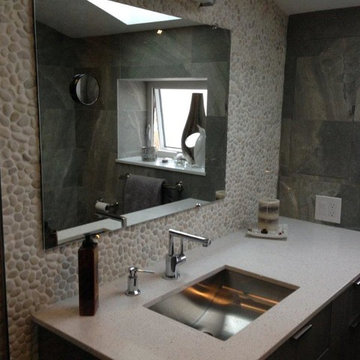
 Star Tile Centre
We at Star Tile Carpet One, know that value is more than just a good price. The Baltjes family and our professional flooring team welcome you to our web site. We are a complete flooring centre specializing in the supply, distribution, and installation of ceramic tile, porcelain tile, slate, natural stone, and in-floor heating, the supply and installation of carpet, carpet tiles, laminate flooring, solid hardwood, engineered hardwood, vinyl flooring, rubber flooring, terrazzo, Mexican Saltillo tiles, VCT (vinyl composition tiles), LVT (Luxury Vinyl Tiles), LVP (Luxury Vinyl Planks), travertine, marble, linoleum, cork, granite, Cambria Quartz kitchen countertops, islands, and vanities, remnants, and area rugs. Kitchens, floor, walls, backsplash, bathrooms, showers, fireplace, bedroom, family room, sunroom, porch, and stairs., Serving all areas in the Niagara Region, Fonthill, Pelham, St. Catharines, Niagara Falls, Welland, Port Colborne, Fort Erie, Ridgeville, Niagara on the Lake, Virgil, Jordan, Grimsby, Vineland, Ridgeway, Crystal Beach, Pelham, Stevensville, Thorold, Wainfleet, West Lincoln, Beamsville, Dunnville, and Stoney Creek, Ontario
 Amy Carman Design
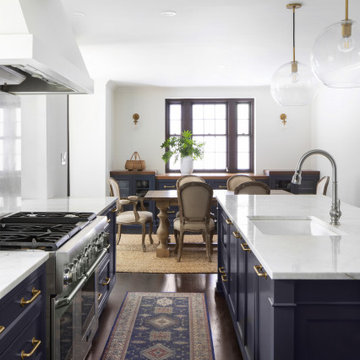
In this home, the dining room and kitchen were two dark rooms separated by a wall. Asked to "brighten it up, lighten it up," our firm removed the wall between the two rooms but kept the walls separating this space from the rest of the living room and first floor. The result? An open arrangement providing plenty of space and light, but also privacy and the ability to move between distinct spaces.

 CBI Design Professionals, Inc.
The family room in this Bloomfield Hills residence was a part of a whole house renovation and addition, completed in 2016. Having spaces that were a staple to traditional family life were very important to the clients, so a warm, inviting family was designed. Centered in this room is a full-masonry, milled stone fireplace with a milled stone hearth and mantle. To help open the space up and pull in more natural light, an arched lantern (transoms) was created. This lantern features wood ceilings and beams, complemented with paneled walls and detailed trim. On both sides of the fireplace are built-in bookshelves and cabinets. The furniture and décor further accentuate the warmth of the room by utilizing earth, blue, and cream tones.
Sponsored
Delaware, OH

Buckeye Basements, Inc.
Central Ohio's Basement Finishing ExpertsBest Of Houzz '13-'21
 Star Tile Centre
We at Star Tile Carpet One, know that value is more than just a good price. The Baltjes family and our professional flooring team welcome you to our web site. We are a complete flooring centre specializing in the supply, distribution, and installation of ceramic tile, porcelain tile, slate, natural stone, and in-floor heating, the supply and installation of carpet, carpet tiles, laminate flooring, solid hardwood, engineered hardwood, vinyl flooring, rubber flooring, terrazzo, Mexican Saltillo tiles, VCT (vinyl composition tiles), LVT (Luxury Vinyl Tiles), LVP (Luxury Vinyl Planks), travertine, marble, linoleum, cork, granite, Cambria Quartz kitchen countertops, islands, and vanities, remnants, and area rugs. Kitchens, floor, walls, backsplash, bathrooms, showers, fireplace, bedroom, family room, sunroom, porch, and stairs., Serving all areas in the Niagara Region, Fonthill, Pelham, St. Catharines, Niagara Falls, Welland, Port Colborne, Fort Erie, Ridgeville, Niagara on the Lake, Virgil, Jordan, Grimsby, Vineland, Ridgeway, Crystal Beach, Pelham, Stevensville, Thorold, Wainfleet, West Lincoln, Beamsville, Dunnville, and Stoney Creek, Ontario

 Stephanie Lang
This kitchen was created for a professional cook who used every bit of space while she cooks. She needed more counterspace, better storage, and was tiered of feeling separated from her guests while entertaining. We removed the pantry closet and central wall. The new configuration allows the kitchen to be the center of all activities.
Photo: S.Lang
 Envision Web
Stuart Wade, Envision Virtual Tours.
The town of Blue Ridge offers eclectic shopping and dining in a quaint small town setting. With the historic Blue Ridge Depot at its center, Blue Ridge is a center for arts and galleries, antiques, unique shopping and eateries.
For capturing the best views of your home or cabin, Envision Virtual Tours is your professional and reliable choice for high resolution virtual tours and photos.
Blue Ridge was once considered an elite health resort because of its pure mineral waters. It was established as a railroad town, with the depot at its heart. Visitors would ride the train to town, eat dinner at the Blue Ridge Hotel, and take a leisurely walk to the mineral springs after dinner. Today's visitors still ride the train and take leisurely walks along Main Street, enjoying the antique and specialty shops, galleries, restaurants, small town atmosphere and friendly people of Blue Ridge. The town was founded in 1886 as a result of the arrival of the Marietta and North Georgia Railroad. In the early years, at different times, there were five hotels and several boarding houses in downtown Blue Ridge.

 Sandra Costa Design Group
I created my team in 1998 that evolved into a Global Group of highly talented and diverse professionals. We tend to focus on sustainable solutions and state of the art smart technology. My work includes but is not limited to the design, planning, project management of entertainment projects, restaurants, Health Center and Hospital Design, Mansions, High Rise Complexes, and multi-use projects. We have the experience to provide cost-effective solutions and innovative exciting fresh new ideas. In addition, we bring a professional commitment to being on time and within the budget. Freshing change, as most contractors will only give allowances and I like to give hard costs. I design and manufacture about 70% of the furnishing shown in my projects. The rest I buy from really great brands. I post various pieces on my furniture site however, call me when you want to go over an idea and I can give you a price on it.
Original Design and construction by Sandra Costa
Venice Retreat
Residential Images by Angelo Costa 310 985 5509
 Epic Interiors
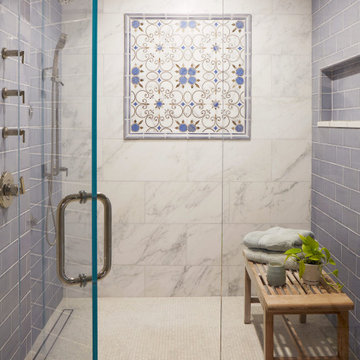
The floor showcases custom Italian mosaic tile from Mona Lisa Tile, featuring intricate blue and gold floral motifs that echo the shower’s framed wall panel. This bespoke pattern, used in both the floor insets and shower niche, was selected after multiple design iterations to achieve perfect scale and tonal harmony. Pale gray and bluish undertones unify the space, establishing a serene and elegant retreat.
 Envision Web
Stuart Wade, Envision Virtual Tours.
The town of Blue Ridge offers eclectic shopping and dining in a quaint small town setting. With the historic Blue Ridge Depot at its center, Blue Ridge is a center for arts and galleries, antiques, unique shopping and eateries.
For capturing the best views of your home or cabin, Envision Virtual Tours is your professional and reliable choice for high resolution virtual tours and photos.
Blue Ridge was once considered an elite health resort because of its pure mineral waters. It was established as a railroad town, with the depot at its heart. Visitors would ride the train to town, eat dinner at the Blue Ridge Hotel, and take a leisurely walk to the mineral springs after dinner. Today's visitors still ride the train and take leisurely walks along Main Street, enjoying the antique and specialty shops, galleries, restaurants, small town atmosphere and friendly people of Blue Ridge. The town was founded in 1886 as a result of the arrival of the Marietta and North Georgia Railroad. In the early years, at different times, there were five hotels and several boarding houses in downtown Blue Ridge.
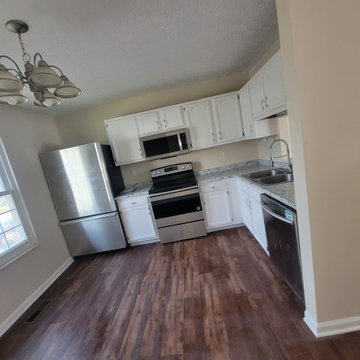

 Star Tile Centre
We at Star Tile Carpet One, know that value is more than just a good price. The Baltjes family and our professional flooring team welcome you to our web site. We are a complete flooring centre specializing in the supply, distribution, and installation of ceramic tile, porcelain tile, slate, natural stone, and in-floor heating, the supply and installation of carpet, carpet tiles, laminate flooring, solid hardwood, engineered hardwood, vinyl flooring, rubber flooring, terrazzo, Mexican Saltillo tiles, VCT (vinyl composition tiles), LVT (Luxury Vinyl Tiles), LVP (Luxury Vinyl Planks), travertine, marble, linoleum, cork, granite, Cambria Quartz kitchen countertops, islands, and vanities, remnants, and area rugs. Kitchens, floor, walls, backsplash, bathrooms, showers, fireplace, bedroom, family room, sunroom, porch, and stairs., Serving all areas in the Niagara Region, Fonthill, Pelham, St. Catharines, Niagara Falls, Welland, Port Colborne, Fort Erie, Ridgeville, Niagara on the Lake, Virgil, Jordan, Grimsby, Vineland, Ridgeway, Crystal Beach, Pelham, Stevensville, Thorold, Wainfleet, West Lincoln, Beamsville, Dunnville, and Stoney Creek, Ontario

 IMPROVE or MOVE
Wet bar in the great room behind the cooktop wall of the kitchen
Horus Photography
Mid-sized trendy single-wall porcelain tile wet bar photo in New York with an undermount sink, shaker cabinets, dark wood cabinets, granite countertops, gray backsplash and stone tile backsplash
Mid-sized trendy single-wall porcelain tile wet bar photo in New York with an undermount sink, shaker cabinets, dark wood cabinets, granite countertops, gray backsplash and stone tile backsplash
 Envision Web
Stuart Wade, Envision Virtual Tours.
The town of Blue Ridge offers eclectic shopping and dining in a quaint small town setting. With the historic Blue Ridge Depot at its center, Blue Ridge is a center for arts and galleries, antiques, unique shopping and eateries.
For capturing the best views of your home or cabin, Envision Virtual Tours is your professional and reliable choice for high resolution virtual tours and photos.
Blue Ridge was once considered an elite health resort because of its pure mineral waters. It was established as a railroad town, with the depot at its heart. Visitors would ride the train to town, eat dinner at the Blue Ridge Hotel, and take a leisurely walk to the mineral springs after dinner. Today's visitors still ride the train and take leisurely walks along Main Street, enjoying the antique and specialty shops, galleries, restaurants, small town atmosphere and friendly people of Blue Ridge. The town was founded in 1886 as a result of the arrival of the Marietta and North Georgia Railroad. In the early years, at different times, there were five hotels and several boarding houses in downtown Blue Ridge.
 Robert Thomas Homes
This home is built by Robert Thomas Homes located in Minnesota. Our showcase models are professionally staged. Please contact Ambiance at Home for information on furniture - 952.440.6757
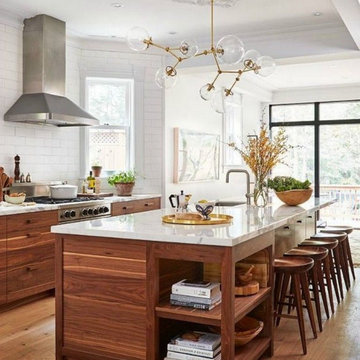


 Doors For Builders Inc
Custom Solid Wood Door with Transom and Sidelites
Arts and crafts entryway photo in Chicago
Arts and crafts entryway photo in Chicago
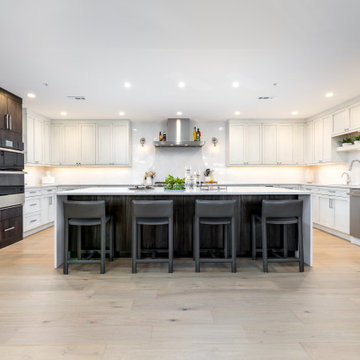
 Boss Design Center
Here at Boss Design Center, we are as committed to getting your kitchen remodel, basement finishing, bathroom remodel, and room addition started and finished as you are, so call our expert team of remodelers who are standing by to deliver quality results from Northern Virginia to the District of Columbia to Maryland. More than just a business in these areas, we consider ourselves neighbors and community members. Fully licensed, bonded, and insured, you can rely on our professionalism to deliver the results that you were looking for when you first began looking for contractors to help realize your remodeling ambitions. While we are more than happy to replace those aging kitchen cabinets, the scope of our vision exceeds those small ambitions, and as our name implies at Boss Design Center, we take a keen interest in the entire design process from drawing board to completion. We have great ideas to help you realize your remodeling dreams from that room addition to the ultimate kitchen remodeling; we bring ten years of experience to the design table and construction site. Contact us today and let’s start planning that bathroom remodeling dream project.
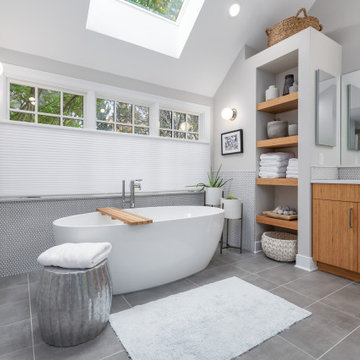 Boss Design Center
Here at Boss Design Center, we are as committed to getting your kitchen remodel, basement finishing, bathroom remodel, and room addition started and finished as you are, so call our expert team of remodelers who are standing by to deliver quality results from Northern Virginia to the District of Columbia to Maryland. More than just a business in these areas, we consider ourselves neighbors and community members. Fully licensed, bonded, and insured, you can rely on our professionalism to deliver the results that you were looking for when you first began looking for contractors to help realize your remodeling ambitions. While we are more than happy to replace those aging kitchen cabinets, the scope of our vision exceeds those small ambitions, and as our name implies at Boss Design Center, we take a keen interest in the entire design process from drawing board to completion. We have great ideas to help you realize your remodeling dreams from that room addition to the ultimate kitchen remodeling; we bring ten years of experience to the design table and construction site. Contact us today and let’s start planning that bathroom remodeling dream project.
134