
Search results for "Conditions managed" in Home Design Ideas
 Hbellorin Architectural Design and Management
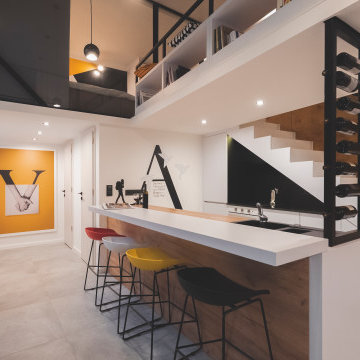
It is a distribution designed for the possible coexistence of two people who maintain a spatial freedom, giving this reason for the planning of two bedrooms completely separated by a walkway. Both bedrooms have beds of 140cm x 200cm, wardrobes, desk and independent windows.
As we mentioned, the bedrooms are separated by a walkway that has been conditioned as a reading space, it should also be noted that from that point we have a visual control of the space.
On the ground floor, we can see that the dead space of the stairs has been used as a kitchen where we have the burners, the oven and the odor extractor. We also have the rest of the public spaces such as the living room, the dining room, the toilet and the laundry room.
Some of the furniture presented in this flat renovation are products of Hbellorin thus giving a touch of exclusivity to the apartment.
 Hbellorin Architectural Design and Management
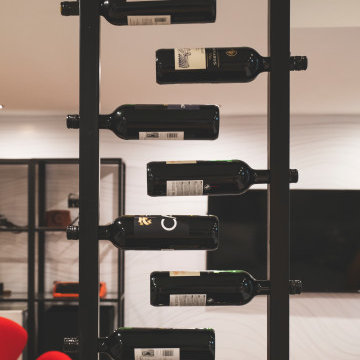
It is a distribution designed for the possible coexistence of two people who maintain a spatial freedom, giving this reason for the planning of two bedrooms completely separated by a walkway. Both bedrooms have beds of 140cm x 200cm, wardrobes, desk and independent windows.
As we mentioned, the bedrooms are separated by a walkway that has been conditioned as a reading space, it should also be noted that from that point we have a visual control of the space.
On the ground floor, we can see that the dead space of the stairs has been used as a kitchen where we have the burners, the oven and the odor extractor. We also have the rest of the public spaces such as the living room, the dining room, the toilet and the laundry room.
Some of the furniture presented in this flat renovation are products of Hbellorin thus giving a touch of exclusivity to the apartment.
 MA Properties
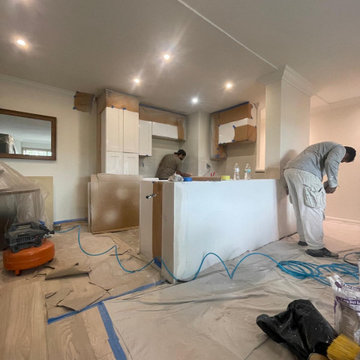
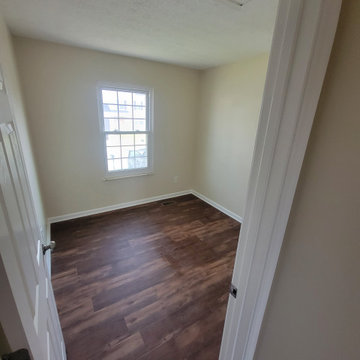
This Mission Valley condo renovation involved the complete restoration of a 2-bedroom, 2-bathroom condominium following water damage remediation. MA Properties Construction completed drywall replacement, texture matching, interior painting, flooring repairs, trim installation, and finish carpentry to restore the property to move-in-ready condition. The project focused on quality craftsmanship, efficient project management, and long-term durability while enhancing the home's appearance, functionality, and value. Serving Mission Valley and San Diego with professional condo remodeling, renovation, restoration, and general contracting services.
Find the right local pro for your project

 C. KOLARZ DESIGN LLC
Design ideas for a mid-sized traditional partial sun front yard pond in New York.
 BuildX - Your Building & ADU Experts
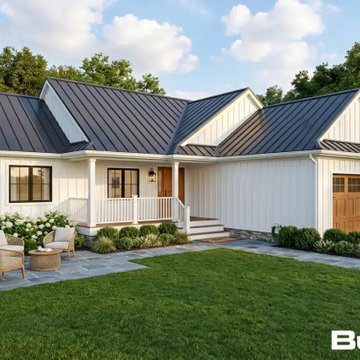
The Homestead ADU features 900 GFA in a compact 50′×42′ footprint, offering 2 bedrooms, 2 baths, a Farmer's Porch, 2-Car Garage, and a Sun Room. It includes 10′ ceilings, LED lighting, solar-ready infrastructure, and ADA options. BuildX provides a complete, move-in-ready ADU home with premium standard selections and full project management, covering architectural plans, permits, engineered foundation, complete exterior build, and a single connection point for high-efficiency heat-pump HVAC, along with finished interiors, including kitchen and bath. Customization options for both exterior and interior selections are available, with upgrades to enhance specific areas without sacrificing clarity or control. The starting price reflects the ADU building package with premium selections, while total project pricing is confirmed after property evaluation and defining the engineered site development scope, including utilities, excavation, drainage, and sewer tie-in or septic conditions.
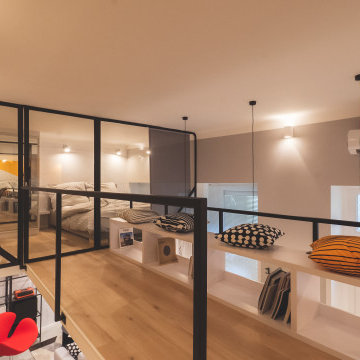 Hbellorin Architectural Design and Management
It is a distribution designed for the possible coexistence of two people who maintain a spatial freedom, giving this reason for the planning of two bedrooms completely separated by a walkway. Both bedrooms have beds of 140cm x 200cm, wardrobes, desk and independent windows.
As we mentioned, the bedrooms are separated by a walkway that has been conditioned as a reading space, it should also be noted that from that point we have a visual control of the space.
On the ground floor, we can see that the dead space of the stairs has been used as a kitchen where we have the burners, the oven and the odor extractor. We also have the rest of the public spaces such as the living room, the dining room, the toilet and the laundry room.
Some of the furniture presented in this flat renovation are products of Hbellorin thus giving a touch of exclusivity to the apartment.
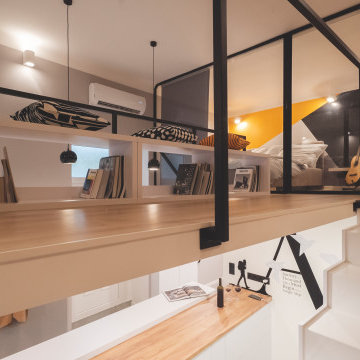 Hbellorin Architectural Design and Management
It is a distribution designed for the possible coexistence of two people who maintain a spatial freedom, giving this reason for the planning of two bedrooms completely separated by a walkway. Both bedrooms have beds of 140cm x 200cm, wardrobes, desk and independent windows.
As we mentioned, the bedrooms are separated by a walkway that has been conditioned as a reading space, it should also be noted that from that point we have a visual control of the space.
On the ground floor, we can see that the dead space of the stairs has been used as a kitchen where we have the burners, the oven and the odor extractor. We also have the rest of the public spaces such as the living room, the dining room, the toilet and the laundry room.
Some of the furniture presented in this flat renovation are products of Hbellorin thus giving a touch of exclusivity to the apartment.

 BuildX - Your Building & ADU Experts
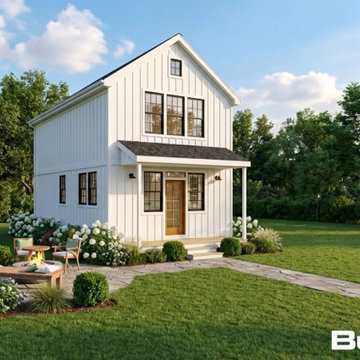
The Garden House ADU features 900 GFA in a compact 18′×27′ two-story footprint, offering 2 bedrooms, 1.5 baths, and a Farmer's Porch. It includes 9′ ceilings, LED lighting, solar-ready infrastructure, and ADA options. BuildX provides a complete, move-in-ready ADU home with premium standard selections and full project management, covering architectural plans, permits, engineered foundation, complete exterior build, and a single connection point for high-efficiency heat-pump HVAC, along with finished interiors, including kitchen and bath. Customization options for both exterior and interior selections are available, with upgrades to enhance specific areas without compromising clarity or control. The starting price reflects the ADU building package with premium selections, while total project pricing is confirmed after property evaluation and defining the engineered site development scope, including utilities, excavation, drainage, and sewer tie-in or septic conditions.
 Hbellorin Architectural Design and Management
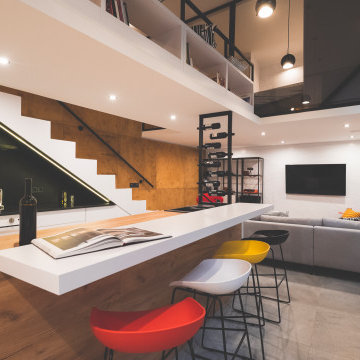
It is a distribution designed for the possible coexistence of two people who maintain a spatial freedom, giving this reason for the planning of two bedrooms completely separated by a walkway. Both bedrooms have beds of 140cm x 200cm, wardrobes, desk and independent windows.
As we mentioned, the bedrooms are separated by a walkway that has been conditioned as a reading space, it should also be noted that from that point we have a visual control of the space.
On the ground floor, we can see that the dead space of the stairs has been used as a kitchen where we have the burners, the oven and the odor extractor. We also have the rest of the public spaces such as the living room, the dining room, the toilet and the laundry room.
Some of the furniture presented in this flat renovation are products of Hbellorin thus giving a touch of exclusivity to the apartment.
 MA Properties
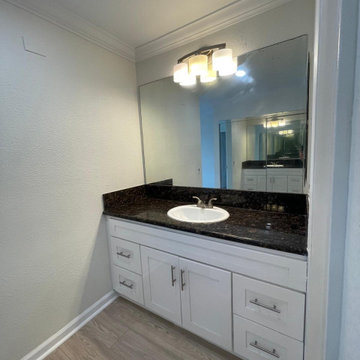
This Mission Valley condo renovation involved the complete restoration of a 2-bedroom, 2-bathroom condominium following water damage remediation. MA Properties Construction completed drywall replacement, texture matching, interior painting, flooring repairs, trim installation, and finish carpentry to restore the property to move-in-ready condition. The project focused on quality craftsmanship, efficient project management, and long-term durability while enhancing the home's appearance, functionality, and value. Serving Mission Valley and San Diego with professional condo remodeling, renovation, restoration, and general contracting services.
 Hbellorin Architectural Design and Management
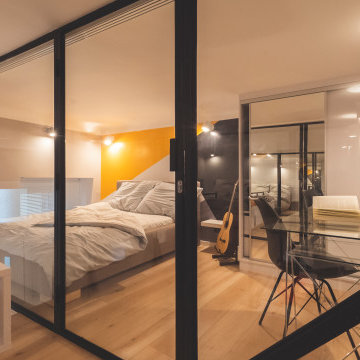
It is a distribution designed for the possible coexistence of two people who maintain a spatial freedom, giving this reason for the planning of two bedrooms completely separated by a walkway. Both bedrooms have beds of 140cm x 200cm, wardrobes, desk and independent windows.
As we mentioned, the bedrooms are separated by a walkway that has been conditioned as a reading space, it should also be noted that from that point we have a visual control of the space.
On the ground floor, we can see that the dead space of the stairs has been used as a kitchen where we have the burners, the oven and the odor extractor. We also have the rest of the public spaces such as the living room, the dining room, the toilet and the laundry room.
Some of the furniture presented in this flat renovation are products of Hbellorin thus giving a touch of exclusivity to the apartment.

 Rudloff Custom Builders
Photography by Alicia's Art, LLC
RUDLOFF Custom Builders, is a residential construction company that connects with clients early in the design phase to ensure every detail of your project is captured just as you imagined. RUDLOFF Custom Builders will create the project of your dreams that is executed by on-site project managers and skilled craftsman, while creating lifetime client relationships that are build on trust and integrity.
We are a full service, certified remodeling company that covers all of the Philadelphia suburban area including West Chester, Gladwynne, Malvern, Wayne, Haverford and more.
As a 6 time Best of Houzz winner, we look forward to working with you on your next project.
 Rossino Interior Design
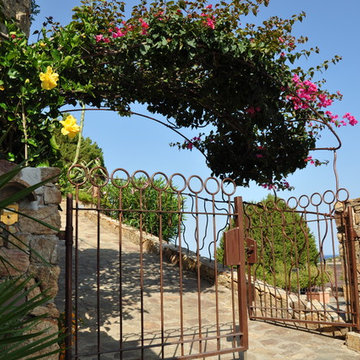
A single-family detached house and its garden form a whole together with the nature. That building, dated back to 90s, has been completely renovated and now it overlooks from Chia hill the surrounding view: a slice of heaven where bays and small coves, with the green of Mediterranean scrub on top, get lost in the blue of the see. Bougainvillea, ivy, begonia climb up the split stoned outside walls and the pillars. The barbecue area, protected by the wooden pergola, has been recreated to enjoy outdoors convivial meals.
The living room, with a wide sliding glass window, overlooks the spacious veranda, the garden and the breathtaking view. The refined materials, like the Cerasarda ceramic flooring, create a continuity between the garden area and the external courtyard emphasising light and colours of nature. Other remarkable features of the villa are: the first floor staircase covered with hand made Cerasarda ceramic and the Mediterranean style bathrooms. The internal and external lighting is studied to create light games and suggestive sceneries.
The total white, that prevailed in the interior of the house, is contrasted by earth colours. The white and coloured linen curtains frame the magic of the surrounding view. The wrought-iron skilfully arranged in the internal handrail and in the external balustrade reproduces the sinuosity of a climbing ranch. The demotics employed makes the villa and its garden totally manageable with a tablet: creating personalised light scenery, managing the air-conditioning of the rooms and the irrigation of the garden.

 Steve Masley Consulting and Design
Jalapeño grown organically in a 7-gallon Smart Pot. This plant produced 69 jalapeños! Photo by Steve Masley
Example of an eclectic home design design in San Francisco
Example of an eclectic home design design in San Francisco
 Free Lancing
Effective residential construction project management is crucial in today’s fast-moving building industry. It means overseeing every step of building a home, from planning to finishing, to ensure projects are completed time, within budget, and with high quality. Unlike commercial projects, residential projects require special attention to meet homeowners' unique needs and wishes, requiring a customized approach from the beginning to the end.
In 2025, the construction sector will use advanced technologies like AI and integrated project delivery (IPD) to streamline processes and improve stakeholder collaboration. However, project managers face significant challenges, including managing risks, maintaining quality control, and ensuring effective communication among team members.
A WIP Report (Work-in-Progress Report) is a key tool that helps track a project's budget, progress, and resource use. It provides clear insights, making managing costs easier, avoiding delays, and making informed decisions.
By adopting best practices and using modern construction management tools, project managers can overcome these challenges and deliver successful residential construction projects that meet client expectations and contribute to a sustainable future.
This article provides a brief overview of residential construction project management, highlights its importance, and touches on the challenges faced by project managers while incorporating the latest trends and technologies in the field.
Types of Residential Construction Management
Here are the different types of Residential Construction Management:
Single-Family Homes: These are standalone houses built for individual families. Managing these projects involves overseeing construction from planning to completion, ensuring that the home meets the owner's preferences and budget.
Multi-Family Housing: This includes apartments, condominiums, and townhouses. Projects of this type require managing multiple units, often with shared facilities, and ensuring compliance with local building codes.
Custom Home Building: This involves constructing homes tailored to specific client needs. Close collaboration with architects and designers is required to ensure the house reflects the owner's personality and preferences.
Home Renovation and Remodeling: These projects focus on updating or expanding existing homes. They often involve working with subcontractors for specialized tasks like electrical or plumbing work.
Components of Residential Construction Project Management
Managing a residential construction project requires carefully coordinating people, materials, and timelines. A well-structured approach ensures efficiency, cost control, and high-quality results.
Roles and Responsibilities
A project manager plays a vital role in residential construction. They oversee every step from planning to completion and ensure the project stays on schedule, within budget, and meets quality standards.
Project Manager’s Role in Home Construction
The project manager is responsible for organizing tasks, managing resources, and solving problems that arise during construction. They coordinate between different teams, track progress, and ensure safety regulations are followed.
Collaboration with Contractors, Architects, and Stakeholders
Successful residential construction requires teamwork. Project managers work closely with architects to bring designs to new heights, coordinate with contractors to manage labor and materials, and keep stakeholders (such as homeowners and investors) informed about project updates.
Client Communication and Expectations Management
Clear communication with clients is essential. The project manager keeps homeowners updated on timelines, changes, and challenges. Setting realistic expectations and providing regular updates, they help avoid misunderstandings and keep the project running smoothly.
Project Scope & Planning
Practical project planning sets the foundation for a successful residential construction project. It ensures clear goals, minimizes risks, and keeps the project on track.
Defining Project Objectives and Deliverables:
Clearly outlining what needs to be done and what the final result should look like is essential. This involves setting specific, measurable goals that align with the homeowner's vision and budget.
Managing Homeowner Expectations and Scope Creep:
Homeowners often have changing needs or ideas. Effective project managers must manage these expectations to prevent "scope creep," which can delay projects and increase costs. This involves open communication and setting clear boundaries.
Ensuring Compliance with Zoning Laws and Permits:
Before construction begins, it's crucial to ensure that all necessary permits are obtained and that the project complies with local zoning laws. This step avoids costly fines and delays, ensuring the project moves forward smoothly.
Budgeting & Cost Control
Proper budgeting is essential for keeping residential construction projects financially viable. Effective cost management prevents overspending and ensures profitability.
Accurate Cost Estimation for Residential Projects
A precise cost estimate considers labor, materials, permits, and unexpected expenses. Using historical data and Sage 300 CRE for financial management improves accuracy and helps set realistic budgets.
Budget Allocation and Tracking
Allocating funds efficiently ensures that each phase of the project receives the necessary resources. Tracking expenses through Construction & Financial Dashboards allows for real-time monitoring and early detection of budget deviations.
Preventing Budget Overruns
Uncontrolled costs can derail a project. Regular financial reviews, automated alerts for overspending, and contingency planning help keep expenses in check and prevent financial strain.
Scheduling & Timeline Management
Timely project completion is crucial in residential construction. Effective scheduling minimizes delays and ensures a smooth workflow.
Creating Detailed Project Schedules
A structured schedule outlines all tasks, deadlines, and dependencies. Breaking down the project into phases, planning, execution, and finishing, helps maintain order and clarity.
Preventing Delays & Meeting Deadlines
Delays can result from labor shortages, weather conditions, or supply chain issues. To avoid problems, it’s good to check for risks ahead of time, add extra time to schedules, and keep everyone on the same page.
Using Gantt Charts and Critical Path Methods
CPM for Construction helps identify critical activities that directly impact project completion, while Gantt charts provide a visual timeline of tasks. Both tools optimize scheduling and improve efficiency.
Residential Construction Project Management Phases
Managing a residential construction project effectively requires a structured approach through various phases. Each phase plays a critical role in ensuring the project's success, from initial planning to completion.
Pre-Construction Phase
The pre-construction phase sets the foundation for a smooth and efficient building process. Proper planning at this stage helps prevent costly changes and delays later.
Site Analysis & Approvals: A thorough site analysis assesses soil conditions, topography, and environmental factors. Feasibility studies evaluate project viability, including costs and regulatory compliance. Obtaining zoning approvals, permits, and other legal clearances is crucial before breaking ground.
Selecting Materials and Procurement Strategies: Choosing the right materials impacts durability, sustainability, and cost efficiency. A well-planned procurement strategy, including bulk purchasing and reliable supplier partnerships, ensures timely delivery and cost savings. Using Sage 300 CRE for procurement management helps streamline material sourcing and financial planning.
Construction Phase
The construction phase transforms plans into reality. Effective coordination and strict quality control ensure a successful build.
Resource Allocation and Workflow Coordination: Efficiently managing labor, equipment, and materials is key to maintaining progress. Using CPM for Construction, project managers can allocate resources strategically, prevent bottlenecks, and optimize workflows for timely completion.
Quality Control and Ensuring Compliance with Safety Regulations: Strict adherence to building codes and safety standards is non-negotiable. Regular inspections, worker training, and real-time quality monitoring ensure a structurally sound and legally compliant project. Proactive safety measures prevent accidents and project disruptions.
Project Closeout & Handover
The final phase of residential construction project management is crucial for ensuring a smooth transition from construction to occupancy. Proper closeout procedures guarantee quality, client satisfaction, and long-term project success.
Final Inspections and Quality Assurance: Before finishing the project, a final inspection checks that everything meets safety rules and quality standards. Any problems need to be fixed quickly. Using Procore helps make inspections and tracking issues easier, ensuring a high-quality final product.
Client Walkthrough and Support: A final check helps homeowners see the finished work, ask questions, and make sure it meets their expectations. This is also a chance to explain important home features and maintenance tips. Good communication here builds trust and strengthens relationships.
Warranty Management and Feedback: Efficient warranty management ensures clients get quick help for any issues after construction. A clear process for tracking requests and keeping in touch with homeowners boosts satisfaction. Collecting feedback helps improve future projects. Using S-Curve Forecasting tracks performance trends and refines management strategies.
Software for Residential Construction Project Management
The integration of technology in residential construction project management has revolutionized the way projects are planned, executed, and monitored. Digital tools streamline operations, reduce costs, and improve communication, making them essential for modern construction firms.
Importance of Digital Tools
Investing in digital tools is crucial for construction firms as it transforms the industry by enhancing efficiency, accuracy, and collaboration across the entire project lifecycle. They also improve project management by streamlining processes, automating tasks, and facilitating real-time stakeholder communication.
Top Construction Management Software for Residential Projects
Several software solutions are available for managing residential construction projects:
Procore: Known for its comprehensive project management features, including document management and collaboration tools.
Sage 300 CRE: Offers robust accounting and financial management capabilities, ideal for large-scale construction projects.
Buildertrend: Specializes in residential construction, providing tools for project scheduling, budgeting, and client communication.
CoConstruct: Focuses on custom home building and remodeling, offering features for estimating, scheduling, and project management.
WIP Reports: Useful for tracking work-in-progress and managing project finances effectively.
Features Comparison and Best Use Cases:
Procore: Best for large projects requiring extensive collaboration and document management.
Sage 300 CRE: Ideal for firms needing robust financial management.
Buildertrend: Suitable for residential builders focusing on client communication and project scheduling.
CoConstruct: Perfect for custom home builders who need detailed estimating and scheduling tools.
WIP Reports: Useful for firms needing to track project finances closely.
How Software Improves Project Efficiency
Construction management software significantly enhances project efficiency in several ways:
Automating Accounting and Job Costing: Software like Sage 300 CRE automates financial tasks, reducing manual errors and improving budget tracking.
Streamlining Document Management and Communication: Tools like Procore centralize documents and facilitate real-time communication among team members, reducing misunderstandings and delays.
Mobile-Friendly Solutions for Real-Time Tracking: Mobile apps from platforms like Buildertrend allow for on-site access to project data, enabling real-time tracking and decision-making.
These digital tools and software solutions are essential for modern residential construction project management, offering benefits such as improved efficiency, enhanced collaboration, and better financial control.
Challenges in Residential Construction Project Management
Residential construction projects face a variety of challenges that can impact their success. Here are some of the key issues project managers encounter:
Managing Subcontractors and Labor Shortages
One of the biggest challenges in residential construction is managing subcontractors and dealing with labor shortages. Subcontractors often have their own schedules and priorities, which can lead to delays if not coordinated properly. Additionally, labor shortages can slow down projects and increase costs due to the need for overtime or hiring temporary workers.
Budget Overruns and Unexpected Costs
Budget overruns are common in residential construction due to factors like material price fluctuations, unexpected site conditions, or changes in project scope. Effective budget management involves regularly monitoring expenses and having contingency plans for unexpected costs.
Changing Construction and Eco Rules
Construction and Eco Rules are always changing, so project managers need to keep up with the latest regulations. This involves following guidelines for saving energy, protecting the environment, and ensuring safety. Ignoring these rules can lead to fines, delays, or even stopping the project.
Best Practices
To ensure your residential construction projects run smoothly and successfully, follow these essential best practices:
Setting Clear Project Goals and Milestones
Clearly defining what you want to achieve is the first step to success. Set specific, measurable, achievable, relevant, and time-bound (SMART) goals. This helps everyone involved understand what needs to be done and by when. For example, instead of saying "build a house," say "build a house with three bedrooms and two bathrooms within the next nine months."
Stakeholder Collaboration
Good communication is key to keeping everyone on the same page. Regular meetings with contractors, suppliers, and homeowners help prevent misunderstandings and ensure that everyone knows what's happening and what's next. This open dialogue also helps resolve issues quickly, preventing small problems from becoming big delays.
Using Data-Driven Insights for Decision-Making
Making decisions based on facts rather than guesses is crucial. Use data and analytics to understand project progress, identify potential issues early, and make informed decisions. For instance, if data shows that a particular material is consistently causing delays, you can plan ahead to avoid those delays in the future.
Proactive Risk Management Strategies
Things don't always go as planned, so being prepared is essential. Identify potential risks early and have a plan to manage them. This might include having backup suppliers, planning for weather conditions, or setting aside extra funds for unexpected expenses. Being proactive can prevent small issues from turning into major problems.
Conclusion
Effective residential construction project management requires careful planning, clear communication, and the right digital tools. From single-family homes to multi-family housing and custom projects, managing timelines, budgets, and quality is essential for success.
By following best practices, using project management software, and staying ahead of industry trends, project managers can ensure smooth execution and client satisfaction despite challenges like labor shortages, budget overruns, and regulatory compliance; modern technology and strategic planning help mitigate risks.
Construction firms can improve efficiency, enhance collaboration, and maintain financial control by adopting advanced tools like Procore, Sage 300 CRE, and Buildertrend. A well-managed project delivers a quality home and builds trust and long-term success in the industry.
FAQs
What is residential construction project management?
It involves overseeing all aspects of building residential properties, from initial planning and design to construction and completion, ensuring projects are completed on time, within budget, and to the desired quality standards.
How can I prevent budget overruns in my construction project?
Accurate cost estimation, continuous budget tracking, and having contingency plans for unexpected expenses are key strategies to prevent budget overruns.
What are the main stages of a residential construction project?
The primary stages include design, pre-construction, procurement, and construction.
How does construction management software improve project efficiency?
It streamlines processes like scheduling, budgeting, and communication, providing real-time data access and collaboration among stakeholders, which enhances overall project efficiency.
How can I ensure my project complies with local building codes and regulations?
Engage professionals familiar with local laws, obtain all necessary permits before starting, and conduct regular inspections to ensure adherence to building codes and regulations.


 William Prull
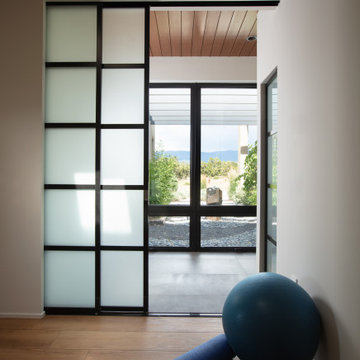
This gorgeous home, situated in the Commonwealth subdivision of the Galisteo Basin Preserve, was designed to accommodate the beautiful but sometimes harsh weather of the Basin. Built around an inner courtyard, buffered to the somewhat inclement conditions, it allows for seasonal year around enjoyment. The floor to ceiling windows, European Reynaers Aluminum, were imported from Ireland, and appear as glassy walls that disappear into pocketing doors ensuring magnificent wraparound views.
The grand entrance, encased with an oversized custom steel and brass entry door, with glass side panel and transom, open up to soaring illuminated recessed lit ceilings. Porcelain tile floors seamlessly transition between interior/exterior. An impressive 3-sided Ortal fireplace provides warmth and coziness encapsulating the entire great room. The excellence of the materials and exclusive nature of the finishes are expressed in a tailored and sophisticated manner.
The 4,332 heated per square foot home is designed with two Master Suite wings that spin off the main great room. The state-of-the-art kitchen is sleek and spacious with an expansive island comprised of Elegant Brown granite countertops, luxury modern Italian Poliform custom cabinets and high-end Gaggenau appliances. The home has a highly efficient engineered heating/cooling system with heat radiant floors and Unico air conditioning.
A detached guest casita/art studio sits adjacent to the main house, on a lushly landscaped protected courtyard. The exterior landscaping is organically integrated into the natural terrain, incorporating a bocce ball court, walking labyrinth, sculpture and water features.
AWARDS
2016 AIA Santa Fe Design Excellence: Citation Award- Single Family Home
PUBLICATIONS
Santa Fe New Mexican – HOME/Santa Fe Real Estate Guide– January 2017 – A Courtyard Centered Gem in the Galisteo Basin
Western Art & Architecture Magazine – February/March 2016 – Finding Home
TESTIMONIAL
After researching several builders in Santa Fe and then interviewing the ones of interest, we decided on Will Prull as he seemed to instantly connect to what we wanted and how to achieve it. He was also highly recommended by our architect. Our Project Manager was excellent and helped us make decisions that creep up between the plans and the actual building. Our house won the AIA award in 2016 for Santa Fe. When choosing your builder, the most important thing is that your Project Manager understands your direction and has your best interests at heart. Our's did!
ARCHITECT
Hoopes + Associates Architects, , Santa Fe, NM
INTERIORS
Paul Rau Interiors, Santa Fe, NM
LANDSCAPE ARCHITECT
Sequis + Associates Landscape Architecture, Santa Fe, NM
PHOTOGRAPHER
Daniel Nadelbach Photography LLC©,


 Grandeur Hills Group,Inc.
This hallway looks spacious and bright, doesn't it? All the essential furniture pieces are placed along the perimeter of the hallway, thereby not cluttering the center of the room.
The hallway space is equipped with a contemporary air conditioning system and soft lighting, consisting of a few longitudinally arranged rows of elegant miniature lamps, which make the hall not only bright, but also appealing.
The Grandeur Hills Group design studio can help you update your hallway interior design as well. Contact our managers, order our interior design service and finally appreciate the high quality of our work!

 Design Connection, Inc.
The kitchen is the most used room in the home. Our clients came to us asking for help with their outdated kitchen. The home was built in 2003 and had seen many years of use with two growing children, family and friends.
The original cabinets were of good quality and were still in excellent condition. We faux painted the old light maple cabinets with a beautiful dark Java stain.
See all of the Before & After pictures of this kitchen here: http://www.designconnectioninc.com/portfolio/kitchen-remodel-in-leawood-ks/
Design Connection, Inc. Kansas City Interior Designer provided- Space planning and project management-tile and countertop design and installation-appliance selection-paint and faux painting design and installation-custom cabinet design and installation, lighting design and installation and bar stools and kitchen table and chairs.
 William Prull
This gorgeous home, situated in the Commonwealth subdivision of the Galisteo Basin Preserve, was designed to accommodate the beautiful but sometimes harsh weather of the Basin. Built around an inner courtyard, buffered to the somewhat inclement conditions, it allows for seasonal year around enjoyment. The floor to ceiling windows, European Reynaers Aluminum, were imported from Ireland, and appear as glassy walls that disappear into pocketing doors ensuring magnificent wraparound views.
The grand entrance, encased with an oversized custom steel and brass entry door, with glass side panel and transom, open up to soaring illuminated recessed lit ceilings. Porcelain tile floors seamlessly transition between interior/exterior. An impressive 3-sided Ortal fireplace provides warmth and coziness encapsulating the entire great room. The excellence of the materials and exclusive nature of the finishes are expressed in a tailored and sophisticated manner.
The 4,332 heated per square foot home is designed with two Master Suite wings that spin off the main great room. The state-of-the-art kitchen is sleek and spacious with an expansive island comprised of Elegant Brown granite countertops, luxury modern Italian Poliform custom cabinets and high-end Gaggenau appliances. The home has a highly efficient engineered heating/cooling system with heat radiant floors and Unico air conditioning.
A detached guest casita/art studio sits adjacent to the main house, on a lushly landscaped protected courtyard. The exterior landscaping is organically integrated into the natural terrain, incorporating a bocce ball court, walking labyrinth, sculpture and water features.
AWARDS
2016 AIA Santa Fe Design Excellence: Citation Award- Single Family Home
PUBLICATIONS
Santa Fe New Mexican – HOME/Santa Fe Real Estate Guide– January 2017 – A Courtyard Centered Gem in the Galisteo Basin
Western Art & Architecture Magazine – February/March 2016 – Finding Home
TESTIMONIAL
After researching several builders in Santa Fe and then interviewing the ones of interest, we decided on Will Prull as he seemed to instantly connect to what we wanted and how to achieve it. He was also highly recommended by our architect. Our Project Manager was excellent and helped us make decisions that creep up between the plans and the actual building. Our house won the AIA award in 2016 for Santa Fe. When choosing your builder, the most important thing is that your Project Manager understands your direction and has your best interests at heart. Our's did!
ARCHITECT
Hoopes + Associates Architects, , Santa Fe, NM
INTERIORS
Paul Rau Interiors, Santa Fe, NM
LANDSCAPE ARCHITECT
Sequis + Associates Landscape Architecture, Santa Fe, NM
7