
Search results for "Continuous pressed" in Home Design Ideas
 Rocky Tops Granite & Marble LLC
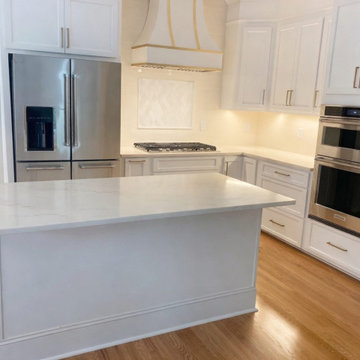
Spectrums Indulgence quartz, manufactured right here in Latta South Carolina, went into this kitchen in Columbia, and it's the kind of stone that works quietly hard in a room people actually cook and live in. It's engineered quartz, so what you're looking at is a mix of ground quartz and resin, blended and pressed to give a background that stays consistent slab to slab. That matters more than people think when you're trying to keep a kitchen looking pulled together across a run of cabinets, an island, and a backsplash.
The color reads as a soft, workable background with movement in it, enough character to give the room some depth without turning into something that fights with the cabinets or the floor. That's the appeal of a pattern like this one. It's not a plain solid, but it's not so busy that it limits what else goes in the space. Kitchens live a long time with the same countertop, and a stone that holds up visually over the years is worth choosing over something flashier that gets tiring.
Quartz like this is also just practical for a working kitchen. It doesn't need sealing the way natural stone does, it resists staining from wine, oil, and citrus, and it shrugs off the daily scratches from knives and pans that would show on a softer stone. Heat is the one thing we tell people to respect, a hot pan straight off the stove can shock the resin, so a trivet is the smart habit to build. Otherwise it's about as low-maintenance a surface as you can put in a kitchen.
We set the edge as eased, which is the clean, simple choice that lets the stone itself do the talking instead of the profile. Templating and fabrication on a job like this comes down to getting the seams tight and matching the pattern across the island and the runs so it reads as one continuous piece even where the slabs meet.
Jobs like this are what we like doing around Columbia and the rest of the Midlands, where a kitchen remodel means getting the material, the layout, and the fit all right in a space a family's going to use every single day.

 Sigmar
Customised Ikea kitchen with bespoke handles, concrete worktop, painted in bespoke Damo paint, available from Sigmar. The glass shelves in the window provide a quirky storage solution for decorative objects as well as privacy.
Photography by: Petr Krejci

 Morpurgo Architects
Press:
"Modern Art," The Record. 1993
This property rises to a knoll, where the house is situated, and continues a steep incline through the treed landscape. The home is positioned to achieve privacy and maximize views.
On approaching the house, one is drawn to a chiseled metal window that punctuates the curved cedar façade and flows into a metal sheathed wall that follows a path to the front doors. This interplay of metal, cedar and glass is repeated in a composition of these materials on each facade.
An expansive sky-lit window wall blurs the distinction between inside and outside. The interior features a sculpted entry, a cantilevered staircase and dynamic arches, all skillfully designed by Morpurgo Architects and crafted in maple and mahogany.
Find the right local pro for your project
 Create Construction
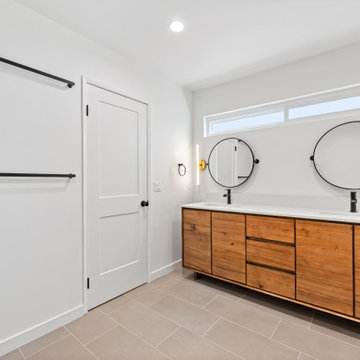
The primary bathroom was reconfigured to accommodate a spacious walk-in shower with a full-sized niche, featuring a unique glass opening that allows visual continuity with the rest of the bathroom. Adjacent to the shower is a free-standing soaking tub. A sleek custom pocket shelving unit adds a minimalistic and modern vibe. Sahara Ecru Pressed Field Tiles from Bedrosians are consistently used throughout the bathroom, enveloping the space in earthy tones for a welcoming and relaxing atmosphere. The vanity, made of solid acacia wood, echoes the kitchen's countertops, unifying the design theme across both spaces.
 Rocky Tops Granite & Marble LLC
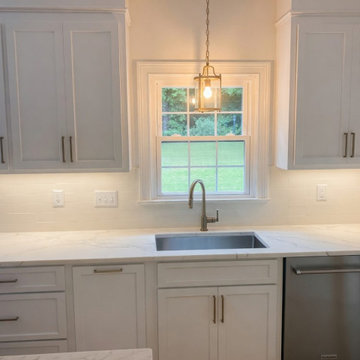
Spectrums Indulgence quartz, manufactured right here in Latta South Carolina, went into this kitchen in Columbia, and it's the kind of stone that works quietly hard in a room people actually cook and live in. It's engineered quartz, so what you're looking at is a mix of ground quartz and resin, blended and pressed to give a background that stays consistent slab to slab. That matters more than people think when you're trying to keep a kitchen looking pulled together across a run of cabinets, an island, and a backsplash.
The color reads as a soft, workable background with movement in it, enough character to give the room some depth without turning into something that fights with the cabinets or the floor. That's the appeal of a pattern like this one. It's not a plain solid, but it's not so busy that it limits what else goes in the space. Kitchens live a long time with the same countertop, and a stone that holds up visually over the years is worth choosing over something flashier that gets tiring.
Quartz like this is also just practical for a working kitchen. It doesn't need sealing the way natural stone does, it resists staining from wine, oil, and citrus, and it shrugs off the daily scratches from knives and pans that would show on a softer stone. Heat is the one thing we tell people to respect, a hot pan straight off the stove can shock the resin, so a trivet is the smart habit to build. Otherwise it's about as low-maintenance a surface as you can put in a kitchen.
We set the edge as eased, which is the clean, simple choice that lets the stone itself do the talking instead of the profile. Templating and fabrication on a job like this comes down to getting the seams tight and matching the pattern across the island and the runs so it reads as one continuous piece even where the slabs meet.
Jobs like this are what we like doing around Columbia and the rest of the Midlands, where a kitchen remodel means getting the material, the layout, and the fit all right in a space a family's going to use every single day.
 Gaile Guevara
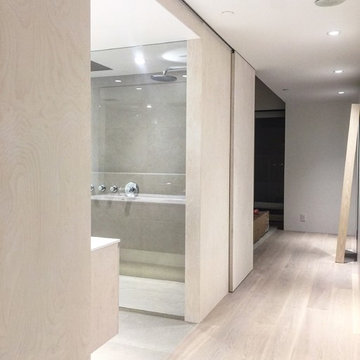
| DETAILS | Evening Views. What a difference it can make when we start to remove unnecessary walls & space wasting swing doors. It's been interesting to see how we've wasted so much space by selling this idea of "quantity over quality" how more rooms supposedly means more space. When ever possible we remove swing doors to open up floor plans. Top hung outside mount oversized sliding doors in pressed Baltic Birch. To continue the material palette we finished to match wall panelling that wraps around the master ensuite and continues into the master bedroom as flush custom doors to conceal @ikeacanada #ikeahack #pax closet wardrobes fully kitted out with internal accessories and storage containers. Kudos to @caisleydevelopments @bisongoods for their attention to detailing the continuous header. Frameless full height glazing in low iron star fire provided by the skilled @optimumstudios to flush hardwood to porcelain tile thresholds (no ugly schluter trims and the lowest we could go with a flush raised shower floor sitting at 1.5" l adore the team for all their efforts and for @somafurniture perfecting the Baltic Birch faced custom wall hung vanities. Custom Leaning wall mirrors on each floor courtesy of the talented @lockandmortice ready for last round of tune ups, accessory installs and paint touch-ups | so grateful for the team effort of amazing @foojan__ for always helping us get through to the finish line | next paint touch ups and unwrapping
#GGID_Bayshore #condoliving #interiordesign #design #renovations #materialstory #CoalHarbor #Vancouver #dwellhomes #houzz #teamwork #home #details #flush #white #drywall #construction #gaileguevara #balticbirch #pnw #hardwood #glazing #showers #doors
 Architect
Why Mattress Thickness Is One of the Most Misunderstood Specs
When most people shop for a memory foam mattress, they focus on firmness, materials, and brand. Thickness tends to be an afterthought — or worse, treated as a proxy for quality. The assumption goes: thicker equals better. That assumption is wrong in a meaningful number of cases, and getting it wrong means waking up with exactly the kind of stiffness, pressure pain, or lower back ache you bought a new mattress to avoid.
The right thickness for a memory foam mattress is not a single number. It is a combination of your body weight, your sleep position, and any specific health conditions you are managing. A 14-inch mattress that provides ideal support for a 250-pound side sleeper may cause a 115-pound stomach sleeper to experience spinal misalignment all night. A 10-inch mattress that works perfectly for a back sleeper of average build offers inadequate pressure relief for a heavier side sleeper whose hips need to sink further into the comfort layer before the support base engages.
This guide maps thickness to the factors that actually determine whether a mattress works for your body. It covers the science of mattress layers, the three primary variables (weight, position, condition), and a complete decision table so you can find your ideal thickness without guesswork.
Understanding Mattress Thickness: Layers, Not Just Height
A memory foam mattress’s total thickness is the sum of its individual layers, and those layers serve entirely different functions. Two mattresses that are both 12 inches thick may feel radically different because their comfort layer depths and support core thicknesses are distributed differently.
The Two Parts That Matter
Every memory foam mattress has two functional zones: the comfort layer at the top and the support core at the bottom. The comfort layer — which in quality mattresses consists of gel-infused viscoelastic foam, transition foam, and a cooling cover — is the zone that contours to your body, relieves pressure, and cushions the joints. The support core — high-density foam or pocketed springs in a hybrid — is the zone that keeps the spine aligned and prevents the entire body from sinking into the mattress.
The key relationship is this: the comfort layer must be deep enough for your body’s heaviest pressure points to sink in fully before the firmer support core pushes back. If it is too shallow, those pressure points press against a firm surface and cause localised pain. If the support core is too thin, the whole mattress sags under body weight and the spine loses alignment regardless of how comfortable the top feels.
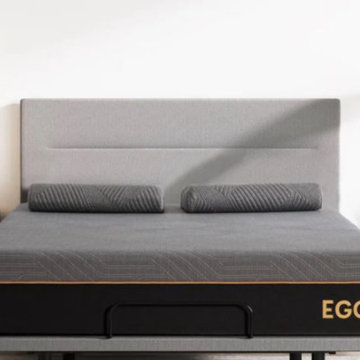
Here is how EGOHOME’s Black series layers map to these functions:
Layer
Material
Function
EGOHOME Technology
Cover (0.5–1")
Fabric + cooling tech
Temperature regulation, hygiene
Anti-heat™ Graphene Cooling Cover
Comfort layer (2–6")
Gel foam, AeroFusion™
Pressure relief, contouring
Copper Gel AeroFusion™ Foam
Transition layer (1–2")
Mid-density foam
Prevents sinkage past comfort zone
BraceSleeper™ Support Foam (upper)
Support core (6–12")
High-density foam or coils
Spinal alignment, edge support
BraceSleeper™ Support Foam (core)
Thickness alone does not tell you how a mattress will perform. A 14-inch mattress with a 2-inch comfort layer and a 12-inch support core will feel firm and supportive. A 14-inch mattress with a 6-inch comfort layer and an 8-inch support core will feel plush and contouring. Always check the comfort layer depth, not just the total inches.
Memory Foam Mattress Thickness Ranges: What Each Category Delivers
Here is a complete breakdown of what to expect from each thickness range and who each suits best:
Thickness
Profile
Best Use Case
Body Weight
Best Sleep Position
6–8"
Low profile
Children, bunk beds, guest rooms, adjustable bases
Under 130 lbs
Kids, lightweight, occasional use
8–10"
Standard-thin
Stomach sleepers, lightweight adults, budget setups
Under 130 lbs
Stomach, lightweight back sleepers
10–12"
Standard
Most adults, back sleepers, back pain relief
130–230 lbs
Back, stomach, combo sleepers
12–14"
High-profile
Side sleepers, plus-size, pressure relief
130–230 lbs+
Side sleepers, hip/shoulder pain
14"+
Premium
Plus-size sleepers, heavy duos, luxury setups
230 lbs+
Plus-size, side sleepers, chronic pain
6–8 Inches: Low-Profile (Specific Use Cases Only)
Low-profile mattresses in the 6 to 8 inch range are designed for specific applications rather than general adult use. They work well on bunk beds and trundle beds where height clearance is limited, for children’s beds where a lower sleep surface is safer, on adjustable bases where the mattress needs to flex significantly, and for lightweight individuals under 130 pounds who need minimal depth to reach the support core. For a standard adult of average build, a mattress under 8 inches is unlikely to provide adequate comfort layer depth for sustained pressure relief.
8–10 Inches: Standard-Thin (Stomach Sleepers and Lightweight Adults)
The 8 to 10 inch range is the practical starting point for most adult use. At this thickness, there is enough comfort layer to provide basic pressure relief without the excessive depth that allows heavier body sections to sink past the support zone. Stomach sleepers in particular benefit from this range: when sleeping face down, the goal is to keep the hips from sinking lower than the shoulders and chest, which would create a downward bow in the lumbar spine. A thinner mattress with a firmer feel prevents this hyperextension more reliably than a thicker, softer model. EGOHOME offers 8-inch memory foam options suited to this profile.
10–12 Inches: Standard (The Sweet Spot for Most Adults)
The 10 to 12 inch range is the most broadly appropriate thickness for adults of standard build. At this depth, a quality memory foam mattress contains enough comfort layer material to contour genuinely around the hips and shoulders without allowing the body to bottom out into the support core. It also contains enough support core depth to maintain spinal alignment under continuous body weight across seven or eight hours. Back sleepers of standard weight (130 to 230 pounds) typically find this range the most supportive, as the lumbar region receives adequate underlying resistance without the excessive softness that taller mattresses can develop under consistent pressure.
12–14 Inches: High-Profile (Side Sleepers and Plus-Size Sleepers)
The 12 to 14 inch range addresses two specific needs: side sleepers who require a deep enough comfort layer to allow the shoulder and hip to sink in while the waist remains supported, and heavier individuals whose body weight requires more foam depth before reaching full support core engagement. For a side sleeper of standard or higher body weight, a comfort layer of less than 4 to 6 inches is often not deep enough for the shoulder to sink fully into an aligned position. The result is an upward lateral bow in the thoracic spine that causes shoulder and upper back pain upon waking. The EGOHOME Black 14-inch Pro and Hybrid models are built specifically for this thickness range.
14 Inches and Above: Premium and Plus-Size
Mattresses at 14 inches or more are appropriate for plus-size sleepers over 230 pounds and for couples where one partner is significantly heavier. At higher body weights, a greater depth of both comfort material and support foam is required because the heavier load compresses the foam more aggressively. A support core that adequately resists a 160-pound sleeper may allow excessive sinkage under a 280-pound sleeper, causing the hips to drop past the point of lumbar support. EGOHOME’s Black 14-inch Firm model includes a 12-inch BraceSleeper™ Support Foam core specifically designed to resist this deep compression under higher body weights.
Thickness by Body Weight: The Primary Determining Factor
Body weight is the single most important variable in thickness selection because it directly determines how far the body sinks into the foam. The same mattress will feel completely different to a 120-pound sleeper versus a 240-pound sleeper, because the heavier person compresses the foam significantly more deeply.
Lightweight Sleepers (Under 130 lbs)
Lightweight sleepers do not need and often cannot benefit from thick mattresses. Because they exert less pressure on the foam, they may not compress a 14-inch mattress deeply enough to feel the support core at all, resulting in a floating sensation with insufficient underlying resistance. For lightweight sleepers, 8 to 10 inches provides adequate comfort layer depth for full pressure relief. The EGOHOME Black 10-inch Classic (medium feel) is the appropriate starting point for this weight category.
Standard-Weight Sleepers (130–230 lbs)
Standard-weight adults represent the broadest population of mattress buyers, and the 10 to 12 inch range was designed specifically for this group. At this weight range, the body compresses the comfort layer meaningfully enough for the foam to contour around pressure points, while the support core remains thick enough to prevent excessive sinkage. The EGOHOME Black 12-inch and the Black 10-inch ranges both address this category, with the 12-inch models being more appropriate for side sleepers who need the extra comfort layer depth.
Plus-Size Sleepers (Over 230 lbs)
Heavier sleepers require 12 to 14 inches at minimum to prevent bottoming out — the point at which body weight compresses through the comfort layer entirely and the sleeper feels the firm support core directly. Bottoming out eliminates pressure relief completely and can significantly worsen joint pain and lower back stiffness. EGOHOME recommends a suggested maximum of 300 pounds per person across their mattress range, and the 14-inch Hybrid and 14-inch Firm models are engineered with the deeper support cores required to handle higher body weights without performance degradation over time.
Thickness by Sleep Position: Matching Depth to Alignment Needs
Side Sleepers: 12 Inches or More
Side sleeping places the body’s heaviest pressure points — the shoulder and hip — in direct contact with the mattress. These points need to sink into the comfort layer deeply enough that the spine remains horizontal from head to toe. If the comfort layer is too thin or too firm, the shoulder cannot descend fully into the mattress, and the spine develops an upward lateral curve between the shoulder and the head. This causes the neck, shoulder, and upper back tension that many side sleepers report upon waking.
Side sleepers of standard weight need at least 12 inches, with a soft to medium-soft comfort layer. EGOHOME’s Black 12-inch Pro (soft feel, 7.5 out of 10 cooling score) is specifically recommended for side sleepers managing back, shoulder, or joint pain. The Black 14-inch Pro (medium-soft, 8 out of 10 cooling) adds additional comfort layer depth for those who need greater pressure relief.
Back Sleepers: 10–12 Inches
Back sleeping is the most spinal-alignment-friendly position because the body’s weight is distributed relatively evenly across the mattress. The primary challenge for back sleepers is lumbar support: the natural inward curve of the lower back creates a gap between the lumbar spine and the mattress surface that must be filled by the foam contouring upward into it. A mattress that is too soft allows the pelvis to sink excessively, flattening this curve and creating lower back compression. A mattress that is too firm cannot conform into the lumbar curve at all.
For back sleepers, 10 to 12 inches with a medium or medium-firm feel provides the optimal combination. EGOHOME’s Black 12-inch Hybrid (medium-firm, 6.5 out of 10 cooling) is specifically noted as ideal for back sleepers, combining pocketed spring zoned support with gel foam contouring for precise lumbar engagement.
Stomach Sleepers: 8–10 Inches
Stomach sleepers face the opposite alignment challenge from side sleepers. Rather than needing the mattress to yield deeply at the joints, they need the mattress to maintain a flat, firm surface that prevents the hips from sinking below the chest. If the hips drop lower than the upper body, the lumbar spine hyperextends into an arched position that compresses the posterior vertebral joints and causes significant lower back pain.
Stomach sleepers need a thinner mattress with a firmer feel. The EGOHOME Black 14-inch Firm is specifically recommended for stomach sleepers and heavier sleepers who need maximum surface resistance. Its 12-inch BraceSleeper™ Support Foam core provides the deep, unyielding base that prevents hip sinkage without requiring a thin mattress that compromises comfort.
Best Thickness for Back Pain: The Medium-Firm 10–12 Inch Principle
For people managing chronic lower back pain, herniated discs, sciatica, or general spinal stiffness, mattress thickness interacts with back health in a specific way that differs from general sleep comfort recommendations.
The key principle for back pain is controlled contouring. You need enough foam depth to relieve pressure at the hips and shoulders, but not so much depth that the foam develops a sag under the heavier sections of the body over time. Excessive thickness combined with a soft comfort layer is one of the most common causes of mattress-induced back pain — the sleeper sinks into a gentle hammock shape that feels comfortable initially but compresses the lumbar discs continuously throughout the night.
10–12 Inches: The Optimal Back Pain Range
A medium-firm mattress of 10 to 12 inches addresses both needs simultaneously. It provides adequate foam depth for genuine pressure relief at the hips and shoulders without the risk of comfort layer collapse that taller, softer mattresses can develop. The support core at this thickness is deep enough to maintain consistent lumbar support from the first night through years of regular use.
For side sleepers with lower back pain, the recommendation extends to 12 inches with a soft feel to ensure the hip can sink into full alignment. For back sleepers with lower back pain, 10 to 12 inches with a medium-firm feel is the target. For stomach sleepers with lower back pain, a firmer feel at any thickness is more important than depth — preventing hip sinkage is the priority.
⚠️ Mattresses over 14 inches with very soft comfort layers are a common hidden cause of lower back pain. The deep softness feels luxurious initially but allows the lumbar region to sag into misalignment through the night. If you sleep on a thick, very soft mattress and wake with lower back stiffness, the mattress — not your position — may be the cause.
Complete Thickness Decision Table: Your Position × Your Weight
Use this table to find your recommended thickness and the matching EGOHOME model:
Sleep Position
Body Weight
Ideal Thickness
EGOHOME Recommendation
Side sleeper
Under 130 lbs
12"
EGOHOME Black 12” Pro (soft, 7.5/10 cool)
Side sleeper
130–230 lbs
12–14"
EGOHOME Black 14” Pro (medium-soft, 8/10 cool)
Side sleeper
Over 230 lbs
14"
EGOHOME Black 14” Hybrid (medium-firm, 8.5/10 cool)
Back sleeper
Under 130 lbs
10"
EGOHOME Black 10” Classic (medium, 6/10 cool)
Back sleeper
130–230 lbs
10–12"
EGOHOME Black 12” Hybrid (medium-firm, 6.5/10 cool)
Back sleeper
Over 230 lbs
12–14"
EGOHOME Black 14” Hybrid (medium-firm, 8.5/10 cool)
Stomach sleeper
Under 130 lbs
8–10"
EGOHOME 8" Memory Foam (firm, standard support)
Stomach sleeper
130–230 lbs
10–12"
EGOHOME Black 10” Hybrid (medium-firm, 6.5/10 cool)
Stomach sleeper
Over 230 lbs
12–14"
EGOHOME Black 14” Firm (firm, 7/10 cool)
Combination
Any weight
10–14"
EGOHOME Black 14” Pro or 14” Hybrid
? If you are between two categories — for example, a 220-pound back sleeper with occasional side sleeping — choose the model suited to your heavier variable. A 12” hybrid model handles the heavier weight and still adapts to position changes. When in doubt, go medium-firm over soft.
EGOHOME Memory Foam Mattresses by Thickness
EGOHOME’s range spans 6 to 14 inches across memory foam and hybrid constructions, with every model carrying CertiPUR-US® and OEKO-TEX® Standard 100 certification, a 10-year warranty, a 100-night home trial, and free shipping and returns across the contiguous U.S.
For 8–10 Inch Needs
The EGOHOME 8-inch memory foam and Black 10-inch Classic and Hybrid models cover the lightweight and stomach sleeper range. The 10-inch Classic offers a medium feel suited to back and side sleepers under 130 pounds. The 10-inch Hybrid adds pocketed spring support for better lumbar engagement and airflow.
For 10–12 Inch Needs
The EGOHOME Black 12-inch range — Classic, Pro, and Hybrid — is the most widely applicable thickness tier. The 12-inch Classic (soft, cool 6/10) suits side sleepers and those with joint pain. The 12-inch Hybrid (medium-firm, cool 6.5/10) is specifically recommended for back sleepers and standard-weight adults across positions. The 12-inch Pro (soft, cool 7.5/10) is the top choice for side sleepers dealing with shoulder or hip pain.
For 12–14 Inch Needs
The EGOHOME Black 14-inch series is the flagship range. The 14-inch Pro (medium-soft, cool 8/10) is designed for side sleepers and pressure-relief-first buyers. The 14-inch Hybrid (medium-firm, cool 8.5/10) handles all sleep positions and is the strongest all-rounder in the range. The 14-inch Firm is built for stomach sleepers and heavier individuals, with a 12-inch BraceSleeper™ Support Foam core that resists sinkage under higher body weights.
Frequently Asked Questions
Is a thicker memory foam mattress always better?
No. Thickness should match your body weight and sleep position, not simply be maximised. A 14-inch mattress with a very soft comfort layer can cause back pain in lightweight sleepers or stomach sleepers by allowing excessive sinkage. A well-calibrated 10-inch mattress will consistently outperform an oversized 14-inch model for the wrong body type.
What thickness of memory foam is good for back pain?
A medium-firm mattress of 10 to 12 inches is the most widely recommended range for lower back pain. It provides enough foam depth for genuine pressure relief without the risk of comfort layer collapse that causes lumbar sagging. Side sleepers with back pain may benefit from 12 inches with a softer feel to ensure hip and shoulder alignment.
What is the minimum thickness for a memory foam mattress for adults?
For most adults, 8 inches is the practical minimum for sustained comfort. Below 8 inches, there is often insufficient comfort layer depth for pressure relief across a full night of sleep. The exception is stomach sleepers who may intentionally choose 8 inches for a firmer surface that prevents hip sinkage.
Does mattress thickness affect how long it lasts?
Yes, indirectly. A mattress that is too thin for the body weight it supports will experience faster comfort layer compression and develop sags and pressure indentations earlier than one appropriately sized for that load. Choosing the correct thickness for your weight extends the usable lifespan of the mattress. EGOHOME mattresses are expected to last 6 to 8 years with proper care, with regular rotation every 3 to 6 months recommended.
Can I use a thick mattress on an adjustable base?
Memory foam mattresses up to 14 inches are generally compatible with adjustable bases, though the mattress should be flexible enough to bend at the head and foot sections without cracking or deforming. EGOHOME mattresses are confirmed compatible with adjustable bases. For very thick or firm mattresses, check the specific flex requirements of your adjustable base before purchasing.
Final Thoughts
The best thickness for a memory foam mattress is not the thickest you can find or the most expensive number on the specification sheet. It is the thickness that aligns precisely with your body weight, your sleep position, and any specific conditions you are managing — then pairs that depth with a comfort layer and support core calibrated to work
 tesa SE - International
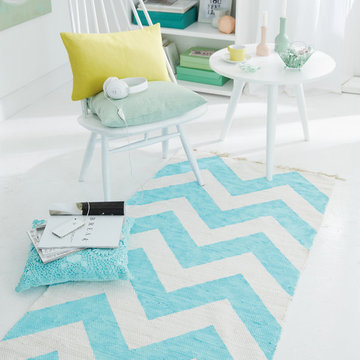
Cool look: Who wants a boring white rug when a trendy zigzag is just a bit of effort away?
HERE’S WHAT WE NEED:
Whie cotton weave rug, 80 cm wide, schematic drawing for the template (uploaded to our project), white sturdy paper for the template, geometric triangle, ruler, pencil, scissors, textile paints, paint brush, tesa® Masking Tape ECO PREMIUM 38 mm
AND THIS IS HOW IT’S DONE:
› Create your template by cutting out the schematic drawing shape from the paper.
› Use the template to transfer the chevron pattern onto the rug with a pencil.
› Mask off the pattern with tesa® Masking Tape ECO PREMIUM: Cut the ends of the masking tape diagonally and start the pattern from the inner corners of the pattern outward. Press down the edges of the tape securely.
› Paint the areas with textile paint while brushing away from the tape edge to prevent paint seeping underneath.
› Peel off the masking tape.
› Please read the instructions of the paint manufacturer on how to continue the treatment of the rug.
 tesa SE - International
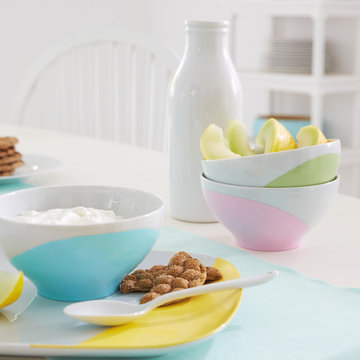
Colour where and how you want it: Completely unique and your own! The stretchy tesa® Masking Tape for Curves will have you spiralling out of control with design ideas!
HERE’S WHAT WE NEED: White crockery, porcelain paint in green, red, blue, yellow and white, paint brush, burnishing bone. tesa® Masking Tape for Curves
AND THIS IS HOW IT’S DONE:
› Carefully clean the crockery.
› Mask the areas to be painted with tesa® Masking Tape for Curves. Use the burnishing bone to press down the tape edges completely to prevent any paint leaking underneath.
› Mix the colour of your choice and apply with the paint brush. Make sure to brush away from the tape edge to make absolutely sure no paint gets in underneath the masking tape.
› Leave paint until touch-dry, then peel off the painters tape. Please read the instructions of the paint manufacturer on how to continue the treatment of the crockery.
 Kitchen Envy - Custom Kitchens
Splashback Trends
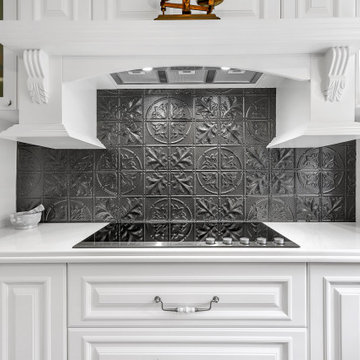
Make a stunning statement on your splashback by choosing the same stone used on your benchtop or island. This latest trend is seamless, easy maintenance and creates visual continuity. If budget is a consideration tiling the splashback opens up a multitude of colour and pattern options at an affordable price. Glass is still a favourite and also gives you the possibility of choosing an accent colour to add interest and style to your scheme.

 Oscar Wren Studios
Bedroom - mid-sized traditional master carpeted, beige floor and wallpaper bedroom idea in Gloucestershire with multicolored walls and no fireplace
 Rocky Tops Granite & Marble LLC
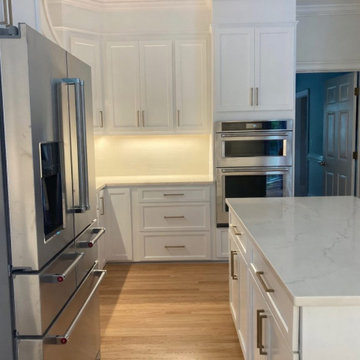
Spectrums Indulgence quartz, manufactured right here in Latta South Carolina, went into this kitchen in Columbia, and it's the kind of stone that works quietly hard in a room people actually cook and live in. It's engineered quartz, so what you're looking at is a mix of ground quartz and resin, blended and pressed to give a background that stays consistent slab to slab. That matters more than people think when you're trying to keep a kitchen looking pulled together across a run of cabinets, an island, and a backsplash.
The color reads as a soft, workable background with movement in it, enough character to give the room some depth without turning into something that fights with the cabinets or the floor. That's the appeal of a pattern like this one. It's not a plain solid, but it's not so busy that it limits what else goes in the space. Kitchens live a long time with the same countertop, and a stone that holds up visually over the years is worth choosing over something flashier that gets tiring.
Quartz like this is also just practical for a working kitchen. It doesn't need sealing the way natural stone does, it resists staining from wine, oil, and citrus, and it shrugs off the daily scratches from knives and pans that would show on a softer stone. Heat is the one thing we tell people to respect, a hot pan straight off the stove can shock the resin, so a trivet is the smart habit to build. Otherwise it's about as low-maintenance a surface as you can put in a kitchen.
We set the edge as eased, which is the clean, simple choice that lets the stone itself do the talking instead of the profile. Templating and fabrication on a job like this comes down to getting the seams tight and matching the pattern across the island and the runs so it reads as one continuous piece even where the slabs meet.
Jobs like this are what we like doing around Columbia and the rest of the Midlands, where a kitchen remodel means getting the material, the layout, and the fit all right in a space a family's going to use every single day.
 Rocky Tops Granite & Marble LLC
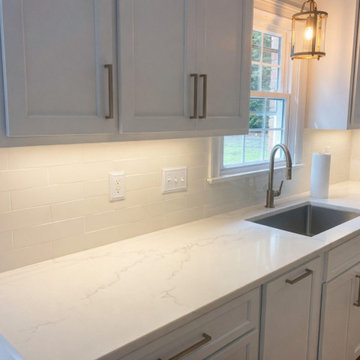
Spectrums Indulgence quartz, manufactured right here in Latta South Carolina, went into this kitchen in Columbia, and it's the kind of stone that works quietly hard in a room people actually cook and live in. It's engineered quartz, so what you're looking at is a mix of ground quartz and resin, blended and pressed to give a background that stays consistent slab to slab. That matters more than people think when you're trying to keep a kitchen looking pulled together across a run of cabinets, an island, and a backsplash.
The color reads as a soft, workable background with movement in it, enough character to give the room some depth without turning into something that fights with the cabinets or the floor. That's the appeal of a pattern like this one. It's not a plain solid, but it's not so busy that it limits what else goes in the space. Kitchens live a long time with the same countertop, and a stone that holds up visually over the years is worth choosing over something flashier that gets tiring.
Quartz like this is also just practical for a working kitchen. It doesn't need sealing the way natural stone does, it resists staining from wine, oil, and citrus, and it shrugs off the daily scratches from knives and pans that would show on a softer stone. Heat is the one thing we tell people to respect, a hot pan straight off the stove can shock the resin, so a trivet is the smart habit to build. Otherwise it's about as low-maintenance a surface as you can put in a kitchen.
We set the edge as eased, which is the clean, simple choice that lets the stone itself do the talking instead of the profile. Templating and fabrication on a job like this comes down to getting the seams tight and matching the pattern across the island and the runs so it reads as one continuous piece even where the slabs meet.
Jobs like this are what we like doing around Columbia and the rest of the Midlands, where a kitchen remodel means getting the material, the layout, and the fit all right in a space a family's going to use every single day.
 Rocky Tops Granite & Marble LLC
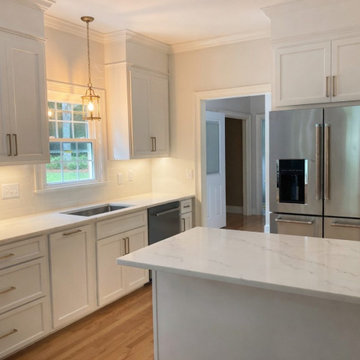
Spectrums Indulgence quartz, manufactured right here in Latta South Carolina, went into this kitchen in Columbia, and it's the kind of stone that works quietly hard in a room people actually cook and live in. It's engineered quartz, so what you're looking at is a mix of ground quartz and resin, blended and pressed to give a background that stays consistent slab to slab. That matters more than people think when you're trying to keep a kitchen looking pulled together across a run of cabinets, an island, and a backsplash.
The color reads as a soft, workable background with movement in it, enough character to give the room some depth without turning into something that fights with the cabinets or the floor. That's the appeal of a pattern like this one. It's not a plain solid, but it's not so busy that it limits what else goes in the space. Kitchens live a long time with the same countertop, and a stone that holds up visually over the years is worth choosing over something flashier that gets tiring.
Quartz like this is also just practical for a working kitchen. It doesn't need sealing the way natural stone does, it resists staining from wine, oil, and citrus, and it shrugs off the daily scratches from knives and pans that would show on a softer stone. Heat is the one thing we tell people to respect, a hot pan straight off the stove can shock the resin, so a trivet is the smart habit to build. Otherwise it's about as low-maintenance a surface as you can put in a kitchen.
We set the edge as eased, which is the clean, simple choice that lets the stone itself do the talking instead of the profile. Templating and fabrication on a job like this comes down to getting the seams tight and matching the pattern across the island and the runs so it reads as one continuous piece even where the slabs meet.
Jobs like this are what we like doing around Columbia and the rest of the Midlands, where a kitchen remodel means getting the material, the layout, and the fit all right in a space a family's going to use every single day.
5