
Search results for "Creosote" in Home Design Ideas

 Rockledge Design + Architecture
If “desert retro” could be translated as a design style, this MCM-inspired kitchen would be it. Our goal for these clients — a young couple who recently relocated to the Pittsburgh-area from Phoenix, AZ — was to bring a touch of the sunny Sonoran into their new home. This subdued, sun-bleached palette feels both vibrant and earthy. A dramatic, shifting landscape that comes alive with the day’s changing light.
Large format terrazzo tiles ground the space with muted, dusty green, ochre and amber. A nod to the tough skins of cacti, agave, and creosote bushes. A mixed finish glass tile backsplash adds pale yellow accents found in parched sand dunes. Three different cabinet finishes form our rocky canyons. Deep brown and clay purple hues like ancient cliff faces stained by manganese and iron oxide. Washed out skies reflecting warm white light. Golden brass details throughout gleam like the desert sun.
By removing a wall in between the kitchen and dining room, we were able to add a working peninsula and pull the range out of the corner. This change opened up the space, solving layout and storage puzzles for our clients — without making the kitchen feel cold or contemporary. Smooth, slab-style cabinet faces paired with streamlined appliances and fixtures keep things low maintenance.
 Rockledge Design + Architecture
If “desert retro” could be translated as a design style, this MCM-inspired kitchen would be it. Our goal for these clients — a young couple who recently relocated to the Pittsburgh-area from Phoenix, AZ — was to bring a touch of the sunny Sonoran into their new home. This subdued, sun-bleached palette feels both vibrant and earthy. A dramatic, shifting landscape that comes alive with the day’s changing light.
Large format terrazzo tiles ground the space with muted, dusty green, ochre and amber. A nod to the tough skins of cacti, agave, and creosote bushes. A mixed finish glass tile backsplash adds pale yellow accents found in parched sand dunes. Three different cabinet finishes form our rocky canyons. Deep brown and clay purple hues like ancient cliff faces stained by manganese and iron oxide. Washed out skies reflecting warm white light. Golden brass details throughout gleam like the desert sun.
By removing a wall in between the kitchen and dining room, we were able to add a working peninsula and pull the range out of the corner. This change opened up the space, solving layout and storage puzzles for our clients — without making the kitchen feel cold or contemporary. Smooth, slab-style cabinet faces paired with streamlined appliances and fixtures keep things low maintenance.
 Rockledge Design + Architecture
If “desert retro” could be translated as a design style, this MCM-inspired kitchen would be it. Our goal for these clients — a young couple who recently relocated to the Pittsburgh-area from Phoenix, AZ — was to bring a touch of the sunny Sonoran into their new home. This subdued, sun-bleached palette feels both vibrant and earthy. A dramatic, shifting landscape that comes alive with the day’s changing light.
Large format terrazzo tiles ground the space with muted, dusty green, ochre and amber. A nod to the tough skins of cacti, agave, and creosote bushes. A mixed finish glass tile backsplash adds pale yellow accents found in parched sand dunes. Three different cabinet finishes form our rocky canyons. Deep brown and clay purple hues like ancient cliff faces stained by manganese and iron oxide. Washed out skies reflecting warm white light. Golden brass details throughout gleam like the desert sun.
By removing a wall in between the kitchen and dining room, we were able to add a working peninsula and pull the range out of the corner. This change opened up the space, solving layout and storage puzzles for our clients — without making the kitchen feel cold or contemporary. Smooth, slab-style cabinet faces paired with streamlined appliances and fixtures keep things low maintenance.
Find the right local pro for your project
 TERRAFIRMA Landscape
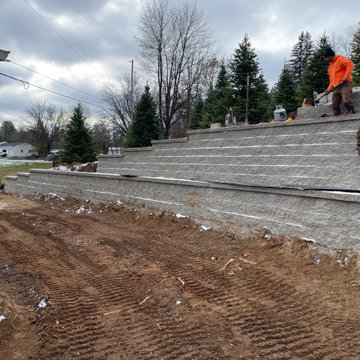
This ambitious project replaced a failing creosote railroad tie retaining wall that had collapsed at our client’s hillside home on Vineyard Lake. A project this size can be daunting in scope to address the overgrown, unstable slope. Our team worked together with thoughtful hardscape design, skilled execution and consistent site management, delivering a quality installation in a timely manor.
Landscape Designer, John McBride, crafted a site design that worked with the natural contours of the hillside, incorporating a terraced approach for structural integrity. Project Supervisor, Donnie Jones, expertly choreographed the new segmented wall construction while concurrently removing the upper railroad tie walls to stabilize the hillside.
 Rockledge Design + Architecture
If “desert retro” could be translated as a design style, this MCM-inspired kitchen would be it. Our goal for these clients — a young couple who recently relocated to the Pittsburgh-area from Phoenix, AZ — was to bring a touch of the sunny Sonoran into their new home. This subdued, sun-bleached palette feels both vibrant and earthy. A dramatic, shifting landscape that comes alive with the day’s changing light.
Large format terrazzo tiles ground the space with muted, dusty green, ochre and amber. A nod to the tough skins of cacti, agave, and creosote bushes. A mixed finish glass tile backsplash adds pale yellow accents found in parched sand dunes. Three different cabinet finishes form our rocky canyons. Deep brown and clay purple hues like ancient cliff faces stained by manganese and iron oxide. Washed out skies reflecting warm white light. Golden brass details throughout gleam like the desert sun.
By removing a wall in between the kitchen and dining room, we were able to add a working peninsula and pull the range out of the corner. This change opened up the space, solving layout and storage puzzles for our clients — without making the kitchen feel cold or contemporary. Smooth, slab-style cabinet faces paired with streamlined appliances and fixtures keep things low maintenance.
 Rockledge Design + Architecture
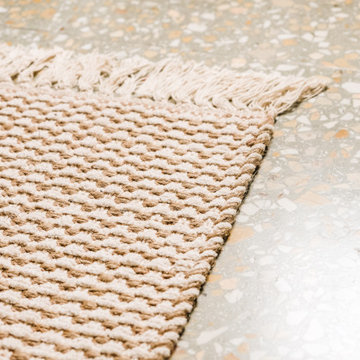
If “desert retro” could be translated as a design style, this MCM-inspired kitchen would be it. Our goal for these clients — a young couple who recently relocated to the Pittsburgh-area from Phoenix, AZ — was to bring a touch of the sunny Sonoran into their new home. This subdued, sun-bleached palette feels both vibrant and earthy. A dramatic, shifting landscape that comes alive with the day’s changing light.
Large format terrazzo tiles ground the space with muted, dusty green, ochre and amber. A nod to the tough skins of cacti, agave, and creosote bushes. A mixed finish glass tile backsplash adds pale yellow accents found in parched sand dunes. Three different cabinet finishes form our rocky canyons. Deep brown and clay purple hues like ancient cliff faces stained by manganese and iron oxide. Washed out skies reflecting warm white light. Golden brass details throughout gleam like the desert sun.
By removing a wall in between the kitchen and dining room, we were able to add a working peninsula and pull the range out of the corner. This change opened up the space, solving layout and storage puzzles for our clients — without making the kitchen feel cold or contemporary. Smooth, slab-style cabinet faces paired with streamlined appliances and fixtures keep things low maintenance.
 Rockledge Design + Architecture
If “desert retro” could be translated as a design style, this MCM-inspired kitchen would be it. Our goal for these clients — a young couple who recently relocated to the Pittsburgh-area from Phoenix, AZ — was to bring a touch of the sunny Sonoran into their new home. This subdued, sun-bleached palette feels both vibrant and earthy. A dramatic, shifting landscape that comes alive with the day’s changing light.
Large format terrazzo tiles ground the space with muted, dusty green, ochre and amber. A nod to the tough skins of cacti, agave, and creosote bushes. A mixed finish glass tile backsplash adds pale yellow accents found in parched sand dunes. Three different cabinet finishes form our rocky canyons. Deep brown and clay purple hues like ancient cliff faces stained by manganese and iron oxide. Washed out skies reflecting warm white light. Golden brass details throughout gleam like the desert sun.
By removing a wall in between the kitchen and dining room, we were able to add a working peninsula and pull the range out of the corner. This change opened up the space, solving layout and storage puzzles for our clients — without making the kitchen feel cold or contemporary. Smooth, slab-style cabinet faces paired with streamlined appliances and fixtures keep things low maintenance.
 Rockledge Design + Architecture
If “desert retro” could be translated as a design style, this MCM-inspired kitchen would be it. Our goal for these clients — a young couple who recently relocated to the Pittsburgh-area from Phoenix, AZ — was to bring a touch of the sunny Sonoran into their new home. This subdued, sun-bleached palette feels both vibrant and earthy. A dramatic, shifting landscape that comes alive with the day’s changing light.
Large format terrazzo tiles ground the space with muted, dusty green, ochre and amber. A nod to the tough skins of cacti, agave, and creosote bushes. A mixed finish glass tile backsplash adds pale yellow accents found in parched sand dunes. Three different cabinet finishes form our rocky canyons. Deep brown and clay purple hues like ancient cliff faces stained by manganese and iron oxide. Washed out skies reflecting warm white light. Golden brass details throughout gleam like the desert sun.
By removing a wall in between the kitchen and dining room, we were able to add a working peninsula and pull the range out of the corner. This change opened up the space, solving layout and storage puzzles for our clients — without making the kitchen feel cold or contemporary. Smooth, slab-style cabinet faces paired with streamlined appliances and fixtures keep things low maintenance.
 SUPERIOR CHIMNEY SERVICES CORPORATION
Winter is always tough on your home. This past winter was no picnic with the snow and cold. By the time spring (really) arrives, your chimney has put up with months of freezing temperatures, snow, ice, and the constant freeze-thaw cycle that quietly does damage you can't always see from the outside. That's why a spring chimney inspection isn't just a good idea, it’s essential to have your chimney checked before storm season begins. Here’s why:
Water Is Your Chimney's Worst Enemy
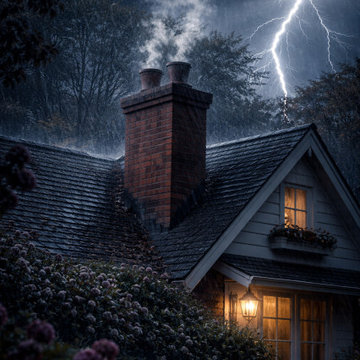
Here's something that most homeowners don’t know: chimney leaks cause more damage to masonry chimneys than fire does. Think about that a moment. While everyone worries about creosote and chimney fires — and rightfully so — water is silently doing just as much, if not more, damage.
Unlike the rest of your home, which is sheltered by your roof and eaves, your chimney stands fully exposed above the roofline. It takes on rain, wind, snow, and every freeze-thaw cycle winter throws at it, all while absorbing moisture into its porous masonry materials. That water expands and contracts, causing cracks, structural stress, and integrity loss that accumulates over time. The worst part? Chimney leaks are often subtle and slow-moving. By the time you notice water damage inside your home, the problem has usually become more serious, and expensive.
What a Spring Inspection Actually Catches
A professional spring chimney inspection, such as Superior Chimney’s, goes well beyond a quick visual check. A CSIA Certified Chimney Sweep technician will evaluate your entire system — inside and out — looking for the most common sources of chimney leaks and damage, including cracked chimney crowns, deteriorated brick and mortar joints, damaged or missing chimney caps, faulty chimney flashing and roof leaks, chimney slab gaps, and flue gas condensation from improperly sized chimney liners.
Any one of these issues left without a proper inspection, heads into spring storm season is an open invitation for water damage. And as Superior Chimney has discussed, masonry water damage is a progressive problem — the longer it goes unrepaired, the costlier the fix becomes.
What You Can Do Right Now
The good news is that most chimney water damage is preventable. The key steps are:
• have a professional-grade chimney cap installed if you don't already have one
• repair or replace a damaged chimney crown
• address any deteriorated brick and mortar
• fix leaky flashing and
• consider having your chimney professionally waterproofed. Waterproofing alone can save you significantly on future repair costs.
What’s Next?
Superior Chimney always includes a free 14-Point Certified Written Inspection with photo documentation via email with every chimney sweep. This helps you to know exactly what condition your chimney is in and what, if anything, needs attention.
Don't wait, have your chimney checked before storm season begins to reveal a problem that's been building all winter.
Schedule your inspection today at 877-244-6349.
 Wilk Stove Ltd.
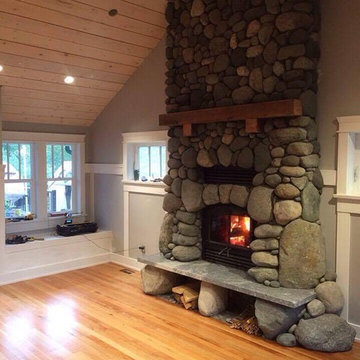
The Opel’s catalyst burns off harmful emissions and increases efficiency when the fire is burning at low temperatures. You get less creosote and more heat from your fire at low to medium burn rates. As a result, less fuel goes up your chimney in the form of smoke.
 ggarbutt
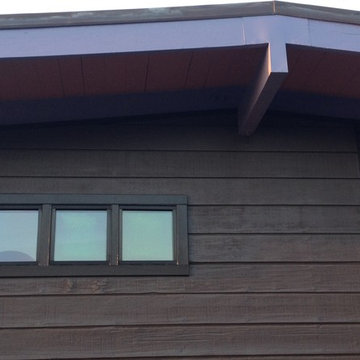
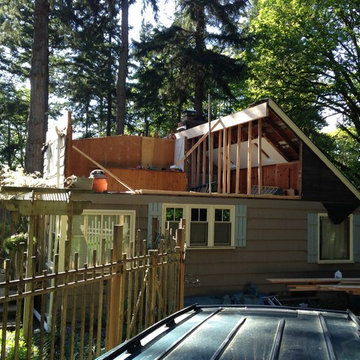
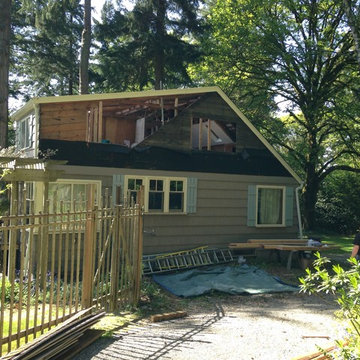
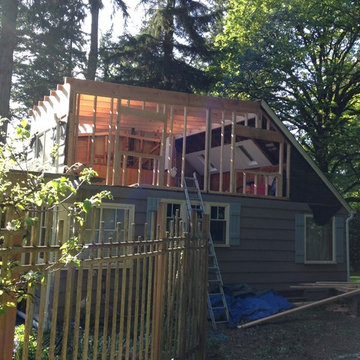
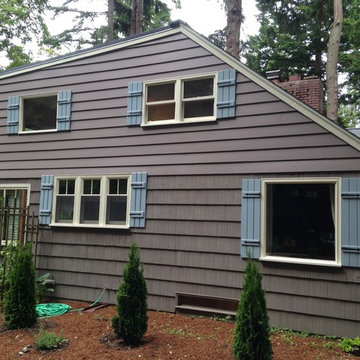
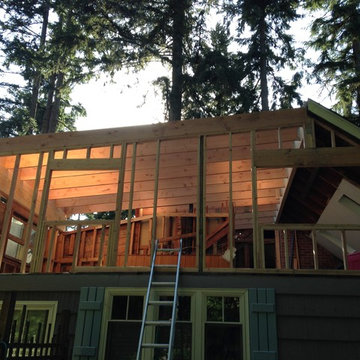
The redwood siding had originally been treated with a dark brown creosote stain. Much of this had disappeared and the siding took a battering from the elements when I bought the home in 1999. In 2000 I applied a semi-transparent stain but this did not hold up well. So in 2017 I applied primer and 2 paint topcoats.

 SUPERIOR CHIMNEY SERVICES CORPORATION
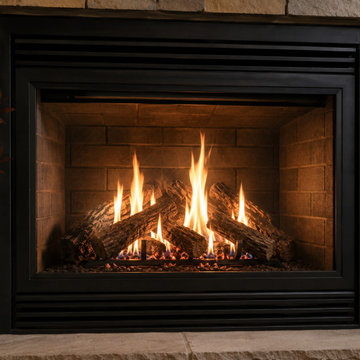
Standard annual or mechanical Chimney cleaning for gas and wood burning fireplaces typically works to remove any type of buildup as well as checking for the structural integrity of the chimney. Maintaining an annual chimney cleaning will meet the national safety standard set by the NFPA, CSIA, IRC and NCSG, helping homeowners avoid chimney fires and blockages.
Why does safety matter? Did you know that there was a chimney fire in Marengo in January? Or a chimney fire at a Peotone home at the end of March? Or a log cabin fire caused by the chimney in June? That’s just a few that happened in the past 7 months.
Why Does a Chimney Cleaning Matter?
Chimney sweeps also known as chimney cleanings, fireplace cleanings, or fireplace sweeps. Regardless of what you call it, it still means the same thing.
Chimney cleaning for gas and wood burning fireplaces serve 3 key purposes:
confirming structural integrity
removing flammable deposits and
obstruction-free assurance.
Homeowners with gas or wood burning fireplaces benefit from each of these safeguards.
The National Fire Protection Association addresses this directly through NFPA 211, a widely recognized fire safety code. The standard states that chimneys, fireplaces, and vents require inspection at least once a year for soundness, free from deposits, and correct clearances, with cleaning, maintenance, and repairs to be done whenever needed.
This annual requirement applies equally to gas and wood burning fireplaces. Organizations including the Chimney Safety Institute of America, the National Chimney Sweep Guild, International Residential code and the National Fire Protection Association each reference this standard as the requirement for home fire safety.
Free 14-Point Certified Written Inspection
Every chimney sweep completed through Superior Chimney includes a complimentary 14-point certified written inspection along with photo documentation delivered to you by email. This documentation gives homeowners a clear visual record of their chimney system.
The written report covers the condition of the flue liner, smoke chamber, smoke shelf, damper, firebox, chimney crown, and chimney cap, among other components examined during a standard visit. Photo documentation captures each area so homeowners can review the findings independently of the technician’s verbal summary. Written inspection reports allow families to track the condition of their fireplace chimney system over time.
Chimney Cleaning and Structural Integrity
A CSIA Certified Chimney Sweep technician, such as Superior Chimney technicians, visually examines the chimney from the top opening to the firebox below, gaining a full evaluation of the interior.
When chimney rods and brushes pass through the chimney system, loose pieces of fire clay tile, damaged tile joints, or crumbling brick sometimes fall down into the fireplace. This debris can mean there is an integrity problem. By knowing this is a problem, will protect families and their homes. Now it’s time to take care of it and call in a certified chimney technician.
Fireplace Cleaning and Creosote Removal
Creosote, is the technical name for soot. Soot forms as a natural byproduct of burning wood. Smoke traveling upward through the chimney and leaves deposits of creosote along the interior walls. With every fire, a little more gets built up.
The issue with creosote is that it is highly flammable and is the leading cause of chimney fires nationwide. Removing the buildup through regular chimney cleanings keeps a fireplace serviceable for continuous use throughout the spring, fall and winter seasons.
Standard and mechanical chimney cleanings pay close attention to the flue liner, smoke chamber, smoke shelf, damper, and firebox in a single service visit. Superior Chimney performs each fireplace chimney inspection using a no-mess process that protects the home during service. This keeps soot contained within specialized equipment rather than the living room.
An Obstruction Free Chimney
Several conditions create blockages within a chimney system. Bird, squirrel, bat and raccoon nesting material, feces, and debris frequently accumulate inside an unprotected flue, especially during spring and summer months when the fireplace sits unused.
Excessive creosote accumulation or a collapsed chimney liner can restrict proper airflow. Homeowners that address obstructions with a chimney inspection will be able to maintain proper draft and ventilation with their gas or wood burning fireplace. This will reduce the risk of smoke backing into the home.
Gas Chimney Cleaning Compared to Wood burning Chimney Cleaning
Gas and wood burning fireplaces share the same annual chimney inspection requirement. Whether you are burning wood, gas or a “pile of shirts” there is still heat and flame that requires worthy firewalls to protect the home from heat transfer. Fire worthiness and checking the firewall integrity is priority.
Wood burning fireplaces generate creosote that builds along the flue liner with every fire. Gas fireplace systems accumulate lighter deposits along with potential venting obstructions, since gas appliances rely heavily on venting for safe combustion byproduct release. Each system accumulates different residues that need attention.
A CSIA Certified Chimney Sweep technician from Superior Chimney adjusts the specific cleaning approach based on fuel type. However, the same core safety elements apply: structural integrity, deposit removal, and clear airflow.
What Happens During a Chimney Cleaning?
A typical chimney inspection begins with a walkthrough of the fireplace and the chimney on top of the roof, allowing the technician to record any visible concerns the homeowner reported in advance as well as any new findings.
The certified technician then covers the immediate hearth area with protective material before setting up specialized equipment designed to contain creosote throughout the cleaning and inspection.
Chimney rods and brushes pass through the flue liner to loosen and remove creosote deposits along the smoke chamber, smoke shelf, and damper. The certified technician inspects each section closely for loose or crumbling firewall, cracked joints, or other signs of weak structural damage.
A final walkthrough of the firebox and chimney completes the visual inspection. Photo documentation captures each component, and the certified written report is sent to the homeowner by email. This consistent process gives homeowners the documentation they need to compare year to year.
Chimney Cleaning Safety Standards
The table below summarizes the organizations that set national chimney safety standards, along with their specific requirements for fireplace chimney sweeps.
NFPA211
National Fire Protection Association
Annual inspection for soundness, deposit buildup, and correct clearances; cleaning and repairs completed as needed
CSIA
Chimney Safety Institute of America
Certifies technicians through testing on chimney and venting system knowledge
NCSG
National Chimney Sweep Guild
Establishes trade standards and best practices for chimney sweep professionals
How Often Should You Schedule a Chimney Cleaning and Inspection?
CSIA recommends scheduling chimney cleaning and inspection annually by CSIA Certified Chimney Sweeps. This recommendation applies to gas and wood burning fireplaces, regardless of how frequently a household uses the fireplace and especially in freeze/thaw geographic areas.
Regular chimney sweeps save lives, since a clean fireplace chimney rarely catches fire. CSIA encourages homeowners to rely on Certified Chimney Sweeps, as these technicians undergo regular testing on the complexities of chimney and venting systems throughout their careers.
Frequently Asked Questions
What is included in a chimney sweep? A chimney sweep includes the flue liner, smoke chamber, smoke shelf, damper, and firebox, removing creosote while checking for obstructions and structural concerns throughout the chimney system (NOT the ashpit).
How often should gas and wood burning fireplaces receive chimney sweeps? CSIA, NFPA, IRC and NCSG guidelines each call for chimney sweeps at least once a year for gas and wood burning fireplace systems.
Why does creosote removal matter for fireplace safety? Creosote is highly flammable and builds along the interior walls of a fireplace chimney with every fire, creating conditions that lead directly to chimney fires when left in place over time. Creosote is unburned particles from the combustion chamber.
Who should perform a fireplace chimney sweep? CSIA Certified Chimney Sweep technicians complete fireplace chimney sweeps after passing regular testing on chimney and venting system knowledge, meeting the certification standard recognized across the industry.
Does a fireplace chimney sweep remove animal nests and debris? No, a fireplace chimney sweep addresses soot and creosote, while significant nesting material, feces, or collapsed liner debris often calls for dedicated obstruction removal alongside the standard service.
What does the free 14-point inspection include? The complimentary 14-point certified written inspection documents the flue liner, smoke chamber, smoke shelf, damper, firebox, crown, and cap through photo evidence delivered directly by email for homeowner records.
Choose Superior Chimney for Your Certified Chimney Inspection
All service technicians completing chimney sweeps through Superior Chimney hold National Certification through the Chimney Safety Institute of America (CSIA), reflecting the training standard recommended by fire safety organizations nationwide.
Scheduling regular chimney sweeps to clean gas and wood burning fireplace systems protects a home from fire risk, preserves the structural integrity of the chimney, and keeps airflow clear for proper, continuous use throughout the year. Contact us today to schedule a chimney inspection at 877-244-6349.
4