
Search results for "Dating request" in Home Design Ideas



 Reverie Design & Renovation
Inspiration for a mid-sized transitional ceramic tile and multicolored floor powder room remodel in Dallas with shaker cabinets, gray cabinets, a two-piece toilet, beige walls, an undermount sink, quartzite countertops and white countertops

 Prestige Chandelier
's workshop images before packing and shipping
Hallway - mid-sized modern carpeted hallway idea in Baltimore with brown walls
Hallway - mid-sized modern carpeted hallway idea in Baltimore with brown walls
Find the right local pro for your project
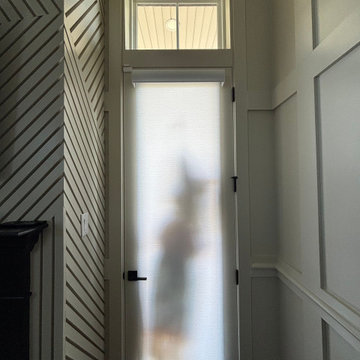

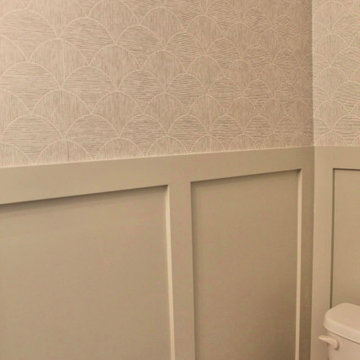
 Novem home design & build
Example of a transitional shiplap ceiling and wallpaper powder room design in Charleston
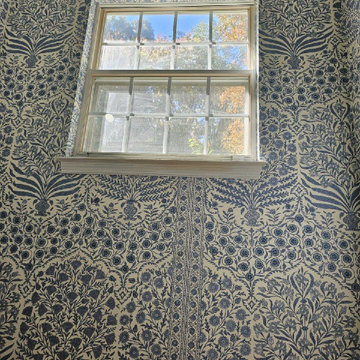
 Titan Hangers Wallpaper
Transform your basement into an elegant extension of your home with our premium wallpaper installation services, designed specifically for Cherry Hills Village residences. Our master wallpaper installers specialize in creating sophisticated, moisture-resistant designs that elevate even the most challenging below-grade spaces.
Basement-Specific Wallpaper Solutions
✔ Humidity-Proof Wallcoverings – Mold/mildew-resistant vinyl and fiberglass options
✔ Light-Enhancing Finishes – Reflective metallics and glossy textures to brighten spaces
✔ Acoustic Wallpapers – Sound-dampening textures for home theaters
✔ Faux Architectural Details – Creates the illusion of windows or paneling
✔ Wine Cellar Elegance – Temperature-stable options for collector spaces
The Cherry Hills Village Standard
✅ Below-Grade Installation Expertise – Specialized techniques for basement conditions
✅ Laser-Level Precision – Perfect alignment in low-ceiling spaces
✅ Concierge Scheduling – Timed around your seasonal use of the space
✅ Historic Home Sensitivity – Preserves original walls in older estates
✅ White Glove Service – No mess left behind
Signature Basement Styles
• Mountain Lodge Luxe – Rich woodgrains and stone textures
• Old World Cellar – European-inspired brick and wine motifs
• Modern Gallery – Neutral backdrops for art displays
• Golf Club Elegance – Subtle grasscloth and leather-look finishes
Serving Cherry Hills Village's Finest Homes – From The Preserve to The Enclave. Schedule your private basement design consultation today.

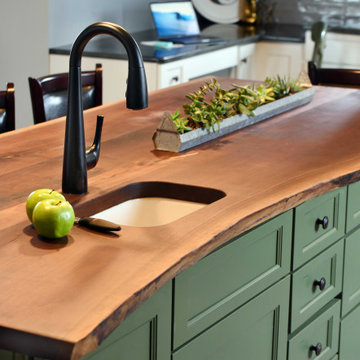
Sponsored
Plain City, OH

The Creative Kitchen Company
Columbus Area Kitchen Remodeling and Refacing Professional




 OnlineArchitect
Marble bathroom
Small trendy single-sink wet room photo in Limerick with flat-panel cabinets, beige cabinets, an integrated sink, marble countertops, a hinged shower door, beige countertops and a built-in vanity
Small trendy single-sink wet room photo in Limerick with flat-panel cabinets, beige cabinets, an integrated sink, marble countertops, a hinged shower door, beige countertops and a built-in vanity



 Wright Ostermier Landscape Architects
With their recently purchased home, the clients wanted to add a pool & spa to their backyard, with a space for entertaining. They also needed a new driveway with additional parking spots, without disturbing their entire front yard.
To address their needs and reflect their taste and lifestyle, a design with a broad set of stairs which opens out to the landscape, descending to a perched pool, was developed. A parapet wall provides an edge to the pool, while woodland plantings frame the view to the conservation area and transcends the boundary between yard and wild.
Photography by Neil Landino, designed while at Dan Gordon Landscape Architects

 NILES
This 1,000ft² recording and production studio, built in 2021 for producer couple Latifah Alattas and Lucas Morton, was designed as a fully custom creative environment that supports writing, mixing, and collaboration at the highest level. Both Latifah and Lucas are multi-instrumentalists, engineers, and mixers, and the studio reflects the full range of their workflows—visually inspiring, technically precise, and intuitive in every room.
The facility was built from the ground up with a strong emphasis on architectural acoustics and plug-and-play connectivity. The layout includes two Control Rooms, multiple isolation booths, and shared common spaces, all tied together with seamless audio integration. No matter where you are in the studio, routing, monitoring, and communication remain effortless and consistent.
Behind the aesthetic, the acoustic design is exceptionally robust. Six independent floating-floor systems support the suites, ensuring each room operates with minimal sound transmission. Tailored sound-reducing wall assemblies, full-lite doors, engineered window systems, and intentional treatment plans deliver clarity, isolation, and precision for tracking and mixing. Each space is mechanically decoupled, allowing multiple rooms to run simultaneously without compromise.
For monitoring, both Latifah and Lucas chose Genelec “The Ones” series monitors with GLM calibration to ensure accurate translation and consistency across the entire facility.
Natural light and a warm, welcoming aesthetic anchor the visual identity of the studio, reflecting the creative energy and personality of its owners. The result is a highly functional, beautifully crafted space where ideas can move freely and production can happen without limitations.

 safe ZOnea
Ask a kitchen designer in Chicago which countertop question comes up most and you will hear the same answer: white or off-white quartz, and which shade. Homeowners walk into showrooms with a photo saved on their phone, usually a bright, veined slab from a magazine spread, and leave an hour later realizing there are a dozen versions of that same look. The confusion is not about taste. It is about the fact that "white quartz" covers a huge range of patterns, undertones, and price points, and nobody explains the differences before the sale.
Older bungalows and newer builds alike are getting stripped of their dated laminate and butcher block in favor of quartz, and the reasons are practical rather than trendy. Quartz does not need sealing, resists the kind of staining that granite can suffer over decades, and holds up to the freeze-thaw humidity swings that Chicago basements and kitchens go through every year. Once a homeowner commits to quartz, though, the real decision starts: which white, and does the pattern justify the difference in cost.
This piece walks through three specific slabs that keep showing up in Chicago renovation projects, why designers reach for them in different rooms, and what actually separates a flat white surface from one with real depth. None of this requires a design background to follow. It is mostly about paying attention to how a slab behaves under kitchen lighting, how busy the vending gets, and how it photographs versus how it looks in person.
Why White Quartz Took Over Chicago Kitchens
Ten years ago, granite dominated Chicago kitchen remodels almost by default. It was durable, it looked expensive, and every fabricator in the metro area carried a wide range of colors. Quartz has since taken over that position, and the shift happened faster than most contractors expected. Engineered stone gave homeowners a more predictable surface, since natural granite varies slab to slab while quartz is manufactured to a consistent pattern batch after batch.
The other driver is light. Chicago winters are long and gray, and a lot of kitchens, especially in older two-flats and courtyard buildings, do not get much direct sun. A dark granite countertop in a dim kitchen can make the whole room feel smaller. White and light-toned quartz reflects what little natural light comes through the windows, and it makes a galley kitchen or a north-facing space feel noticeably brighter without touching the cabinetry or the layout.
There is also a resale argument that local real estate agents bring up constantly. White quartz photographs well for listings, reads as updated and low-maintenance to buyers touring in person, and does not compete visually with whatever cabinet color the next owner might prefer. It is a safer bet than a bold veined marble look or a colored quartz that might feel dated in five years.
Arctic White and the Cost Question
Among the flatter, more uniform whites, arctic white quartz price comes up constantly in budget conversations because the slab sits at a more approachable point than the heavily veined Italian-marble-inspired patterns. It reads as clean and bright without the busy movement that some homeowners find overwhelming in a small kitchen. Fabricators in the Chicago area tend to keep it in stock precisely because demand stays steady across both new construction and remodel projects.
Part of what keeps this slab affordable relative to its heavily patterned cousins comes down to manufacturing complexity. A quartz surface with minimal veining and a consistent white base is simpler to produce at scale than one that mimics the irregular, high-contrast movement of natural Calacatta marble. That production difference shows up directly in what a homeowner pays per square foot, and it is worth asking a fabricator to walk through that pricing before assuming every white quartz costs the same.
Homeowners planning a full kitchen, including an island, backsplash, and perimeter counters, often use a flatter white like this specifically because it lets other elements carry the visual interest. A patterned tile backsplash or a bold cabinet color reads more clearly against a calm countertop than against one already fighting for attention with heavy veining. Designers frequently pair simpler whites with statement lighting fixtures for exactly this reason.
What Makes Calacatta Patterns Different
Calacatta refers to a family of marble originally quarried in Italy, known for a bright white background broken up by bold, often gold-toned veining that moves in thick, dramatic streaks rather than thin gray lines. Natural Calacatta marble is soft, porous, and expensive to maintain, which is exactly why quartz manufacturers spent years developing engineered versions that replicate the look without the upkeep headaches.
The challenge with any Calacatta-style quartz is getting the veining to look organic instead of printed. Early generations of engineered stone struggled with repetitive patterns that gave away the fact the slab was manufactured rather than cut from actual marble. Modern digital printing and layering techniques have closed that gap considerably, and the better Calacatta-inspired quartz lines now vary the veining across each slab batch so two counters in the same kitchen do not look identical.
Chicago designers gravitate toward Calacatta patterns for kitchens that function as the visual centerpiece of an open floor plan, which describes a large share of the gut renovations happening in neighborhoods like Lincoln Park, Roscoe Village, and the North Shore suburbs. When the kitchen island is visible from the living room and dining area, a dramatic veined surface becomes part of the home's overall design language rather than a purely functional work surface.
Calacatta Arno Under Kitchen Lighting
One of the more popular options in this category, calacatta arno quartz, balances a warm white base with soft gray and gold veining that avoids looking too stark under the cooler LED lighting common in newer Chicago builds. Homeowners touring showrooms sometimes make the mistake of judging a slab entirely under warm incandescent lighting, then get surprised when the same surface looks slightly different once installed under their kitchen's actual fixtures.
What separates this particular pattern from flatter competitors is how the veining clusters rather than spreading evenly across the slab. That clustering mimics the way real quarried marble forms, with denser mineral deposits in some sections and cleaner stretches in others. Fabricators cutting a large island slab from a single piece will often orient the pattern intentionally so the busiest veining lands somewhere visually interesting rather than getting cut off at an edge.
Because the background reads warmer than a stark white, this pattern tends to pair well with brass or matte gold hardware, a combination that has been showing up repeatedly in Chicago kitchen remodels over the past few renovation seasons. Cabinet painters report a similar trend, with more clients requesting warm white or greige cabinet colors specifically because they complement this kind of veined quartz better than a cooler, blue-toned white would.
Silestone's Version of the Calacatta Look
Manufacturers compete directly in this Calacatta-inspired category, and silestone eternal calacatta gold represents one brand's specific take on the pattern, distinguished by richer gold veining set against a brighter white base than some competing slabs in the same family. Silestone has built a reputation around anti-bacterial surface treatments in addition to the standard quartz durability, a detail some homeowners specifically ask about for kitchens used heavily by families with young children.
The veining in this particular slab tends to run in longer, more continuous lines compared to the clustered pattern found in some other Calacatta-style options, which gives large island surfaces a sense of visual flow from one end to the other. Fabricators working with bigger islands, the kind increasingly common in open-concept Chicago remodels, often favor patterns like this because there is less need to worry about seams interrupting a busy, disconnected pattern.
Price positioning for this slab tends to sit toward the upper end of the engineered quartz category, reflecting both the brand's manufacturing process and the complexity of replicating that continuous gold veining consistently across production batches. Homeowners weighing this option against other Calacatta-style quartz should ask their fabricator directly about batch availability, since premium patterns sometimes have longer lead times than standard stock colors.
Living With Quartz Day to Day
Beyond how a slab looks in a showroom or a listing photo, the daily experience of owning quartz countertops matters more once the renovation dust settles. Quartz resists scratching far better than laminate and holds up to the acidic spills, hot pans, and general abuse of an active kitchen without the sealing maintenance that natural stone requires every year or two. That low-maintenance reputation is a large part of why quartz overtook granite in the first place.
Heat resistance is a detail that gets less attention than it should. While quartz handles moderate heat well, manufacturers generally recommend using a trivet or pad for very hot pots straight off the stove, since sudden temperature shock can occasionally cause stress marks in the resin binder that holds the engineered stone together. This is a minor precaution rather than a major limitation, but it is worth mentioning to anyone assuming quartz is entirely indestructible.
Cleaning routines stay simple across almost every pattern in this category. A damp cloth and mild soap handle daily messes, and the nonporous surface means wine, coffee, and tomato-based sauces do not soak in the way they can with unsealed granite or marble. Homeowners moving from an older stone counter often mention how much less they worry about everyday spills once quartz is installed, which is a quality-of-life change that rarely makes it into the initial design conversation.
Choosing Between the Three
There is no single correct answer among these three slabs, and that is exactly why they keep coming up together in the same design conversations across Chicago renovation projects. A flatter white with minimal veining suits kitchens where other elements need to carry the visual interest, while a bolder Calacatta-inspired pattern makes sense when the countertop itself is meant to be the centerpiece of an open floor plan.
Budget matters too, and it is worth having a direct conversation with a fabricator about where each option lands before falling in love with a specific slab in a showroom. Lighting, cabinet color, and how the kitchen connects to the rest of the home all play into which pattern will actually look right once installation is finished rather than just in a photo.
Whatever direction a homeowner leans, seeing a full slab in person under actual kitchen lighting remains the single most useful step before signing off. Photos only go so far once the countertop is sitting in the room it will live in for years.
110