
Search results for "Embody pre qualification" in Home Design Ideas
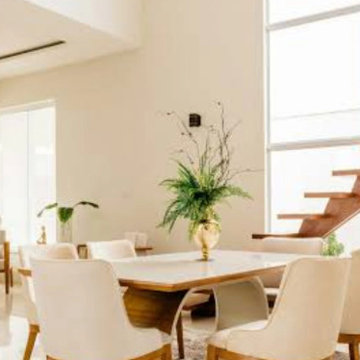
 highland
Plumbing issues rarely occur at a convenient moment. When selecting whom to install plumbing in Melbourne homes, one must find someone who is licensed, readily available and has the right to tell you the costs upfront before work is commenced. This guide includes what to look at prior to hiring a plumber melbourne and common hiring mistakes to avoid.
Explaining how to choose the right plumber Melbourne homeowners
Why choosing the right plumber matters
Poor plumbing repair may be more expensive to repair than the original problem. Experience, licensing, and communication are also all issues that impact on a job being done right the first time round. A few minutes checking credentials will save later on down the line. Difficult hiring choices may result in:
● Repeat callouts: Incomplete repairs, which fail once again in the matter of weeks, necessitate a visit by another tradesperson, and additional expense. ● Hidden charges: Unclear price estimates that become unexpected bills after the project has begun. ● Property damage: Rushing or unlicensed work that causes damage to pipes, fittings and adjacent walls and floors.
Check licensing and qualifications first
All plumbers operating in Victoria have to have the valid licence issued by the Building and Plumbing Commission. Licensing validates the formal training as well as legal responsibility of the work done. This is checked within a few minutes prior to securing any job. Pre-hiring ensure the following before the hiring:
● Licence number: A registered plumber is able to issue a licence number which is confirmed by the appropriate authority. ● Insurance coverage: Public liability insurance insures the property in the case of damage at the time of plumbing work. ● Trade specialization: Gas fitting and hot water work need to be covered by certain qualifications other than, in general, a plumbing licence. ● Membership bodies: The association with established industry organizations is usually an indication of continued training and accountability benchmarks.
Ask about availability and response time
Plumbing emergencies do not follow business hours. An explosion of a pipe or gas break should be addressed immediately, irrespective of the days or the time of the day. Skill is no more crucial than availability in the matter of picking a plumber. Some useful questions to ask before making a reservation are:
● Emergency availability: Checking that the callouts are not provided on weekends, evenings or during public holidays with long delays. ● Response time: Inquiring about the speed at which a plumber can commonly arrive to address an emergency in the house under contact. ● Call-out fee: An explanation of whether or not a call-out fee is charged and whether or not the fee is waived when the work is carried out. ● Service area: In this case, it will be necessary to check whether the plumber visits the given suburb of Melbourne on a regular basis.
Understand pricing before work begins
The most frustrating aspect among the plumbing customers is unclear pricing. An honest plumber discusses prices and alternatives with him/her prior to commencing any job. Written quotes insure the homeowner and the tradesperson. Fair pricing practices normally involve:
● Fixed quotes: An open quote properly quoted and then inspected, not an hourly estimate. ● Written breakdowns: Detailed expenses showing labour, materials as well as any other expenses prior to beginning of work. ● No pressure tactics: Time to study the options without requesting a decision to be made immediately on-site. ● Transparent extras: All other costs including after-hours costs would be explicitly known prior to the job.
Common errors one should not make when employing a plumber
Hasty judgments made in the plumbing crisis tended to come back to bite. The failure to do basic checks may lead to low-quality workmanship or high prices. Most frequent hiring issues are avoided with a brief wait before making a booking. Frequent mistakes include:
● Skipping licence checks: Recruiting solely on price without first ensuring they are properly licensed and insured. ● Accepting verbal quotes only: Accepting oral estimates rather than writing down, making itemised price explanations. ● Ignoring reviews: Finding a plumber without examining customer feedback in the past few reviews on different independent review sites. ● Overlooking guarantees: Not enquiring of work done, whether it comes with any part or labour warranty.
A look at the frequently asked questions
What is the average price of a Melbourne plumber?
Prices are depending on the type of job hence a written estimate is always advisable.
Is a call-out fee always charged?
Not necessarily; lots of plumbers cancel a charge after the job is done.
Is there a plumber who can do gas fitting?
No, the other licence qualification is a separate gas fitting licence qualification.
Is it necessary to base a hiring decision on reviews?
Yes, there are some patterns in the quality of reliability and workmanship according to recent reviews.
Is emergency plumbing available on weekends?
There are numerous certified plumbers who have emergency services available on weekends and after hours.

 Dianne Davant and Associates
Master Bedroom with Red Bed Frame and custom drapery and bedding.
Bedroom - traditional master light wood floor bedroom idea in Charlotte
Bedroom - traditional master light wood floor bedroom idea in Charlotte

 Wine Cellar International
Mid-sized transitional light wood floor wine cellar photo in Miami with display racks
Find the right local pro for your project

 aamodt / plumb architects
Shou sugi ban, weathered mesquite wood and white walls around found throughout this modern home, including in the stairway.
Staircase - modern wooden straight metal railing staircase idea in Austin
Staircase - modern wooden straight metal railing staircase idea in Austin


 Montana Timber Products
ranchwood™ Reclaimed Barn Wood Alternative – South Dakota timbers
-
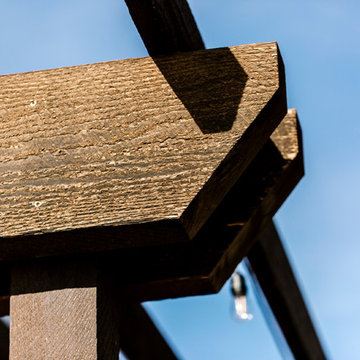
Nothing embodies the South Dakota frontier spirit quite like Montana Timber Products pre-finished ranchwood™ Tackroom timbers constructed into a fine pergola.
-
Not just a siding company, Montana Timber Products also caters to your exposed, pre-finished beams and timbers.
-
ranchwood™ is Montana Timber Products' flagship rustic natural wood timbers, a reclaimed barn wood alternative that is milled from new, rough stock, kiln dried, chemical free wood.
ranchwood™ is put through a production process that creates aesthetically beautiful rustic wood siding and authentic reclaimed barn wood and reclaimed lumber alternatives.
Typically less expensive than antique reclaimed barn wood, ranchwood™ offers uncompromising rustic wood beauty.
-
ranchwood™ Tackroom timbers provides a strong, substantive look and function.
-
Montana Timber Products is a custom millwork shop. Montana Timber Products' common texturizing options are Wire Brushed and Circle Sawn. Wire Brushed offers aesthetic and physical depth to the wood grain. The traditional milling practice of using large circular saw blades creates Montana Timber Products' Circle Sawn texture.
The result of the texturizing process is greater surface area allowing Seal-Once, 100% NO VOC waterproofer with a 10 year guarantee, to more effectively penetrate the wood. Seal-Once is safe for pets and children, exterior and interior use.
-
Tackroom offers a darker, more robust look.
-
If the environment is important to you, Montana Timber Products natural wood siding, trim, interior accents, timbers -- all of our wood products -- do not use degenerative chemicals as some other companies do to achieve desired effects.
Reclaimed wood, barn wood alternatives, and faux vintage wood are popular building materials further exemplified by Montana Timber Products environmentally friendly manufacturing technique.
 Montana Timber Products
ranchwood™ Reclaimed Barn Wood Alternative – South Dakota timbers
-
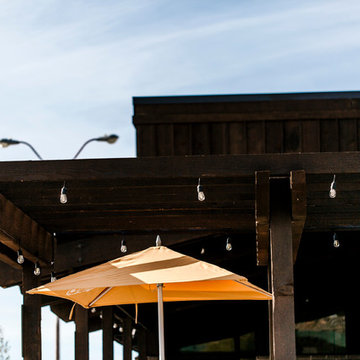
Nothing embodies the South Dakota frontier spirit quite like Montana Timber Products pre-finished ranchwood™ Tackroom timbers constructed into a fine pergola.
-
Not just a siding company, Montana Timber Products also caters to your exposed, pre-finished beams and timbers.
-
ranchwood™ is Montana Timber Products' flagship rustic natural wood timbers, a reclaimed barn wood alternative that is milled from new, rough stock, kiln dried, chemical free wood.
ranchwood™ is put through a production process that creates aesthetically beautiful rustic wood siding and authentic reclaimed barn wood and reclaimed lumber alternatives.
Typically less expensive than antique reclaimed barn wood, ranchwood™ offers uncompromising rustic wood beauty.
-
ranchwood™ Tackroom timbers provides a strong, substantive look and function.
-
Montana Timber Products is a custom millwork shop. Montana Timber Products' common texturizing options are Wire Brushed and Circle Sawn. Wire Brushed offers aesthetic and physical depth to the wood grain. The traditional milling practice of using large circular saw blades creates Montana Timber Products' Circle Sawn texture.
The result of the texturizing process is greater surface area allowing Seal-Once, 100% NO VOC waterproofer with a 10 year guarantee, to more effectively penetrate the wood. Seal-Once is safe for pets and children, exterior and interior use.
-
Tackroom offers a darker, more robust look.
-
If the environment is important to you, Montana Timber Products natural wood siding, trim, interior accents, timbers -- all of our wood products -- do not use degenerative chemicals as some other companies do to achieve desired effects.
Reclaimed wood, barn wood alternatives, and faux vintage wood are popular building materials further exemplified by Montana Timber Products environmentally friendly manufacturing technique.
 Montana Timber Products
ranchwood™ Reclaimed Barn Wood Alternative – South Dakota timbers
-
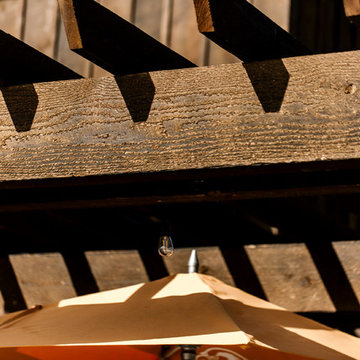
Nothing embodies the South Dakota frontier spirit quite like Montana Timber Products pre-finished ranchwood™ Tackroom timbers constructed into a fine pergola.
-
Not just a siding company, Montana Timber Products also caters to your exposed, pre-finished beams and timbers.
-
ranchwood™ is Montana Timber Products' flagship rustic natural wood timbers, a reclaimed barn wood alternative that is milled from new, rough stock, kiln dried, chemical free wood.
ranchwood™ is put through a production process that creates aesthetically beautiful rustic wood siding and authentic reclaimed barn wood and reclaimed lumber alternatives.
Typically less expensive than antique reclaimed barn wood, ranchwood™ offers uncompromising rustic wood beauty.
-
ranchwood™ Tackroom timbers provides a strong, substantive look and function.
-
Montana Timber Products is a custom millwork shop. Montana Timber Products' common texturizing options are Wire Brushed and Circle Sawn. Wire Brushed offers aesthetic and physical depth to the wood grain. The traditional milling practice of using large circular saw blades creates Montana Timber Products' Circle Sawn texture.
The result of the texturizing process is greater surface area allowing Seal-Once, 100% NO VOC waterproofer with a 10 year guarantee, to more effectively penetrate the wood. Seal-Once is safe for pets and children, exterior and interior use.
-
Tackroom offers a darker, more robust look.
-
If the environment is important to you, Montana Timber Products natural wood siding, trim, interior accents, timbers -- all of our wood products -- do not use degenerative chemicals as some other companies do to achieve desired effects.
Reclaimed wood, barn wood alternatives, and faux vintage wood are popular building materials further exemplified by Montana Timber Products environmentally friendly manufacturing technique.


 Zelaya Properties LLC
We used: Custom cherry cabinetry in Arts & Crafts Shaker style by Kabinart in Boulder and Espresso stains. Liberty Hardware Venetian bronze 1-1/2" cabinet knobs. KitchenAid Architect II Series 22 CF counter-depth French door refrigerator. KitchenAid Architect Series II 27" convection single wall oven. KitchenAid 36" 6-burner dual fuel freestanding commercial-style range. KitchenAid Architect II Series 24" dishwasher. Sharp Insight Pro Series 24" built-in microwave drawer (Model #KB6524PS). Crystorama Solaris 12" wide pendant lights in English bronze. Granite countertops in Brown Fantasy. 3"x6" polished marble backsplash.
Paint colors:
Walls: Glidden Silver Cloud 30YY 63/024
Ceilings/Trims/Doors: Glidden Swan White GLC23
Robert B. Narod Photography

 Moderne Builders
Gorgeous master bath with dramatic retro "wave" tile. Peak Photography
Example of a 1950s bathroom design in Los Angeles
Example of a 1950s bathroom design in Los Angeles
 Field Architecture
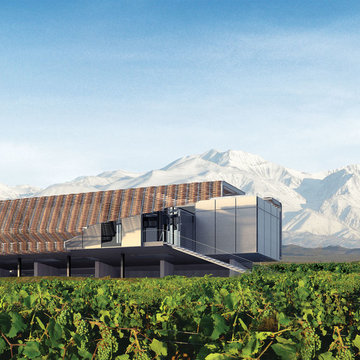
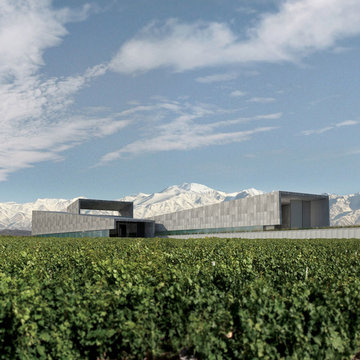
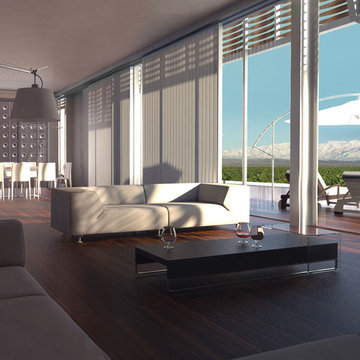
Our ambition for Bodega Bauer was to create an architecture that was informed by the same particularities of the earth which are embodied in the wine of the region. Siting and materiality are guided by the subtleties of sun and wind exposure, climate, the unexpected nuances of each season, and the presence and absence of water and shade.
The Incan irrigation technology that made the region habitable since pre-Columbian times by channeling snow melt from the Andes, was a powerful source of inspiration. Extending this system of ancient waterways, a central channel connects the house to the winery, and becomes a collector for water harvested from the building’s rooftops for irrigation. The new channel guides visitors along a sensuous journey through which one encounters the elements – sun, wind, soil, and water – which make the wine unique. What emerges is an architecture that accentuates its environment, and is at one with the raw, bold spirit of Mendoza.
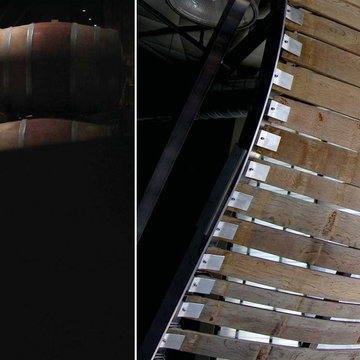
Along the irrigation channel, two linear forms – one descending, the other rising out of the ground – evoke the correspondence of architecture and wine. The descending structure is the wine-making facility which follows the gravity fed wine making process into the barrel aging vault below. The ascending structure allows the visitor to see how the wine is made, and culminates with a tasting room overlooking the vineyards and landscape. The forms of the winery create a playful interplay of sloping planes that allow the subtle topography of the ground to be perceived.
 Field Architecture
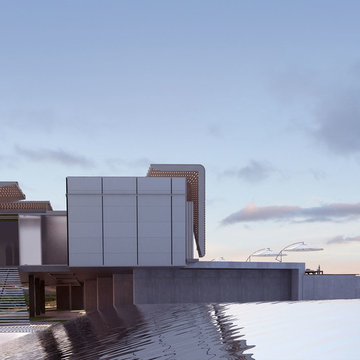
Our ambition for Bodega Bauer was to create an architecture that was informed by the same particularities of the earth which are embodied in the wine of the region. Siting and materiality are guided by the subtleties of sun and wind exposure, climate, the unexpected nuances of each season, and the presence and absence of water and shade.
The Incan irrigation technology that made the region habitable since pre-Columbian times by channeling snow melt from the Andes, was a powerful source of inspiration. Extending this system of ancient waterways, a central channel connects the house to the winery, and becomes a collector for water harvested from the building’s rooftops for irrigation. The new channel guides visitors along a sensuous journey through which one encounters the elements – sun, wind, soil, and water – which make the wine unique. What emerges is an architecture that accentuates its environment, and is at one with the raw, bold spirit of Mendoza.
Along the irrigation channel, two linear forms – one descending, the other rising out of the ground – evoke the correspondence of architecture and wine. The descending structure is the wine-making facility which follows the gravity fed wine making process into the barrel aging vault below. The ascending structure allows the visitor to see how the wine is made, and culminates with a tasting room overlooking the vineyards and landscape. The forms of the winery create a playful interplay of sloping planes that allow the subtle topography of the ground to be perceived.
 Field Architecture
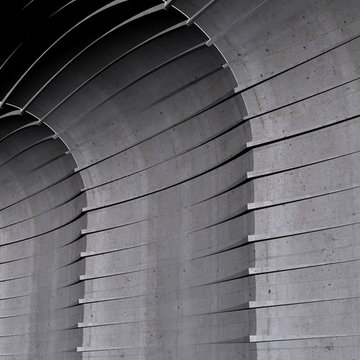
Our ambition for Bodega Bauer was to create an architecture that was informed by the same particularities of the earth which are embodied in the wine of the region. Siting and materiality are guided by the subtleties of sun and wind exposure, climate, the unexpected nuances of each season, and the presence and absence of water and shade.
The Incan irrigation technology that made the region habitable since pre-Columbian times by channeling snow melt from the Andes, was a powerful source of inspiration. Extending this system of ancient waterways, a central channel connects the house to the winery, and becomes a collector for water harvested from the building’s rooftops for irrigation. The new channel guides visitors along a sensuous journey through which one encounters the elements – sun, wind, soil, and water – which make the wine unique. What emerges is an architecture that accentuates its environment, and is at one with the raw, bold spirit of Mendoza.
Along the irrigation channel, two linear forms – one descending, the other rising out of the ground – evoke the correspondence of architecture and wine. The descending structure is the wine-making facility which follows the gravity fed wine making process into the barrel aging vault below. The ascending structure allows the visitor to see how the wine is made, and culminates with a tasting room overlooking the vineyards and landscape. The forms of the winery create a playful interplay of sloping planes that allow the subtle topography of the ground to be perceived.
 Field Architecture
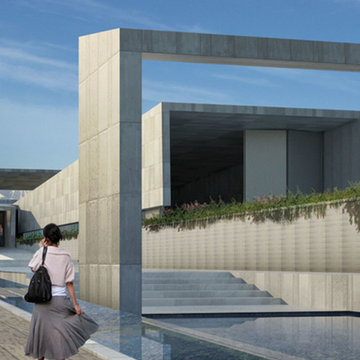
Our ambition for Bodega Bauer was to create an architecture that was informed by the same particularities of the earth which are embodied in the wine of the region. Siting and materiality are guided by the subtleties of sun and wind exposure, climate, the unexpected nuances of each season, and the presence and absence of water and shade.
The Incan irrigation technology that made the region habitable since pre-Columbian times by channeling snow melt from the Andes, was a powerful source of inspiration. Extending this system of ancient waterways, a central channel connects the house to the winery, and becomes a collector for water harvested from the building’s rooftops for irrigation. The new channel guides visitors along a sensuous journey through which one encounters the elements – sun, wind, soil, and water – which make the wine unique. What emerges is an architecture that accentuates its environment, and is at one with the raw, bold spirit of Mendoza.
Along the irrigation channel, two linear forms – one descending, the other rising out of the ground – evoke the correspondence of architecture and wine. The descending structure is the wine-making facility which follows the gravity fed wine making process into the barrel aging vault below. The ascending structure allows the visitor to see how the wine is made, and culminates with a tasting room overlooking the vineyards and landscape. The forms of the winery create a playful interplay of sloping planes that allow the subtle topography of the ground to be perceived.
 Field Architecture
Our ambition for Bodega Bauer was to create an architecture that was informed by the same particularities of the earth which are embodied in the wine of the region. Siting and materiality are guided by the subtleties of sun and wind exposure, climate, the unexpected nuances of each season, and the presence and absence of water and shade.
The Incan irrigation technology that made the region habitable since pre-Columbian times by channeling snow melt from the Andes, was a powerful source of inspiration. Extending this system of ancient waterways, a central channel connects the house to the winery, and becomes a collector for water harvested from the building’s rooftops for irrigation. The new channel guides visitors along a sensuous journey through which one encounters the elements – sun, wind, soil, and water – which make the wine unique. What emerges is an architecture that accentuates its environment, and is at one with the raw, bold spirit of Mendoza.
Along the irrigation channel, two linear forms – one descending, the other rising out of the ground – evoke the correspondence of architecture and wine. The descending structure is the wine-making facility which follows the gravity fed wine making process into the barrel aging vault below. The ascending structure allows the visitor to see how the wine is made, and culminates with a tasting room overlooking the vineyards and landscape. The forms of the winery create a playful interplay of sloping planes that allow the subtle topography of the ground to be perceived.
 Field Architecture
Our ambition for Bodega Bauer was to create an architecture that was informed by the same particularities of the earth which are embodied in the wine of the region. Siting and materiality are guided by the subtleties of sun and wind exposure, climate, the unexpected nuances of each season, and the presence and absence of water and shade.
The Incan irrigation technology that made the region habitable since pre-Columbian times by channeling snow melt from the Andes, was a powerful source of inspiration. Extending this system of ancient waterways, a central channel connects the house to the winery, and becomes a collector for water harvested from the building’s rooftops for irrigation. The new channel guides visitors along a sensuous journey through which one encounters the elements – sun, wind, soil, and water – which make the wine unique. What emerges is an architecture that accentuates its environment, and is at one with the raw, bold spirit of Mendoza.
Along the irrigation channel, two linear forms – one descending, the other rising out of the ground – evoke the correspondence of architecture and wine. The descending structure is the wine-making facility which follows the gravity fed wine making process into the barrel aging vault below. The ascending structure allows the visitor to see how the wine is made, and culminates with a tasting room overlooking the vineyards and landscape. The forms of the winery create a playful interplay of sloping planes that allow the subtle topography of the ground to be perceived.
 Field Architecture
Our ambition for Bodega Bauer was to create an architecture that was informed by the same particularities of the earth which are embodied in the wine of the region. Siting and materiality are guided by the subtleties of sun and wind exposure, climate, the unexpected nuances of each season, and the presence and absence of water and shade.
The Incan irrigation technology that made the region habitable since pre-Columbian times by channeling snow melt from the Andes, was a powerful source of inspiration. Extending this system of ancient waterways, a central channel connects the house to the winery, and becomes a collector for water harvested from the building’s rooftops for irrigation. The new channel guides visitors along a sensuous journey through which one encounters the elements – sun, wind, soil, and water – which make the wine unique. What emerges is an architecture that accentuates its environment, and is at one with the raw, bold spirit of Mendoza.
Along the irrigation channel, two linear forms – one descending, the other rising out of the ground – evoke the correspondence of architecture and wine. The descending structure is the wine-making facility which follows the gravity fed wine making process into the barrel aging vault below. The ascending structure allows the visitor to see how the wine is made, and culminates with a tasting room overlooking the vineyards and landscape. The forms of the winery create a playful interplay of sloping planes that allow the subtle topography of the ground to be perceived.

 Homestead Doors, Inc.
Door #10
FP3190
Flat 3 Panel Interior Door with Farmhouse Sticking
Solid Poplar stiles and rails
MDF panels
Painted White
1 x 4 door casing
1 x 6 baseboard
Bravura 336B door knob
Call us for a quote on your door project
419-684-9582
Visit https://www.door.cc

 Flavor Paper
Designed by UK born, Brooklyn based artist Jon Burgerman, Play Doodles brings to life Jon's famous doodles...where he just grabs a pen, wiggles it over a piece of paper and sees what, or who, pops out. Thinking it would be interesting to see how this could translate into 3D, he grabbed a bunch of colourful Play Doh and tried to make some fun characters without any plan, allowing the medium to dictate the results, which was a whole gaggle of funny little dudes. They are ageless, genderless, raceless and clearly embody the fun Jon had in making them. From a half-eaten cookie and a laid back corn on the cob to many abstract and curious creatures that ooze personality.
When Jon and Jon started to talk about a collaboration it seemed like using the realized doodles made the most sense since they added such a colorful 3D aspect to the design. All of the characters were photographed and then built into a repeat resulting in a lively wallpaper that will bring cheer to many spaces.
Play Doodles is one of our EZ Papes designs, meaning it's pre-pasted and water-activated for an easy DIY installation and removal!
2