
Search results for "Extensive acceptance" in Home Design Ideas
 User
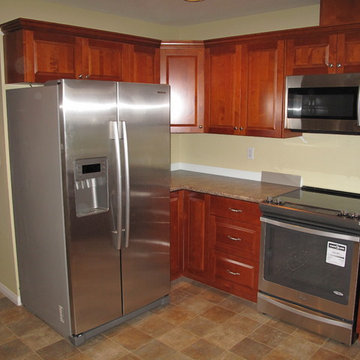
UserThe client decided to reface her kitchen cabinets rather than paint or replace them. The sadly outdated Oak cabinets had a green stain which was very outdated. Changes made to the existing cabinets prior to the refacing included:
• Adding a new cabinet over the fridge (the old one was long since removed as a new fridge was too tall
• Eliminating the range fan hood cover to allow for a new microwave/fan combination and a new cabinet overhead
• Modifying the existing microwave cabinet to now accept two full height doors
• Adding a new upper cabinet to the right of this, in matching dimensions
• Adding a new base cabinet below this new upper (right of the dishwasher), which includes a small cutlery drawer and two tall pot drawers. The new drawers are full extension and feature Blum SoftClose technology
• Installing two new tall pot drawers to each of the base cabinets to the right and left of the range
For the cabinets, Alder in a Golden Maple stain was used for the cabinet refacing, which included “plant-on” panels everywhere. A “Raised Panel” Shaker style of door and pot drawer was used with slab fronts chosen for the smaller cutlery drawers throughout.
A new 3 ½” crown molding was added to the upper cabinets. Blum SoftClose hinges were used for all door closures. New Richelieu Knobs and handles in a brushed satin finish were chosen to complete this warm and inviting transformation.
This client is EXTREMELY HAPPY with this transformation, and the good news – this price was about half of the cost of replacing the existing cabinets with ‘all new’.
 User
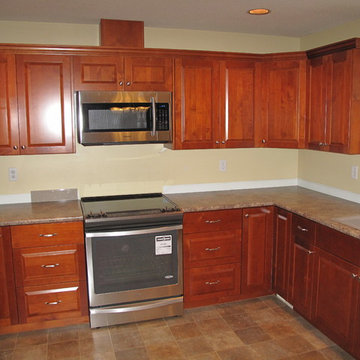
UserThe client decided to reface her kitchen cabinets rather than paint or replace them. The sadly outdated Oak cabinets had a green stain which was very outdated. Changes made to the existing cabinets prior to the refacing included:
• Adding a new cabinet over the fridge (the old one was long since removed as a new fridge was too tall
• Eliminating the range fan hood cover to allow for a new microwave/fan combination and a new cabinet overhead
• Modifying the existing microwave cabinet to now accept two full height doors
• Adding a new upper cabinet to the right of this, in matching dimensions
• Adding a new base cabinet below this new upper (right of the dishwasher), which includes a small cutlery drawer and two tall pot drawers. The new drawers are full extension and feature Blum SoftClose technology
• Installing two new tall pot drawers to each of the base cabinets to the right and left of the range
For the cabinets, Alder in a Golden Maple stain was used for the cabinet refacing, which included “plant-on” panels everywhere. A “Raised Panel” Shaker style of door and pot drawer was used with slab fronts chosen for the smaller cutlery drawers throughout.
A new 3 ½” crown molding was added to the upper cabinets. Blum SoftClose hinges were used for all door closures. New Richelieu Knobs and handles in a brushed satin finish were chosen to complete this warm and inviting transformation.
This client is EXTREMELY HAPPY with this transformation, and the good news – this price was about half of the cost of replacing the existing cabinets with ‘all new’.
 User
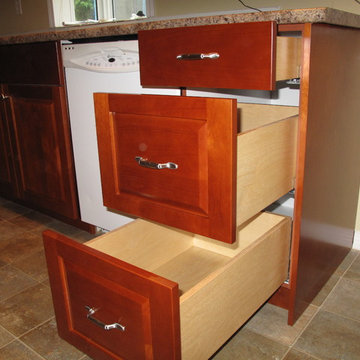
UserThe client decided to reface her kitchen cabinets rather than paint or replace them. The sadly outdated Oak cabinets had a green stain which was very outdated. Changes made to the existing cabinets prior to the refacing included:
• Adding a new cabinet over the fridge (the old one was long since removed as a new fridge was too tall
• Eliminating the range fan hood cover to allow for a new microwave/fan combination and a new cabinet overhead
• Modifying the existing microwave cabinet to now accept two full height doors
• Adding a new upper cabinet to the right of this, in matching dimensions
• Adding a new base cabinet below this new upper (right of the dishwasher), which includes a small cutlery drawer and two tall pot drawers. The new drawers are full extension and feature Blum SoftClose technology
• Installing two new tall pot drawers to each of the base cabinets to the right and left of the range
For the cabinets, Alder in a Golden Maple stain was used for the cabinet refacing, which included “plant-on” panels everywhere. A “Raised Panel” Shaker style of door and pot drawer was used with slab fronts chosen for the smaller cutlery drawers throughout.
A new 3 ½” crown molding was added to the upper cabinets. Blum SoftClose hinges were used for all door closures. New Richelieu Knobs and handles in a brushed satin finish were chosen to complete this warm and inviting transformation.
This client is EXTREMELY HAPPY with this transformation, and the good news – this price was about half of the cost of replacing the existing cabinets with ‘all new’.
Find the right local pro for your project
 Tile Doctor Ltd
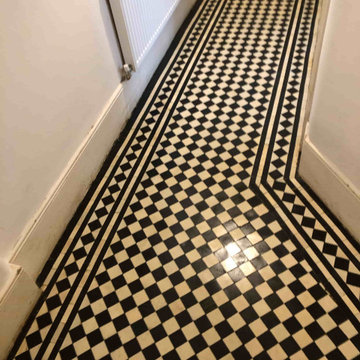
This property was in theLadbroke Grove area of West London near Kensington. The client had found an old and probably original black and white checkered pattern Victorian tiled floor under their cork tiled flooring. They also reported that it was badly damaged so I thought it would be best if I paid them a visit first to see how extensive the damage was and whether it was repairable. The floor was in a quite a state, the tiles were covered in glue from the cork and had several areas had been back filled with cement.
I reassured them that the damage could be rectified, and that it would be possible to completely restore the floor back to a good standard. I would have to remove the glue, remove the cement that had been used to level the floor and replace with reclaimed tiles to match. They were relieved to find out it could be done and happy with my quote I was instructed to go ahead with the work.
We started by taping up the skirting boards to protect the woodwork. With this done attention was turned to the glue which was softened using a strong dilution of Tile Doctor Remove and Go so it could be carefully scraped off. Multiple techniques and tools were needed to remove the glue including hand-held scrappers and a black pad fitted to a buffing machine. For the stubborn areas steam was applied to help lift the adhesive out the tile.
Once all the glue was removed the floor was rinsed and the alkaline cleaner neutralised with Tile Doctor Grout Clean Up which further cleaned the tiles and removed old traces of grout from the floor. Old floors like this generally don’t have a damp proof membrane underneath so the acids in the Grout Clean-up also counter any efflorescent salts trapped in the tile.
Once this was completed the slurry was removed with a wet vacuum and left to fully dry out overnight.
The following day focus turned to repairing the areas of the floor where the tiles were missing or broken. The main issue being the cemented areas, we see this a lot with Victorian Hallways and generally what happens is a heating engineer digs out the floor to install pipework. Not being tilers, your average plumber then repairs the floor with a self-levelling cement that brings the level up to the surface of the tile so it can be covered with lino, carpet of in this case cork.
The sub floor was then rebuilt with rapid setting self-levelling compound but this time to below the level of the tile.
Once the new base was dry it was a just a question of re-tiling with the replacement tiles to match the original checkered pattern. The replacement reproduction tiles were sourced from Original Features in Crouch End North London. After grouting we left the floor to dry out over the weekend.
When we returned to seal the floor our first step was to check the floor was dry using a moisture meter. This is critical as the sealant will not cure correctly if there is too much moisture in the floor. In this case the extra two days we had allowed had done its job and the test had confirmed it was ready to accept a sealer.
The client wanted the floor finish not to be too shiny once sealed so we opted to seal with two coats of Tile Doctor Seal and Go Extra. This is good choice for old Victorian floors such as this example as it’s special acrylic-based formula allows for moisture vapour transmission which as mentioned previously is a concern where no damp proof membrane has been installed.
I’m please to confirm my clients were delighted with the result, as you can see from the pictures the black and white floor restoration makes for a dramatic entrance well in keeping with the style of the property. For aftercare I recommended the use of Tile Doctor Neutral Tile Cleaner which will keep the tiles in good condition going forward without damaging the new sealer.
Jackson Davis
Central London Tile Doctor
 gardenaar
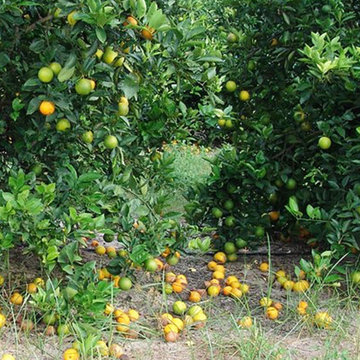
Does your orange tree drop its fruit before it reaches full size, or worse, does it drop flowers before the fruit starts to form?
Trees photosynthesize to produce carbohydrates like sugar which they store as a source of energy. They can maintain a limited amount, which is used to drive the growth of new leaves, branches, roots and stem. Fruitfulness requires the tree to divert its limited energy sources away from these vital functions to the production of flowers, blossoms and fruits.
Fruit development involves maturity followed by fertilization, growth, maturity and maturity. This process takes between 6-7 months in warmer climates, which requires a large number of tree energy sources as a result.
Trees are able to manage their resources, and will also divert them to emergencies ...
Fruit Drop and Crop Depression
In regions where oranges produce one crop per year, they go through a series of growth stages as follows:
Sprout formation and flower launching (mid-winter)
Flowers and fruit set (early spring)
Fruit growth - cell division (late spring to early summer)
Fruit growth - cell proliferation (mid-summer to early autumn)
Fruit ripening (autumn to late winter)
The difference is in the regions where most citrus crops are produced year-round. In these cases, the different stages of development will take place simultaneously.
The orange tree can handle its plant load well, and it will bear as much fruit as we can support. It is natural for all citrus trees to produce too little fruit and too little flowers in early spring to prevent overproduction. There is no need to worry too much about flowering, as an orange tree needs only 1% to 2% of flowers to produce a good crop, and sometimes even less than 1% is enough.
If a tree is depressed because it does not get enough water in hot, dry weather, and if it dies of nitrogen starvation because it is not given enough fertilizer, fruit set will be very difficult in the spring. There may also be a small number of fruit losses in the summer under stressful conditions.
Solution: Provide enough water, and water often in hot weather and strong winds. Orange feed with moderate fertilizer in early spring (September in Southern hemisphere, March in the Northern Hemisphere)
Fruit Drop and Lack of Potassium Nutrient
When orange trees are heavy, the decline in fruit can be exacerbated by low potassium levels.
Potassium, also known as potash (represented by the chemical mark K on fertilizer labels meaning N-P-K or nitrogen-phosphorus-potassium ratio) is a major macronutrient needed for flowering and fruit formation. Next to nitrogen, plants absorb more potassium than any other nutrient. Without potassium, the trees stop flowering and fruiting, which is what happens if they are not fed regularly.
Before any smug horticulturist declares to you that potassium has no direct effect on flowering and fruit set, let me say that as a horticulturist and biochemist, plant chemistry, like the chemistry of all living things is complex, but some input it is necessary to produce certain results. , and the references I have made to the end of this article support what I am saying!
Entering science, Potassium (K) is essential for water, nutrients and the movement of carbohydrates in plant tissues. It also activates enzymes that facilitate the synthesis of complex chemicals within the plant - such as starch, protein and adenosine triphosphate (ATP) production. The role of ATP is to transport the energy needed for all cellular metabolic activities to all living things, and in plants ATP production can regulate the level of photosynthesis.
Potassium also helps regulate the opening and closing of stomata, holes or cavities under which oxygen and carbon dioxide are exchanged with the atmosphere, and respiratory losses are controlled. It increases root growth which increases the absorption of nutrients and improves drought resistance, and increases resistance to frost, pests and diseases. High potassium levels produce similar maturity and fruit growth rate, as well as better nutritional quality, taste and range.
Agricultural extension agencies suggest that large amounts of potash are needed in many crops, and that potassium deficiency or macronutrient deficiency leads to reduced crop growth and reduced yields, and that potassium levels not only affect yield, but fruit size, juice. quality and shelf life.
Since potassium plays an important role in water regulation, deficiency can clearly increase the pressures associated with the declining fruit mentioned in the previous section.
Solution: Make sure that the orange trees are fertilized with the right fertilizer as previously discussed. Extra potassium can be brought in using seaweed extract (which is not a fertilizer but contains a good amount of potassium), wood ash (used in small quantities only as it is very alkaline), or potash sulphate (potassium sulphate) - all this is guaranteed. as acceptable in a natural garden.
Never use potassium chloride as it can be harmful to plants, it is a very inexpensive alternative to fertilizer manufacturers to save money!
Even if there are sufficient levels of potassium in the soil, it may not be accessible to plants, unless we make some improvements.
 KSI Kitchen & Bath
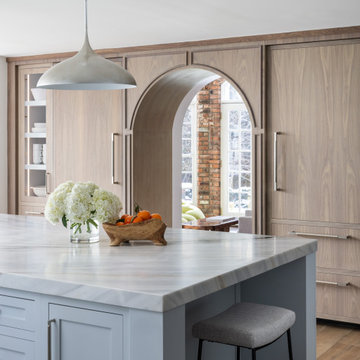
Picture this: a large-scale renovation and addition, a dream team collaboration with Krieger Klatt Architects, Mosher Dolan, and Whitmer Design, and clients who wanted it all. Timeless? Yes. Eclectic? Absolutely. Funky yet grounded in tradition? You bet. Our clients desired a space that was both enduringly classic and delightfully unique—and we delivered.
Our clients craved a space that was functional for a bustling family life (hello, kids and constant entertaining!) but also a showstopper. The goal? To create a timeless kitchen and pantry that felt like an extension of the home's traditional bones while making a strong statement. Challenge accepted.
 KSI Kitchen & Bath
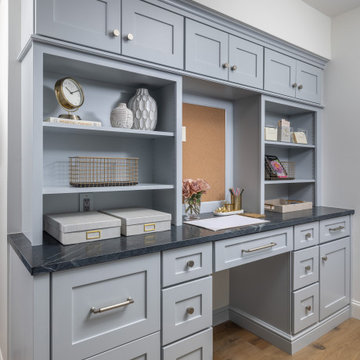
Picture this: a large-scale renovation and addition, a dream team collaboration with Krieger Klatt Architects, Mosher Dolan, and Whitmer Design, and clients who wanted it all. Timeless? Yes. Eclectic? Absolutely. Funky yet grounded in tradition? You bet. Our clients desired a space that was both enduringly classic and delightfully unique—and we delivered.
Our clients craved a space that was functional for a bustling family life (hello, kids and constant entertaining!) but also a showstopper. The goal? To create a timeless kitchen and pantry that felt like an extension of the home's traditional bones while making a strong statement. Challenge accepted.

 M-Squared Contracting Inc.
Photo Credit: Scott Norsworthy
Architect: Wanda Ely Architect Inc
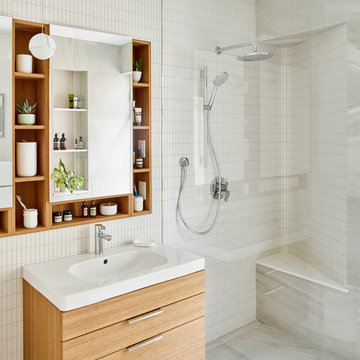
Inspiration for a small contemporary 3/4 white tile gray floor alcove shower remodel in Toronto with gray walls, a hinged shower door, flat-panel cabinets, medium tone wood cabinets and a console sink
Inspiration for a small contemporary 3/4 white tile gray floor alcove shower remodel in Toronto with gray walls, a hinged shower door, flat-panel cabinets, medium tone wood cabinets and a console sink
 KSI Kitchen & Bath
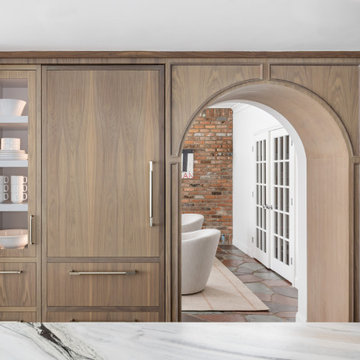
Picture this: a large-scale renovation and addition, a dream team collaboration with Krieger Klatt Architects, Mosher Dolan, and Whitmer Design, and clients who wanted it all. Timeless? Yes. Eclectic? Absolutely. Funky yet grounded in tradition? You bet. Our clients desired a space that was both enduringly classic and delightfully unique—and we delivered.
Our clients craved a space that was functional for a bustling family life (hello, kids and constant entertaining!) but also a showstopper. The goal? To create a timeless kitchen and pantry that felt like an extension of the home's traditional bones while making a strong statement. Challenge accepted.

 User
UserIn 2021, Reynard Architectural Designs accepted its first design project. Our team partnered with Tobars Dobbs to transform a tiny, abandoned ranch in West Atlanta into an expansive contemporary modern home.
The first floor, existing brickwork, and main structure where kept in tact. The original ranch was a closed floor plan with 2 bedrooms and 2 bathrooms with an extended hallway. All the interior finishes, appliances and walls were removed to convert the home into an open floor plan that maximizes space on the first floor. The finished home is a modern contemporary design that doubled the number of bedrooms, created four accessible outdoor decks, and created a fresh look that balances simplicity with plenty of character.
The home on Shirley Street takes advantage of minimalist/modern design elements, clean white countertops and cupboards that are complimented nicely by classic stainless steel finishes. The original ranch home was once confined and segmented.
Now, an open stairway that is bathed in natural light leads to the main living space above. Low profile jack and jill vanity mirrors, a soaker tub with a view, and a spacious shower all highlight the serene master bathroom.
The master bedroom makes great use of light with a small, private transom above the bed and easy outdoor access to a private patio deck behind the main sleeping quarters.
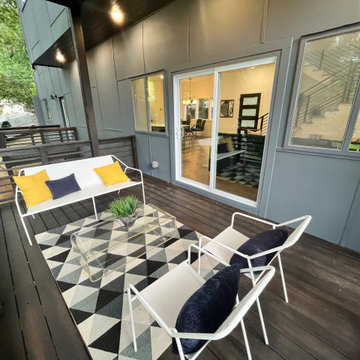
A private getaway shaded by the surrounding live oaks is just what's needed after a long day at work. The home on Shirley Street features four of these private patio decks that provide additional entertainment and relaxation space.

 Westminster Teak
The Martinique Sussex Dining Set for 6 unites traditional craftsmanship and forms with versatile functionality. With the ability to extend the Martinique Table and stack the Sussex Chairs for storage, this set can accommodate 4 to 6 people. The generous proportions and gently contoured design of the chairs allow any body type to dine in comfort for extended amounts of time. Functional yet classic, this set will be enjoyed for years to come, indoor or out.
1 x Martinique Extension Table
6 x Sussex Stacking Chairs
Table includes a double leaf extension system, allowing it to extend from a round table to an oval table (measuring 54.5" / 64.5" / 74.5"). One or both of the leaves can be extended at any time. Accepts an optional umbrella in any position.
Chairs stack up to four high for easy storage.
Optional cushions made with Quick Dry Foam® core and 100% solution dyed Sunbrella fabrics. Crafted with SVLK Certified Grade A Teak harvested from sustainable plantations in Indonesia. Every piece is precision manufactured to standard specifications for commercial and residential use.


4