
Search results for "Fernanda" in Home Design Ideas

 Fernanda Zulzke Interiores
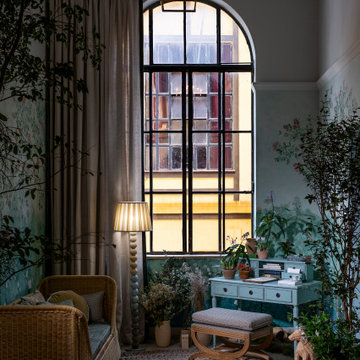
Within its 35m² of functional space, divided into an anteroom and a bathroom, Fernanda crafted a sunroom that intentionally brings together a vast array of elements: native Atlantic Forest species in a biophilic and naturalistic arrangement, a hand-painted chinoiserie adorning the walls, classic jequitibá wood furniture, refined retro-inspired tapestries, wallpapers, wooden beams reminiscent of country homes, ceramic lighting fixtures, and vases created exclusively for the project. This composition clearly expresses the richness of detail in her work and the depth of her research.
Driven by a desire to offer visitors a bucolic, fresh, and ethereal experience, landscaping was a central element of the project. Regarding the furniture, classic, rounded, lightweight, and intricately crafted forms were a prerequisite. Thus, the choice fell on pieces from Paschoal Bianco, crafted individually by master carpenters who are true artists in wood carving. Opting for the natural tone of jequitibá wood, the armchairs, stool, and side tables transport visitors to the grand residences and châteaus of rural France. To soften the design, natural fibers from Biasá were incorporated into the sofa, the Paris rattan chair, and a round rug, all displayed in an area the designer dubbed “the poetry corner.”
This corner, featuring a classic writing desk, a porcelain coffee cup, eucalyptus branches, books, and a note card beside a large window dressed with a dramatic, meticulously crafted curtain by A Morada, could only be called “the poetry corner.” Here, the public is invited to sit, contemplate the surrounding landscape, read, and write.
 Fernanda Zulzke Interiores
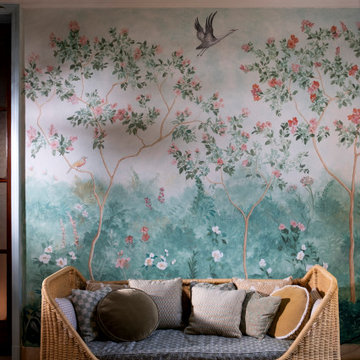
Within its 35m² of functional space, divided into an anteroom and a bathroom, Fernanda crafted a sunroom that intentionally brings together a vast array of elements: native Atlantic Forest species in a biophilic and naturalistic arrangement, a hand-painted chinoiserie adorning the walls, classic jequitibá wood furniture, refined retro-inspired tapestries, wallpapers, wooden beams reminiscent of country homes, ceramic lighting fixtures, and vases created exclusively for the project. This composition clearly expresses the richness of detail in her work and the depth of her research.
Driven by a desire to offer visitors a bucolic, fresh, and ethereal experience, landscaping was a central element of the project. Regarding the furniture, classic, rounded, lightweight, and intricately crafted forms were a prerequisite. Thus, the choice fell on pieces from Paschoal Bianco, crafted individually by master carpenters who are true artists in wood carving. Opting for the natural tone of jequitibá wood, the armchairs, stool, and side tables transport visitors to the grand residences and châteaus of rural France. To soften the design, natural fibers from Biasá were incorporated into the sofa, the Paris rattan chair, and a round rug, all displayed in an area the designer dubbed “the poetry corner.”
This corner, featuring a classic writing desk, a porcelain coffee cup, eucalyptus branches, books, and a note card beside a large window dressed with a dramatic, meticulously crafted curtain by A Morada, could only be called “the poetry corner.” Here, the public is invited to sit, contemplate the surrounding landscape, read, and write.
Find the right local pro for your project
 Fernanda Zulzke Interiores
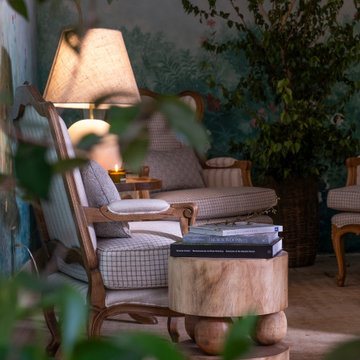
Within its 35m² of functional space, divided into an anteroom and a bathroom, Fernanda crafted a sunroom that intentionally brings together a vast array of elements: native Atlantic Forest species in a biophilic and naturalistic arrangement, a hand-painted chinoiserie adorning the walls, classic jequitibá wood furniture, refined retro-inspired tapestries, wallpapers, wooden beams reminiscent of country homes, ceramic lighting fixtures, and vases created exclusively for the project. This composition clearly expresses the richness of detail in her work and the depth of her research.
Driven by a desire to offer visitors a bucolic, fresh, and ethereal experience, landscaping was a central element of the project. Regarding the furniture, classic, rounded, lightweight, and intricately crafted forms were a prerequisite. Thus, the choice fell on pieces from Paschoal Bianco, crafted individually by master carpenters who are true artists in wood carving. Opting for the natural tone of jequitibá wood, the armchairs, stool, and side tables transport visitors to the grand residences and châteaus of rural France. To soften the design, natural fibers from Biasá were incorporated into the sofa, the Paris rattan chair, and a round rug, all displayed in an area the designer dubbed “the poetry corner.”
This corner, featuring a classic writing desk, a porcelain coffee cup, eucalyptus branches, books, and a note card beside a large window dressed with a dramatic, meticulously crafted curtain by A Morada, could only be called “the poetry corner.” Here, the public is invited to sit, contemplate the surrounding landscape, read, and write.
 Fernanda Zulzke Interiores
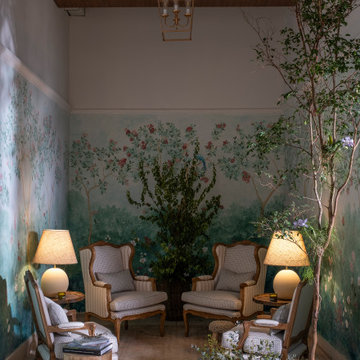
Within its 35m² of functional space, divided into an anteroom and a bathroom, Fernanda crafted a sunroom that intentionally brings together a vast array of elements: native Atlantic Forest species in a biophilic and naturalistic arrangement, a hand-painted chinoiserie adorning the walls, classic jequitibá wood furniture, refined retro-inspired tapestries, wallpapers, wooden beams reminiscent of country homes, ceramic lighting fixtures, and vases created exclusively for the project. This composition clearly expresses the richness of detail in her work and the depth of her research.
Driven by a desire to offer visitors a bucolic, fresh, and ethereal experience, landscaping was a central element of the project. Regarding the furniture, classic, rounded, lightweight, and intricately crafted forms were a prerequisite. Thus, the choice fell on pieces from Paschoal Bianco, crafted individually by master carpenters who are true artists in wood carving. Opting for the natural tone of jequitibá wood, the armchairs, stool, and side tables transport visitors to the grand residences and châteaus of rural France. To soften the design, natural fibers from Biasá were incorporated into the sofa, the Paris rattan chair, and a round rug, all displayed in an area the designer dubbed “the poetry corner.”
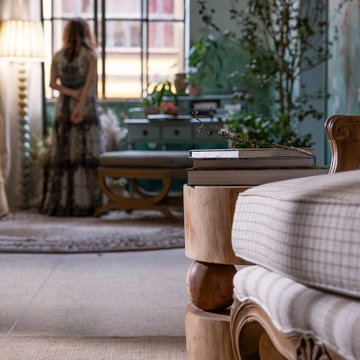
This corner, featuring a classic writing desk, a porcelain coffee cup, eucalyptus branches, books, and a note card beside a large window dressed with a dramatic, meticulously crafted curtain by A Morada, could only be called “the poetry corner.” Here, the public is invited to sit, contemplate the surrounding landscape, read, and write.
 Fernanda Zulzke Interiores
Within its 35m² of functional space, divided into an anteroom and a bathroom, Fernanda crafted a sunroom that intentionally brings together a vast array of elements: native Atlantic Forest species in a biophilic and naturalistic arrangement, a hand-painted chinoiserie adorning the walls, classic jequitibá wood furniture, refined retro-inspired tapestries, wallpapers, wooden beams reminiscent of country homes, ceramic lighting fixtures, and vases created exclusively for the project. This composition clearly expresses the richness of detail in her work and the depth of her research.
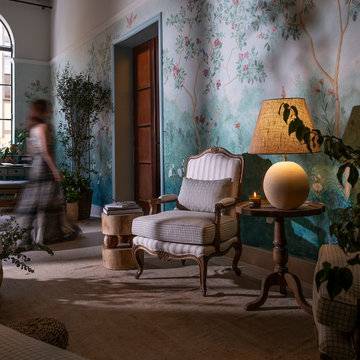
Driven by a desire to offer visitors a bucolic, fresh, and ethereal experience, landscaping was a central element of the project. Regarding the furniture, classic, rounded, lightweight, and intricately crafted forms were a prerequisite. Thus, the choice fell on pieces from Paschoal Bianco, crafted individually by master carpenters who are true artists in wood carving. Opting for the natural tone of jequitibá wood, the armchairs, stool, and side tables transport visitors to the grand residences and châteaus of rural France. To soften the design, natural fibers from Biasá were incorporated into the sofa, the Paris rattan chair, and a round rug, all displayed in an area the designer dubbed “the poetry corner.”
This corner, featuring a classic writing desk, a porcelain coffee cup, eucalyptus branches, books, and a note card beside a large window dressed with a dramatic, meticulously crafted curtain by A Morada, could only be called “the poetry corner.” Here, the public is invited to sit, contemplate the surrounding landscape, read, and write.
 Fernanda Zulzke Interiores
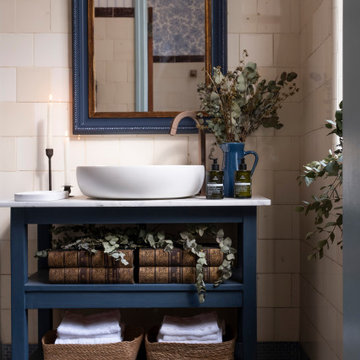
Within its 35m² of functional space, divided into an anteroom and a bathroom, Fernanda crafted a sunroom that intentionally brings together a vast array of elements: native Atlantic Forest species in a biophilic and naturalistic arrangement, a hand-painted chinoiserie adorning the walls, classic jequitibá wood furniture, refined retro-inspired tapestries, wallpapers, wooden beams reminiscent of country homes, ceramic lighting fixtures, and vases created exclusively for the project. This composition clearly expresses the richness of detail in her work and the depth of her research.
Driven by a desire to offer visitors a bucolic, fresh, and ethereal experience, landscaping was a central element of the project. Regarding the furniture, classic, rounded, lightweight, and intricately crafted forms were a prerequisite. Thus, the choice fell on pieces from Paschoal Bianco, crafted individually by master carpenters who are true artists in wood carving. Opting for the natural tone of jequitibá wood, the armchairs, stool, and side tables transport visitors to the grand residences and châteaus of rural France. To soften the design, natural fibers from Biasá were incorporated into the sofa, the Paris rattan chair, and a round rug, all displayed in an area the designer dubbed “the poetry corner.”
This corner, featuring a classic writing desk, a porcelain coffee cup, eucalyptus branches, books, and a note card beside a large window dressed with a dramatic, meticulously crafted curtain by A Morada, could only be called “the poetry corner.” Here, the public is invited to sit, contemplate the surrounding landscape, read, and write.
 Fernanda Zulzke Interiores
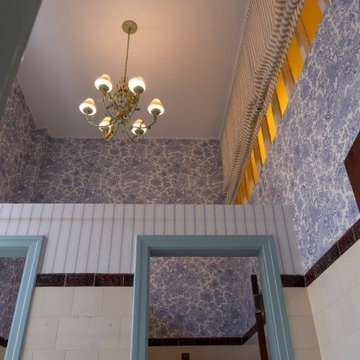
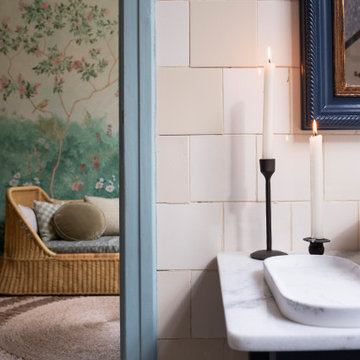
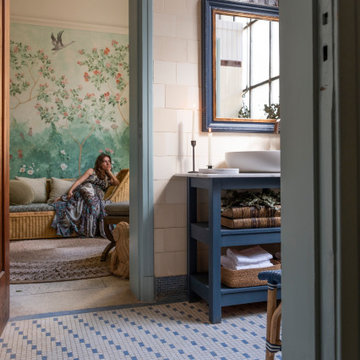
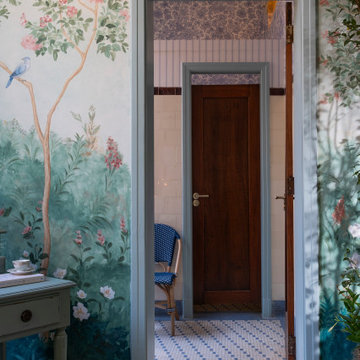
Fernanda Zulzke gifted São Paulo with an authentic experience by preserving the original 1920s tiles and architecture of the building. Many broken tiles were replaced, and missing ones were carefully sourced to breathe new life into a long-forgotten space. The floor tiles received the same care, though they posed an even greater challenge, as the original baseboard pieces could not be found even in the city’s largest tile archives. Beyond mere maintenance, the decoration aims to show visitors that history and its imperfections bring beauty, vitality, originality, and exclusivity to a space—a combination that can never be replicated, a luxury in its essence.
In the realm of restoration, the solid wood bathroom doors were personally tended to by Flávio Galli, a skilled designer and expert in raw materials, who followed the guidelines of the Parque da Água Branca manual. Four days of cleaning, sanding, and varnishing brought the doors back to life. In terms of carpentry, damaged baseboards and frames were crafted by Construverde using the building’s original wood—a true gift that Fernanda Zulzke was determined to offer the public and the park.
Completing the bathroom’s composition, imported wallpapers from Cordão Decor and a Roman curtain in cambric demonstrate the decorator’s ability to honor history while making bold, unexpected choices. Few can combine vintage, classic, and diverse colors and patterns in such a small space, transforming it into a light and fresh work of art, like the eucalyptus resting atop the marble and classic encyclopedias.
 Fernanda Zulzke Interiores
Fernanda Zulzke gifted São Paulo with an authentic experience by preserving the original 1920s tiles and architecture of the building. Many broken tiles were replaced, and missing ones were carefully sourced to breathe new life into a long-forgotten space. The floor tiles received the same care, though they posed an even greater challenge, as the original baseboard pieces could not be found even in the city’s largest tile archives. Beyond mere maintenance, the decoration aims to show visitors that history and its imperfections bring beauty, vitality, originality, and exclusivity to a space—a combination that can never be replicated, a luxury in its essence.
In the realm of restoration, the solid wood bathroom doors were personally tended to by Flávio Galli, a skilled designer and expert in raw materials, who followed the guidelines of the Parque da Água Branca manual. Four days of cleaning, sanding, and varnishing brought the doors back to life. In terms of carpentry, damaged baseboards and frames were crafted by Construverde using the building’s original wood—a true gift that Fernanda Zulzke was determined to offer the public and the park.
Completing the bathroom’s composition, imported wallpapers from Cordão Decor and a Roman curtain in cambric demonstrate the decorator’s ability to honor history while making bold, unexpected choices. Few can combine vintage, classic, and diverse colors and patterns in such a small space, transforming it into a light and fresh work of art, like the eucalyptus resting atop the marble and classic encyclopedias.
 Fernanda Zulzke Interiores
Fernanda Zulzke gifted São Paulo with an authentic experience by preserving the original 1920s tiles and architecture of the building. Many broken tiles were replaced, and missing ones were carefully sourced to breathe new life into a long-forgotten space. The floor tiles received the same care, though they posed an even greater challenge, as the original baseboard pieces could not be found even in the city’s largest tile archives. Beyond mere maintenance, the decoration aims to show visitors that history and its imperfections bring beauty, vitality, originality, and exclusivity to a space—a combination that can never be replicated, a luxury in its essence.
In the realm of restoration, the solid wood bathroom doors were personally tended to by Flávio Galli, a skilled designer and expert in raw materials, who followed the guidelines of the Parque da Água Branca manual. Four days of cleaning, sanding, and varnishing brought the doors back to life. In terms of carpentry, damaged baseboards and frames were crafted by Construverde using the building’s original wood—a true gift that Fernanda Zulzke was determined to offer the public and the park.
Completing the bathroom’s composition, imported wallpapers from Cordão Decor and a Roman curtain in cambric demonstrate the decorator’s ability to honor history while making bold, unexpected choices. Few can combine vintage, classic, and diverse colors and patterns in such a small space, transforming it into a light and fresh work of art, like the eucalyptus resting atop the marble and classic encyclopedias.
 Fernanda Zulzke Interiores
Fernanda Zulzke gifted São Paulo with an authentic experience by preserving the original 1920s tiles and architecture of the building. Many broken tiles were replaced, and missing ones were carefully sourced to breathe new life into a long-forgotten space. The floor tiles received the same care, though they posed an even greater challenge, as the original baseboard pieces could not be found even in the city’s largest tile archives. Beyond mere maintenance, the decoration aims to show visitors that history and its imperfections bring beauty, vitality, originality, and exclusivity to a space—a combination that can never be replicated, a luxury in its essence.
In the realm of restoration, the solid wood bathroom doors were personally tended to by Flávio Galli, a skilled designer and expert in raw materials, who followed the guidelines of the Parque da Água Branca manual. Four days of cleaning, sanding, and varnishing brought the doors back to life. In terms of carpentry, damaged baseboards and frames were crafted by Construverde using the building’s original wood—a true gift that Fernanda Zulzke was determined to offer the public and the park.
Completing the bathroom’s composition, imported wallpapers from Cordão Decor and a Roman curtain in cambric demonstrate the decorator’s ability to honor history while making bold, unexpected choices. Few can combine vintage, classic, and diverse colors and patterns in such a small space, transforming it into a light and fresh work of art, like the eucalyptus resting atop the marble and classic encyclopedias.
 Fernanda Zulzke Interiores
Fernanda Zulzke gifted São Paulo with an authentic experience by preserving the original 1920s tiles and architecture of the building. Many broken tiles were replaced, and missing ones were carefully sourced to breathe new life into a long-forgotten space. The floor tiles received the same care, though they posed an even greater challenge, as the original baseboard pieces could not be found even in the city’s largest tile archives. Beyond mere maintenance, the decoration aims to show visitors that history and its imperfections bring beauty, vitality, originality, and exclusivity to a space—a combination that can never be replicated, a luxury in its essence.
In the realm of restoration, the solid wood bathroom doors were personally tended to by Flávio Galli, a skilled designer and expert in raw materials, who followed the guidelines of the Parque da Água Branca manual. Four days of cleaning, sanding, and varnishing brought the doors back to life. In terms of carpentry, damaged baseboards and frames were crafted by Construverde using the building’s original wood—a true gift that Fernanda Zulzke was determined to offer the public and the park.
Completing the bathroom’s composition, imported wallpapers from Cordão Decor and a Roman curtain in cambric demonstrate the decorator’s ability to honor history while making bold, unexpected choices. Few can combine vintage, classic, and diverse colors and patterns in such a small space, transforming it into a light and fresh work of art, like the eucalyptus resting atop the marble and classic encyclopedias.





8