
Search results for "Handle real" in Home Design Ideas

 Renovisions
The goal here was to achieve an overall new look; a sleeker transitional style kitchen remodel with a better flow throughout the kitchen and dining room. Adding more lighting, interior storage, a desk area and custom seating area with built-in wine cubby and glass cabinetry to showcase wine glasses were on the top of this clients’ list.
Replacing the existing vinyl floor with new hardwood flooring was a good choice to combine both rooms and also to provide a warm and spacious feel to an otherwise narrow space.
The homeowners came across a dark marble countertop in a trade magazine but were concerned about the maintenance necessary to care for scratches and stains. We recommended Silestone’s ‘Doradus’, a new Quartz color which looks and feels like real marble, without the fuss of sealing the countertop every 6 months. The double-equal stainless steel sink with grids were stunning in contrast to the darker quartz material and the Jado single-handled stainless steel faucet was exactly the look and quality the client wanted.
Along with new Electrolux stainless steel appliances, we provided custom ‘linen white’ inset cabinetry to accommodate a pantry cabinet with pull out trays, a pull-out trash receptacle, deep drawers including a bread drawer, a Lazy Susan, and a few mullion doors with glass to showcase some colorful dishware. LED dimmable lighting was furnished and installed over all countertop work areas, casting a beautiful rich glow on the linen white porcelain subway tile as well as onto the countertop below. Recessed LED dimmable Lighting was also installed on the ceiling to ensure plenty of lighting whenever needed.
Our clients are thrilled with their new kitchen as it provides a much better flow as well as an appealing sleeker ‘linen white’ classic look compared to the darker wood-toned outdated kitchen they once had.

 FA Design Build
To stay or to go? This is the question our clients are still pondering. Yet, as their youngest child heads off to college, they are ready to enjoy their new kitchen or feature it in a real estate listing. Since they were unsure of their plans, we decided a pull and replace renovation was the logical — and most economical—choice. While all appliances remain in their same locations, we were able to make easy adjustments with cabinetry to update the space: convert a desk to a beverage center; increase the size of the island; install an island countertop with overhang for seating; and lengthen the perimeter cabinetry and add a tip-up, on-counter cabinet to house small appliances. The color palette was based on introducing warm grays to the space while ensuring the existing Brazilian cherry floor remained compatible with the new design. A combination of light gray and dark gray painted cabinetry (Medallion, Irish Crème and Frappe) updates the space, along with bronze finishes. A unique hex-patterned white tile backsplash with contrasting gray grout on the perimeter adds interest yet keeps the focus on the island. We installed the understated Cambria Whitehall on the perimeter with the vivid Cambria Skara Brae on the island. We worked closely with the stone fabricator to ensure the Skara Brae’s veining pattern matched the client’s vision. Above the island countertop, we installed two oversized pendants to add intensity and beauty as you enter the room.

 Renovation By Design LLC
Inspiration for a mid-sized transitional u-shaped medium tone wood floor and brown floor eat-in kitchen remodel in Detroit with an undermount sink, recessed-panel cabinets, white cabinets, quartz countertops, multicolored backsplash, stone tile backsplash, stainless steel appliances, an island and gray countertops
Find the right local pro for your project

 Pearl Remodeling
Laura
Inspiration for a large timeless u-shaped dark wood floor and brown floor eat-in kitchen remodel in Los Angeles with a farmhouse sink, shaker cabinets, white cabinets, quartz countertops, white backsplash, porcelain backsplash, stainless steel appliances, an island and black countertops
Inspiration for a large timeless u-shaped dark wood floor and brown floor eat-in kitchen remodel in Los Angeles with a farmhouse sink, shaker cabinets, white cabinets, quartz countertops, white backsplash, porcelain backsplash, stainless steel appliances, an island and black countertops
 Rocky Tops Granite & Marble LLC
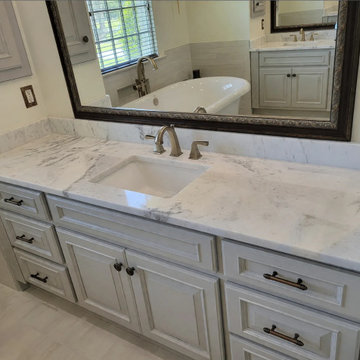
This project in Northeast Columbia brought together three different stones across the house, and that's not something we get to do every day. Marble in one space, quartzite in another, dolomite doing its own quiet work somewhere else. It's the kind of job that makes you slow down and think about where each material actually belongs instead of just picking one slab and running it everywhere.
The kitchen called for something that could handle the daily grind while still looking like a piece of natural stone should look, full of movement and depth. Quartzite earns its keep here. It reads like marble with all that soft veining and cool background color, but it's far harder and more resistant to etching from citrus, wine, or vinegar splashing around a busy counter. We templated it carefully to keep the veining moving in a way that feels natural across the runs, not chopped up or mismatched at the seams. That takes patience on the slab yard picking the right book match before it ever hits a saw.
The bathroom vanity is where the marble gets to shine. Marble on a vanity top makes sense in a way it doesn't always in a kitchen. Less traffic, less acid exposure, and it gets to just look good day after day with the veining catching the light over the sink. We kept the edge eased throughout the project, a simple softened line that doesn't compete with the stone itself. An eased edge is subtle, it just takes the sharp corner off the top so it feels comfortable under your hand and doesn't chip as easy as a square edge would over the years.
Dolomite showed up in the other space, and it's one of our favorite stones to work with because it splits the difference. It looks a lot like marble, softer tones, that same classic veining, but it's a good bit tougher and more stain resistant, which makes it a smart call anywhere you want that marble look without babying it constantly. Sealing still matters with all three of these stones. A good penetrating sealer keeps them looking right for years and makes cleanup simple, no special stuff needed, just soap and water day to day.
Jobs like this are why we like working across the Midlands. Northeast Columbia homes run the gamut from new builds to older houses getting a real refresh, and getting to move between marble, quartzite, and dolomite in one project keeps the work honest. Every stone got fabricated and set the way it should be, tight seams, clean eased edges, and a finish that'll hold up to real life in that kitchen and that bath for a long time to come.
 Rocky Tops Granite & Marble LLC
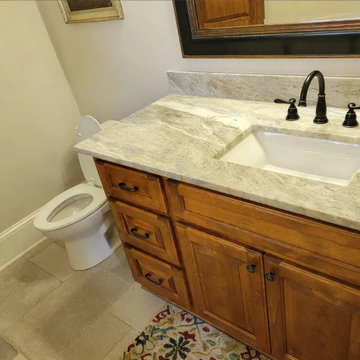
This project in Northeast Columbia brought together three different stones across the house, and that's not something we get to do every day. Marble in one space, quartzite in another, dolomite doing its own quiet work somewhere else. It's the kind of job that makes you slow down and think about where each material actually belongs instead of just picking one slab and running it everywhere.
The kitchen called for something that could handle the daily grind while still looking like a piece of natural stone should look, full of movement and depth. Quartzite earns its keep here. It reads like marble with all that soft veining and cool background color, but it's far harder and more resistant to etching from citrus, wine, or vinegar splashing around a busy counter. We templated it carefully to keep the veining moving in a way that feels natural across the runs, not chopped up or mismatched at the seams. That takes patience on the slab yard picking the right book match before it ever hits a saw.
The bathroom vanity is where the marble gets to shine. Marble on a vanity top makes sense in a way it doesn't always in a kitchen. Less traffic, less acid exposure, and it gets to just look good day after day with the veining catching the light over the sink. We kept the edge eased throughout the project, a simple softened line that doesn't compete with the stone itself. An eased edge is subtle, it just takes the sharp corner off the top so it feels comfortable under your hand and doesn't chip as easy as a square edge would over the years.
Dolomite showed up in the other space, and it's one of our favorite stones to work with because it splits the difference. It looks a lot like marble, softer tones, that same classic veining, but it's a good bit tougher and more stain resistant, which makes it a smart call anywhere you want that marble look without babying it constantly. Sealing still matters with all three of these stones. A good penetrating sealer keeps them looking right for years and makes cleanup simple, no special stuff needed, just soap and water day to day.
Jobs like this are why we like working across the Midlands. Northeast Columbia homes run the gamut from new builds to older houses getting a real refresh, and getting to move between marble, quartzite, and dolomite in one project keeps the work honest. Every stone got fabricated and set the way it should be, tight seams, clean eased edges, and a finish that'll hold up to real life in that kitchen and that bath for a long time to come.
 Rocky Tops Granite & Marble LLC
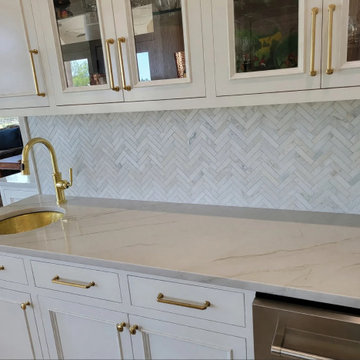
This project in Northeast Columbia brought together three different stones across the house, and that's not something we get to do every day. Marble in one space, quartzite in another, dolomite doing its own quiet work somewhere else. It's the kind of job that makes you slow down and think about where each material actually belongs instead of just picking one slab and running it everywhere.
The kitchen called for something that could handle the daily grind while still looking like a piece of natural stone should look, full of movement and depth. Quartzite earns its keep here. It reads like marble with all that soft veining and cool background color, but it's far harder and more resistant to etching from citrus, wine, or vinegar splashing around a busy counter. We templated it carefully to keep the veining moving in a way that feels natural across the runs, not chopped up or mismatched at the seams. That takes patience on the slab yard picking the right book match before it ever hits a saw.
The bathroom vanity is where the marble gets to shine. Marble on a vanity top makes sense in a way it doesn't always in a kitchen. Less traffic, less acid exposure, and it gets to just look good day after day with the veining catching the light over the sink. We kept the edge eased throughout the project, a simple softened line that doesn't compete with the stone itself. An eased edge is subtle, it just takes the sharp corner off the top so it feels comfortable under your hand and doesn't chip as easy as a square edge would over the years.
Dolomite showed up in the other space, and it's one of our favorite stones to work with because it splits the difference. It looks a lot like marble, softer tones, that same classic veining, but it's a good bit tougher and more stain resistant, which makes it a smart call anywhere you want that marble look without babying it constantly. Sealing still matters with all three of these stones. A good penetrating sealer keeps them looking right for years and makes cleanup simple, no special stuff needed, just soap and water day to day.
Jobs like this are why we like working across the Midlands. Northeast Columbia homes run the gamut from new builds to older houses getting a real refresh, and getting to move between marble, quartzite, and dolomite in one project keeps the work honest. Every stone got fabricated and set the way it should be, tight seams, clean eased edges, and a finish that'll hold up to real life in that kitchen and that bath for a long time to come.
Sponsored
Sunbury, OH

J.Holderby - Renovations
Franklin County's Leading General Contractors - 2X Best of Houzz!
 Rocky Tops Granite & Marble LLC
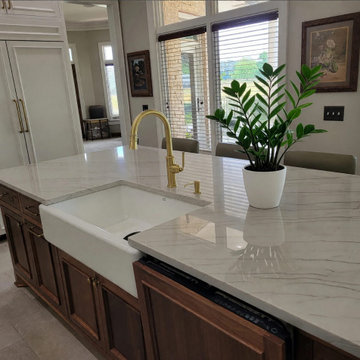
This project in Northeast Columbia brought together three different stones across the house, and that's not something we get to do every day. Marble in one space, quartzite in another, dolomite doing its own quiet work somewhere else. It's the kind of job that makes you slow down and think about where each material actually belongs instead of just picking one slab and running it everywhere.
The kitchen called for something that could handle the daily grind while still looking like a piece of natural stone should look, full of movement and depth. Quartzite earns its keep here. It reads like marble with all that soft veining and cool background color, but it's far harder and more resistant to etching from citrus, wine, or vinegar splashing around a busy counter. We templated it carefully to keep the veining moving in a way that feels natural across the runs, not chopped up or mismatched at the seams. That takes patience on the slab yard picking the right book match before it ever hits a saw.
The bathroom vanity is where the marble gets to shine. Marble on a vanity top makes sense in a way it doesn't always in a kitchen. Less traffic, less acid exposure, and it gets to just look good day after day with the veining catching the light over the sink. We kept the edge eased throughout the project, a simple softened line that doesn't compete with the stone itself. An eased edge is subtle, it just takes the sharp corner off the top so it feels comfortable under your hand and doesn't chip as easy as a square edge would over the years.
Dolomite showed up in the other space, and it's one of our favorite stones to work with because it splits the difference. It looks a lot like marble, softer tones, that same classic veining, but it's a good bit tougher and more stain resistant, which makes it a smart call anywhere you want that marble look without babying it constantly. Sealing still matters with all three of these stones. A good penetrating sealer keeps them looking right for years and makes cleanup simple, no special stuff needed, just soap and water day to day.
Jobs like this are why we like working across the Midlands. Northeast Columbia homes run the gamut from new builds to older houses getting a real refresh, and getting to move between marble, quartzite, and dolomite in one project keeps the work honest. Every stone got fabricated and set the way it should be, tight seams, clean eased edges, and a finish that'll hold up to real life in that kitchen and that bath for a long time to come.

 Cabinet-S-Top
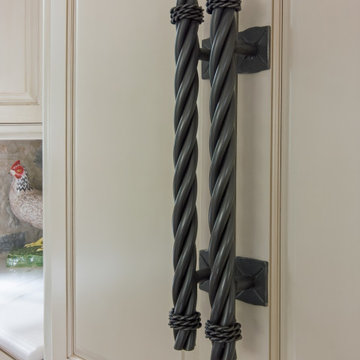
This was a major remodel where the kitchen was completely gutted, flooring and soffits were removed and all the electrical in the kitchen had to be reworked and brought up to code. We used Waypoint Living Spaces for the perimeter cabinets and used a riser and crown molding to connect the cabinets to the ceiling. We chose Medallion Cabinetry for the island because the customer had her heart set on a green painted island. The hardware we used is from the Mulholland collection by Amerock. The customers have large family gathers and it was very important for them to have an island that was moveable. We used casters from Richelieu to create and island that could move easily, as well as having brakes to keep the island in place when they wanted.
Giallo Traversella granite was used on the perimeter countertops to tie together the greens and beige tones of the cabinetry and we used John Boos, walnut butcher block countertop for the island to compliment wood tones from the existing millwork in the home. The customer provided me with an inspiration picture for a backsplash, she knew she wanted a glass patterned backsplash. Ceramic Tiles International had released their Debut Petal mosaic tile and the customer loved it.
Prior to the remodel, the kitchen was very dark and very crowded, it did not function in a way that worked for my customer. We added under cabinet LED lights, one general ceiling fixture and LED Brio Disc lights with dimming capabilities so the customers could adjust the lighting to their specific needs.
Light fixtures were updated in the hallways as well as the kitchen.
My customer didn’t know exactly what they wanted as far as plumbing was concerned. They wanted products that were durable and easy to maintain. I chose the Blanco Performa undermount sink in the Truffle color due to is durability and the color complimented the other materials. We used Moen’s Arbor single handle pull down spray faucet and transitional soap dispenser due to its simplistic design, functionality and warranty. We used a ¾ horsepower Insinkerator disposal and a deluxe Steamball strainer basket.
The customer originally had Parquet flooring and they liked the look of real hardwood. Madeira 5” planks in Dark Gunstock oak was chosen for its color and durability. The flooring brought in warm neutral tones to compliment other materials. My customer wanted a larger window, but they had some safety concerns. We addressed their concerns by providing a larger Awning style window, using tempered glass and double locks.
 Drury Design
THE SETUP
Imagine how thrilled Diana was when she was approached about designing a kitchen for a client who is an avid traveler and Francophile. ‘French-country’ is a very specific category of traditional design that combines French provincial elegance with rustic comforts. The look draws on soothing hues, antique accents and a wonderful fusion of polished and relic’d finishes.
Her client wanted to feel like she was in the south of France every time she walked into her kitchen. She wanted real honed marble counters, vintage finishes and authentic heavy stone walls like you’d find in a 400-year old château in Les Baux-de-Provence.
Diana’s mission: capture the client’s vision, design it and utilize Drury Design’s sourcing and building expertise to bring it to life.
Design Objectives:
Create the feel of an authentic vintage French-country kitchen
Include natural materials that would have been used in an old French château
Add a second oven
Omit an unused desk area in favor of a large, tall pantry armoire
THE REMODEL
Design Challenges:
Finding real stone for the walls, and the craftsmen to install it
Accommodate for the thickness of the stones
Replicating château beam architecture
Replicating authentic French-country finishes
Find a spot for a new steam oven
Design Solutions:
Source and sort true stone. Utilize veteran craftsmen to apply to the walls using old-world techniques
Furr out interior window casings to adjust for the thicker stone walls
Source true reclaimed beams
Utilize veteran craftsmen for authentic finishes and distressing for the island, tall pantry armoire and stucco hood
Modify the butler’s pantry base cabinet to accommodate the new steam oven
THE RENEWED SPACE
Before we started work on her new French-country kitchen, the homeowner told us the kitchen that came with the house was “not my kitchen.”
“I felt like a stranger,” she told us during the photoshoot. “It wasn’t my color, it wasn’t my texture. It wasn’t my style… I didn’t have my stamp on it.”
And now?
“I love the fact that my family can come in here, wrap their arms around it and feel comfortable,” she said. “It’s like a big hug.”

 harry schott
Running a small restaurant is a high-wire act - delicious plates on one end, razor-thin margins on the other. With food costs averaging 28-35 percent of revenue and labor at 30 percent, every dollar counts. The good news? Targeted tweaks can shave 10-20 percent off your bottom line without sacrificing quality. From smarter sourcing to streamlined waste handling, these strategies empower independents to thrive. One underrated gem: Efficient waste management via roll-off dumpster rentals, which can slash disposal fees by up to 40 percent. Let's break it down.
Optimize Inventory: Waste Less, Save More
Overstocked pantries are profit killers - U.S. restaurants toss $25 billion in food yearly. Audit weekly. Track sales data to forecast demand, using apps like Toast or MarketMan for real-time insights. Trim your menu to 12-15 core items, focusing on seasonal, high-margin stars like farm-fresh salads over imported proteins. Portion control is key - pre-weighed scoops cut overuse by 15 percent.
Repurpose scraps creatively. Veggie peels into stocks, bread ends for croutons. Donate extras to food banks via apps like Too Good To Go, earning tax deductions up to $5,000 annually. These habits reclaim 5-10 percent of food budgets, freeing cash for upgrades. Additionally, consider using citrus rinds for infused oils or desserts, and coffee grounds for compost to support local gardens. Engaging staff in sustainability efforts also builds morale and can be highlighted in marketing materials to attract eco-conscious diners.
Trim Energy and Utilities: Go Green for Greenbacks
Utilities gobble 4-10 percent of expenses. Swap to LED bulbs and energy-star appliances - upfront costs pay back in 6-12 months via 20-30 percent bill drops. Install low-flow faucets and programmable thermostats; during off-hours, dial down to 55°F to save $200/month on HVAC.
Use induction cooktops for precise heat, reducing gas by 15 percent. Train staff on "last out" protocols - unplugging idle equipment. Solar panels? For rooftops under 1,000 sq ft, incentives cover 30 percent installation, yielding ROI in 5 years.
Master Waste Management: Dumpsters as Cost Commanders
Trash isn't just garbage - it's a budget black hole, with disposal eating 2-5 percent of revenues. Small spots generate 1-2 tons monthly from food scraps, packaging, and grease. Ditch overflowing bins and irregular hauls for roll-off dumpster rentals. A 10-15 yard unit centralizes waste, handling bulk like fryer oil drums or produce crates without daily pickups.
Efficiency Over Headcount
Labor's your biggest line item - cross-train staff for multi-roles, like servers prepping during lulls, trimming overtime 10-15 percent. Shift scheduling software optimizes based on reservations, avoiding idle payroll.
Negotiate bulk buys with local suppliers for 5-10 percent discounts; loyalty programs from Sysco yield free deliveries. Go digital - QR menus cut printing costs, speed table turnover, and allow menu updates in real time without waste. Loyalty apps boost repeat visits without increasing your advertising budget, making it easier to track customer preferences and send targeted promotions. Consider bundling purchases with other area restaurants to unlock deeper discounts and leverage supplier relationships for exclusive seasonal specials. These strategies can reduce overhead, improve customer retention, and keep operations flexible as trends shift.

 Caine & Company
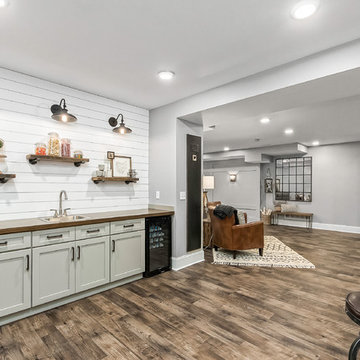
Lovely transitional style custom home in Scottsdale, Arizona. The high ceilings, skylights, white cabinetry, and medium wood tones create a light and airy feeling throughout the home. The aesthetic gives a nod to contemporary design and has a sophisticated feel but is also very inviting and warm. In part this was achieved by the incorporation of varied colors, styles, and finishes on the fixtures, tiles, and accessories. The look was further enhanced by the juxtapositional use of black and white to create visual interest and make it fun. Thoughtfully designed and built for real living and indoor/ outdoor entertainment.

 Susan Yeley Homes
This gem of a house was built in the 1950s, when its neighborhood undoubtedly felt remote. The university footprint has expanded in the 70 years since, however, and today this home sits on prime real estate—easy biking and reasonable walking distance to campus.
When it went up for sale in 2017, it was largely unaltered. Our clients purchased it to renovate and resell, and while we all knew we'd need to add square footage to make it profitable, we also wanted to respect the neighborhood and the house’s own history. Swedes have a word that means “just the right amount”: lagom. It is a guiding philosophy for us at SYH, and especially applied in this renovation. Part of the soul of this house was about living in just the right amount of space. Super sizing wasn’t a thing in 1950s America. So, the solution emerged: keep the original rectangle, but add an L off the back.
With no owner to design with and for, SYH created a layout to appeal to the masses. All public spaces are the back of the home--the new addition that extends into the property’s expansive backyard. A den and four smallish bedrooms are atypically located in the front of the house, in the original 1500 square feet. Lagom is behind that choice: conserve space in the rooms where you spend most of your time with your eyes shut. Put money and square footage toward the spaces in which you mostly have your eyes open.
In the studio, we started calling this project the Mullet Ranch—business up front, party in the back. The front has a sleek but quiet effect, mimicking its original low-profile architecture street-side. It’s very Hoosier of us to keep appearances modest, we think. But get around to the back, and surprise! lofted ceilings and walls of windows. Gorgeous.
Sponsored
Sunbury, OH
J.Holderby - Renovations
Franklin County's Leading General Contractors - 2X Best of Houzz!
 Amber Mitchell
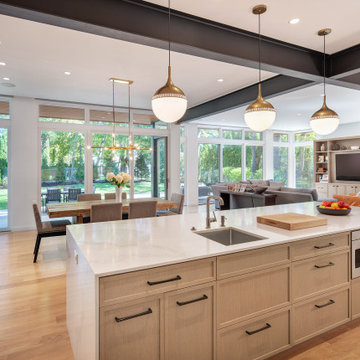
Eat-in kitchen - large modern light wood floor and exposed beam eat-in kitchen idea in Chicago with a single-bowl sink, shaker cabinets, light wood cabinets, quartzite countertops, white backsplash, subway tile backsplash, stainless steel appliances, an island and white countertops
 safe ZOnea
Every year, the same thing happens. The first real snowfall arrives, demand for de-icing materials spikes overnight, and the businesses that waited too long find themselves scrambling for supply at the worst possible moment. Facility managers, property owners, contractors, and municipalities all depend on a steady supply of salt and ice melt to keep their properties safe and operational through winter. The ones who plan ahead sail through. The ones who don't pay more, wait longer, and take on real risk.
Sourcing de-icing materials well is not complicated, but it does require thinking ahead and understanding the options. The choices you make about what to buy, how to buy it, and who to buy it from have a direct effect on your costs, your reliability, and your ability to keep people safe when conditions turn dangerous. This article lays out what matters.
Why Your Choice of Supplier Matters More Than You Think
It is easy to treat de-icing material as a commodity, something you grab whenever you need it without much thought about where it comes from. That works fine until the moment it doesn't, usually in the middle of a storm when everyone needs supply at once and the casual sources have run dry. At that point, the relationships you built before the season become the difference between staying stocked and being stuck.
Reliable supply is the whole game in winter operations. A property that runs out of ice melt during a storm faces safety hazards, liability exposure, and disruption, none of which can wait for a back-ordered shipment. This is why establishing relationships with dependable rock salt suppliers before the season starts is one of the smartest moves a facility manager or contractor can make. It locks in supply, often locks in better pricing, and removes a major source of mid-winter stress.
The lesson here is to treat sourcing as a planning decision rather than a last-minute errand. The businesses that come through winter smoothly are almost always the ones that secured their supply chain early, chose suppliers who could actually deliver when it counted, and never had to gamble on finding material during a shortage. Reliability bought in advance is far cheaper than scarcity paid for in a crisis.
Bagged or Bulk: Matching the Material to the Job
One of the first practical decisions is whether to buy de-icing material in bags or in bulk, and the right answer depends entirely on the operation. Each format has clear advantages, and many operations end up using both for different purposes.
Bagged material offers convenience, control, and easy storage. It is simple to handle, easy to distribute to different locations or crews, straightforward to store without special equipment, and convenient for spot application by hand. It suits smaller properties, businesses without bulk storage, and situations where portion control and tidiness matter. Bulk material, on the other hand, tends to make sense for large operations that go through high volumes, where buying in quantity lowers the per-unit cost and the operation has the equipment and space to store and handle it. The tradeoff is between the convenience and flexibility of bags and the volume economics of bulk.
For many operations, the right approach is a mix: bulk for the high-volume core of the work and bags for flexibility, spot treatment, and locations where bulk handling is impractical. The key is to match the format to how the material will actually be stored, moved, and applied, rather than defaulting to one or the other out of habit. Thinking this through in advance avoids both the waste of over-buying bulk you can't handle and the expense of relying entirely on bags for a large operation.
Rock Salt Is Not Your Only Option
Rock salt, or sodium chloride, is the workhorse of winter de-icing for good reason. It is effective, widely available, and cost-efficient, which makes it the default choice for most operations most of the time. But it has limits, and understanding the alternatives helps you choose the right material for the conditions you actually face.
The most important limitation is temperature. Rock salt becomes less effective as temperatures drop, and in genuinely cold conditions it can struggle to do the job at all. This is where alternatives come in. Calcium chloride, for instance, works at much lower temperatures than rock salt and acts quickly, which makes it valuable when conditions are severe or when fast melting matters. Operations that face hard freezes or need dependable performance in extreme cold often keep calcium chloride for sale on hand for exactly those situations, using it alongside rock salt rather than instead of it.
The practical approach is to understand the conditions your property faces and stock accordingly. For many operations, rock salt handles the bulk of the work while a faster, colder-rated material like calcium chloride covers the extreme days when ordinary salt falls short. Matching the material to the temperature and the urgency of the situation is what separates an operation that stays ahead of winter from one that is constantly reacting to it.
Securing Your Supply Before the Season
Knowing what to buy is only half the equation. The other half is making sure you can actually get it when you need it, which means securing your supply before winter arrives rather than after it has already started. Timing is one of the most underrated factors in winter operations.
The logic is simple. Demand for de-icing materials is highly seasonal and spikes sharply during storms, when everyone needs supply simultaneously. Prices and availability both move against the buyer at exactly those moments. By contrast, planning ahead, estimating your needs and arranging supply before the season, puts you in a far stronger position. Working with established rock salt suppliers ahead of time means your material is accounted for before the rush, often at better pricing and with the confidence that it will be there when the first storm hits.
This kind of planning also lets you think clearly rather than react under pressure. You can estimate your seasonal needs based on your property and past winters, decide on the right mix of materials and formats, and arrange storage in advance. Operations that do this consistently spend less, worry less, and never find themselves making frantic calls during a storm. The effort of planning ahead is modest, and the payoff in reliability and cost savings is substantial.
Storing and Handling What You Buy
Securing supply is not much use if the material degrades before you can use it, which makes proper storage and handling an important and often overlooked part of the equation. De-icing materials are sensitive to moisture, and poor storage can turn a good supply into a clumped, hardened mess that is difficult to apply.
The fundamentals are straightforward. Keep material dry and protected from moisture, since salt and ice melt readily absorb water and can harden if exposed. Store it in a way that suits the format, whether that means a proper bulk storage area or a dry space for stacked bags. Keep it accessible, so crews can get to it quickly when a storm hits and time is short. And handle it with the right equipment for the format and volume, which protects both the material and the people working with it. None of this is complicated, but neglecting it can undermine even a well-planned supply.
Good storage practices protect the investment you made in securing supply early. There is little point in arranging your materials ahead of the season only to have them degrade before use. Treating storage and handling as part of the overall plan, rather than an afterthought, ensures that the material you secured is actually usable when the moment comes. It is the final link in a supply chain built to perform under winter conditions.
Estimating How Much You Actually Need
One question trips up operations of every size: how much de-icing material to buy. Order too little and you risk running short during a storm. Order too much and you tie up money and storage space in material you may not use. Getting the estimate reasonably right is a meaningful part of sourcing well.
Several factors shape the answer. The size and type of the areas you treat, sidewalks, lots, entrances, and drive lanes, set the baseline for how much material each application consumes. The local climate matters too, since colder regions and those with frequent snowfall go through far more material than milder ones. Application frequency depends on how often storms hit and how quickly surfaces need to be cleared, which varies with the kind of property and the expectations of the people who use it. And the type of material plays a role, since different products are applied at different rates.
Past experience is often the best guide. Operations that track what they used in previous winters, adjusted for the size of the property and the severity of the season, can estimate their needs with reasonable confidence. For newer operations without that history, it helps to plan conservatively and to work with a supplier who can replenish stock reliably, so that a low estimate does not turn into a mid-storm shortage.
The goal is not perfect precision but a sound, slightly cautious estimate paired with a dependable supply relationship. That combination lets an operation keep enough material on hand to handle the season without over-committing to volume it cannot store or use. Thinking this through before winter, rather than guessing during it, is one more way that planning ahead pays off when the snow starts to fall.
The Bottom Line
Sourcing de-icing materials well comes down to a few straightforward principles: plan ahead, choose reliable suppliers before the season, match your materials and formats to your actual needs and conditions, and store what you buy properly. The operations that follow these principles move through winter with confidence, while those that improvise pay more and take on needless risk.
Winter is predictable in one respect: it arrives every year, and demand for de-icing material spikes the moment it does. The businesses that prepare for that reality, rather than being surprised by it, are the ones that keep their properties safe, their costs controlled, and their operations running no matter what the season throws at them. A little foresight before the first snowfall pays off through every storm that follows.
 Renovisions
The goal here was to achieve an overall new look; a sleeker transitional style kitchen remodel with a better flow throughout the kitchen and dining room. Adding more lighting, interior storage, a desk area and custom seating area with built-in wine cubby and glass cabinetry to showcase wine glasses were on the top of this clients’ list.
Replacing the existing vinyl floor with new hardwood flooring was a good choice to combine both rooms and also to provide a warm and spacious feel to an otherwise narrow space.
The homeowners came across a dark marble countertop in a trade magazine but were concerned about the maintenance necessary to care for scratches and stains. We recommended Silestone’s ‘Doradus’, a new Quartz color which looks and feels like real marble, without the fuss of sealing the countertop every 6 months. The double-equal stainless steel sink with grids were stunning in contrast to the darker quartz material and the Jado single-handled stainless steel faucet was exactly the look and quality the client wanted.
Along with new Electrolux stainless steel appliances, we provided custom ‘linen white’ inset cabinetry to accommodate a pantry cabinet with pull out trays, a pull-out trash receptacle, deep drawers including a bread drawer, a Lazy Susan, and a few mullion doors with glass to showcase some colorful dishware. LED dimmable lighting was furnished and installed over all countertop work areas, casting a beautiful rich glow on the linen white porcelain subway tile as well as onto the countertop below. Recessed LED dimmable Lighting was also installed on the ceiling to ensure plenty of lighting whenever needed.
Our clients are thrilled with their new kitchen as it provides a much better flow as well as an appealing sleeker ‘linen white’ classic look compared to the darker wood-toned outdated kitchen they once had.

 DHD Architecture and Interior Design
This classic loft building features the Flatiron Residence, features large windows and soaring ceiling heights. This was a perfect project for a young growing family who wanted to create a luminous, spacious home. They combined two floors and opted for a sun drenched, generous layout designed to maintain as much openness as possible throughout the residence. The overall feeling is fresh, contemporary and artisan. Their custom kitchen anchors the main floor’s loft space while the dining, living and family rooms flow together. The rooms are separated only by a full height woven-leather sliding panel system. This was integrated to give the owners flexibility in open or closed doors depending on how they’re occupying the space on any given day. The stair’s sculptural bronze and white oak finishes quietly integrate the two floors, with cove lighting and an artisan glass chandelier illuminating the area.
Photography: Guillaume Gaudet
www.guillaumegaudet.com
© DHD / ALL RIGHTS RESERVED.
Sponsored
Sunbury, OH
J.Holderby - Renovations
Franklin County's Leading General Contractors - 2X Best of Houzz!
 Cabinet-S-Top
This was a major remodel where the kitchen was completely gutted, flooring and soffits were removed and all the electrical in the kitchen had to be reworked and brought up to code. We used Waypoint Living Spaces for the perimeter cabinets and used a riser and crown molding to connect the cabinets to the ceiling. We chose Medallion Cabinetry for the island because the customer had her heart set on a green painted island. The hardware we used is from the Mulholland collection by Amerock. The customers have large family gathers and it was very important for them to have an island that was moveable. We used casters from Richelieu to create and island that could move easily, as well as having brakes to keep the island in place when they wanted.
Giallo Traversella granite was used on the perimeter countertops to tie together the greens and beige tones of the cabinetry and we used John Boos, walnut butcher block countertop for the island to compliment wood tones from the existing millwork in the home. The customer provided me with an inspiration picture for a backsplash, she knew she wanted a glass patterned backsplash. Ceramic Tiles International had released their Debut Petal mosaic tile and the customer loved it.
Prior to the remodel, the kitchen was very dark and very crowded, it did not function in a way that worked for my customer. We added under cabinet LED lights, one general ceiling fixture and LED Brio Disc lights with dimming capabilities so the customers could adjust the lighting to their specific needs.
Light fixtures were updated in the hallways as well as the kitchen.
My customer didn’t know exactly what they wanted as far as plumbing was concerned. They wanted products that were durable and easy to maintain. I chose the Blanco Performa undermount sink in the Truffle color due to is durability and the color complimented the other materials. We used Moen’s Arbor single handle pull down spray faucet and transitional soap dispenser due to its simplistic design, functionality and warranty. We used a ¾ horsepower Insinkerator disposal and a deluxe Steamball strainer basket.
The customer originally had Parquet flooring and they liked the look of real hardwood. Madeira 5” planks in Dark Gunstock oak was chosen for its color and durability. The flooring brought in warm neutral tones to compliment other materials. My customer wanted a larger window, but they had some safety concerns. We addressed their concerns by providing a larger Awning style window, using tempered glass and double locks.

 HDR Remodeling Inc.
The Baltic core plywood edges were treated as a feature element, and honed black granite countertops were finished with a raw edge.
Photo Credit: Michael Hospelt
 Rocky Tops Granite & Marble LLC
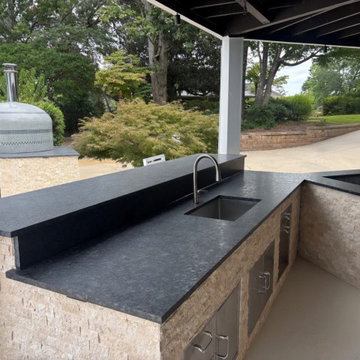
Out by the lake in Chapin, an outdoor kitchen calls for stone that can take whatever the Midlands throws at it, and leathered Steel Gray granite handles that job without complaint. The leathered finish gives the surface a soft, textured feel instead of a glossy one, so it reads more like natural rock sitting outside where it belongs. Under sun or porch light it doesn't throw glare back at you, and that texture actually helps hide water spots and fingerprints that would show up fast on a polished top.
Steel Gray is a tough granite to begin with, dense and consistent, and it holds up to the swings in temperature and humidity you get living near Lake Murray. Outdoor kitchens take a beating that indoor counters never see: grills throwing off heat, rain, pollen, the occasional forgotten pot left sitting too long. This stone doesn't flinch. We fabricated and set the slabs with the same care we'd give an indoor kitchen, tight seams, level surfaces, everything templated to the grill and prep layout so there's no guesswork once it's installed.
We finished the edges eased, which is the right call for a space like this. It keeps the line clean and durable without adding anything fussy that would just catch chips or wear oddly outside over time.
Day to day, this countertop is built for real use, not just looks. Set a hot pan down, wipe up sauce, hose off pollen in the spring, it all rolls off without drama. Leathered granite doesn't need to be babied, and a light sealing keeps it performing that way for years with minimal upkeep.
It's the kind of stone that fits right into lake life in Chapin: durable, low-maintenance, and built for people who actually cook and entertain outside instead of just looking at a nice kitchen through a window.
100