
Search results for "Inhibitor" in Home Design Ideas
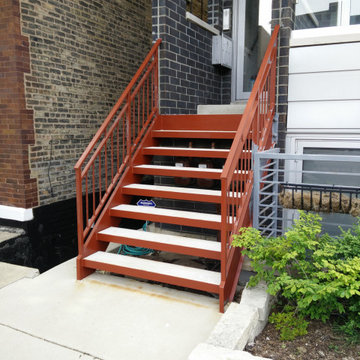
 Windy City Painters
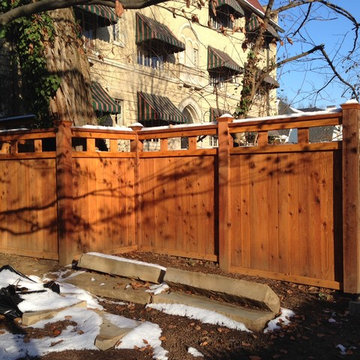
Does your iron fence look like Chicago winters have been winning the battle for years? That slow orange spread across pickets and rails is not just an eyesore - it is active corrosion undermining the structural integrity of metalwork that frames some of Chicago's most architecturally significant residential properties. Windy City Painters addresses iron fence rust at the source, using professional-grade rust conversion chemistry and direct-to-metal coatings engineered for the specific abuse Chicago's climate delivers.
PROJECT OVERVIEW
This project involved a heavily rusted ornamental iron fence on a Chicago North Side residential property. Rust had progressed beyond surface oxidation into moderate pitting on lower rails, a pattern Windy City Painters sees frequently on properties within blocks of treated roadways where salt drift accelerates corrosion. The scope included mechanical descaling, chemical rust conversion, DTM priming, and a durable gloss topcoat matched to the original fence color.
MATERIALS AND PRODUCTS
Ospho Rust Converter: A phosphoric acid-based treatment that chemically reacts with iron oxide, converting it to iron phosphate - a stable, paintable compound. Corroseal Water-Based Rust Converter is an alternative for situations requiring lower VOC handling. Rust-Oleum Professional DTM Primer and Sherwin-Williams DTM Acrylic Coating serve as the primary coating system, formulated for direct metal adhesion with built-in rust inhibitors. For structurally compromised sections, welding is coordinated before any chemical or coating work begins.
THE PROCESS
Step 1 - Mechanical Preparation: Wire wheel grinding on an angle grinder removes loose rust scale, mill scale, and flaking paint. For advanced pitting, Windy City Painters deploys a needle gun descaler, which impacts the metal surface thousands of times per minute to drive scale from deep cavities. This step determines whether the fence can be coated or needs welding first.
Step 2 - Chemical Rust Conversion: Ospho or Corroseal is brushed onto all remaining rust surface. These products do not simply seal rust - they react with it. The conversion process takes 24 hours to fully cure before topcoating. Skipping this step is the single most common reason iron fence paint jobs fail prematurely.
Step 3 - DTM Priming: Sherwin-Williams DTM or Rust-Oleum DTM primer is applied by brush to ensure full penetration around decorative elements, picket tips, and weld joints. Spray application is used on open sections for even film build. DTM formulations bond directly to prepared metal without a separate shop primer.
Step 4 - Finish Coating: A DTM topcoat in gloss or semi-gloss provides the final weather barrier. Gloss is preferred for iron fencing because the harder surface sheds water more effectively and resists dirt adhesion between maintenance cycles. Windy City Painters applies two finish coats for maximum film thickness.
CHICAGO-SPECIFIC CHALLENGES
Chicago's freeze-thaw cycle is the primary enemy of iron fence coatings. Water infiltrates micro-cracks in paint film, freezes, expands, and delaminate coating from beneath. Properties on the North Side and Near West Side also contend with lake-effect humidity that keeps metal surfaces damp for extended periods, slowing cure times and promoting under-film corrosion if preparation is inadequate. Greystones and Victorian brownstones typically feature ornate cast iron or wrought iron fencing with complex geometries that trap moisture and demand hand-brush application to fully coat recesses.
WHAT TO EXPECT LONG-TERM
A properly prepared and coated iron fence in Chicago should hold 5-8 years before requiring recoating. Annual inspection of weld joints, picket tips, and base rails closest to grade will identify early rust return. Addressing small spots with touch-up converter and primer extends service life significantly between full recoats.
PRO TIPS
Tip 1: Never pressure wash a rusted iron fence immediately before painting. Water drives moisture into pits and delays the surface drying needed for chemical converter adhesion. Allow 48 hours of dry weather before prep begins.
Tip 2: Picket tips and rail ends are the first failure points. These end-grain equivalent areas on metal concentrate corrosion. Ask your painter to apply an extra brush coat to every tip and terminus.
Tip 3: Black is the traditional and most durable color choice for iron fencing. Dark pigments absorb UV rather than reflecting it, reducing thermal cycling stress on the paint film at color change boundaries.
FAQ
Q: What does iron fence painting cost in Chicago?
A: Most residential iron fence painting in Chicago ranges from $400 to $1,200 depending on linear footage, rust severity, prep method required, and whether structural welding is needed before Windy City Painters can coat the surface.
Q: How do I know if my fence needs a welder before painting?
A: If you can press a screwdriver through a rail or picket, the metal wall has failed. Windy City Painters inspects all fencing before quoting and identifies weld-required sections so repairs happen before any coating investment.
Q: Is Ospho or Corroseal better for my fence?
A: Both convert rust effectively. Ospho is solvent-based and fast-acting, preferred for heavy rust. Corroseal is water-based with lower odor, preferred in enclosed or residential settings where off-gassing is a concern. Windy City Painters selects based on site conditions.
Q: Can iron fence painting be done in winter in Chicago?
A: Application requires temperatures above 50 degrees Fahrenheit for DTM coatings to cure properly. Most iron fence painting in Chicago runs April through October, with scheduling flexibility based on extended warm stretches.
Q: How do I maintain my fence between professional recoats?
A: Inspect annually in spring. Sand any rust spots to bare metal with 80-grit paper, apply Ospho, let cure 24 hours, then spot-prime with DTM primer and touch up with finish coat. Windy City Painters offers maintenance inspections.
Q: Do you paint courtyard building fences and coach house gates?
A: Yes. Multi-unit courtyard buildings and coach houses are common in the North Side neighborhoods Windy City Painters serves. We coordinate with property managers and HOAs for larger perimeter fence projects.
Q: How long after painting can I touch the fence?
A: DTM coatings are typically dry to touch in 2-4 hours and hard dry in 24 hours. Full cure for maximum hardness takes 7 days. Windy City Painters advises against pressure washing or heavy contact during that cure window.
Visit windypainters.com to request your free iron fence assessment and project quote.

 Allen Construction
Architect: Becker Henson Niksto
General Contractor: Allen Construction
Photographer: Jim Bartsch Photography
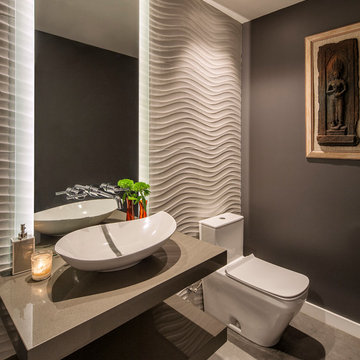
Example of a trendy concrete floor and gray floor powder room design in Santa Barbara with open cabinets, a one-piece toilet, gray walls, a vessel sink, solid surface countertops and gray countertops
Example of a trendy concrete floor and gray floor powder room design in Santa Barbara with open cabinets, a one-piece toilet, gray walls, a vessel sink, solid surface countertops and gray countertops
Find the right local pro for your project
 archadeckoutdoorliving
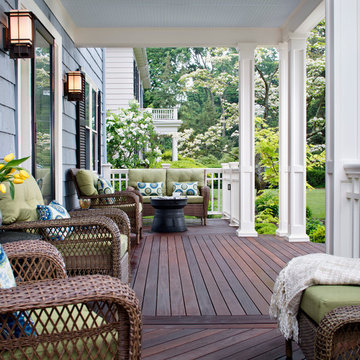
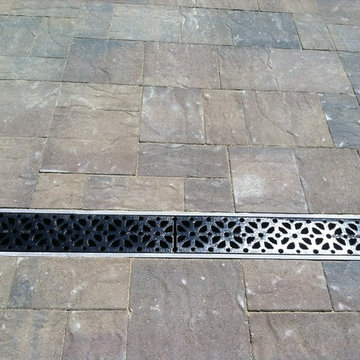
This hardwood deck on this New England front porch floor is mixed with warm, rich tones of ebony, chocolate and cinnamon, in a variety of interesting plank formations. The center, which leads to the homes front door, was installed on the horizontal for an easy sight line into the home. The two adjacent seating areas consist of two opposed 45 degree angle board placements, adding a beautiful contrast to the center area.
 Hill Construction Co
Roger Hill/Hill Construction
Example of a huge tuscan exterior home design in San Francisco
Example of a huge tuscan exterior home design in San Francisco
 Windy City Painters
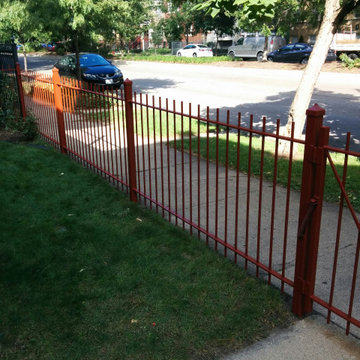
Ever notice how your iron fence looks worse every spring after another Chicago winter? That slow deterioration is not cosmetic - it is active metal failure that compounds every freeze-thaw cycle until replacement becomes the only option. Windy City Painters works with homeowners across the Chicago North Side and Near West Side to restore original iron fencing on greystones, two-flats, Victorian brownstones, and coach houses before that point is reached.
PROJECT OVERVIEW
This iron fence restoration involved a classic Chicago residential property with original wrought iron fencing showing surface rust across the majority of pickets, flaking previous paint coats, and localized deep pitting near the base rails. A structural check identified two loose pickets requiring welding before any surface preparation or coating began. Total linear footage fell in the mid-range for a standard Chicago residential lot.
MATERIALS AND PRODUCTS
Windy City Painters selected Ospho rust converter for chemically neutralizing active iron oxide before priming. Ospho reacts with rust to form a stable phosphate compound that stops corrosion progression rather than simply sealing over it. Sherwin-Williams DTM rust-inhibitive primer was applied to all bare and converted surfaces, followed by two finish coats of Rust-Oleum DTM in satin black. DTM - direct to metal - formulas provide corrosion inhibitors built into the coating matrix, which matters significantly in Chicago's climate.
THE PROCESS
Step 1 - Structural Assessment and Welding Coordination. Before any surface preparation begins, Windy City Painters inspects every picket and rail connection for structural integrity. Loose or cracked iron must be welded before coating. Paint applied over a compromised joint will fail within one season as movement continues to break the bond. On this project, two pickets were tack-welded by a coordinating welder before prep started.
Step 2 - Wire Wheel Grinding and Needle Gun Descaling. All rusted sections were ground to bare or near-bare metal using wire wheel attachments and needle gun descaling tools. This step removes loose scale, flaking previous coatings, and surface contamination that would prevent primer adhesion. Skipping mechanical prep is the single most common reason iron fence paint fails prematurely on Chicago properties.
Step 3 - Ospho Rust Converter Application. Ospho was brushed into all pitted and converted areas and allowed to cure fully. The phosphoric acid chemistry converts iron oxide into iron phosphate, arresting active rust and creating a surface that accepts primer more effectively than bare metal alone. Corroseal is an equivalent alternative used on projects with heavier pitting.
Step 4 - DTM Primer and Finish Coat Application. Sherwin-Williams DTM rust-inhibitive primer was applied across all prepared surfaces. Two topcoats of Rust-Oleum DTM in satin black followed after full primer cure. DTM finish coats add a second corrosion-inhibiting layer and provide the UV and weather resistance needed for Chicago exterior iron work.
CHICAGO-SPECIFIC CHALLENGES
Chicago iron fencing faces conditions that accelerate corrosion faster than most US markets. Lake humidity keeps metal surface moisture elevated through much of the year. Road salt splash from winter maintenance reaches fencing along parkways and sidewalk edges, introducing chlorides that aggressively attack iron. Freeze-thaw cycles expand any rust pocket that has formed under paint, lifting coatings from the inside and creating the classic bubbled-paint appearance homeowners notice every spring.
WHAT TO EXPECT LONG-TERM
With Ospho conversion, DTM primer, and two DTM finish coats properly applied over mechanically prepared surfaces, most Chicago residential iron fences hold 5-8 years before needing significant touch-up. Annual visual inspection for any chips or bare spots, with immediate touch-up using Rust-Oleum DTM, extends that window considerably.
PRO TIPS
Tip 1 - Address any bare metal spot the same season you notice it. A pinhole of exposed iron becomes a rust bubble within one Chicago winter and a flaking section by the following spring.
Tip 2 - Never paint over active rust without a converter step. Ospho or Corroseal is inexpensive insurance against a complete repaint two years early.
Tip 3 - Check picket bases at grade level every spring. Ground contact accelerates corrosion at the base faster than anywhere else on the fence. Catching it early keeps welding out of the equation.
Contact Windy City Painters at windypainters.com for a project estimate.
FAQ
Q: What does iron fence painting cost in Chicago? A: Residential iron fence painting with proper rust prep typically runs $300-$900 for standard lot footage. Windy City Painters provides itemized estimates based on linear footage, rust severity, and whether structural welding is required before surface preparation begins.
Q: Do you paint over rust or remove it first? A: Windy City Painters always addresses active rust before priming. Ospho or Corroseal rust converter chemically neutralizes iron oxide, and wire wheel grinding removes loose scale - coating over unaddressed rust guarantees early failure on Chicago iron fences.
Q: When does an iron fence need welding before painting? A: Loose pickets, cracked rails, or connections with visible movement require welding before any coating work begins. Paint cannot stabilize a structural joint - Windy City Painters coordinates with welders when this condition is identified during initial assessment.
Q: How long does iron fence paint last in Chicago? A: With mechanical prep, Ospho conversion, and Sherwin-Williams or Rust-Oleum DTM coatings, properly restored iron fencing holds 5-8 years in Chicago's freeze-thaw climate before needing significant maintenance.
Q: Is Ospho better than Corroseal for Chicago iron fences? A: Both are effective rust converters. Ospho is a liquid phosphoric acid treatment suited for moderate rust and pitting. Corroseal is a latex-based converter-primer hybrid better suited to heavier rust profiles. Windy City Painters selects based on site conditions.
Q: What finish sheen works best on iron fencing? A: Satin or semi-gloss black is the traditional and most durable choice for Chicago greystone and brownstone properties. Satin hides minor surface imperfections better than gloss while still providing adequate UV and moisture resistance.
Q: Can iron fence painting be done in spring or fall in Chicago? A: Yes. Windy City Painters schedules iron fence work in temperatures above 50 degrees Fahrenheit with low ambient humidity - spring and early fall are often ideal windows that avoid both winter cold and peak summer humidity.
 Cowart Door Systems
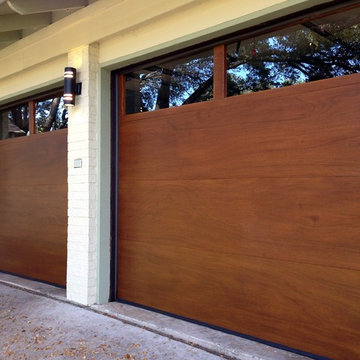
Two Clopay Model 33 flush Luan mahogany doors with Long Panel windows provide warmth and a sleek upgrade for this in-town Austin home. The doors were finished using the Sikkens Cetol 1/23+ stain system to increase the doors' elegance and to assure that they look like new for years. (BTW, the "pea shooter" at the left door is a flag holder:-)
 Budget Blinds
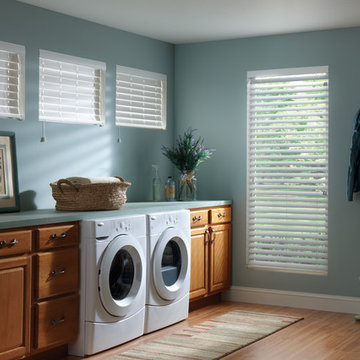
Crisp and clean white faux wood blinds are a great match for laundry rooms
Example of a classic laundry room design in Orange County with blue walls
Example of a classic laundry room design in Orange County with blue walls
 Ameriside
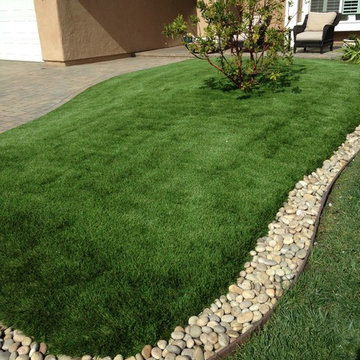
For this project, we removed the old sod and excavated 3 to 4 inches of topsoil. We capped the sprinklers and then spread a base of crushed aggregate, which was packed down. The artificial turf was laid out and trimmed. Then seamed and staked into place, we spread infill and power broomed the turf so the blades would stand up straight. We used Tigerturf (Tiger Cool) Everglade Fescue. Created by Tencate, a worldwide innovator of space-age yarns for NASA and Boeing, TigerCool® yarns are engineered with heat reflective color pigments and advanced U.V. inhibitors that reduce surface temperatures. A series of solar panel tests indicate that artificial grass featuring TigerCool® technology successfully reduces turf temperatures by 30% and up to 17 degrees! That’s a difference that you can feel. The homeowner also selected a border of river rocks with a slight wave that gives a lush cool grassy Island effect.
Photo by Greg Hawks

 iCork Floor
 https://bit.ly/2IJ9uiH
Enjoy and relax by soundproofing with cork tiles. Bring the simple quiet pleasures of a backyard oasis into your home with cork soundproofing tiles, planks or panels. With cork, soundproofing becomes a manageable endeavor. Great prices combined with a material that works as an eco-friendly sound inhibitor, cork tiles as a soundproofing option will give you the quiet, relaxing home you’ve been dreaming about without straining your bank account

 Lindsey Schultz Design
Interior & Exterior Design, Interior Architectural Design by Lindsey Schultz Design
Garrett Cook; garrettcookphotography.com
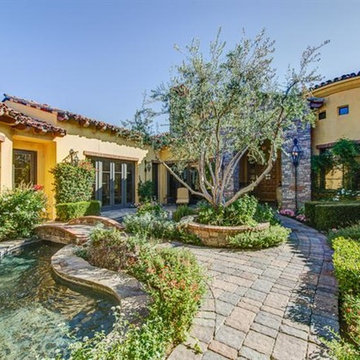
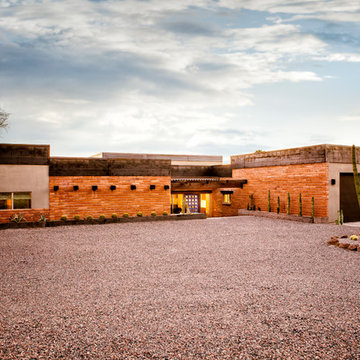
Example of a southwest exterior home design in Phoenix
Example of a southwest exterior home design in Phoenix
 Carolina Timberworks
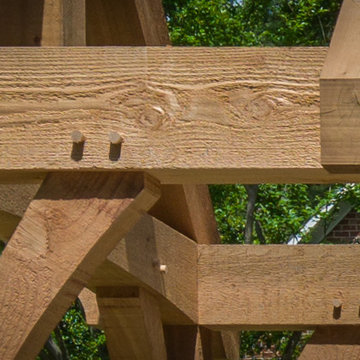
Western Red Cedar is used often in exterior timber framing–because it is highly rot resistant. It is also shrinks less as it dries than many other species, and is lightweight, but fairly low in strength.
Because rough sawn timber absorbs and holds more stain than surfaced timber, we sometimes suggest to our clients than they consider rough sawn texture outside
© Carolina Timberworks

 NatureRails LLC
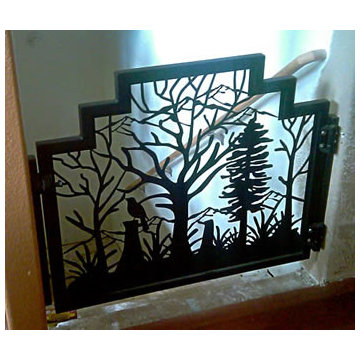
This custom driveway gate is pictured unfinished with just the raw steel before powder-coating.
Our custom gates are cut from steel or aluminum with a water jet machine (we don't use plasma or laser jet cutting as the water jet gives a much smoother detailed finish), dipped in an acid bath that contains a rust inhibitor, sandblasted, and then powder-coated. This gate is finished in a brown tone, and it will never need painting! Our exterior gates receive an extra primer layer of powder coating as well.
Stunning designs created for any style or size. Let our artist/owner Rob Gerdin design a work of art in metal for you.
Call us at 888-743-2325 or visit our website www.NatureRails.com and we will answer your questions promptly.
 NatureRails LLC
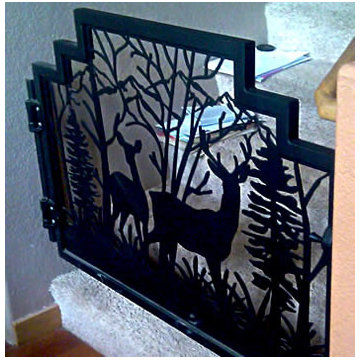
Our custom gates are cut from steel or aluminum with a water jet machine (we don't use plasma or laser jet cutting as the water jet gives a much smoother detailed finish), dipped in an acid bath that contains a rust inhibitor, sandblasted, and then powder-coated. This gate is finished in a brown tone, and it will never need painting! Our exterior gates receive an extra primer layer of powder coating as well.
Stunning designs created for any style or size. Let our artist/owner Rob Gerdin design a work of art in metal for you.
Call us at 888-743-2325 or visit our website www.NatureRails.com and we will answer your questions promptly.
 NatureRails LLC
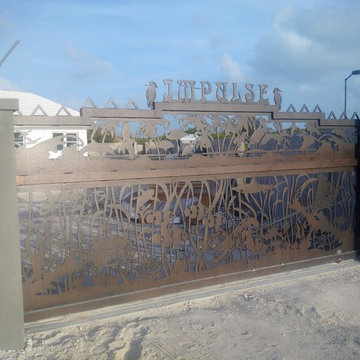
Traditional landscape and sea life designs, local to Turks and Caicos Islands, create the railing design sections (up to 13 feet in length) for areas used in between planters around the property of this lovely home.
Durable, heavy gauge aluminum railing sections, as well as several pedestrian gates, were fabricated with sea & bird life of the local area.
All to 4" code, aluminum materials provide a long lasting and durable product that puts spindles to shame. Finally--a railing that compliments the natural landscape, rather than deterring from it. Railing and gates shown with primer and penny vein powder coat finish.
The exterior railings are dipped in an acid wash bath with a rust inhibitor, powder coated with a layer of primer, and powder coated again with the customer's choice of powder coat colors. This gate is very low maintenance and will always look amazing. No painting ever!
What can we design for you? Call 888-743-2325 or visit our website and fill out our contact form to get a free quote or discuss your project. www.NatureRails.com
 Seaside Surfaces LLC
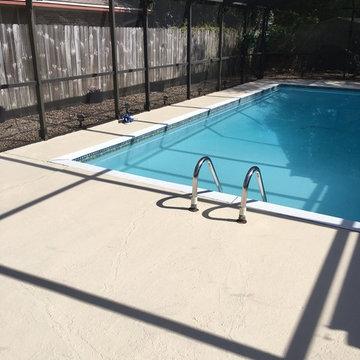
The pool deck has been completely re-coated with a white, opaque concrete stain. I then coated this pool deck with an acrylic sealer, with a UV inhibitor to keep the surface looking great for many years to come.
 Renovate Paint and Design
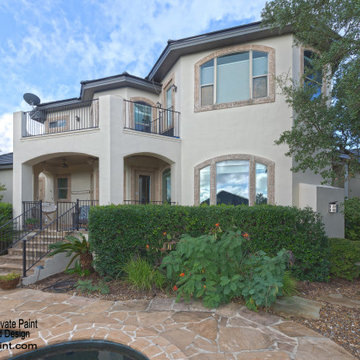
Updating the orange tone stucco color to this lighter shade dramatically improved the overall appearance and helped emphasize the beauty of the columns and trim around the doors and windows.
Products used:
1) POWER HOUSE CAULK (60 yr. rated) to open joints & cracks.
2) two coats of Sherwin Williams DURATION PAINT, color Kendall Charcoal, to soffit, fascia, back entry doors.
3) one coat of Sherwin Williams LOXON ELASTOMERIC HIGH BUILD PAINT, color Manchester Tan, to stucco.
4) Metal railing surfaces were spot primed with a rust inhibitor and painted with Direct to Metal Paint: Sherwin Williams ASE OIL LL, color Tricorn Black
 Seaside Surfaces LLC
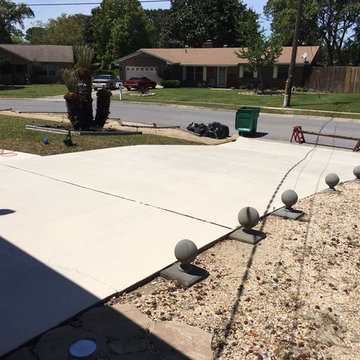
The driveway is complete. First the surface was thoroughly cleaned by pressure washing, then re-coated with a white, opaque concrete stain. To keep the new surface looking great, I sealed it with an gloss acrylic sealer, with a UV inhibitor. Christopher Hill
1