
Search results for "Jurisdiction" in Home Design Ideas
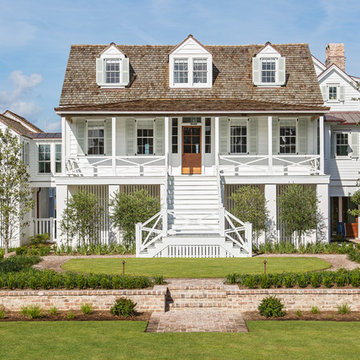
 Sea Island Builders LLC
Classic Island beach cottage exterior of an elevated historic home by Sea Island Builders. Light colored white wood contract wood shake roof. Juila Lynn

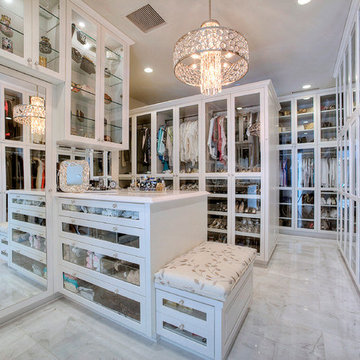
 Cullum Homes
Elegant gender-neutral dressing room photo in Phoenix with glass-front cabinets and white cabinets
Find the right local pro for your project
 EDR Design Build
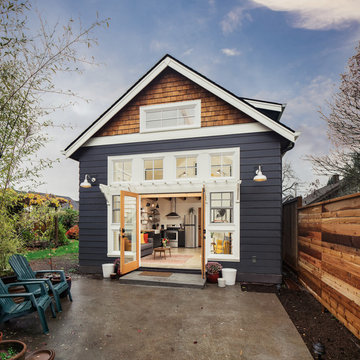
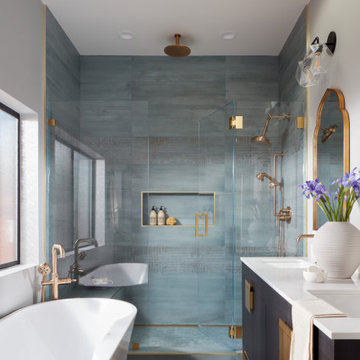
Accessory Dwelling Unit (ADU) design and construction compliant with California ADU laws (SB 9, SB 68, SB 1123). EDR Design Build provides turnkey ADU solutions including architectural design optimized for code compliance, permitting coordination with local jurisdictions, construction management, and final inspection. ADUs serve as guest houses, in-law quarters, rental income properties, or long-term housing solutions. Typical ADU sizes 400-800 sq ft with project costs ranging from $150K-$400K depending on configuration and finish levels.
 EDR Design Build
Accessory Dwelling Unit (ADU) design and construction compliant with California ADU laws (SB 9, SB 68, SB 1123). EDR Design Build provides turnkey ADU solutions including architectural design optimized for code compliance, permitting coordination with local jurisdictions, construction management, and final inspection. ADUs serve as guest houses, in-law quarters, rental income properties, or long-term housing solutions. Typical ADU sizes 400-800 sq ft with project costs ranging from $150K-$400K depending on configuration and finish levels.
 Lee & Co Contractors
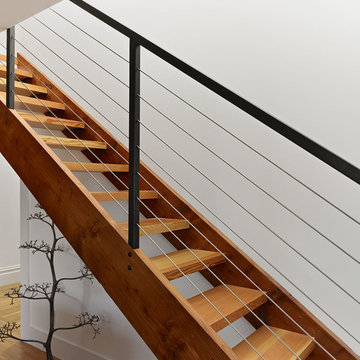
Modern staircase, designed by Mark Reilly Architecture
Inspiration for a mid-sized modern wooden straight open and cable railing staircase remodel in San Francisco
Inspiration for a mid-sized modern wooden straight open and cable railing staircase remodel in San Francisco
 Josh Partee | Architectural Photographer
© Josh Partee 2013
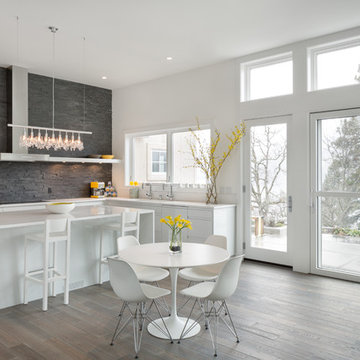
Example of a trendy eat-in kitchen design in Portland with flat-panel cabinets, white cabinets, gray backsplash and slate backsplash
Example of a trendy eat-in kitchen design in Portland with flat-panel cabinets, white cabinets, gray backsplash and slate backsplash
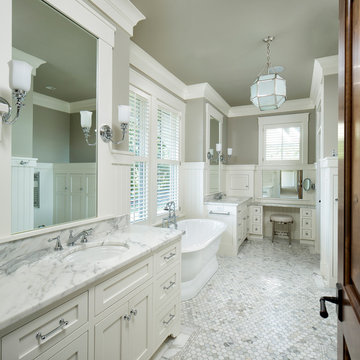
Inspiration for a timeless master white tile and mosaic tile freestanding bathtub remodel in Minneapolis with shaker cabinets, white cabinets, gray walls, an undermount sink and marble countertops
 CJ South Photography
CJ South
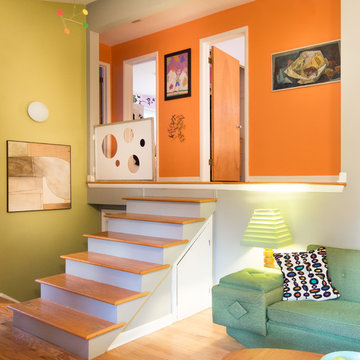
Example of a trendy light wood floor staircase design in Detroit with orange walls
Example of a trendy light wood floor staircase design in Detroit with orange walls
 Isaman design, Inc.
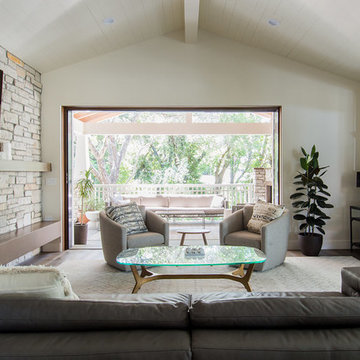
On a quiet cul-de-sac not too far from downtown San Luis Obispo lies the contemporary craftsman styled Clausen Residence. The challenges that accompanied this project were what, in the end, made it so interesting. The buildable area of the site is very small due to the fact that almost half of the property is occupied by a biological open space easement, established to protect the creek that runs behind the lot. In addition to this, the site is incredibly steep, which lent itself well to a stair stepped 3-story floor plan. Strict height restrictions set by the local jurisdiction governed the decision to bury the garage in the hill, and set the main living space on top of it, accompanied by the children’s bedrooms and game room further back on the site. The 3rd floor is occupied fully by the master suite, which looks down on the back yard below. Off of the great room is a vast deck, with built in barbecue, fire place and heaters, ideal for outdoor entertaining year round.
The house, adorned in lap siding and true craftsman details is flanked by gorgeous oak trees and the creek beyond.
 William Hoffman Architect
4 Steps to Achieving a Rewarding Cost Effective Home Renovation
1 Home Renovation an Introduction
A home renovation due to changes in family needs and space requirements can be a challenging, but also a rewarding experience. As a homeowner, gathering and coordinating resources and possibly help from professional consultants are required. Once the construction phase has started, patience, endurance and commitment to follow through are necessary. Despite the challenges, the rewards of a well-planned and successfully completed project are meaningful, adding aesthetic and economic value, also providing the opportunity to personalize a home, encompassing the function, comfort and aesthetics to accommodate individual taste and lifestyle.
A renovation of an existing home is a viable alternative to moving or building a new home, assuming that a home is structurally sound, the expenditure to enlarge or improve can be a cost effective alternative. A home possessing charm, style, historical significance, established landscaping or an exceptional location could be a significant motivation to consider purchasing another home with the intent to renovate.
The complexity of a project could be relatively simple, changing the use of a room, consolidating two rooms into one, or opening up a room to the outdoors. It could also be a more involved task requiring planning, design and construction documents to build a second floor addition, the addition of a new wing or completely gutting the interior. Some projects could be completed in a weekend’s work or more complex projects, using a “Master Plan”, a plan which provides overall guidance; a renovation can be accomplished all at once or divided into manageable projects over a period of time. With the home evolving gradually allowing the renovation to be planned, timed and tailored to meet individual needs and circumstances.
The due diligence phase should precede the decision to renovate whether it’s an existing home or a home that is purchased with the intent to renovate. The due diligence phase will reveal the factors affecting the nature and scope of the project or if a renovation makes sense.
Every renovation project is unique relative to personal requirements, architectural style & construction type. This guide will be helpful in developing an understanding of the preliminary groundwork required to realize a successful project. If properly planned, a home renovation project can be a positive and rewarding experience resulting in a comfortable, practical and an attractive living environment.
The first step of the planning process is documenting the goals and long-range plans referred to as the “Project Program”. This will dictate the nature, scope and feasibility of the project. Providing a guide to achieving defined goals, the timing or phasing of the project and budget required to achieve the desired end result.
2 Documenting Existing Conditions
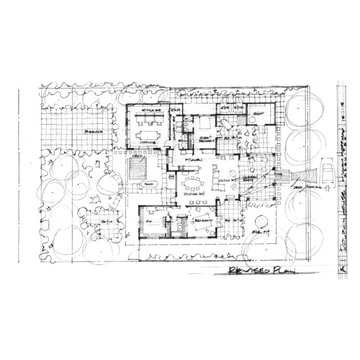
Once the “Project Program”, has been established, the next step is to determine what there is to work with. This requires documenting the home’s floor plan and site elements which includes drawing an “as built” floor & site plan consisting of the existing exterior walls, interior rooms, doors, windows, etc. and surrounding site elements, landscape and other significant exterior features. Additionally understanding and noting on the “as built” plan, the structural, mechanical and electrical systems as necessary. Gathering the “existing condition” information defines what there is to work with, creating the framework from which to facilitate and organize the decision making process and develop effective “project program” solutions.
3 Evaluating Existing Conditions
The goals and long-range plans have been established, and the existing floor plan and site elements have been documented. Before developing design solutions, the next step is to evaluate existing conditions. The evaluation includes: a detailed analysis of the structural, mechanical and electrical systems, determining the condition of the house, noting functional and aesthetic deficiencies. At the same time recognizing the home’s strengths, assets and evaluating its relationship to its site. The remaining parameters will be defined by the local jurisdiction’s zoning regulations, these regulations will define the “envelope”, within which the proposed project will be required to fit:
•required front, side & rear yard setbacks
•maximum allowable lot coverage & height
The previous three steps have provided the necessary foundation to start the design phase. The goals and long range plans have been established, existing conditions have been documented and the evaluation of what there is to work with are now in place. This will provide the framework from which to facilitate and organize design solutions. The consolidation of this information is manifested in the development of the “Master Plan” which will become the road map by which sound decision-making can be made as a home renovation evolves. Keeping the project, on a linear path, avoiding redundancies and back tracking, on time, within budget, concluding with a well crafted finished product. After all the “up front” research and documentation has been completed, the design phase of the project can now precede, with the creation of diagrammatic design drawings. Organizing interior spaces, taking into account the external elements, prevailing breezes, solar orientation, view, existing outdoor features, etc. Through the development of schematic sketches themes will emerge followed by design development drawings. Wise planning and renovation decisions can save money and time at the same time provide a well crafted finished project. The “Master Plan” provides a strategic path in the planning and decision making process leading to a successful and rewarding home renovation, which will add value and considerable enjoyment, for many years, living in a newly renovated home.
By virtue of having gone through these steps, frustrations sometimes encountered during a home renovation will be minimized, allowing the renovation to be a gratifying and rewarding experience. Being aware of the process allows one to become an “Educated Client,” which is worth quite a bit more than one might realize. The uneducated client may not realize the benefit of going through the planning, evaluation and documentation groundwork. He will only realize its benefits after having completed a prior renovation project. This rational approach keeps the design process on a direct path to achieving prescribed goals.
4 Exploring Design Solutions & Developing a Master Plan
The previous three steps have provided the necessary foundation to start the design phase. The goals and long range plans have been established, existing conditions have been documented and the evaluation of what there is to work with are now in place. This will provide the framework from which to facilitate and organize design solutions. The consolidation of this information is manifested in the development of the “Master Plan” which will become the road map by which sound decision-making can be made as a home renovation evolves. Keeping the project, on a linear path, avoiding redundancies and back tracking, on time, within budget, concluding with a well crafted finished product.
By virtue of having gone through these steps, frustrations sometimes encountered during a home renovation will be minimized, allowing the renovation to be a gratifying and rewarding experience. Being aware of the process allows one to become an “Educated Client,” which is worth quite a bit more than one might realize. The uneducated client may not realize the benefit of going through the planning, evaluation and documentation groundwork. He will only realize its benefits after having completed a prior renovation project. This rational approach keeps the design process on a direct path to achieving prescribed goals.
After all the “up front” research and documentation has been completed, the design phase of the project can now precede, with the creation of diagrammatic design drawings. Organizing interior spaces, taking into account the external elements, prevailing breezes, solar orientation, view, existing outdoor features, etc. Through the development of schematic sketches themes will emerge followed by design development drawings. Wise planning and renovation decisions can save money and time at the same time provide a well crafted finished project. The “Master Plan” provides a strategic path in the planning and decision making process leading to a successful and rewarding home renovation, which will add value and considerable enjoyment, for many years, living in a newly renovated home.
 Beck/Allen Cabinetry
La Cornue Range
Alise O'Brien Photography
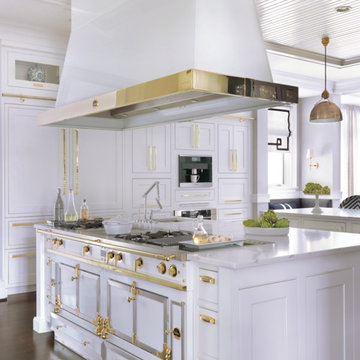
Inspiration for a huge timeless dark wood floor and brown floor kitchen remodel in St Louis with an undermount sink, shaker cabinets, white cabinets, stainless steel appliances and two islands
Inspiration for a huge timeless dark wood floor and brown floor kitchen remodel in St Louis with an undermount sink, shaker cabinets, white cabinets, stainless steel appliances and two islands
 Semmes & Co. Builders, Inc
Elliott Johnson
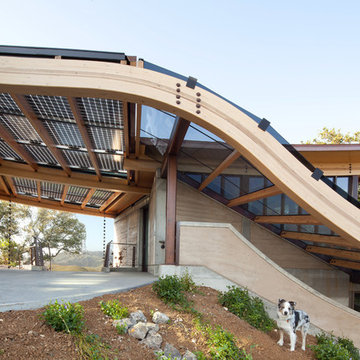
Inspiration for an eclectic wood exterior home remodel in San Luis Obispo
Inspiration for an eclectic wood exterior home remodel in San Luis Obispo
 User
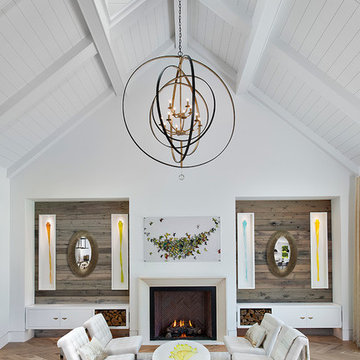
UserLiving room - cottage light wood floor and beige floor living room idea with white walls and a standard fireplace

 Broadhurst Architects, Inc.
Contractor: Added Dimensions Inc.
Photographer: Hoachlander Davis Photography
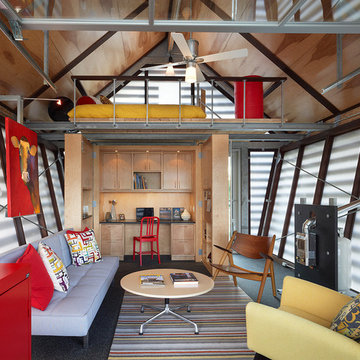
Living room - small eclectic light wood floor living room idea in DC Metro with multicolored walls, no fireplace and no tv
Living room - small eclectic light wood floor living room idea in DC Metro with multicolored walls, no fireplace and no tv
 Krueger Architects
Ulimited Style Photography
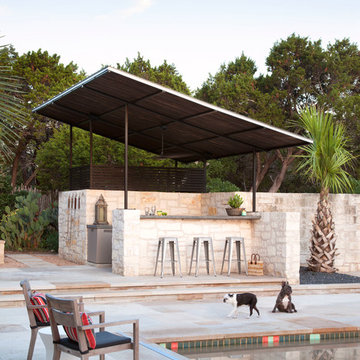
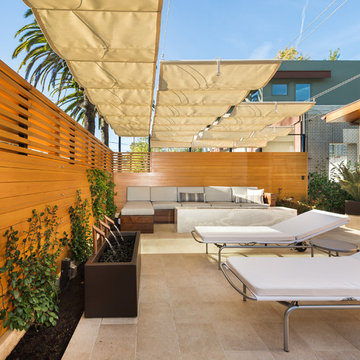
Inspiration for a mid-sized modern tile patio fountain remodel in Los Angeles with an awning
Inspiration for a mid-sized modern tile patio fountain remodel in Los Angeles with an awning
 EDR Design Build
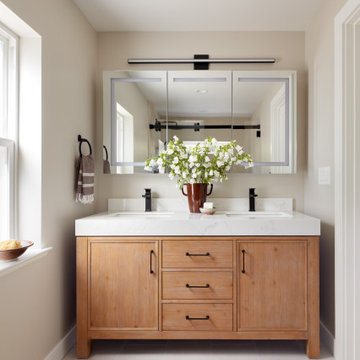
Accessory Dwelling Unit (ADU) design and construction compliant with California ADU laws (SB 9, SB 68, SB 1123). EDR Design Build provides turnkey ADU solutions including architectural design optimized for code compliance, permitting coordination with local jurisdictions, construction management, and final inspection. ADUs serve as guest houses, in-law quarters, rental income properties, or long-term housing solutions. Typical ADU sizes 400-800 sq ft with project costs ranging from $150K-$400K depending on configuration and finish levels.
 Isaman design, Inc.
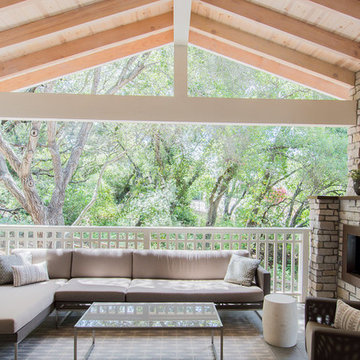
On a quiet cul-de-sac not too far from downtown San Luis Obispo lies the contemporary craftsman styled Clausen Residence. The challenges that accompanied this project were what, in the end, made it so interesting. The buildable area of the site is very small due to the fact that almost half of the property is occupied by a biological open space easement, established to protect the creek that runs behind the lot. In addition to this, the site is incredibly steep, which lent itself well to a stair stepped 3-story floor plan. Strict height restrictions set by the local jurisdiction governed the decision to bury the garage in the hill, and set the main living space on top of it, accompanied by the children’s bedrooms and game room further back on the site. The 3rd floor is occupied fully by the master suite, which looks down on the back yard below. Off of the great room is a vast deck, with built in barbecue, fire place and heaters, ideal for outdoor entertaining year round.
The house, adorned in lap siding and true craftsman details is flanked by gorgeous oak trees and the creek beyond.
 Robert M. Cain, Architect
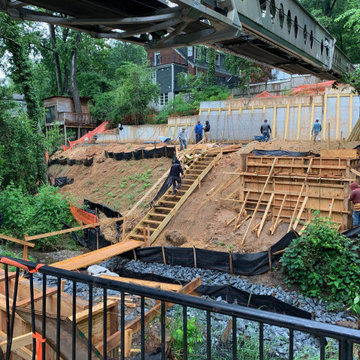
As the core of Atlanta becomes more and more dense, options for new single-family homes are often limited to building unsustainably through demolition of existing homes. However, scattered around the city core are undeveloped sites considered “unbuildable", often because of jurisdictionally imposed restraints i.e. zoning setbacks, riparian stream buffers, peculiar lot configurations and difficult site features.
Comparably, for this 12,401 sq. ft. site, zoning setbacks and riparian buffer restraints imposed on the lot's status as an undeveloped, legal, residential lot-of-record, rendered the property “unbuildable”. Not a single square foot of the site met jurisdictional requirements for “buildable”. Furthermore, the stream along the front of the site precluded construction access and the steep terrain was foreboding.
1