
Search results for "Native neighborhood" in Home Design Ideas
 Sweet Smiling Landscape Design
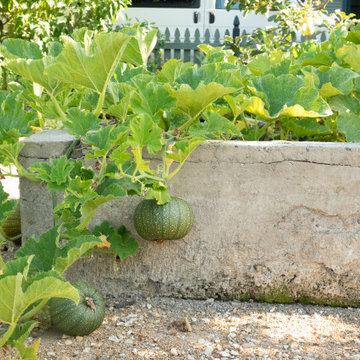
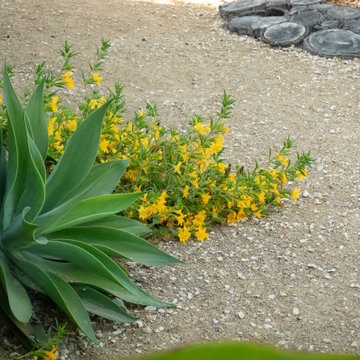
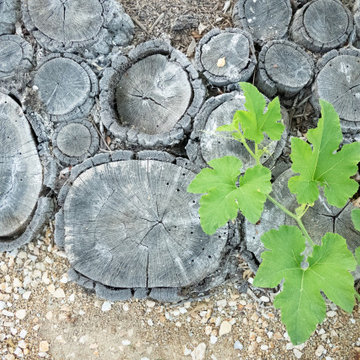
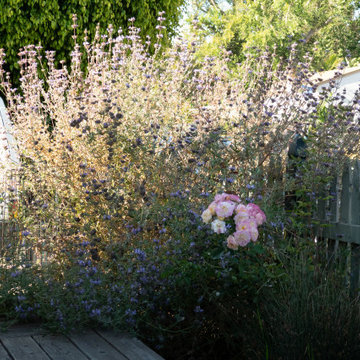
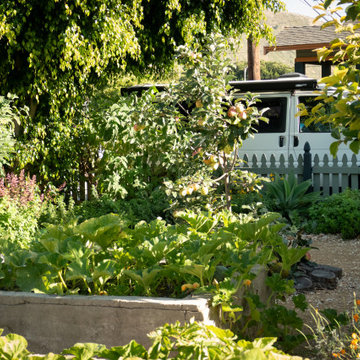
Located on a flat, square, corner plot in a dense neighborhood comprised of small homes, this project was a blank canvas to create a landscape that is both an opportunity for community engagement as well as a peaceful space to recreate and entertain, while also expanding the living space on the property. The client is an avid surfer does volunteer work for the Surfrider Foundation, and he was inspire to build a landscape that fulfils Surfrider’s Ocean Friendly Garden program. We combined a mix of California natives with edible plants such as herbs and fruit trees. We created curvilinear beds outlined with rock and pebbles of ascending size to mimic the rock outcroppings of the local coastline. The veggie beds are made of rammed earth—a tradition natural building technique that uses, mud, sand and a small amount of cement. With fruits and flowers hanging into the sidewalk, this garden allows for friendly neighborhood interaction as well as a more-intimate area for this client to relax and entertain in. *Images captured at 1-year and 3-years after
 Sweet Smiling Landscape Design
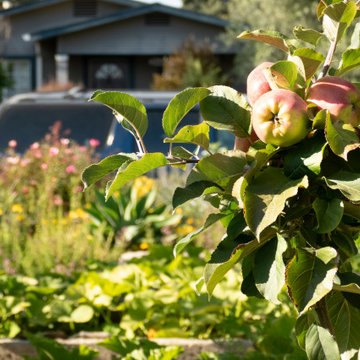
Located on a flat, square, corner plot in a dense neighborhood comprised of small homes, this project was a blank canvas to create a landscape that is both an opportunity for community engagement as well as a peaceful space to recreate and entertain, while also expanding the living space on the property. The client is an avid surfer does volunteer work for the Surfrider Foundation, and he was inspire to build a landscape that fulfils Surfrider’s Ocean Friendly Garden program. We combined a mix of California natives with edible plants such as herbs and fruit trees. We created curvilinear beds outlined with rock and pebbles of ascending size to mimic the rock outcroppings of the local coastline. The veggie beds are made of rammed earth—a tradition natural building technique that uses, mud, sand and a small amount of cement. With fruits and flowers hanging into the sidewalk, this garden allows for friendly neighborhood interaction as well as a more-intimate area for this client to relax and entertain in. *Images captured at 1-year and 3-years after
 Sweet Smiling Landscape Design
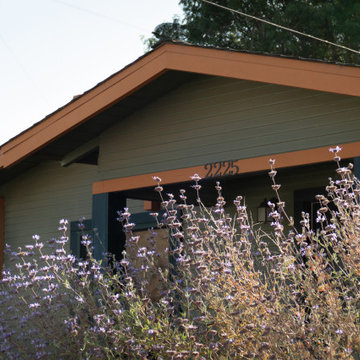
Located on a flat, square, corner plot in a dense neighborhood comprised of small homes, this project was a blank canvas to create a landscape that is both an opportunity for community engagement as well as a peaceful space to recreate and entertain, while also expanding the living space on the property. The client is an avid surfer does volunteer work for the Surfrider Foundation, and he was inspire to build a landscape that fulfils Surfrider’s Ocean Friendly Garden program. We combined a mix of California natives with edible plants such as herbs and fruit trees. We created curvilinear beds outlined with rock and pebbles of ascending size to mimic the rock outcroppings of the local coastline. The veggie beds are made of rammed earth—a tradition natural building technique that uses, mud, sand and a small amount of cement. With fruits and flowers hanging into the sidewalk, this garden allows for friendly neighborhood interaction as well as a more-intimate area for this client to relax and entertain in. *Images captured at 1-year and 3-years after
Find the right local pro for your project
 Sweet Smiling Landscape Design
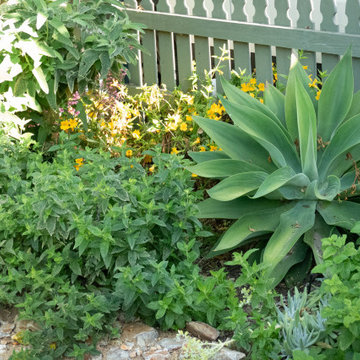
Located on a flat, square, corner plot in a dense neighborhood comprised of small homes, this project was a blank canvas to create a landscape that is both an opportunity for community engagement as well as a peaceful space to recreate and entertain, while also expanding the living space on the property. The client is an avid surfer does volunteer work for the Surfrider Foundation, and he was inspire to build a landscape that fulfils Surfrider’s Ocean Friendly Garden program. We combined a mix of California natives with edible plants such as herbs and fruit trees. We created curvilinear beds outlined with rock and pebbles of ascending size to mimic the rock outcroppings of the local coastline. The veggie beds are made of rammed earth—a tradition natural building technique that uses, mud, sand and a small amount of cement. With fruits and flowers hanging into the sidewalk, this garden allows for friendly neighborhood interaction as well as a more-intimate area for this client to relax and entertain in. *Images captured at 1-year and 3-years after
 Sweet Smiling Landscape Design
Located on a flat, square, corner plot in a dense neighborhood comprised of small homes, this project was a blank canvas to create a landscape that is both an opportunity for community engagement as well as a peaceful space to recreate and entertain, while also expanding the living space on the property. The client is an avid surfer does volunteer work for the Surfrider Foundation, and he was inspire to build a landscape that fulfils Surfrider’s Ocean Friendly Garden program. We combined a mix of California natives with edible plants such as herbs and fruit trees. We created curvilinear beds outlined with rock and pebbles of ascending size to mimic the rock outcroppings of the local coastline. The veggie beds are made of rammed earth—a tradition natural building technique that uses, mud, sand and a small amount of cement. With fruits and flowers hanging into the sidewalk, this garden allows for friendly neighborhood interaction as well as a more-intimate area for this client to relax and entertain in. *Images captured at 1-year and 3-years after
 Sweet Smiling Landscape Design
Located on a flat, square, corner plot in a dense neighborhood comprised of small homes, this project was a blank canvas to create a landscape that is both an opportunity for community engagement as well as a peaceful space to recreate and entertain, while also expanding the living space on the property. The client is an avid surfer does volunteer work for the Surfrider Foundation, and he was inspire to build a landscape that fulfils Surfrider’s Ocean Friendly Garden program. We combined a mix of California natives with edible plants such as herbs and fruit trees. We created curvilinear beds outlined with rock and pebbles of ascending size to mimic the rock outcroppings of the local coastline. The veggie beds are made of rammed earth—a tradition natural building technique that uses, mud, sand and a small amount of cement. With fruits and flowers hanging into the sidewalk, this garden allows for friendly neighborhood interaction as well as a more-intimate area for this client to relax and entertain in. *Images captured at 1-year and 3-years after

 Taproot Garden Design
Patrick & Topaze McCaffery - Taproot Garden Design
"June 2017: A beautiful new Connecticut Bluestone Full Range cut-stone paver entryway welcomes the family and guests upon arrival to the residence.
 Sweet Smiling Landscape Design
Tiered of the looking out at a shabby brown lawn in their front yard and unwilling to use the water to keep it green these homeowners decided to go for something different. The wife in this household worked from home and was motivated to have a better view from her home office. As an enthusiastic bird watcher, I wanted to give her a view that included happy birds fluttering about. The husband was annoyed by the fact that some of the neighbors allowed their dogs to use this corner lot a toilet without having the curtesy of cleaning up after them.
My job was to create a low water landscape (also known as xeriscape) that attracted birds, bees and butterflies but kept the dogs off. We started with directing down spouts in to catch basins called infiltration swales. These swales capture water storing it in the soil where it can be accessed by plants months after the rains have stopped. Then we integrated primarily California native plants and succulents into the design. Special attention was payed to the water needs of the plants and the ideal growing conditions for each species so that the combination of earthworks and plant choice and placement this landscape can get by with zero supplemental irrigation after the period of establishment this landscape. By incorporating flowering California native plants, native birds and insects flocked to the site in a neighborhood otherwise dominated by lifeless landscapes. By surrounding the garden with decomposed granite and succulents we created a space that was unpleasant and unappealing for dogs to relive themselves while remaining appealing to more human sensibilities.
Today this property sits on the corner in a suburban neighborhood of Goleta, California. Hopefully serving as inspiration to take out lawns and build beautiful gardens that work to integrate the man made landscape with the natural ecosystem in which it is built.

 DesignARC
Situated on a 3.5 acre, oak-studded ridge atop Santa Barbara's Riviera, the Greene Compound is a 6,500 square foot custom residence with guest house and pool capturing spectacular views of the City, Coastal Islands to the south, and La Cumbre peak to the north. Carefully sited to kiss the tips of many existing large oaks, the home is rustic Mediterranean in style which blends integral color plaster walls with Santa Barbara sandstone and cedar board and batt.
Landscape Architect Lane Goodkind restored the native grass meadow and added a stream bio-swale which complements the rural setting. 20' mahogany, pocketing sliding doors maximize the indoor / outdoor Santa Barbara lifestyle by opening the living spaces to the pool and island view beyond. A monumental exterior fireplace and camp-style margarita bar add to this romantic living. Discreetly buried in the mission tile roof, solar panels help to offset the home's overall energy consumption. Truly an amazing and unique property, the Greene Residence blends in beautifully with the pastoral setting of the ridge while complementing and enhancing this Riviera neighborhood.
 Sweet Smiling Landscape Design
Tiered of the looking out at a shabby brown lawn in their front yard and unwilling to use the water to keep it green these homeowners decided to go for something different. The wife in this household worked from home and was motivated to have a better view from her home office. As an enthusiastic bird watcher, I wanted to give her a view that included happy birds fluttering about. The husband was annoyed by the fact that some of the neighbors allowed their dogs to use this corner lot a toilet without having the curtesy of cleaning up after them.
My job was to create a low water landscape (also known as xeriscape) that attracted birds, bees and butterflies but kept the dogs off. We started with directing down spouts in to catch basins called infiltration swales. These swales capture water storing it in the soil where it can be accessed by plants months after the rains have stopped. Then we integrated primarily California native plants and succulents into the design. Special attention was payed to the water needs of the plants and the ideal growing conditions for each species so that the combination of earthworks and plant choice and placement this landscape can get by with zero supplemental irrigation after the period of establishment this landscape. By incorporating flowering California native plants, native birds and insects flocked to the site in a neighborhood otherwise dominated by lifeless landscapes. By surrounding the garden with decomposed granite and succulents we created a space that was unpleasant and unappealing for dogs to relive themselves while remaining appealing to more human sensibilities.
Today this property sits on the corner in a suburban neighborhood of Goleta, California. Hopefully serving as inspiration to take out lawns and build beautiful gardens that work to integrate the man made landscape with the natural ecosystem in which it is built.
 Sweet Smiling Landscape Design
Located on a flat, square, corner plot in a dense neighborhood comprised of small homes, this project was a blank canvas to create a landscape that is both an opportunity for community engagement as well as a peaceful space to recreate and entertain, while also expanding the living space on the property. The client is an avid surfer does volunteer work for the Surfrider Foundation, and he was inspire to build a landscape that fulfils Surfrider’s Ocean Friendly Garden program. We combined a mix of California natives with edible plants such as herbs and fruit trees. We created curvilinear beds outlined with rock and pebbles of ascending size to mimic the rock outcroppings of the local coastline. The veggie beds are made of rammed earth—a tradition natural building technique that uses, mud, sand and a small amount of cement. With fruits and flowers hanging into the sidewalk, this garden allows for friendly neighborhood interaction as well as a more-intimate area for this client to relax and entertain in. *Images captured at 1-year and 3-years after
 Sweet Smiling Landscape Design
Located on a flat, square, corner plot in a dense neighborhood comprised of small homes, this project was a blank canvas to create a landscape that is both an opportunity for community engagement as well as a peaceful space to recreate and entertain, while also expanding the living space on the property. The client is an avid surfer does volunteer work for the Surfrider Foundation, and he was inspire to build a landscape that fulfils Surfrider’s Ocean Friendly Garden program. We combined a mix of California natives with edible plants such as herbs and fruit trees. We created curvilinear beds outlined with rock and pebbles of ascending size to mimic the rock outcroppings of the local coastline. The veggie beds are made of rammed earth—a tradition natural building technique that uses, mud, sand and a small amount of cement. With fruits and flowers hanging into the sidewalk, this garden allows for friendly neighborhood interaction as well as a more-intimate area for this client to relax and entertain in. *Images captured at 1-year and 3-years after
 Sweet Smiling Landscape Design
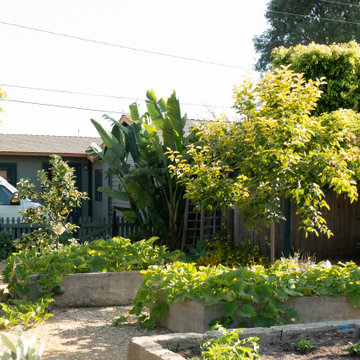
Located on a flat, square, corner plot in a dense neighborhood comprised of small homes, this project was a blank canvas to create a landscape that is both an opportunity for community engagement as well as a peaceful space to recreate and entertain, while also expanding the living space on the property. The client is an avid surfer does volunteer work for the Surfrider Foundation, and he was inspire to build a landscape that fulfils Surfrider’s Ocean Friendly Garden program. We combined a mix of California natives with edible plants such as herbs and fruit trees. We created curvilinear beds outlined with rock and pebbles of ascending size to mimic the rock outcroppings of the local coastline. The veggie beds are made of rammed earth—a tradition natural building technique that uses, mud, sand and a small amount of cement. With fruits and flowers hanging into the sidewalk, this garden allows for friendly neighborhood interaction as well as a more-intimate area for this client to relax and entertain in. *Images captured at 1-year and 3-years after
 Sweet Smiling Landscape Design
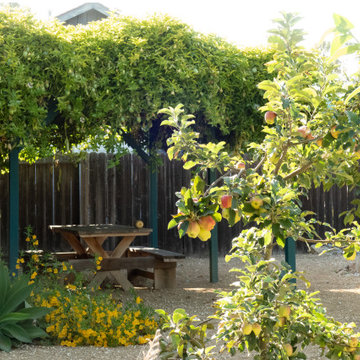
Located on a flat, square, corner plot in a dense neighborhood comprised of small homes, this project was a blank canvas to create a landscape that is both an opportunity for community engagement as well as a peaceful space to recreate and entertain, while also expanding the living space on the property. The client is an avid surfer does volunteer work for the Surfrider Foundation, and he was inspire to build a landscape that fulfils Surfrider’s Ocean Friendly Garden program. We combined a mix of California natives with edible plants such as herbs and fruit trees. We created curvilinear beds outlined with rock and pebbles of ascending size to mimic the rock outcroppings of the local coastline. The veggie beds are made of rammed earth—a tradition natural building technique that uses, mud, sand and a small amount of cement. With fruits and flowers hanging into the sidewalk, this garden allows for friendly neighborhood interaction as well as a more-intimate area for this client to relax and entertain in. *Images captured at 1-year and 3-years after
 Sweet Smiling Landscape Design
Tiered of the looking out at a shabby brown lawn in their front yard and unwilling to use the water to keep it green these homeowners decided to go for something different. The wife in this household worked from home and was motivated to have a better view from her home office. As an enthusiastic bird watcher, I wanted to give her a view that included happy birds fluttering about. The husband was annoyed by the fact that some of the neighbors allowed their dogs to use this corner lot a toilet without having the curtesy of cleaning up after them.
My job was to create a low water landscape (also known as xeriscape) that attracted birds, bees and butterflies but kept the dogs off. We started with directing down spouts in to catch basins called infiltration swales. These swales capture water storing it in the soil where it can be accessed by plants months after the rains have stopped. Then we integrated primarily California native plants and succulents into the design. Special attention was payed to the water needs of the plants and the ideal growing conditions for each species so that the combination of earthworks and plant choice and placement this landscape can get by with zero supplemental irrigation after the period of establishment this landscape. By incorporating flowering California native plants, native birds and insects flocked to the site in a neighborhood otherwise dominated by lifeless landscapes. By surrounding the garden with decomposed granite and succulents we created a space that was unpleasant and unappealing for dogs to relive themselves while remaining appealing to more human sensibilities.
Today this property sits on the corner in a suburban neighborhood of Goleta, California. Hopefully serving as inspiration to take out lawns and build beautiful gardens that work to integrate the man made landscape with the natural ecosystem in which it is built.
 Accent Landscapes
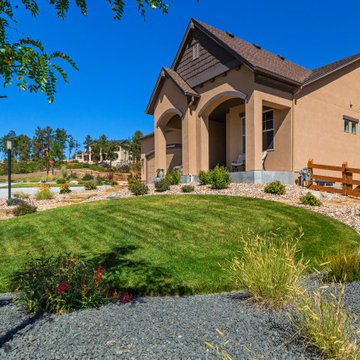
A beautifully manicured front yard combines a lush green lawn with xeriscaped elements, featuring drought-tolerant plantings and natural stone accents, enhancing the charm and sustainability of this elegant home.
 Sweet Smiling Landscape Design
Tiered of the looking out at a shabby brown lawn in their front yard and unwilling to use the water to keep it green these homeowners decided to go for something different. The wife in this household worked from home and was motivated to have a better view from her home office. As an enthusiastic bird watcher, I wanted to give her a view that included happy birds fluttering about. The husband was annoyed by the fact that some of the neighbors allowed their dogs to use this corner lot a toilet without having the curtesy of cleaning up after them.
My job was to create a low water landscape (also known as xeriscape) that attracted birds, bees and butterflies but kept the dogs off. We started with directing down spouts in to catch basins called infiltration swales. These swales capture water storing it in the soil where it can be accessed by plants months after the rains have stopped. Then we integrated primarily California native plants and succulents into the design. Special attention was payed to the water needs of the plants and the ideal growing conditions for each species so that the combination of earthworks and plant choice and placement this landscape can get by with zero supplemental irrigation after the period of establishment this landscape. By incorporating flowering California native plants, native birds and insects flocked to the site in a neighborhood otherwise dominated by lifeless landscapes. By surrounding the garden with decomposed granite and succulents we created a space that was unpleasant and unappealing for dogs to relive themselves while remaining appealing to more human sensibilities.
Today this property sits on the corner in a suburban neighborhood of Goleta, California. Hopefully serving as inspiration to take out lawns and build beautiful gardens that work to integrate the man made landscape with the natural ecosystem in which it is built.
 FiveSTAR Landscape
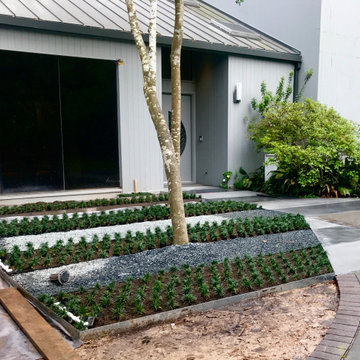
For this landscape design and installation in the Piney Point neighborhood of Houston, TX, our goal was to embrace and enhance the minimalist and modern ethos of the home. Guided by our commitment to sustainability, we consistently salvage elements from the original landscape whenever possible and in this case, we chose to design the landscape around the existing driveway.
Our aim was to reinvent the feel of the entrance area entirely. We installed Blackstar gravel and stamped, stained concrete in a clean and simple alternating pattern to infuse texture and depth into the landscape. To add greenery to the property without detracting from the modern feel and simplicity of the design, we installed over 1000 dwarf mondo grass plants in rows, infusing them into the pattern.
21