
Search results for "Native neighborhood" in Home Design Ideas

 Sweet Smiling Landscape Design
Tiered of the looking out at a shabby brown lawn in their front yard and unwilling to use the water to keep it green these homeowners decided to go for something different. The wife in this household worked from home and was motivated to have a better view from her home office. As an enthusiastic bird watcher, I wanted to give her a view that included happy birds fluttering about. The husband was annoyed by the fact that some of the neighbors allowed their dogs to use this corner lot a toilet without having the curtesy of cleaning up after them.
My job was to create a low water landscape (also known as xeriscape) that attracted birds, bees and butterflies but kept the dogs off. We started with directing down spouts in to catch basins called infiltration swales. These swales capture water storing it in the soil where it can be accessed by plants months after the rains have stopped. Then we integrated primarily California native plants and succulents into the design. Special attention was payed to the water needs of the plants and the ideal growing conditions for each species so that the combination of earthworks and plant choice and placement this landscape can get by with zero supplemental irrigation after the period of establishment this landscape. By incorporating flowering California native plants, native birds and insects flocked to the site in a neighborhood otherwise dominated by lifeless landscapes. By surrounding the garden with decomposed granite and succulents we created a space that was unpleasant and unappealing for dogs to relive themselves while remaining appealing to more human sensibilities.
Today this property sits on the corner in a suburban neighborhood of Goleta, California. Hopefully serving as inspiration to take out lawns and build beautiful gardens that work to integrate the man made landscape with the natural ecosystem in which it is built.

 Flourish - Landscape Design Build
This is an example of a mid-sized traditional full sun front yard concrete paver landscaping in Cincinnati.
 Sweet Smiling Landscape Design
Tiered of the looking out at a shabby brown lawn in their front yard and unwilling to use the water to keep it green these homeowners decided to go for something different. The wife in this household worked from home and was motivated to have a better view from her home office. As an enthusiastic bird watcher, I wanted to give her a view that included happy birds fluttering about. The husband was annoyed by the fact that some of the neighbors allowed their dogs to use this corner lot a toilet without having the curtesy of cleaning up after them.
My job was to create a low water landscape (also known as xeriscape) that attracted birds, bees and butterflies but kept the dogs off. We started with directing down spouts in to catch basins called infiltration swales. These swales capture water storing it in the soil where it can be accessed by plants months after the rains have stopped. Then we integrated primarily California native plants and succulents into the design. Special attention was payed to the water needs of the plants and the ideal growing conditions for each species so that the combination of earthworks and plant choice and placement this landscape can get by with zero supplemental irrigation after the period of establishment this landscape. By incorporating flowering California native plants, native birds and insects flocked to the site in a neighborhood otherwise dominated by lifeless landscapes. By surrounding the garden with decomposed granite and succulents we created a space that was unpleasant and unappealing for dogs to relive themselves while remaining appealing to more human sensibilities.
Today this property sits on the corner in a suburban neighborhood of Goleta, California. Hopefully serving as inspiration to take out lawns and build beautiful gardens that work to integrate the man made landscape with the natural ecosystem in which it is built.
Find the right local pro for your project

 Mayita Dinos Garden Design
This front yard (as seen from the sidewalk) was a grouping of mature birches underplanted with ivy and azaleas. That thirsty bunch was replaced with a waterwise habitat garden that provides year round visual interest for the owners and neighboring residents, and habitat needs for the butterflies and birds that also live in the neighborhood. We vastly reduced the water use and created a beautiful landscape.
Mayita Dinos Photography

 Michael Norpell's Wall To Wall
Removing a section of the existing stone garden wall allowed the geometric concrete paver entry walk pass through to meet with the neighborhood sidewalk. Massing plantings of native ornamental grasses and perennials create board sweeps of color within the soft, curving landscape beds.
Linda Oyama Bryan Photography

 Star of Texas Landscape
Leuders limestone walls help to create this multi-level space, looking over a neighborhood lake, while you sit around this custom made fire pit. The firepit is a single block of Leuders limestone cut and carved to create a very unique piece. Chunk lava rock finishes it off right.
 Studio Terrain
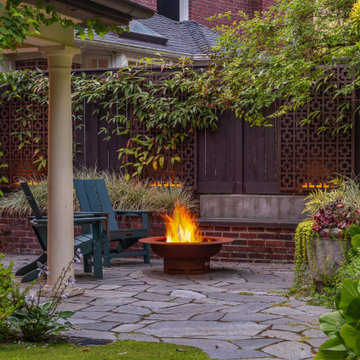
Nestled into the hillside of the Mt. Baker neighborhood of Seattle, the private backyard blends corten steel and natural stone to create a hideaway for the homeowner's enjoyment. Bamboo decking with a complimenting pergola and gate surrounds a custom, rustic outdoor kitchen. A rusted, gas fire feature centers the patio space surrounded by a basalt and brick seat wall and uplight decorative steel screens. The brick feature wall was repurposed to compliment the architecture. A flagstone path steps through a lush shade garden and walkable groundcover "lawn". This compact space is brimming with intricate details that bring it to life.
 Accent Landscapes
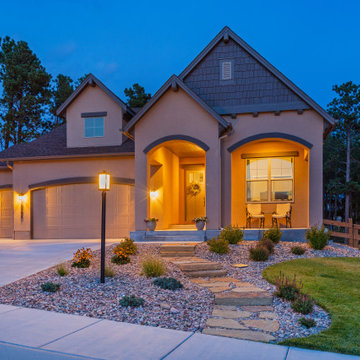
This stunning new home is complemented by a meticulously landscaped front yard, featuring a natural flagstone walkway, vibrant plantings, and elegant lighting that enhances the warm and inviting evening glow.

 Greey Pickett
This residence is a renovation of a traditional landscape into a contemporary garden. Custom contemporary steel planters complement the steel detailing on the home and offer an opportunity to highlight unique native plant species. A large front yard living space offers easy socialization with this active neighborhood. The spectacular salvaged 15ft Organ Pipe Cactus grabs your eye as you enter the residence and anchors the contemporary garden.
The back terrace has been designed to create inviting entertainment areas that overlook the golf course as well as protected private dining areas. A large family gathering spot is nestled between the pool and centered around the concrete fire pit. The relaxing spa has a negative edge that falls as a focal point towards the master bedroom.
A secluded private dining area off of the kitchen incorporates a steel louver wall that can be opened and closed providing both privacy from adjacent neighbors and protection from the wind. Masses of succulents and cacti reinforce the structure of the home.
Project Details:
Architect: PHX Architecture
Landscape Contractor: Premier Environments
Photography: Sam Rosenbaum

 CAVINESS LANDSCAPE DESIGN, INC.
This Caviness project for a modern farmhouse design in a community-based neighborhood called The Prairie At Post in Oklahoma. This complete outdoor design includes a large swimming pool with waterfalls, an underground slide, stream bed, glass tiled spa and sun shelf, native Oklahoma flagstone for patios, pathways and hand-cut stone retaining walls, lush mature landscaping and landscape lighting, a prairie grass embedded pathway design, embedded trampoline, all which overlook the farm pond and Oklahoma sky. This project was designed and installed by Caviness Landscape Design, Inc., a small locally-owned family boutique landscape design firm located in Arcadia, Oklahoma. We handle most all aspects of the design and construction in-house to control the quality and integrity of each project.
Film by Affordable Aerial Photo & Video

 Drawing Dept
RVP Photography
Inspiration for a small contemporary black one-story metal exterior home remodel in Cincinnati with a shed roof
Inspiration for a small contemporary black one-story metal exterior home remodel in Cincinnati with a shed roof

 Urban Oasis Landscape Design
The garden has become a showpiece in the neighborhood and interaction with my client's neighbors has increased dramatically.
Photo of a mediterranean full sun front yard concrete paver landscaping in Los Angeles for spring.
Photo of a mediterranean full sun front yard concrete paver landscaping in Los Angeles for spring.

 Deibys Landscaping INC.
Becher Neme
Photo of a small shabby-chic style drought-tolerant and full sun front yard mulch landscaping in Los Angeles for spring.
Photo of a small shabby-chic style drought-tolerant and full sun front yard mulch landscaping in Los Angeles for spring.

 Taproot Garden Design
Patrick & Topaze McCaffery - Taproot Garden Design
"July 2017: The front lawn was removed and replaced with a raised planting box, decomposed granite patio, California Native Plants, including Achillea millefolium 'Sonoma Coast', Arctostaphylos 'Dr. Hurd' Manzanita, Calamagrostis foliosa (Mendocino Reed Grass), and Ceanothus 'Centennial' groundcover, and other drought tolerant perennials. Photo taken after 3 months from installation date."
 Taproot Garden Design
Patrick & Topaze McCaffery - Taproot Garden Design
"April 29, 2018 - The central walkway (Connecticut Bluestone Full Range pavers) connects with the front door, the new decomposed granite patio, the driveway, and the sidewalk."
 Sweet Smiling Landscape Design
Tiered of the looking out at a shabby brown lawn in their front yard and unwilling to use the water to keep it green these homeowners decided to go for something different. The wife in this household worked from home and was motivated to have a better view from her home office. As an enthusiastic bird watcher, I wanted to give her a view that included happy birds fluttering about. The husband was annoyed by the fact that some of the neighbors allowed their dogs to use this corner lot a toilet without having the curtesy of cleaning up after them.
My job was to create a low water landscape (also known as xeriscape) that attracted birds, bees and butterflies but kept the dogs off. We started with directing down spouts in to catch basins called infiltration swales. These swales capture water storing it in the soil where it can be accessed by plants months after the rains have stopped. Then we integrated primarily California native plants and succulents into the design. Special attention was payed to the water needs of the plants and the ideal growing conditions for each species so that the combination of earthworks and plant choice and placement this landscape can get by with zero supplemental irrigation after the period of establishment this landscape. By incorporating flowering California native plants, native birds and insects flocked to the site in a neighborhood otherwise dominated by lifeless landscapes. By surrounding the garden with decomposed granite and succulents we created a space that was unpleasant and unappealing for dogs to relive themselves while remaining appealing to more human sensibilities.
Today this property sits on the corner in a suburban neighborhood of Goleta, California. Hopefully serving as inspiration to take out lawns and build beautiful gardens that work to integrate the man made landscape with the natural ecosystem in which it is built.
 Sweet Smiling Landscape Design
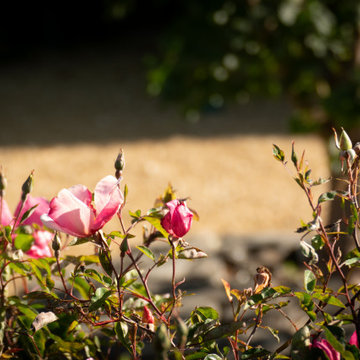
Located on a flat, square, corner plot in a dense neighborhood comprised of small homes, this project was a blank canvas to create a landscape that is both an opportunity for community engagement as well as a peaceful space to recreate and entertain, while also expanding the living space on the property. The client is an avid surfer does volunteer work for the Surfrider Foundation, and he was inspire to build a landscape that fulfils Surfrider’s Ocean Friendly Garden program. We combined a mix of California natives with edible plants such as herbs and fruit trees. We created curvilinear beds outlined with rock and pebbles of ascending size to mimic the rock outcroppings of the local coastline. The veggie beds are made of rammed earth—a tradition natural building technique that uses, mud, sand and a small amount of cement. With fruits and flowers hanging into the sidewalk, this garden allows for friendly neighborhood interaction as well as a more-intimate area for this client to relax and entertain in. *Images captured at 1-year and 3-years after
 Sweet Smiling Landscape Design
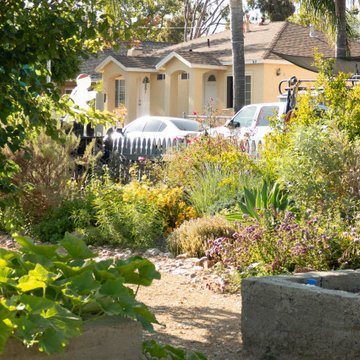
Located on a flat, square, corner plot in a dense neighborhood comprised of small homes, this project was a blank canvas to create a landscape that is both an opportunity for community engagement as well as a peaceful space to recreate and entertain, while also expanding the living space on the property. The client is an avid surfer does volunteer work for the Surfrider Foundation, and he was inspire to build a landscape that fulfils Surfrider’s Ocean Friendly Garden program. We combined a mix of California natives with edible plants such as herbs and fruit trees. We created curvilinear beds outlined with rock and pebbles of ascending size to mimic the rock outcroppings of the local coastline. The veggie beds are made of rammed earth—a tradition natural building technique that uses, mud, sand and a small amount of cement. With fruits and flowers hanging into the sidewalk, this garden allows for friendly neighborhood interaction as well as a more-intimate area for this client to relax and entertain in. *Images captured at 1-year and 3-years after
20