
Search results for "Programming standards" in Home Design Ideas
 User
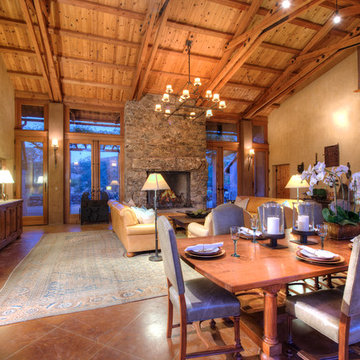
UserThe magnificent Casey Flat Ranch Guinda CA consists of 5,284.43 acres in the Capay Valley and abuts the eastern border of Napa Valley, 90 minutes from San Francisco.
There are 24 acres of vineyard, a grass-fed Longhorn cattle herd (with 95 pairs), significant 6-mile private road and access infrastructure, a beautiful ~5,000 square foot main house, a pool, a guest house, a manager's house, a bunkhouse and a "honeymoon cottage" with total accommodation for up to 30 people.
Agriculture improvements include barn, corral, hay barn, 2 vineyard buildings, self-sustaining solar grid and 6 water wells, all managed by full time Ranch Manager and Vineyard Manager.The climate at the ranch is similar to northern St. Helena with diurnal temperature fluctuations up to 40 degrees of warm days, mild nights and plenty of sunshine - perfect weather for both Bordeaux and Rhone varieties. The vineyard produces grapes for wines under 2 brands: "Casey Flat Ranch" and "Open Range" varietals produced include Cabernet Sauvignon, Cabernet Franc, Syrah, Grenache, Mourvedre, Sauvignon Blanc and Viognier.
There is expansion opportunity of additional vineyards to more than 80 incremental acres and an additional 50-100 acres for potential agricultural business of walnuts, olives and other products.
Casey Flat Ranch brand longhorns offer a differentiated beef delight to families with ranch-to-table program of lean, superior-taste "Coddled Cattle". Other income opportunities include resort-retreat usage for Bay Area individuals and corporations as a hunting lodge, horse-riding ranch, or elite conference-retreat.
 Windward Pointe
Open House This Sunday 4/11/21 in Fishersville!
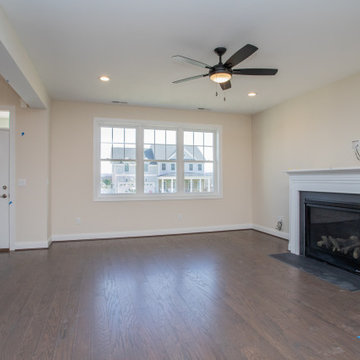
Your brand new, three-bedroom, 2.5-bathroom home awaits you in Windward Pointe! If you have been waiting for the perfect home for your family, this one is it! Your new kitchen features a large island with a built-in breakfast bar, stainless steel appliances, granite countertops, and hardwood floors. Warm yourself on cold days by the fireplace in the living room. There are many windows in this home, too, allowing the natural light to accent the home's beautiful construction.
Enjoy the warmer weather on your screened-in back porch. The laundry room has plenty of cabinet space and a sink for easy clean-up. There is a bonus room just off the master suite, which would be perfect for a home office or nursery. Speaking of your new master suite, it features a walk-in closet and a master bath with a jetted tub, a stall shower, and his and her sinks!
Follow the gorgeous staircase to the second floor, where you'll find a loft/rec room area, two more bedrooms, a second full bath, and an unfinished bonus room! Plus, there's plenty of space for your vehicles in your new two-car garage!
This home is a must-see in person! Lucky for you, Ashley is hosting an open house this Sunday, April 11, 2021, at this stunning home! Visit her at 197 Windsor Drive, Fishersville, VA 22939, from 1 to 4 PM. This home is available with a builder's warranty for one year and qualifies for our easy owner financing program. Ashley has all the details! If you prefer to schedule a private tour or have any questions before the open house, contact her at 540-280-3385. We are an equal housing opportunity and warmly welcome realtors!
 HX Home Solutions and North Star Stone
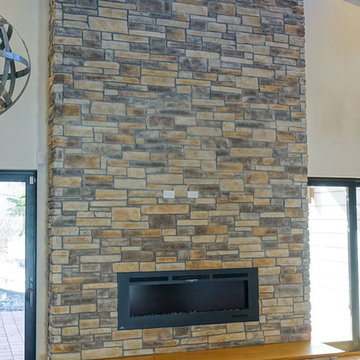
Brick and stone veneer are nothing new to the world of architecture and construction. They are attractive, durable, and don’t come with the same hefty price tag as a traditional, full sized stone or brick.
And, in the instance of this beautiful new home in Evanston, Illinois, their use marks achieving a standard of sustainability measured by the popular certification program, LEED. These are no ordinary stone veneers. They are entirely man-made, which gives them several important qualities that do well to promote environmentally friendly design.
This article aims to examine this stunning work of residential construction, and answer a few fundamental questions about LEED. What is it? Why is it Important? And how do things like sourcing local, sustainable materials make an impact on the environment?
Learn more: http://bit.ly/leed-stone-veneer
Find the right local pro for your project
 MATHISON | MATHISON ARCHITECTS
Acton, MA
2008
sq ft varies
Visioning, programming, concept design, schematic design, construction documentation and construction administration
The HingeHouse project was the result of a unique partnership between an independent architect and a pre-fabricated home manufacturer – a partnership among the first of its kind in the country. Today, many pre-fab companies have adopted this collaborative approach recognizing that homeowners are looking for unique, custom homes while taking advantage of reliable and predictable construction methods and costs.
In 2008, the partnership was created to rethink pre-engineered post-and-beam and panelized systems to connect clients to a more modern and integrated set of design values. By integrating systems, factory design approach, manufacturing methodologies and construction sequences with design criteria grounded in sustainable planning and rigorous implementation, HingeHouse was developed.
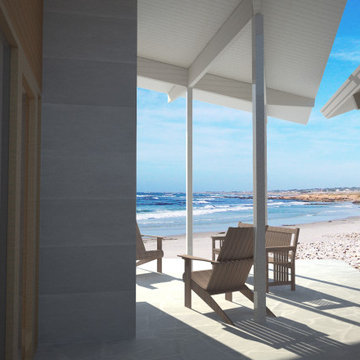
HingeHouse is a fully-customizable pre-fab home which can be configured to meet the needs of any site, and any family. It is flexible and expandable using Deck House engineered building components. Starting with basic floor plans that are optimized spatially to Deck’s standard components, the living spaces are rotated around a "hinge” point. This design solution addresses the limitations and challenges of a particular site, while highlighting the best aspects of it. HingeHouse considers passive solar orientation depending on where the home is placed on the site and how it is “hinged”. It provides for maximum cross-ventilation from prevailing winds, preserves existing site formations and trees, and works on sloping grades. It addresses specific desired views while mitigating unwanted adjacencies, and provides great flexibility for entry sequences.
HingeHouse uses Deck’s standard sloped roof post-and-beam component system to create a lyrical, light-filled home. The western red cedar exterior is sculptural and dynamic. Interior spaces are lofty, with great view potential using Deck’s own custom-made mahogany windows. The “hinge” of the home, where the two building forms come together, has the added benefit of creating a desirable outdoor living room, complete with an outdoor fireplace. The "hinge” provides both a tool for maximizing customization and spatial orientation and a center of activity at the heart of the home.
Since this partnership in 2008, Maryann Thompson Architects and MATHISON | MATHISON ARCHITECTS have worked with Acorn Deck House Company on numerous full or partial pre-fab projects in the Boston Area, Western Massachusetts, Maryland and Michigan. We have become an advocate for their services and products because it offers advantages on a variety of levels including schedule, cost and quality.
Services provided included visioning, programming, concept design, schematic design, construction documentation and construction administration.
Evan’s Role: Project Designer & Project Manager
 The Galante Architecture Studio, Inc.
Originally built in 1972, these eight interlocked residential units and the accompanying House Master’s Residence won an AIA award for their unique spatial complexity, balancing standard units of construction with volumetric interplay, all while bringing natural light into living spaces. However, nearly 40 years later
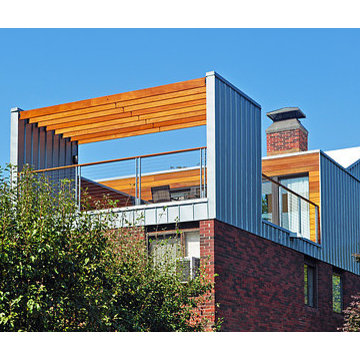
These 1970’s era, interlocked faculty housing units won an AIA award when first completed. They were unique in spatial complexity, By early 2,000’s they were showing signs of age, and had become outdated on many levels. Working with project management for the Faculty of Arts & Sciences, we prepared one prototype design to bring the buildings into the 21st century. New insulated skylights, standing seam metal siding, cedar decks and trellises, exchanging black roofs for well insulated white roofs, were all part of a larger planning program to renovate all nine units. The prototype was implemented in 2012, to great approval and result. In 2013 a few more units were done. In 2014 the “House Masters” unit was done, with the remaining four units planned for future budgets.
Sustainable features include re-use of most materials on site, (former siding was able to become sheathing below metal panels), implementing the Stretch Energy Code for insulation, and putting new white roof membranes in place. Using FSC certified wood for decks and trellises, and using Rheinzink siding, a “200 year material” according to the manufacturer.
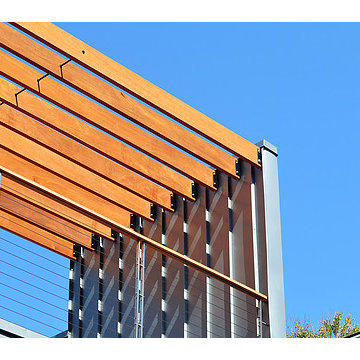
After nearly 40 years, Ronald Gourley’s AIA award winning Faculty Housing (1972) was beginning to show its age – plywood siding was delaminating, wooden decks splintering, and custom windows failing. Therefore, the opportunity to reinvent a piece of Mid-Century Modernism presented itself when two of the building’s eight alternating rooftop designs were to be rebuilt as prototypes for the remainder of the structure.
The strength of the original design was its rectilinear and symmetrical arrangement of internal and external spaces, but the difference between the two had become blurred over the decades. New zinc siding, mahogany decking, and stainless steel railings accentuate the defining elements and more clearly articulate the living spaces, breathing new life into the building and reinvigorating the surrounding campus.
Furthermore, the renovation also provided a chance to bring the structure up to modern energy standards and help meet Harvard’s lofty environmental goals. Insulation within the ceilings was more than tripled, white TPO roofing reduces the heat island effect, construction waste was minimized by recasting the siding as sheathing, and materials were selected not only for aesthetics, but for their longevity and ability to be recycled as well.
Harvard’s energy standards brought an uncharacteristic level of environmental care to this building. Roof structures are triple insulated, allowing separating interior from exterior in the most thermally efficient manner. North facing triple insulated skylights and white TPO roofing reduces the heat gain, but allows natural light to pour in. Materials were selected not only for aesthetics, but for their longevity. Zinc, for example, is made of 100% recycled material, and has duration of 200 years. Uncharacteristic levels of environmental care were common on this project.
 Kelly Simkovich at Main Line Sound & Video
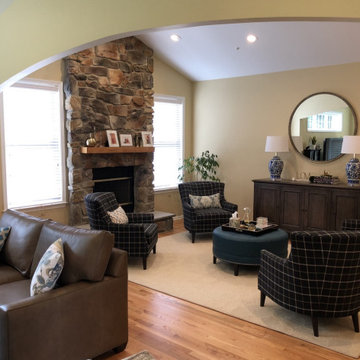
From concept to completion, the ideas and renderings for this addition began over a year ago with our new 3D space planner. Construction did not begin until 6 months later after every detail was designed in the program from the exact placement of the windows to the furniture layout. And now it's finally complete!
 MATHISON | MATHISON ARCHITECTS
Acton, MA
2008
sq ft varies
Visioning, programming, concept design, schematic design, construction documentation and construction administration
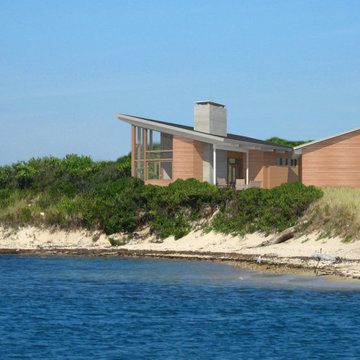
The HingeHouse project was the result of a unique partnership between an independent architect and a pre-fabricated home manufacturer – a partnership among the first of its kind in the country. Today, many pre-fab companies have adopted this collaborative approach recognizing that homeowners are looking for unique, custom homes while taking advantage of reliable and predictable construction methods and costs.
In 2008, the partnership was created to rethink pre-engineered post-and-beam and panelized systems to connect clients to a more modern and integrated set of design values. By integrating systems, factory design approach, manufacturing methodologies and construction sequences with design criteria grounded in sustainable planning and rigorous implementation, HingeHouse was developed.
HingeHouse is a fully-customizable pre-fab home which can be configured to meet the needs of any site, and any family. It is flexible and expandable using Deck House engineered building components. Starting with basic floor plans that are optimized spatially to Deck’s standard components, the living spaces are rotated around a "hinge” point. This design solution addresses the limitations and challenges of a particular site, while highlighting the best aspects of it. HingeHouse considers passive solar orientation depending on where the home is placed on the site and how it is “hinged”. It provides for maximum cross-ventilation from prevailing winds, preserves existing site formations and trees, and works on sloping grades. It addresses specific desired views while mitigating unwanted adjacencies, and provides great flexibility for entry sequences.
HingeHouse uses Deck’s standard sloped roof post-and-beam component system to create a lyrical, light-filled home. The western red cedar exterior is sculptural and dynamic. Interior spaces are lofty, with great view potential using Deck’s own custom-made mahogany windows. The “hinge” of the home, where the two building forms come together, has the added benefit of creating a desirable outdoor living room, complete with an outdoor fireplace. The "hinge” provides both a tool for maximizing customization and spatial orientation and a center of activity at the heart of the home.
Since this partnership in 2008, Maryann Thompson Architects and MATHISON | MATHISON ARCHITECTS have worked with Acorn Deck House Company on numerous full or partial pre-fab projects in the Boston Area, Western Massachusetts, Maryland and Michigan. We have become an advocate for their services and products because it offers advantages on a variety of levels including schedule, cost and quality.
Services provided included visioning, programming, concept design, schematic design, construction documentation and construction administration.
Evan’s Role: Project Designer & Project Manager
Sponsored
Columbus, OH

Wannemacher Interiors
Customized Award-Winning Interior Design Solutions in Franklin Cnty OH
 Budget Blinds Of The High Country
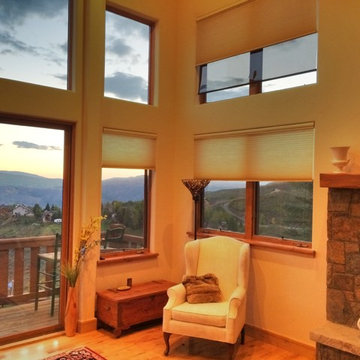
We developed this innovative solution using a motorized mylar roller shade combined with a motorized cellular shade. With the mylar roller shade down, the views are unobstructed but 99% of the UV is blocked, minimizing heating issues during long summer days. The mylar shade can be retracted to allow full solar heating during the winter. Lowering the cellular honeycomb shade provides optimal insulation on the window, which is further boosted if the mylar shade is also lowered. Best of all, it can be controlled using hand-held remotes, or controlled or programmed for automatic operation, even from halfway around the world using a tablet or mobile phone.
 MATHISON | MATHISON ARCHITECTS
Acton, MA
2008
sq ft varies
Visioning, programming, concept design, schematic design, construction documentation and construction administration
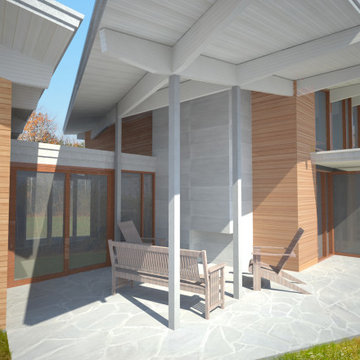
The HingeHouse project was the result of a unique partnership between an independent architect and a pre-fabricated home manufacturer – a partnership among the first of its kind in the country. Today, many pre-fab companies have adopted this collaborative approach recognizing that homeowners are looking for unique, custom homes while taking advantage of reliable and predictable construction methods and costs.
In 2008, the partnership was created to rethink pre-engineered post-and-beam and panelized systems to connect clients to a more modern and integrated set of design values. By integrating systems, factory design approach, manufacturing methodologies and construction sequences with design criteria grounded in sustainable planning and rigorous implementation, HingeHouse was developed.
HingeHouse is a fully-customizable pre-fab home which can be configured to meet the needs of any site, and any family. It is flexible and expandable using Deck House engineered building components. Starting with basic floor plans that are optimized spatially to Deck’s standard components, the living spaces are rotated around a "hinge” point. This design solution addresses the limitations and challenges of a particular site, while highlighting the best aspects of it. HingeHouse considers passive solar orientation depending on where the home is placed on the site and how it is “hinged”. It provides for maximum cross-ventilation from prevailing winds, preserves existing site formations and trees, and works on sloping grades. It addresses specific desired views while mitigating unwanted adjacencies, and provides great flexibility for entry sequences.
HingeHouse uses Deck’s standard sloped roof post-and-beam component system to create a lyrical, light-filled home. The western red cedar exterior is sculptural and dynamic. Interior spaces are lofty, with great view potential using Deck’s own custom-made mahogany windows. The “hinge” of the home, where the two building forms come together, has the added benefit of creating a desirable outdoor living room, complete with an outdoor fireplace. The "hinge” provides both a tool for maximizing customization and spatial orientation and a center of activity at the heart of the home.
Since this partnership in 2008, Maryann Thompson Architects and MATHISON | MATHISON ARCHITECTS have worked with Acorn Deck House Company on numerous full or partial pre-fab projects in the Boston Area, Western Massachusetts, Maryland and Michigan. We have become an advocate for their services and products because it offers advantages on a variety of levels including schedule, cost and quality.
Services provided included visioning, programming, concept design, schematic design, construction documentation and construction administration.
Evan’s Role: Project Designer & Project Manager
 Amhad Freeman Interiors
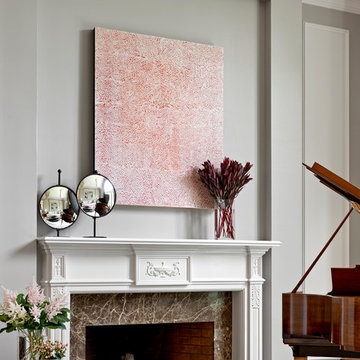
This is a stunning Forest Hills home that was traditional by design. The client requested it be updated. The program was to brighten the space by using neutral colors, textiles, and furnishings that are on trend and timeless.
Photo Credit: Nicholas Mcginn
 Tomecek Studio Architecture
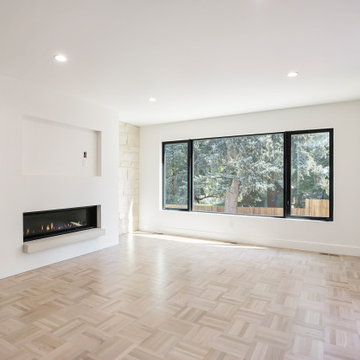
Jasmine Residence is a renovation of a single-story ranch house in Denver, Colorado. Two accordion folding glass doors connect the main living space with the rear yard and the neighborhood street. This effectively creates a large breezeway that can be opened up for three seasons annually. The second story addition expands the house's existing program to include a new master suite and a loft.
 Stellar Remodeling & Cabinetry
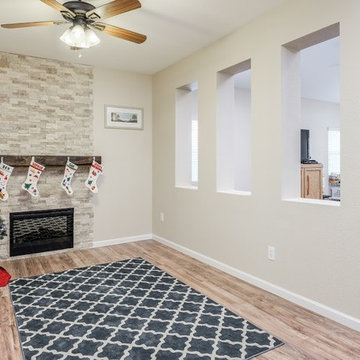
This 600sf addition in Folsom created much need space for a growing family. In addition to gaining space, functionality and pantry storage were requirements in the design program. We opened up the kitchen and dining area to great room, with a vaulted ceiling, lots of natural light, created a private office, and new flooring throughout. We also designed a warm and cozy sitting area with a new LED fireplace, stacked stacked stone and a rustic mantel. Schrock cabinets provided a lot more storage and functionality. The countertops are a combination of granite and quartz; the backsplash is natural stone. The 'floating' soffit above the island provided an opportunity for more LED up-lights and a great focal point. New concrete walkways, a patio, and an easy-access area for the garbage cans completed the exterior.
 Corri Sandwick Architecture
Corri Sandwick Architecture
Location: Bellaire, MI, USA
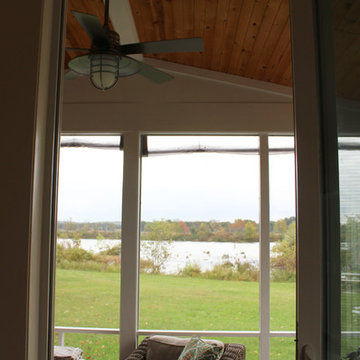
Sitting on the banks of the Intermediate River, this house is designed to be a Green Star Silver retreat. Integrating and expanding on the expression of the original modern house and inspired by Joseph Eichler, this house incorporates simple lines, and clean details. With the goal of going to net-zero in a few years, the house is well air-sealed and insulated to reduce energy consumption as a first step in achieving the goal. Using the Green Star program helped to guide the design and construction team to achieve a home that addresses sustainability in all aspects.
Photographed by: Endura Homes
Sponsored
Columbus, OH

Snider & Metcalf Interior Design, LTD
Leading Interior Designers in Columbus, Ohio & Ponte Vedra, Florida
 Alair Homes Arlington
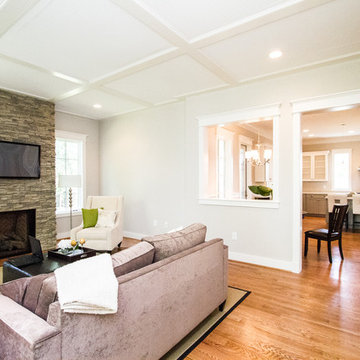
A gorgeous, high quality, custom home with incredible attention to detail. Energy Star rated & Arlington's Green Choice program. Features a gourmet kitchen with top of the line finishes, two mud rooms, screened porch, and MBR balcony. All of the bedrooms have an attached bathroom. This home has four finished levels and a gorgeous, continuous handrail. Opt'l home theater & elevator rough-in. This home is minutes from DC, and mere blocks away from Yorktown High School.
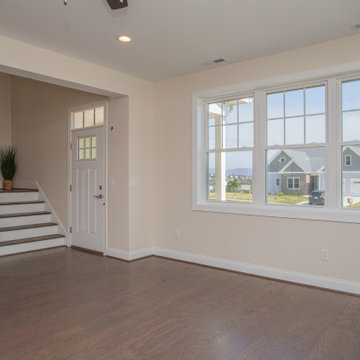 Windward Pointe
Open House This Sunday 4/11/21 in Fishersville!
Your brand new, three-bedroom, 2.5-bathroom home awaits you in Windward Pointe! If you have been waiting for the perfect home for your family, this one is it! Your new kitchen features a large island with a built-in breakfast bar, stainless steel appliances, granite countertops, and hardwood floors. Warm yourself on cold days by the fireplace in the living room. There are many windows in this home, too, allowing the natural light to accent the home's beautiful construction.
Enjoy the warmer weather on your screened-in back porch. The laundry room has plenty of cabinet space and a sink for easy clean-up. There is a bonus room just off the master suite, which would be perfect for a home office or nursery. Speaking of your new master suite, it features a walk-in closet and a master bath with a jetted tub, a stall shower, and his and her sinks!
Follow the gorgeous staircase to the second floor, where you'll find a loft/rec room area, two more bedrooms, a second full bath, and an unfinished bonus room! Plus, there's plenty of space for your vehicles in your new two-car garage!
This home is a must-see in person! Lucky for you, Ashley is hosting an open house this Sunday, April 11, 2021, at this stunning home! Visit her at 197 Windsor Drive, Fishersville, VA 22939, from 1 to 4 PM. This home is available with a builder's warranty for one year and qualifies for our easy owner financing program. Ashley has all the details! If you prefer to schedule a private tour or have any questions before the open house, contact her at 540-280-3385. We are an equal housing opportunity and warmly welcome realtors!
 Great Lakes Carpentry Inc
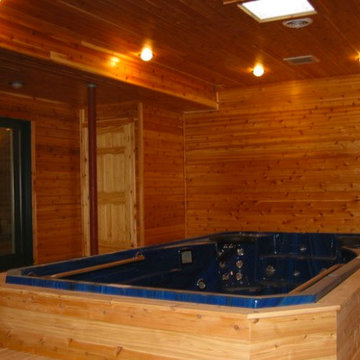
This full-log home was the first to meet Wisconsin Energy Star Program Standards and to achieve a Wisconsin Green-Built Homes certification in the State of Wisconsin. Properly kiln-dried logs played a key role in making the home air-tight and energy efficient. Logs are 8×12 rectangular Eastern White Pine with dovetail corner details. The wave pool in the lower level make this home a swimmers dream come true.
 Landis Architects | Builders
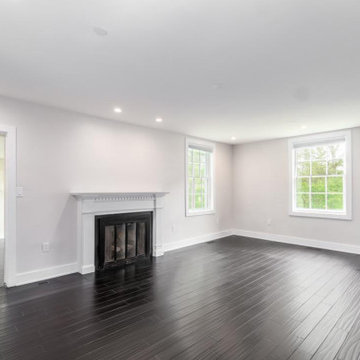
This was a complete transformation that incorporated a brick Cape Cod into a stunning modern home. It offers two-family living with a separate dwelling. The retractable glass walls that lead to a central courtyard provide family and entertaining space. Our designer solved many design challenges to meet the program, including working the design around a difficult lot and zoning rules.
Sponsored
Westerville, OH

Custom Home Works
Franklin County's Award-Winning Design, Build and Remodeling Expert
 The Galante Architecture Studio, Inc.
Originally built in 1972, these eight interlocked residential units and the accompanying House Master’s Residence won an AIA award for their unique spatial complexity, balancing standard units of construction with volumetric interplay, all while bringing natural light into living spaces. However, nearly 40 years later
These 1970’s era, interlocked faculty housing units won an AIA award when first completed. They were unique in spatial complexity, By early 2,000’s they were showing signs of age, and had become outdated on many levels. Working with project management for the Faculty of Arts & Sciences, we prepared one prototype design to bring the buildings into the 21st century. New insulated skylights, standing seam metal siding, cedar decks and trellises, exchanging black roofs for well insulated white roofs, were all part of a larger planning program to renovate all nine units. The prototype was implemented in 2012, to great approval and result. In 2013 a few more units were done. In 2014 the “House Masters” unit was done, with the remaining four units planned for future budgets.
Sustainable features include re-use of most materials on site, (former siding was able to become sheathing below metal panels), implementing the Stretch Energy Code for insulation, and putting new white roof membranes in place. Using FSC certified wood for decks and trellises, and using Rheinzink siding, a “200 year material” according to the manufacturer.
After nearly 40 years, Ronald Gourley’s AIA award winning Faculty Housing (1972) was beginning to show its age – plywood siding was delaminating, wooden decks splintering, and custom windows failing. Therefore, the opportunity to reinvent a piece of Mid-Century Modernism presented itself when two of the building’s eight alternating rooftop designs were to be rebuilt as prototypes for the remainder of the structure.
The strength of the original design was its rectilinear and symmetrical arrangement of internal and external spaces, but the difference between the two had become blurred over the decades. New zinc siding, mahogany decking, and stainless steel railings accentuate the defining elements and more clearly articulate the living spaces, breathing new life into the building and reinvigorating the surrounding campus.
Furthermore, the renovation also provided a chance to bring the structure up to modern energy standards and help meet Harvard’s lofty environmental goals. Insulation within the ceilings was more than tripled, white TPO roofing reduces the heat island effect, construction waste was minimized by recasting the siding as sheathing, and materials were selected not only for aesthetics, but for their longevity and ability to be recycled as well.
Harvard’s energy standards brought an uncharacteristic level of environmental care to this building. Roof structures are triple insulated, allowing separating interior from exterior in the most thermally efficient manner. North facing triple insulated skylights and white TPO roofing reduces the heat gain, but allows natural light to pour in. Materials were selected not only for aesthetics, but for their longevity. Zinc, for example, is made of 100% recycled material, and has duration of 200 years. Uncharacteristic levels of environmental care were common on this project.
 Tulsa Design Therapy
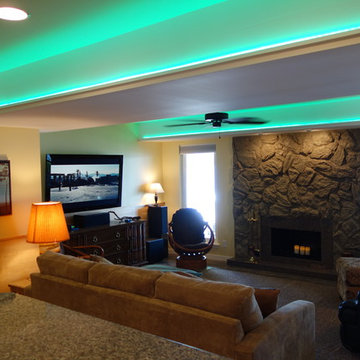
The ceiling was raised, ducts re-routed and soffits built to house the vents, a window added next to the fireplace, the angled wall eliminated, new flooring, maple plank wainscot added to two walls to bring unity from the upstairs down. LED color changing lightstrips can be programmed to change color or you can pick a color depending on your mood. With music or movies playing through the surround sound system and the light strips changing color, it make for a festive environment after a day on the water.

7