
Search results for "Property held" in Home Design Ideas

 MULHOLLAND BRAND
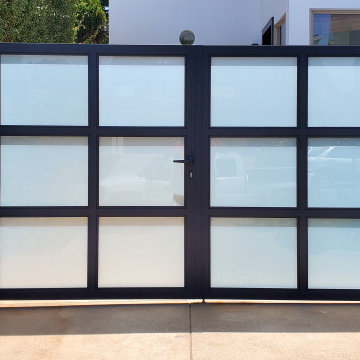
Laminated white glass held firmly in place with a powder-coated aluminum frame. This replaced a steel-framed glass gate that rusted away. Aluminum is the best material for outdoor use. This will look beautiful and work excellently for years and require very little maintenance
 Donald S. Richardson AIA
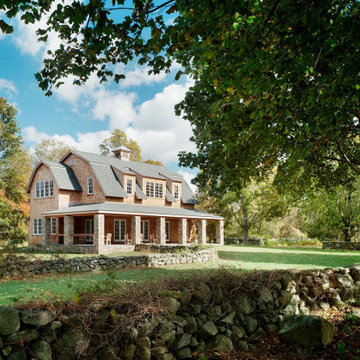
When the owners of historic Weeden Farm, one of the oldest privately held farms in New England, decided to divide their property, a generous benefactor stepped in to save a large portion of the land and underwrite the construction of The Barn, as it is known, to be used as the headquarters of the South Kingstown Land Trust. The new HQ building replaced a 19th Century building that had been used to hold farm equipment and as a summer residence for extended family members. The original building was beyond renovation, and DSR AIA & Assoc. was commissioned to design a new building on the original footprint. The design goal was to provide a modern multi-functional space acknowledging the original barn in scale and materials and was respectful of the character of the remaining 18th Century farm buildings. The main floor houses a large common area used for meetings and informal gatherings, as well as a modern catering kitchen and bathrooms. Upstairs, several offices, a library and conference room, and an additional bathroom serve the SKLT staff, while the addition of a large stone loggia on the ground floor welcomes summer visitors and groups. The Barn project received several design awards.
Find the right local pro for your project
 Garabedian Properties Custom Home Builder
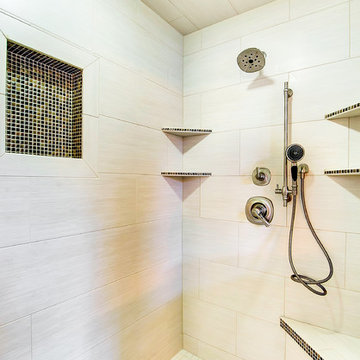
The master shower features three separate shower heads, a traditional, a rain head and a hand held. Pictures by Imagary Intelligence for Garabedian Estates a sister company of Garabedian Properties

 team-b design
The Clareville Artist’s House is located on the Northern Beaches Peninsula - north of Sydney - with 360° views of Pittwater and the Pacific Ocean.
The expansive property held an existing sandstone dwelling ‘Hy Brasil’ designed and built by Alexander Jolly in 1934 and was subject to a Permanent Conservation Order (under NSW Heritage Act 1977) in recognition the integrity of the setting and the preservation of vegetation on the prominent ridge.
Commissioned by the Client to provide a primary family dwelling and working artists studio on the site, the planning of the new pavilion style home was heavily influenced by the rich setting - within the constraints of Bushfire and site access constraints.
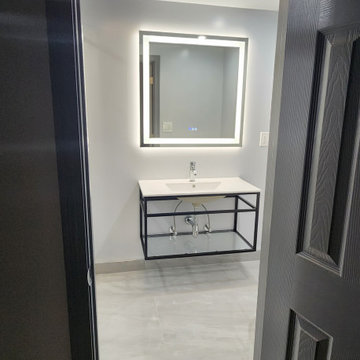
 Vascontractors
We added a brand-new bathroom in the basement of this property with a full walk-in shower, featuring high-pressure shower heads (1 rain shower, 1 regular shower head and 1 hand-held shower).
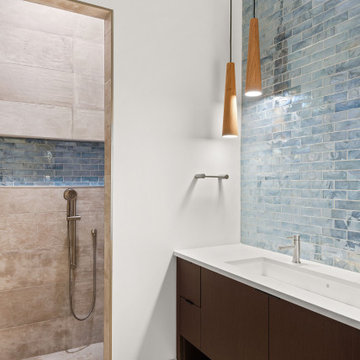
 Beck Custom Homes, LLC
This photo shows a stylish and functional pool bath, captured before the mirror was installed. The room features a striking accent wall tiled with iridescent blue bricks, creating a beautiful, shimmery effect.
A dark wood floating vanity with a white countertop is mounted below the tile wall. The sink is a clean, modern basin with a single-hole faucet. Two sleek, wood-toned pendant lights hang above where the sink is located. To the left, an open, doorless entryway leads to a walk-in shower. The shower walls are covered in light beige stone tiles, complemented by a horizontal stripe of the same blue iridescent tiles as the accent wall. A hand-held shower head is visible inside. The design is a sophisticated blend of natural tones and bold, modern accents, perfect for a pool-side bathroom.

 JC Property Professionals
This driveway had held firm since the 1950s but a decayed drainage system created a sinkhole that made this path undrivable. We installed a new drain and pack this driveway tight.

 Momentous Impressions Ltd.
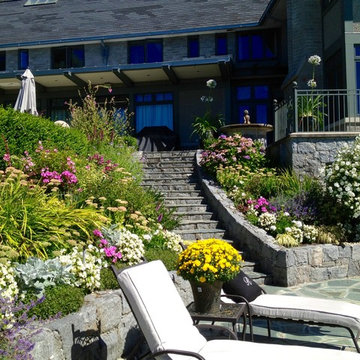
CLIENT ISSUES/PROBLEMS
o Large property with variety of native and foreign species
o requires expertise and thorough understanding of gardening to ensure property maintenance
o regular functions held on weekends, require coordination to ensure all aspects of required gardening are addressed
MOMENTOUS APPROACH
o 6 year maintenance client
o weekly maintenance scheduled for end of week to ensure property looks it’s best for weekend functions
o recommendation of plants and soil for areas needing replacement or additions
o consistent crew leader to ensure development of relationship with client
o treatment of plants for pests/mites/insects (IPM Certified Staff)
RESULTS
o Well maintained property that shows amazing colour and interest year-round
o Strong relationship between Momentous Impressions and Client, allowing for ease of communication and quick follow-up for client requests
 Momentous Impressions Ltd.
CLIENT ISSUES/PROBLEMS
o Large property with variety of native and foreign species
o requires expertise and thorough understanding of gardening to ensure property maintenance
o regular functions held on weekends, require coordination to ensure all aspects of required gardening are addressed
MOMENTOUS APPROACH
o 6 year maintenance client
o weekly maintenance scheduled for end of week to ensure property looks it’s best for weekend functions
o recommendation of plants and soil for areas needing replacement or additions
o consistent crew leader to ensure development of relationship with client
o treatment of plants for pests/mites/insects (IPM Certified Staff)
RESULTS
o Well maintained property that shows amazing colour and interest year-round
o Strong relationship between Momentous Impressions and Client, allowing for ease of communication and quick follow-up for client requests
 Momentous Impressions Ltd.
CLIENT ISSUES/PROBLEMS
o Large property with variety of native and foreign species
o requires expertise and thorough understanding of gardening to ensure property maintenance
o regular functions held on weekends, require coordination to ensure all aspects of required gardening are addressed
MOMENTOUS APPROACH
o 6 year maintenance client
o weekly maintenance scheduled for end of week to ensure property looks it’s best for weekend functions
o recommendation of plants and soil for areas needing replacement or additions
o consistent crew leader to ensure development of relationship with client
o treatment of plants for pests/mites/insects (IPM Certified Staff)
RESULTS
o Well maintained property that shows amazing colour and interest year-round
o Strong relationship between Momentous Impressions and Client, allowing for ease of communication and quick follow-up for client requests
 Momentous Impressions Ltd.
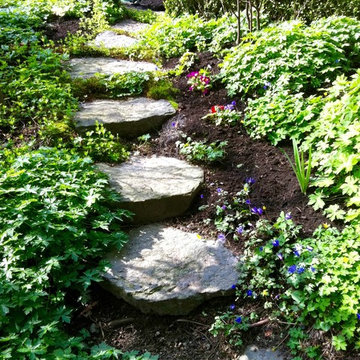
CLIENT ISSUES/PROBLEMS
o Large property with variety of native and foreign species
o requires expertise and thorough understanding of gardening to ensure property maintenance
o regular functions held on weekends, require coordination to ensure all aspects of required gardening are addressed
MOMENTOUS APPROACH
o 6 year maintenance client
o weekly maintenance scheduled for end of week to ensure property looks it’s best for weekend functions
o recommendation of plants and soil for areas needing replacement or additions
o consistent crew leader to ensure development of relationship with client
o treatment of plants for pests/mites/insects (IPM Certified Staff)
RESULTS
o Well maintained property that shows amazing colour and interest year-round
o Strong relationship between Momentous Impressions and Client, allowing for ease of communication and quick follow-up for client requests
 Momentous Impressions Ltd.
CLIENT ISSUES/PROBLEMS
o Large property with variety of native and foreign species
o requires expertise and thorough understanding of gardening to ensure property maintenance
o regular functions held on weekends, require coordination to ensure all aspects of required gardening are addressed
MOMENTOUS APPROACH
o 6 year maintenance client
o weekly maintenance scheduled for end of week to ensure property looks it’s best for weekend functions
o recommendation of plants and soil for areas needing replacement or additions
o consistent crew leader to ensure development of relationship with client
o treatment of plants for pests/mites/insects (IPM Certified Staff)
RESULTS
o Well maintained property that shows amazing colour and interest year-round
o Strong relationship between Momentous Impressions and Client, allowing for ease of communication and quick follow-up for client requests
 Momentous Impressions Ltd.
CLIENT ISSUES/PROBLEMS
o Large property with variety of native and foreign species
o requires expertise and thorough understanding of gardening to ensure property maintenance
o regular functions held on weekends, require coordination to ensure all aspects of required gardening are addressed
MOMENTOUS APPROACH
o 6 year maintenance client
o weekly maintenance scheduled for end of week to ensure property looks it’s best for weekend functions
o recommendation of plants and soil for areas needing replacement or additions
o consistent crew leader to ensure development of relationship with client
o treatment of plants for pests/mites/insects (IPM Certified Staff)
RESULTS
o Well maintained property that shows amazing colour and interest year-round
o Strong relationship between Momentous Impressions and Client, allowing for ease of communication and quick follow-up for client requests
 Tile Doctor Ltd
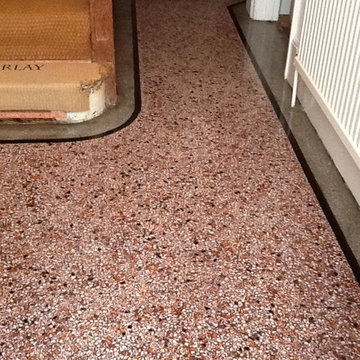
This Terrazzo tiled hallway at a property in Northampton was in a really bad state. It was heavily soiled and suffered from glue marks where the original carpet covering it had been removed. Additionally, there was some damage to the edges of the doorway, and a large crack in the floor running across the width of the hallway.
Terrazzo is an interesting material, originally produced in Italy, that consists mainly of concrete with segments of marble and other stone interspersed and held together with a resin. Since Terrazzo is formed in this way, I explained to the customer that I would fill the crack along the floor and the small holes around the edges with concrete, before then using tile paint to match in the colours as best as possible. This would be the most cost-effective solution, which was ideal since the customer had a limited budget for the repairs.
Before beginning the restoration, I tested a small area using a diamond encrusted burnishing pad, thereby giving the customer an indication of the type of results that could be achieved. With the customer pleased by the results, the job was booked in for the following week.
To begin, Tile Doctor Remove & Go was applied to the floor and was left to dwell for ten minutes to soften the carpet glue and break down any old sealer. This was then scrubbed in to the tiles with a pad fitted to a rotary machine. To remove the remaining residue and marks in the particularly stubborn areas, I used a manual hand scraper. The entire floor was then wet vaxed to soak up the soiled cleaner and leave the area clean for burnishing.
This was followed by the use of Tile Doctor diamond encrusted burnishing pads to polish the tiles, starting with a coarse grit pad, followed by wet vaxing and repeating the process with a medium grit pad and finally the fine grit pad to achieve the desired effect. I then installed a turbo dryer to dry the floor.
I returned to the property once the floor was dry and carried out the repairs which had been discussed earlier with the customer (filling the holes and cracks in the floor with concrete), cleaning off any concrete residue before I finished for the day.
Upon my return to the property the next day, I refined the polish on the floor even further by applying the extra fine grit burnishing pad.
To finish off the three day restoration, I sealed the Terrazzo tiles using two coats of Tile Doctor Colour Grow sealer. As an impregnating sealer, Colour Grow soaks into the pores of the stone, protecting it from ingrained dirt. Colour Grow also contains colour intensifying properties, allowing it to enhance the naturally occurring shades in the stone, and therefore stopping it from appearing dull.
This floor certainly was in a bad state, with damage as well as dirt to deal with, but I’m pleased to say that the work went a long way in transforming its appearance, leaving a very happy customer.
Phil Vissian
Northamptonshire Tile Doctor
 Tile Doctor Ltd
At Tile Doctor, we often come across Victorian tiled hallways in need of restoration. They’re very popular due to their timeless and unique patterns – and as a result are still in production, having first being produced in the 19th century. While many have been maintained in their original state since first being laid (which is sometimes over a century ago), others have been hidden by carpet or linoleum for many years, only to be uncovered by new property owners.
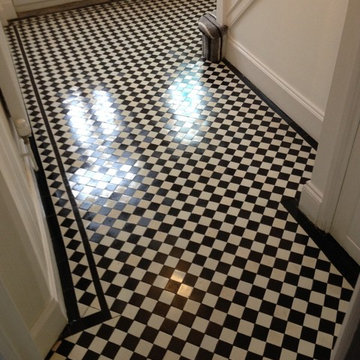
In this case, at a property in Newport – the port city of South East Wales – the Victorian tiled hallway had not been subject to an effective cleaning plan leaving the fantastic white and black checkered pattern grubby and unsightly. I was asked if I could help bring it back to life – and I was happy to oblige!
I started the restoration by applying a strong cleaning solution combined from mixing two Tile Doctor products in equal parts namely Remove and Go and Pro Clean. Together they create a powerful sealer remover and cleaner to break down any remaining old sealers, paint whilst lifting ingrained dirt and muck from the pores of the tile.
The two products were worked into the tiles using firstly a 17 inch black buffing pad to remove the initial layer of dirt, followed by a 6 inch buffing pad, wire brush, and hand-held scrapper to remove the more stubborn specks of paint and dirt. The resultant slurry was then rinsed away with water and a wet vacuum and stubborn areas retreated until I was satisfied. The results were great so after a final rinse I left tiles to dry off.
A couple of days later, after leaving the tiles to dry completely, I went back to the property to seal the floor. I checked first for any excess moisture as this can cloud the sealer and prevent it from acting an effective barrier against dirt and stains.
My choice of sealer included one coat of Tile Doctor Colour Grow to restore the rich colour to the black and white tiles, followed by seven coats of Tile Doctor Seal and Go to provide an aesthetically pleasing sheen finish. Colour Grow is an impregnating sealer that penetrates the pores of the tile to fill them and prevent dirt becoming trapped, while Seal and Go is a topical sealer that builds up an additional layer of protection on the surface of the tiles.
The combination of fresh sealers, preceded by a deep and thorough clean, really helped to restore these Victorian tiles to a condition in which they could be easily mistaken for newly laid! The customer was very pleased and undoubtedly will be looking forward to showing off the tiles to friends and family.
Paul Wales
Monmouthshire Tile Doctor
 Tile Doctor Ltd
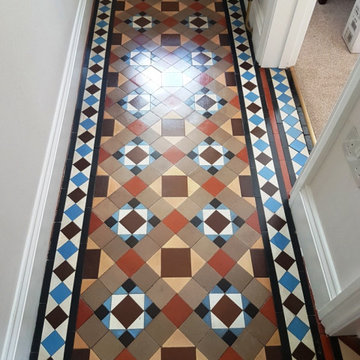
I was contacted by a homeowner who had moved into a property in the small Yorkshire market town of Masham and discovered a Victorian tiled floor under the hallway carpet. Realising this was a valuable period feature he was keen to see if it could be restored. As you can imagine he was delighted when I told him that it should be possible, and he was keen to get it uncovered and back on show.
After discussing the floor on the phone, I visited the property and removed the carpet so we could take a long look at the Victorian tile’s underneath. The carpet had protected the floor well and it was in good physical order, (i.e. no cracks etc.) it was just very dirty but was also marked with paint splashes from some untidy decorating work from the past. I confirmed none of these issues should present a problem and got the go ahead for the work to start.
There was no sealer on the floor, so I started the cleaning process using a medium dilution of Tile Doctor Pro-Clean which was worked into the tiles using a coarse 200-grit pad fitted to a rotary floor buffer. I then used a 400-grit hand-held diamond block to clean the edges which couldn’t be reached by the machine. This also removed the paint splashes which should have been on the skirting boards and not the floor!
The floor was then rinsed with water and the soil extracted with a wet vacuum. I was able to inspect the floor at this stage and spot treat areas that needed more work as they were a little stubborn. It wasn’t a large hallway and except for the paint it only needed a light clean. The result was I was able to complete the cleaning process by lunch time. I dried the floor as much as possible and left an air blower in the space for a couple of hours.
I returned later that afternoon and checked the floor for moisture using a damp meter. The floor was mostly dry, but some areas needed some more help with a heat gun. It was late summer and so still warm and so there was no need on this occasion to leave the floor overnight.
Once I was happy the floor was dry, I started sealing the tiles with the first of four coats of Tile Doctor Seal and Go. This is a specially formulated water-based blend of acrylic polymers that provides both a stain resistant surface seal and a durable low-sheen finish. It is perfect for a floor of this age as it allows moisture vapour to pass through, this is an important feature when considering a sealer for old floors which will not have a damp-proof membrane installed. If you were to apply a non-breathable sealer moisture can get trapped under the floor causing it to spread out to the walls resulting in rising damp.
The combination of the cleaning and new sealer brought the floor back to life and it now looked in keeping with the rest of the property which had numerous other period features. My client was over the moon with the difference and very happy to see the back of the grubby carpet.
Nigel Stoker
North West Yorkshire Tile Doctor
 Tile Doctor Ltd
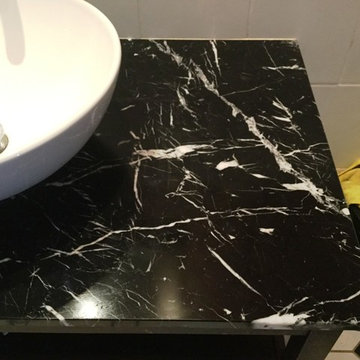
Marble is known for its premium quality, toughness and aesthetic, making it a very popular choice for bathroom countertops, such as this one at a house in Northampton. However just because it’s tough doesn’t mean that Marble can be cleaned with the usual household cleaners. Like all natural stone, Marble is acid sensitive and unsuitable products can have a very damaging effect on its appearance.
In this situation, the property owner had used a limescale remover to remove some unsightly marks from the countertop. Unfortunately, the product was acid-based and instead of making an improvement it just made it worse and caused severe etching.
The first photo above shows the limescale marks from where toiletries have been placed on the side whilst wet. Since Northampton is a hard water area, the limescale deposits over time caused these marks to appear.
The only way to effectively remove the Limestone deposits – while at the same time rectifying the damaged caused by the botched cleaning attempt – was to use a system of hand-held diamond encrusted pads and hand help blocks of various grits to cut back the stone and re-polish it, a process we call burnishing.
Before officially beginning the burnishing process, I ran a few tests to determine the type of pad I would need to use to achieve the best results. I found that, in most areas, I would need to use the Tile Doctor 400 Grit (Coarse) pad to resurface the tile and remove the damaged layer of stone, but in some areas where the etching was worse, I would need to use the 200 Grit (Very Coarse) pad.
After burnishing the affected areas with the Coarse and Very Coarse grit pads, I started to incrementally polish the stone to achieve a high-quality shine, working my up through the Medium, Fine and Very grit pads.
No chemicals were used during this process – only water for lubrication, combined with the six-inch diamond encrusted burnishing pads fitted to a hand-held buffing machine.
The final part of the restoration was to seal the stone to maintain a long-lasting, deep polished appearance. To do this, I used Tile Doctor Shine Powder, which is a crystallising sealer in powder form. The powder is applied directly and combined with water, before being worked into the stone to seal it.
The customer was very happy with the results and the level of shine achieved. I gave the customer a complimentary bottle of Tile Doctor Stone Soap, which is our aftercare cleaner for polished natural stone, along with instructions on periodic maintenance to help maintain the finish we had achieved for as long as possible.
Phil Vissian
Northamptonshire Tile Doctor
 Waterside Landscaping
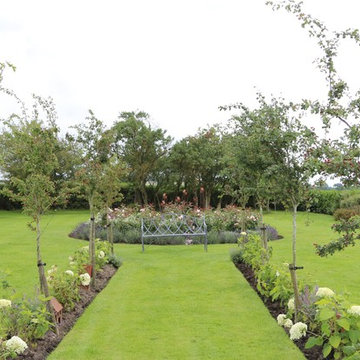
The rose garden on the property is a setting to photograph for wedding parties. Wedding receptions are held on the property in a repurposed barn building.
 Tile Doctor Ltd
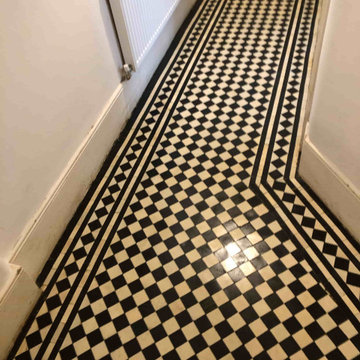
This property was in theLadbroke Grove area of West London near Kensington. The client had found an old and probably original black and white checkered pattern Victorian tiled floor under their cork tiled flooring. They also reported that it was badly damaged so I thought it would be best if I paid them a visit first to see how extensive the damage was and whether it was repairable. The floor was in a quite a state, the tiles were covered in glue from the cork and had several areas had been back filled with cement.
I reassured them that the damage could be rectified, and that it would be possible to completely restore the floor back to a good standard. I would have to remove the glue, remove the cement that had been used to level the floor and replace with reclaimed tiles to match. They were relieved to find out it could be done and happy with my quote I was instructed to go ahead with the work.
We started by taping up the skirting boards to protect the woodwork. With this done attention was turned to the glue which was softened using a strong dilution of Tile Doctor Remove and Go so it could be carefully scraped off. Multiple techniques and tools were needed to remove the glue including hand-held scrappers and a black pad fitted to a buffing machine. For the stubborn areas steam was applied to help lift the adhesive out the tile.
Once all the glue was removed the floor was rinsed and the alkaline cleaner neutralised with Tile Doctor Grout Clean Up which further cleaned the tiles and removed old traces of grout from the floor. Old floors like this generally don’t have a damp proof membrane underneath so the acids in the Grout Clean-up also counter any efflorescent salts trapped in the tile.
Once this was completed the slurry was removed with a wet vacuum and left to fully dry out overnight.
The following day focus turned to repairing the areas of the floor where the tiles were missing or broken. The main issue being the cemented areas, we see this a lot with Victorian Hallways and generally what happens is a heating engineer digs out the floor to install pipework. Not being tilers, your average plumber then repairs the floor with a self-levelling cement that brings the level up to the surface of the tile so it can be covered with lino, carpet of in this case cork.
The sub floor was then rebuilt with rapid setting self-levelling compound but this time to below the level of the tile.
Once the new base was dry it was a just a question of re-tiling with the replacement tiles to match the original checkered pattern. The replacement reproduction tiles were sourced from Original Features in Crouch End North London. After grouting we left the floor to dry out over the weekend.
When we returned to seal the floor our first step was to check the floor was dry using a moisture meter. This is critical as the sealant will not cure correctly if there is too much moisture in the floor. In this case the extra two days we had allowed had done its job and the test had confirmed it was ready to accept a sealer.
The client wanted the floor finish not to be too shiny once sealed so we opted to seal with two coats of Tile Doctor Seal and Go Extra. This is good choice for old Victorian floors such as this example as it’s special acrylic-based formula allows for moisture vapour transmission which as mentioned previously is a concern where no damp proof membrane has been installed.
I’m please to confirm my clients were delighted with the result, as you can see from the pictures the black and white floor restoration makes for a dramatic entrance well in keeping with the style of the property. For aftercare I recommended the use of Tile Doctor Neutral Tile Cleaner which will keep the tiles in good condition going forward without damaging the new sealer.
Jackson Davis
Central London Tile Doctor
7